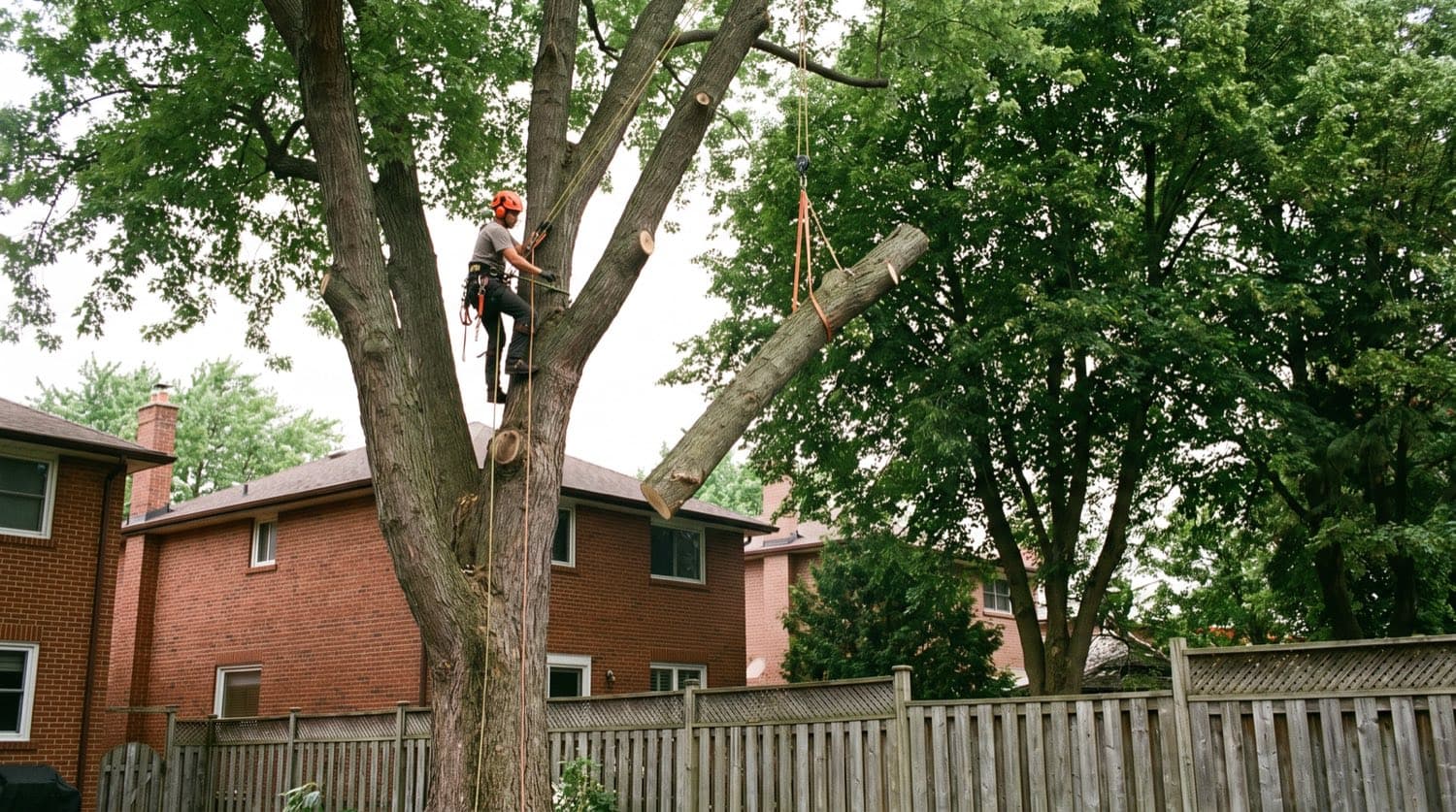
Answer First: In Toronto, you need a City permit to remove or injure a private tree that is 30 centimetres or more in diameter, measured 1.4 metres (4.5 feet) above the ground, under Municipal Code Chapter 813. The process runs: measure the trunk, confirm whether a permit is required, submit an arborist report plus a tree protection plan and fee, wait for City review, then have the tree removed by or under a certified arborist, often with a replanting condition. City-owned and street trees are protected at any size.
Cutting down a tree in Toronto is not a weekend chore you can just start. The city protects its mature canopy, and a single wrong cut on a protected tree can trigger a fine and a replanting order. The good news is the process is clear once you know the one number that decides everything: 30 centimetres.
Do you need a permit to remove a tree in Toronto?
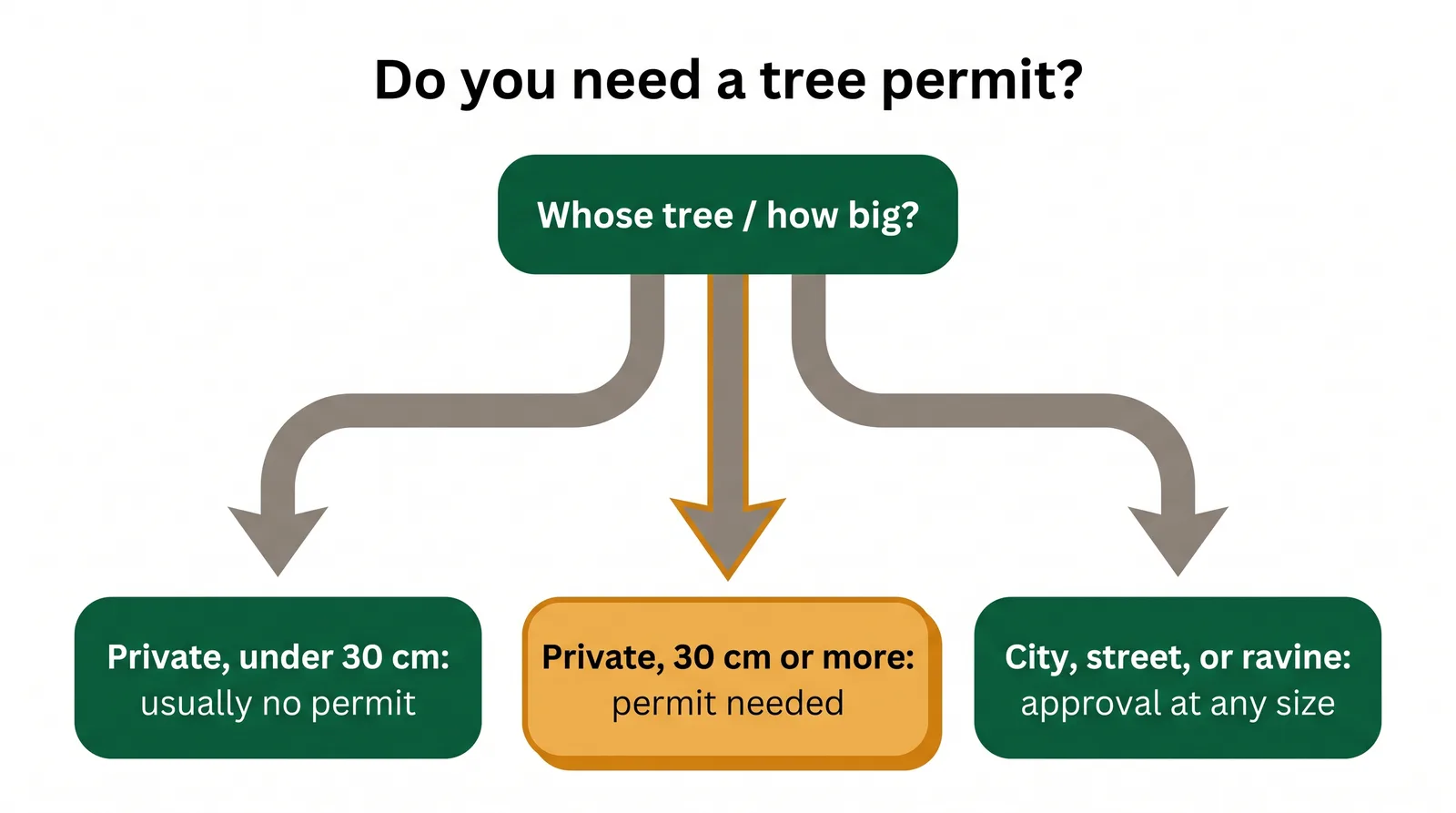
Usually, if the tree is a decent size. Under the private tree bylaw, you need a permit to remove or injure any private tree measuring 30 centimetres or more in diameter at 1.4 metres above the ground (City of Toronto). Below that, a private tree generally needs no permit.
Two big exceptions catch people out:
- City-owned and street trees are protected at any size. The tree on your boulevard or overhanging from City land is not yours to cut, and only Urban Forestry can approve work on it.
- Ravine and protected natural areas. If your lot falls under Toronto's ravine and natural feature protection rules, a tree there may need a ravine permit even under 30 centimetres.
Diameter at breast height (DBH) — the standard way arborists and the City measure a tree's size: the trunk's diameter taken 1.4 metres (about 4.5 feet) up from the ground, which is the exact measurement Toronto's 30 cm permit threshold is based on.
Quotable: In Toronto you need a permit to remove or injure a private tree 30 cm or more in diameter measured at 1.4 m above ground, and City-owned or street trees are protected at any size.
How do you measure whether your tree needs a permit?
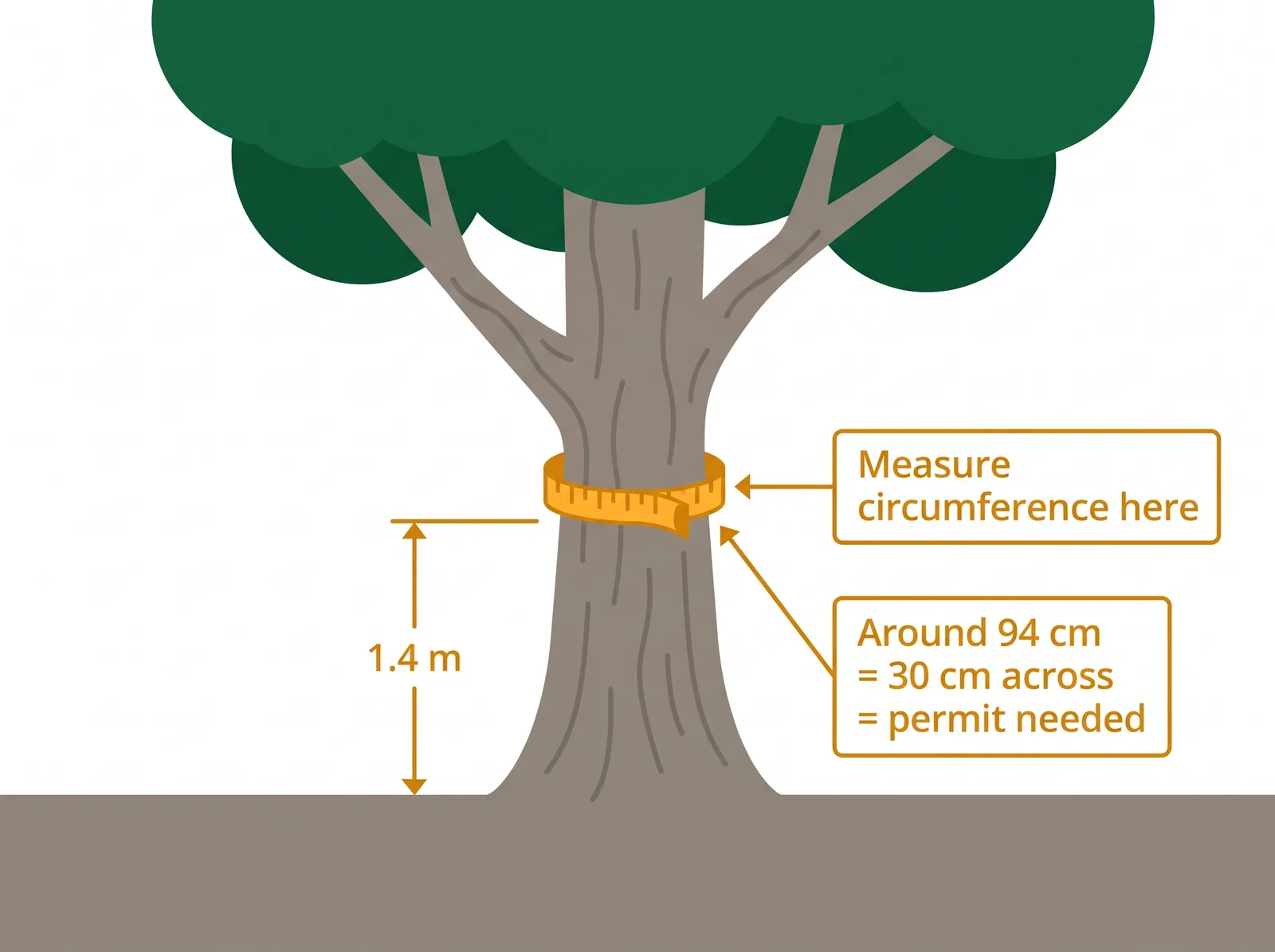
Measure around, then divide. The permit threshold is a 30 cm diameter at 1.4 metres up the trunk, but diameter is awkward to measure directly on a round trunk. The reliable method is to wrap a tape around the trunk at that height to get the circumference, then divide by about 3.14.
That math gives you one number to remember: a trunk about 94 centimetres (37 inches) around is right at the 30 cm diameter threshold. Bigger around than that, and you are almost certainly in permit territory. A few cautions:
- Measure at 1.4 m, not at the base, where the trunk flares wider and would overstate the size.
- Multi-stem trees follow specific City rules that can combine the stems, so a clump of smaller trunks may still count. Check with Urban Forestry.
- When in doubt, an arborist measures it as part of the report you will likely need anyway.
What is the step-by-step tree removal process?
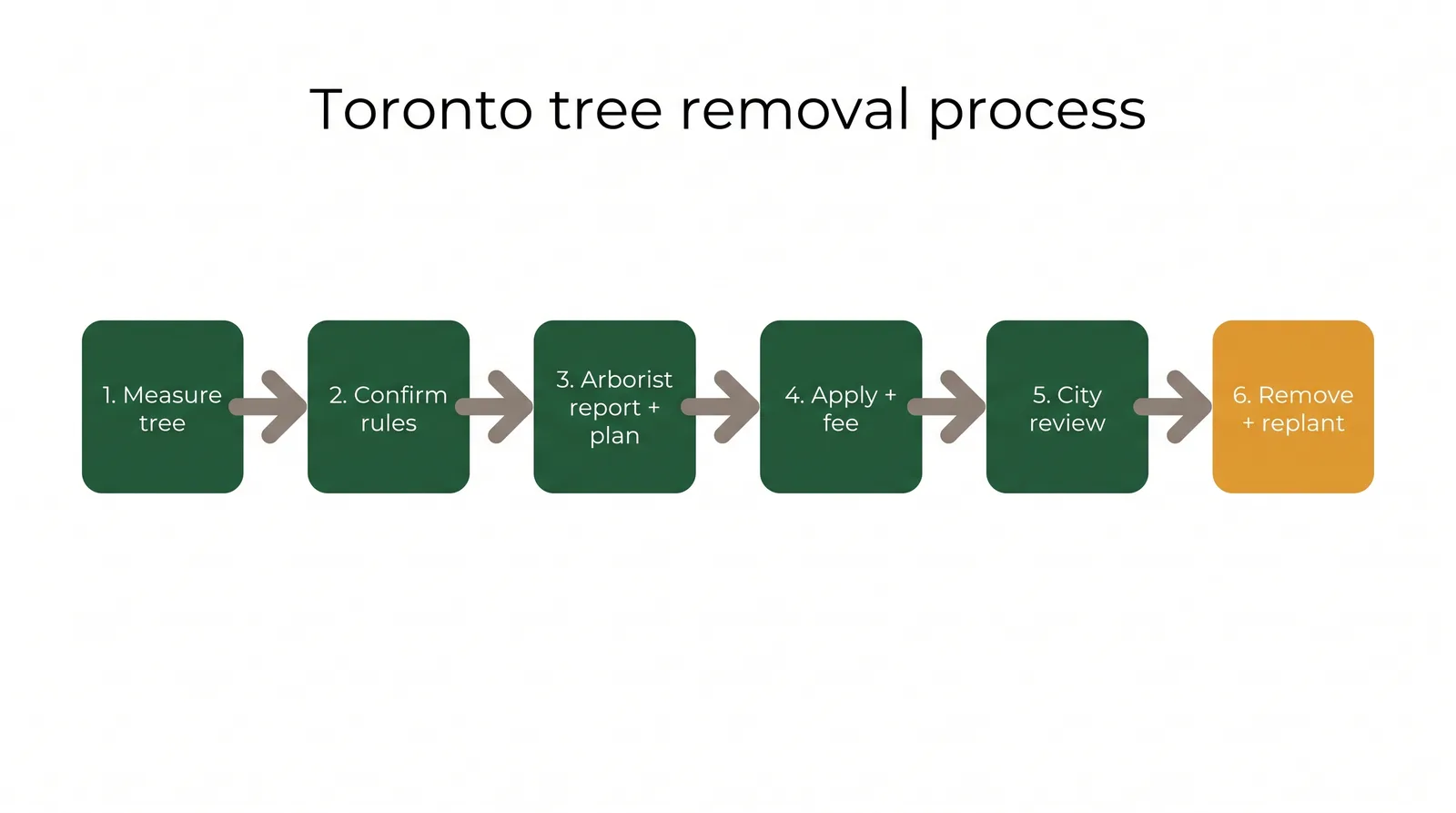
Six steps take you from "I want this tree gone" to a legal, finished removal. Skipping the middle ones is what gets homeowners fined.
- Measure and identify the tree. Get the diameter at 1.4 m and note the species and condition. This decides whether you even need a permit.
- Confirm the rules for your property. Private tree under 30 cm with no ravine designation, likely no permit. Otherwise, or if it is a City or ravine tree, you need to apply.
- Get an arborist report and tree protection plan. The report documents the tree's species, size, condition, and health; the plan maps every tree 30 cm or larger on your property and within 6 metres on neighbouring lots (City of Toronto).
- Submit the application and fee. Apply online or on the printable form, with the report, plan, and fee.
- Wait for City review. Urban Forestry reviews the application; some removals carry a notice period or conditions.
- Remove with a certified arborist, then replant if required. The bylaw requires the work be done by or under an arborist, and permits often come with a condition to plant replacement trees.
Our companion guides cover the paperwork in depth, including the Toronto tree removal permit guide and the step-by-step application walkthrough, plus how the rules differ for private versus City trees.
Who can legally remove the tree, and what if you skip the permit?
Leave a protected removal to a certified arborist, and never go near wires. The bylaw requires permit-triggering removals to be done by or under the supervision of an arborist, and there is a safety reason on top of the legal one: felling a large tree, rigging heavy limbs over a house, and grinding a stump are genuinely dangerous. Any tree touching or near a power line is the utility's job, not yours.
The cost of skipping the permit is steep. Removing or injuring a protected tree without approval is an offence that can carry significant fines per tree, plus a replanting order, which our guide to tree-cutting fines in Toronto breaks down. Confirming the rules first is always cheaper than a charge later.
From the data: YardQuote tracks 650 landscaping companies across the GTA, 613 of them with three or more reviews at an average of 4.77 stars (YardQuote tracking, July 2026). Many of those crews handle the smaller removals, stump grinding, and storm cleanup that fall outside the permit, but a 30 cm-plus removal legally needs a certified arborist and the paperwork above, so confirm who on a quote holds that credential.
Diagnosing whether a tree even needs to go is a separate question our guide to the signs a tree is dying helps answer, and if a storm forced the issue, emergency tree removal in the GTA covers the urgent version. To find a vetted crew for the work around a removal, browse landscaping companies in North York and other GTA areas.
Need the work around a tree removal handled by someone vetted? Request a quote and compare up to three vetted local pros side by side. Your contact details only go to the one you pick.