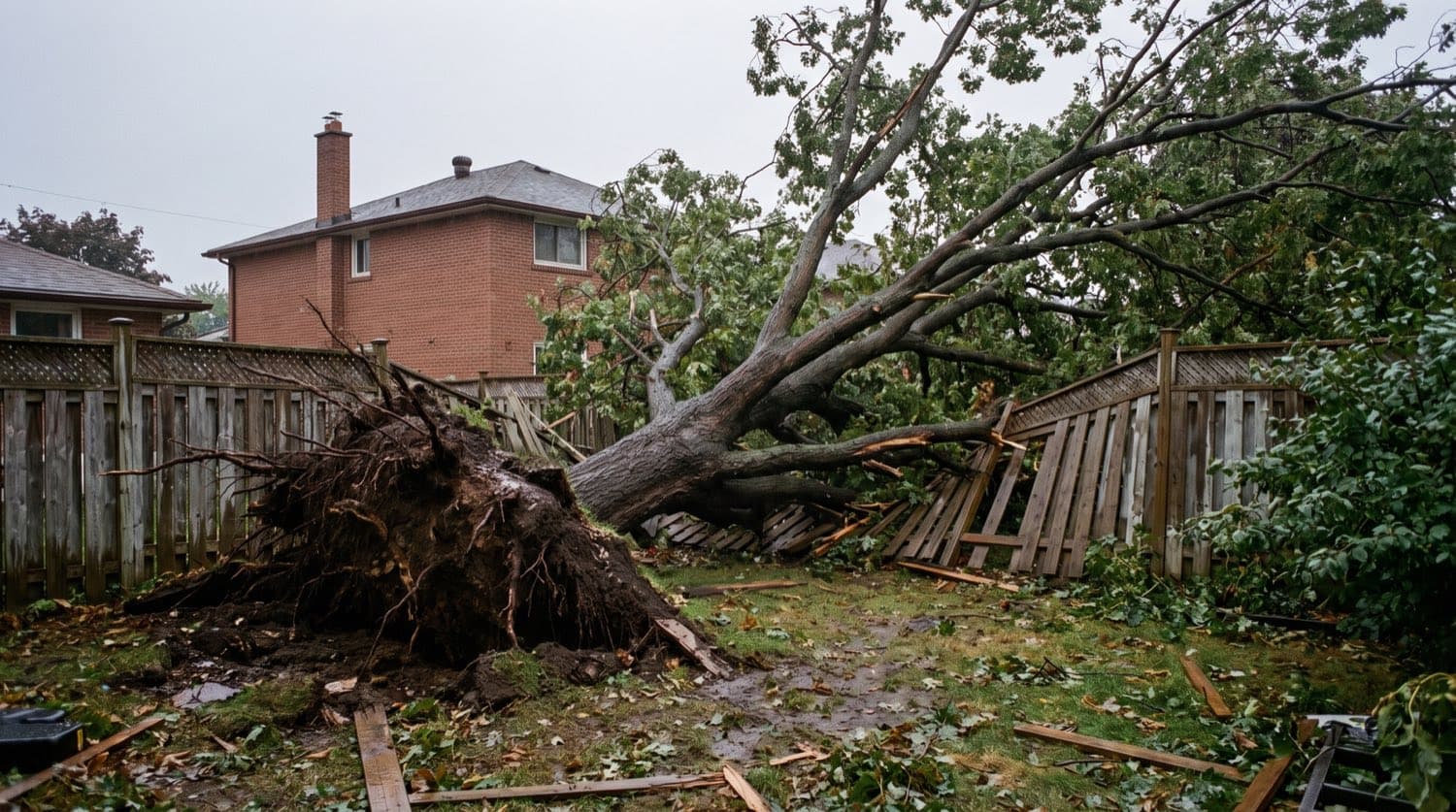
Answer First: After a GTA storm, a downed power line or a tree on a wire is a 911 and Toronto Hydro emergency: never touch it, assume it is live, and stay at least 10 metres back. A City-owned tree that comes down is cleared by Urban Forestry, reported through 311. A private tree, or one that fell on your house, is your responsibility, handled by a tree service and your own insurance. The City is not liable for storm damage (City of Toronto).
When a storm drops a tree, the instinct is to grab a chainsaw and start cutting. That instinct gets people killed, mostly because of what might be tangled in the branches. The first job after a storm is not removal. It is figuring out what is safe to approach and who is actually responsible for the tree.
What counts as an emergency, and what do you do first?
An emergency is any tree that poses immediate danger: one on a house or car, blocking a road, hanging broken over where people walk, or, most dangerous of all, touching a power line. For anything involving wires, safety comes before cleanup, every time.
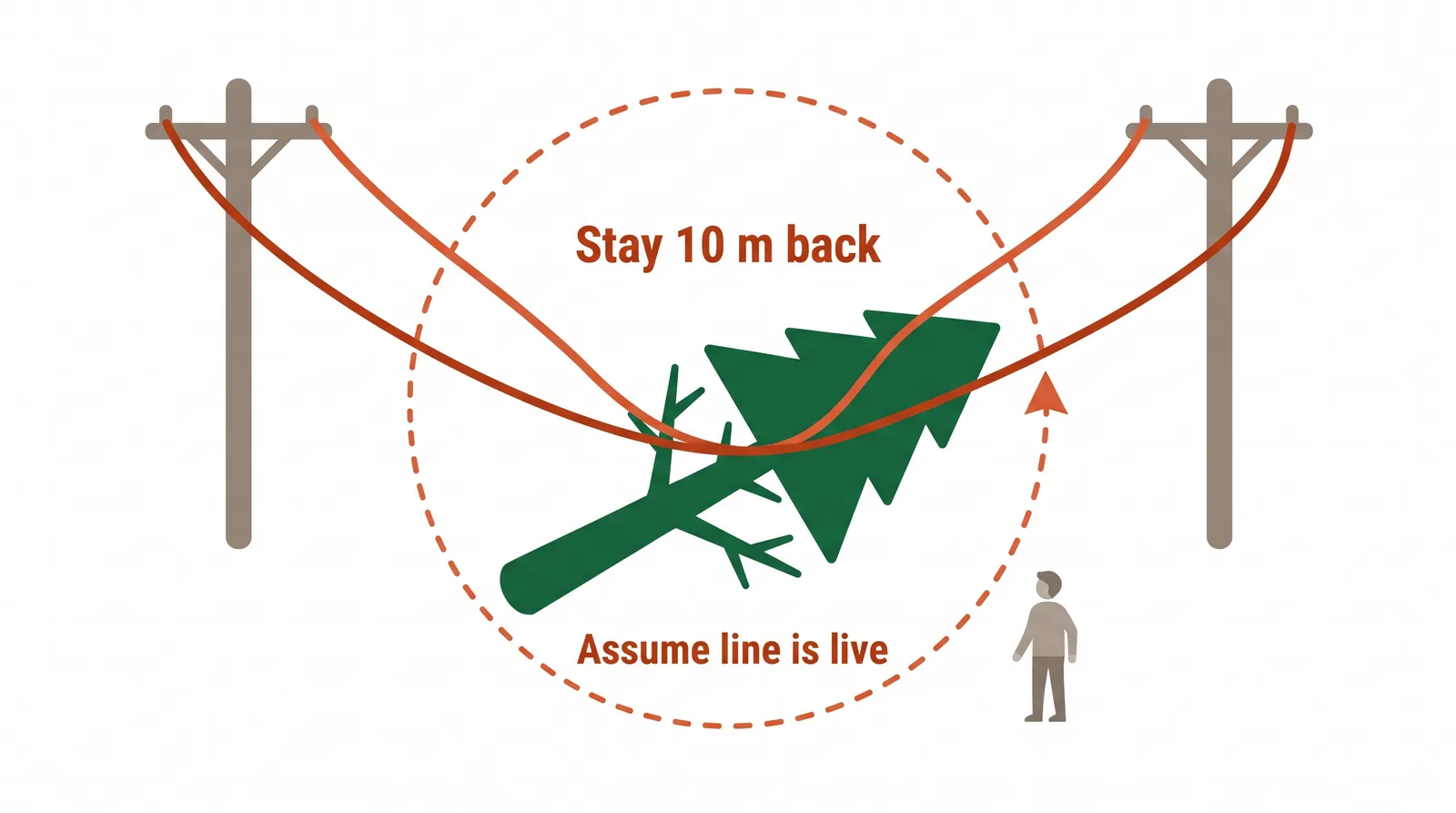
If a tree is on or near a power line, or a line is down:
- Call 911 for immediate danger and Toronto Hydro to report the line.
- Assume the line is live and stay at least 10 metres back. A downed or contacted line can energize the tree, the ground, and anything touching them.
- Keep everyone and every pet away, and do not drive over a downed line.
- Do not cut the tree, and do not let a general tree crew cut it. Wires are the utility's job.
Quotable: A tree touching a power line can energize the tree, the ground, and anyone near it. After a storm, treat every downed line as live, stay 10 metres back, and call 911 and Toronto Hydro, never a chainsaw.
Who is responsible: the City or you?
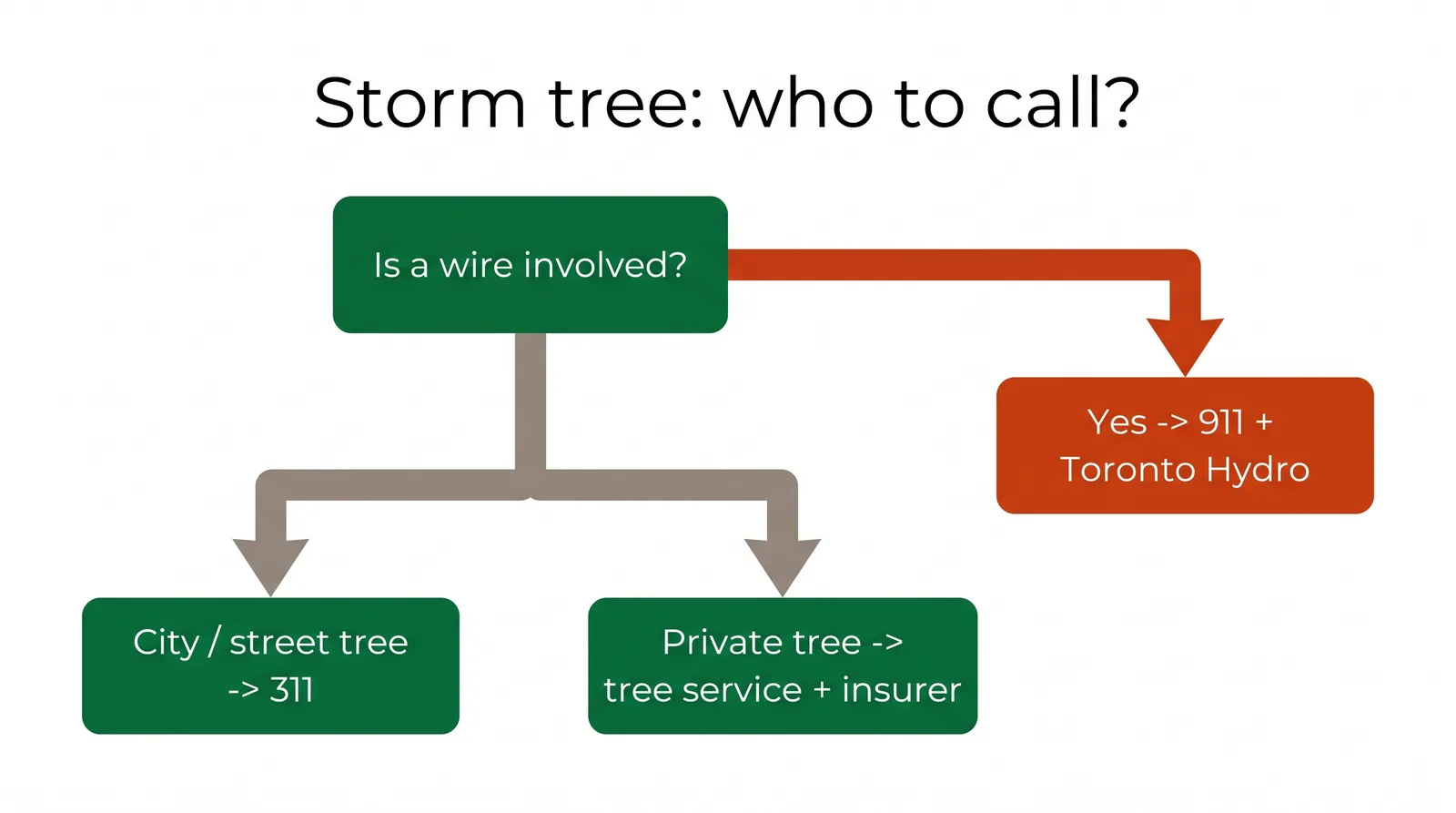
Ownership and location decide who clears the tree and who pays. This is the question that determines your entire next move, and the answer splits cleanly.
- City-owned and street trees: Urban Forestry clears fallen City trees and branches. Report them to 311 or at toronto.ca/311 (City of Toronto).
- Your private tree: you are responsible for cleanup, using a tree service, and for any damage through your own home insurance.
- A neighbour's tree that fell onto your land: still your responsibility to clean up the part on your property, which surprises many homeowners.
- Damage to your property: if the failure was caused by a storm, the City is not responsible, and you claim through your own insurer.
From the data: YardQuote tracks 650 landscaping companies across the GTA, 613 of them with three or more reviews at an average of 4.77 stars (YardQuote tracking, July 2026). Many handle storm cleanup and downed-limb work, but the two jobs to never hand a general crew are anything near a live wire, which belongs to Toronto Hydro, and a permit-triggering removal of a surviving protected tree, which needs a certified arborist.
Power lines and trees: the line you never cross
Vegetation near power lines is managed by the utility, not by you. Toronto Hydro works with the City's Forestry department to keep safe clearances around power lines, and during a storm they prioritize the trees that threaten those lines and block roads (Toronto Hydro). That division matters in an emergency: a branch on your own tree is a tree-service call, but the moment that branch is on a wire, it becomes the utility's job.
This is also why the City's storm response can feel slow for a single yard. Crews triage by public safety first, clearing wires and roads before individual private-property calls, which is exactly why a hazardous private tree is faster to handle by calling a tree service yourself.
How do you prevent storm damage before the next one?
The cheapest emergency is the one that never happens. Most storm tree failures are not random; they start at weaknesses a certified arborist can spot in advance.
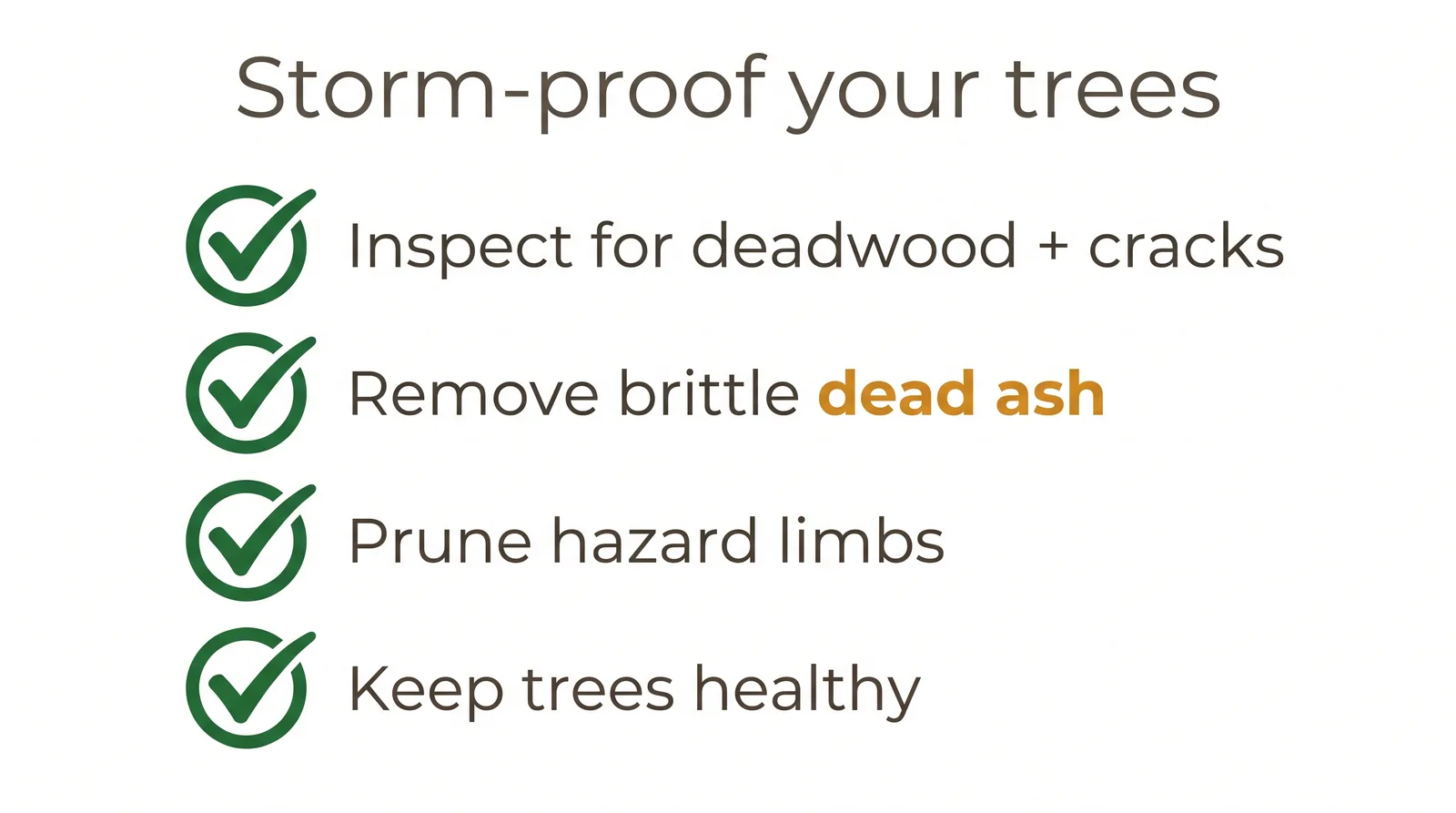
- Inspect large trees near the house for deadwood, cracks, cavities, and a developing lean, and prune or address them before storm season.
- Prioritize dead ash trees. Ash killed by emerald ash borer become brittle fast and shed limbs readily, making them some of the highest-risk trees in the GTA to leave standing near a target.
- Keep trees healthy and pruned. A sound, well-maintained tree rides out wind and ice far better than a neglected one.
- Know your trees' status before a storm, so you are not diagnosing a hazard in the dark with the power out.
Spotting those weaknesses is easier with our guide to the signs a tree is dying, and if the tree survived but has to come down, the full Toronto tree removal process covers the permit side. For utility-side questions, see Toronto Hydro tree trimming. To line up a vetted crew for cleanup and prevention, browse landscaping companies in Scarborough and other GTA areas.
Want a vetted local pro for storm cleanup or a pre-season tree check? Request a quote and compare up to three side by side. Your contact details only go to the one you pick.