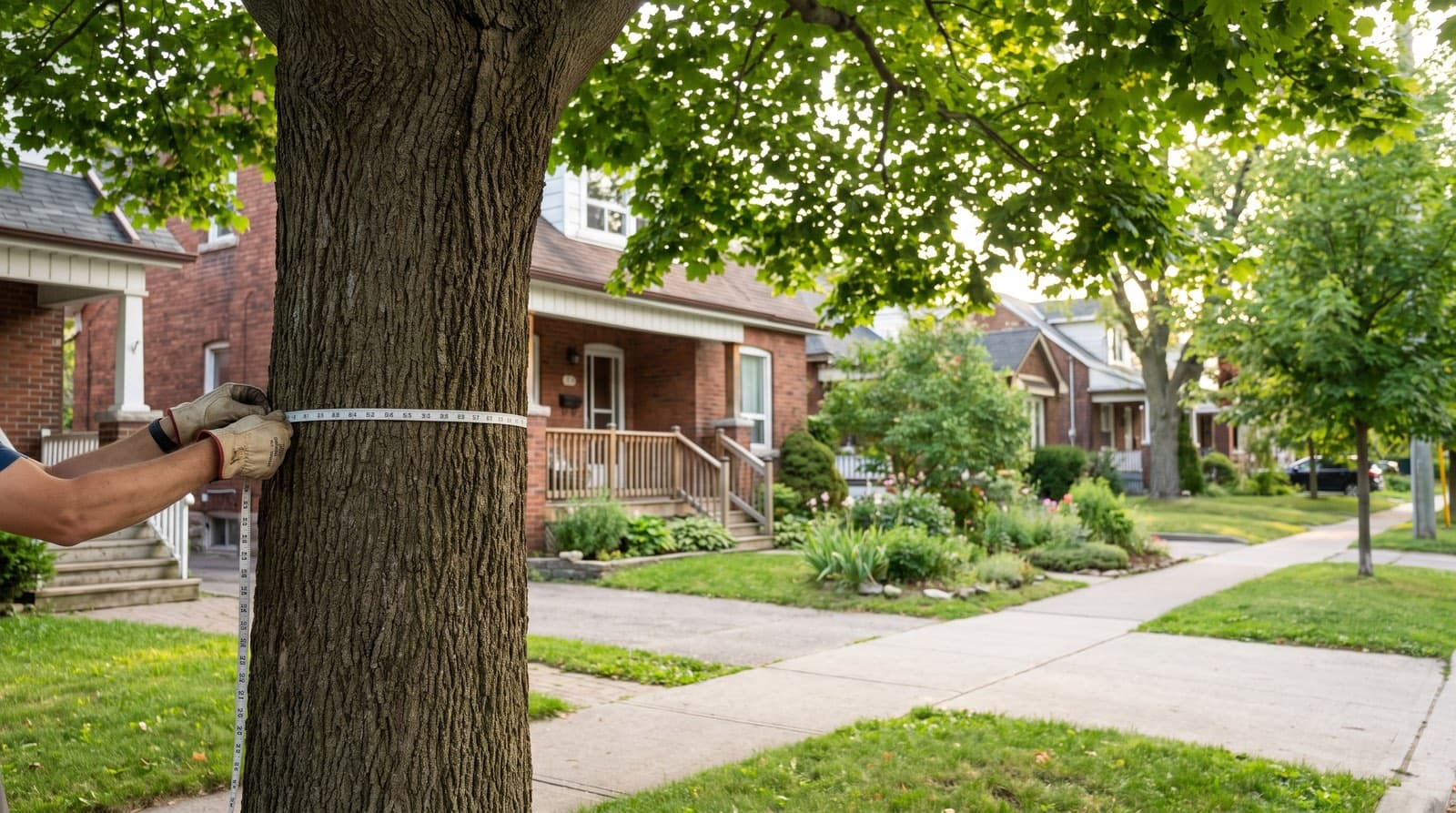
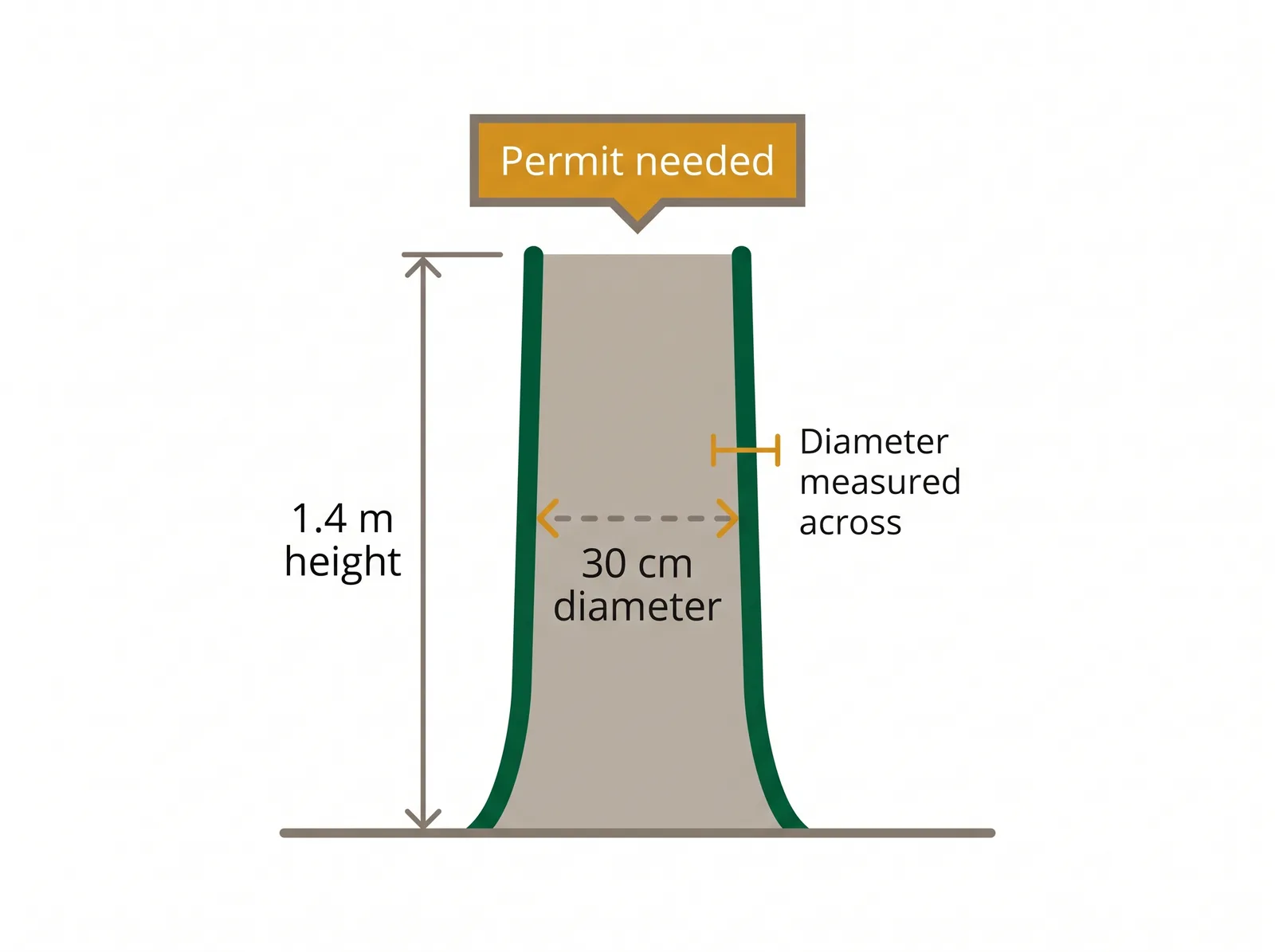
Answer First: In Toronto, injuring or removing a protected private tree without a permit can bring a fine of $500 at minimum and up to $100,000 per tree, plus a special fine of as much as $100,000, under Municipal Code Chapter 813. The permit requirement kicks in for any private tree 30 centimetres or more in diameter, measured at 1.4 metres above the ground.
A homeowner clears one big backyard maple to open up light for a patio, no permit, no arborist. On paper, that single afternoon can expose them to a six-figure penalty. Toronto's tree rules are among the strictest in Ontario, and the fines are written to bite.
What is the fine for cutting down a tree without a permit in Toronto?
A minimum of $500 and a maximum of $100,000 per tree, plus a possible special fine of up to $100,000. Those numbers are set out directly in the penalty section of Chapter 813, the City's tree bylaw (Toronto Municipal Code Chapter 813).
The phrase that matters is "per tree." The maximum is not a cap on the whole job; it applies to each protected tree you injure or destroy. Clear three protected trees for a pool and, in principle, the exposure triples. The special fine is an additional amount a court can impose under the City of Toronto Act to remove any financial benefit someone gained by breaking the rule, so cutting a tree to boost a property's sale value does not pay off the way people assume.
Quotable: Toronto's tree bylaw (Chapter 813) sets a minimum fine of $500 and a maximum of $100,000 per tree for illegal removal, plus a special fine of up to $100,000, and the penalty is charged per tree, not per job.
Which trees are actually protected?
The line is drawn by size and by location. Three separate protections overlap, and most homeowners only know about one of them.
- Private trees, 30 cm and up. On private property, any tree measuring 30 centimetres or more in diameter is protected and needs a permit to injure or remove.
- City and street trees, any size. Trees on the City road allowance, including the boulevard strip in front of your house, belong to the City and are protected regardless of size.
- Ravine trees, any size. Trees inside a designated ravine or natural-feature area are protected at any diameter under the separate Ravine and Natural Feature Protection bylaw, with no minimum size at all.
That overlap is why "it's on my land" is not a safe assumption. A modest tree near the back of a lot can still be untouchable if the lot sits inside a protected ravine.
From the data: YardQuote tracks 650 landscaping companies across the GTA, and 613 carry three or more Google reviews at an average of 4.77 stars (July 2026). Plenty of well-reviewed pros will pull the tree or ravine permit as part of the job. The risk is the crew that offers to "just take it down" without one.
How is the 30-centimetre threshold measured?
Diameter, not the distance around the trunk, taken at 1.4 metres above the ground. That height has a name: diameter at breast height.
Diameter at breast height (DBH) — the width of the tree's trunk measured straight across at 1.4 metres up from ground level, which is the standard point arborists and the bylaw use so measurements are consistent from tree to tree.
Two practical traps live in that definition. First, people measure circumference (around the trunk) and think they are under the limit; a 30-centimetre diameter is roughly a 94-centimetre circumference, so a trunk that is about a metre around is already protected. Second, the bylaw has specific rules for trees that lean or split into multiple stems, so an unusual trunk should be measured by an arborist, not eyeballed.
Do you need a permit to remove a dead or dangerous tree?
In most cases you still apply, even for a tree that looks obviously dead. The City assesses the tree and can authorize removal, including faster handling for a genuine hazard, but the decision is theirs to make, not yours.
The temptation is to cut first and argue later. That is the expensive move. If Urban Forestry decides the tree did not truly qualify as dead or imminently hazardous, you are back to a per-tree fine with no permit on file to defend you. For a storm-damaged or clearly failing tree, document the condition with photos and get an arborist's assessment before anything comes down.
What does illegal removal actually cost, all in?
More than the ticket. The headline fine is only one layer; the real bill stacks up.
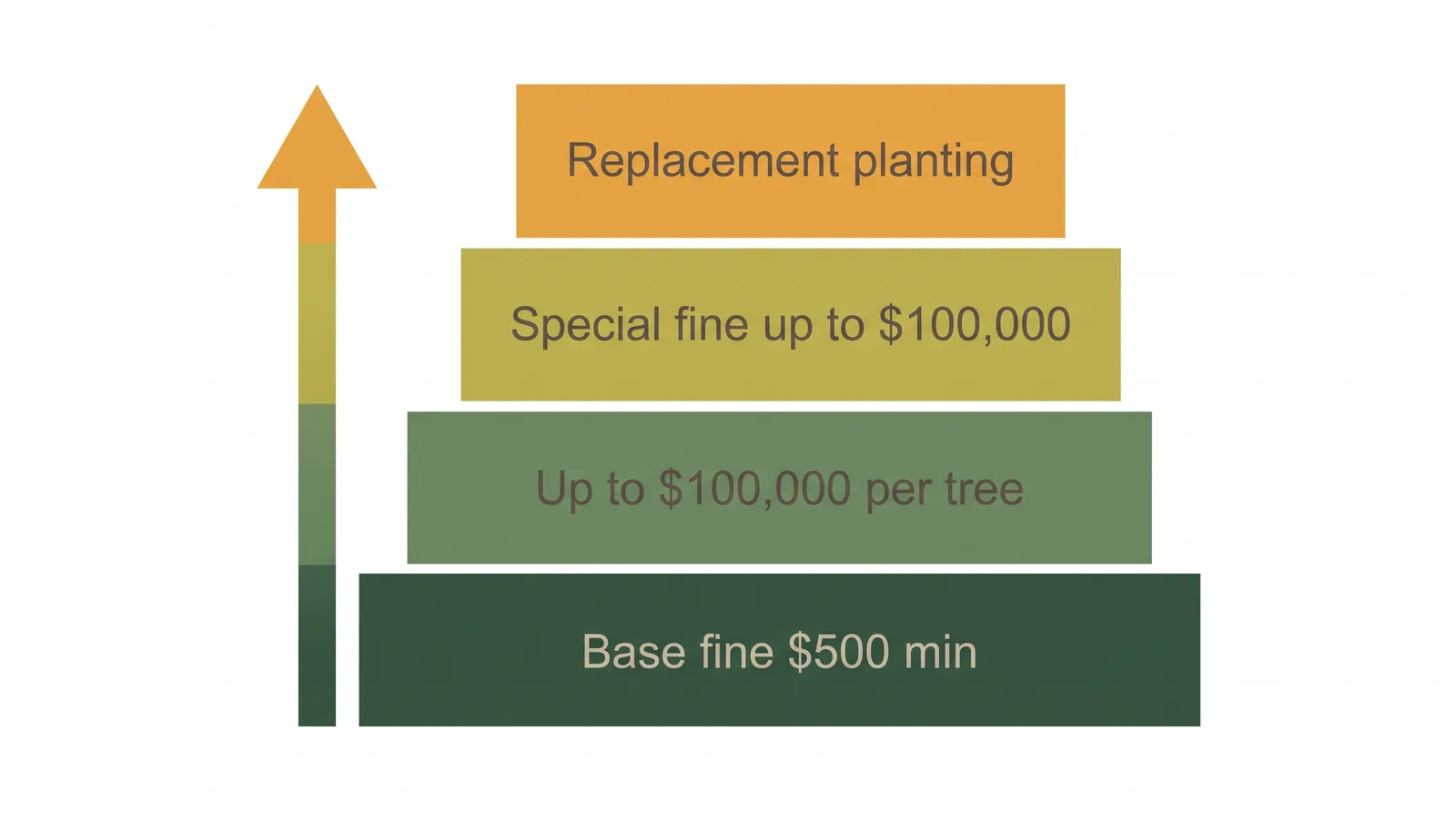
- The base fine. $500 minimum, and courts set the actual amount based on the tree and the circumstances.
- The per-tree maximum. Up to $100,000 for each protected tree, so multiple trees multiply fast.
- The special fine. An extra amount up to $100,000 to claw back any financial gain from the removal.
- Replacement planting. The City can order you to plant new trees, and to keep them alive, at your cost.
Put together, taking down one protected tree to skip a $600 permit can turn into a five-figure problem. The permit is cheap by comparison, and it is the only version of this story that ends without a court date.
Quotable: In Toronto, the permit to remove a protected private tree costs far less than the penalty for skipping it: illegal removal risks up to $100,000 per tree plus a $100,000 special fine and a City order to replant.
How to remove a tree the legal way
The safe path is short, and it starts before any saw comes out.
- Measure the diameter at 1.4 metres. If the trunk is 30 centimetres or more across, assume you need a permit. If you are close to the line, have an arborist confirm.
- Check for ravine or street-tree status. Look up your address on the City's mapping or call 311; a protected ravine removes the size exemption entirely.
- Apply to the City. Submit a private-tree removal application to Urban Forestry, with an arborist report if the tree is dead or hazardous.
- Hire a pro who works to the permit. Confirm your contractor will follow the permit conditions, including any replacement planting.
You can compare rated crews for the surrounding work on the landscaping cost page, browse pros by area such as landscaping in North York, or start at the costs hub. If your project sits near a slope or valley, read our companion guide to the Toronto ravine bylaw next, and our lawn mowing bylaw guide covers the everyday rules that catch homeowners more often.
Planning work that touches a big tree? Request a quote and compare up to three vetted local pros who handle permits properly, side by side. Your contact details only go to the one you pick.