Answer First: Inside a designated Toronto ravine area, Chapter 658 (Ravine and Natural Feature Protection) requires a permit to injure or remove any tree of any size, to alter the grade of land, to place or dump fill, and to build structures or retaining walls. Fines reach a $100,000 maximum plus a $100,000 special fine, and some violations run up to $10,000 for each day they continue.
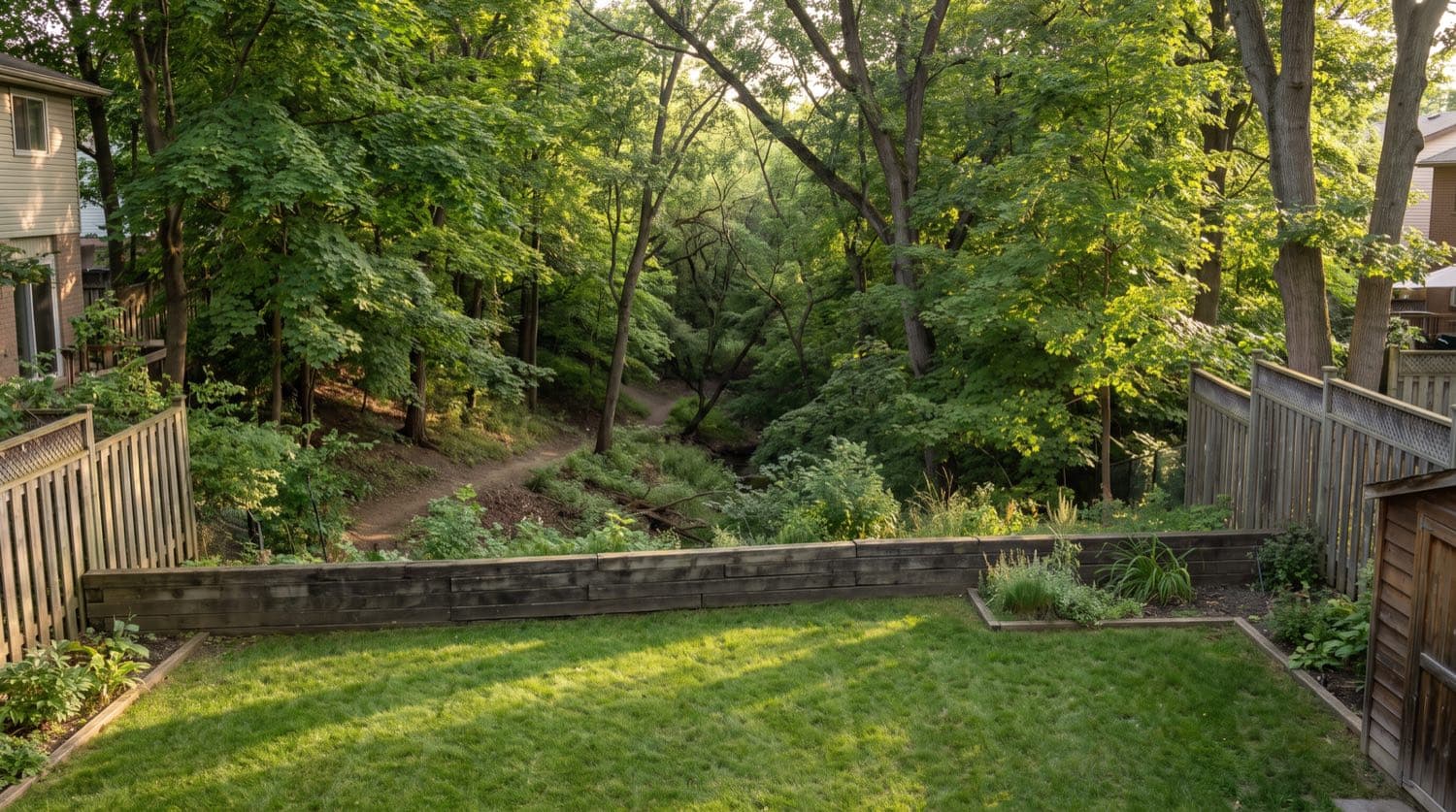
If your backyard backs onto a slope, a wooded valley, or a creek, the normal rules about what you can do on your own land may not apply. Toronto protects its ravine system with a bylaw that is stricter than the tree rules most homeowners know, and it reaches onto land that looks like ordinary lawn.
What does the Toronto ravine bylaw control?
Four things, inside the protected area: trees, grade, fill, and structures. Chapter 658 prohibits any person, without a permit, from injuring or removing trees, altering the grade of land, placing or dumping fill or refuse, and constructing or replacing structures and retaining walls in a protected ravine or natural-feature area (Toronto Municipal Code Chapter 658).
That list is broader than people expect. It is not only about cutting trees. Trucking in soil to level a low spot, digging out a slope for a walkout, or replacing an old timber retaining wall all count, because each one changes the ravine's stability or its natural features. The bylaw treats the slope as a living system, not a backdrop.
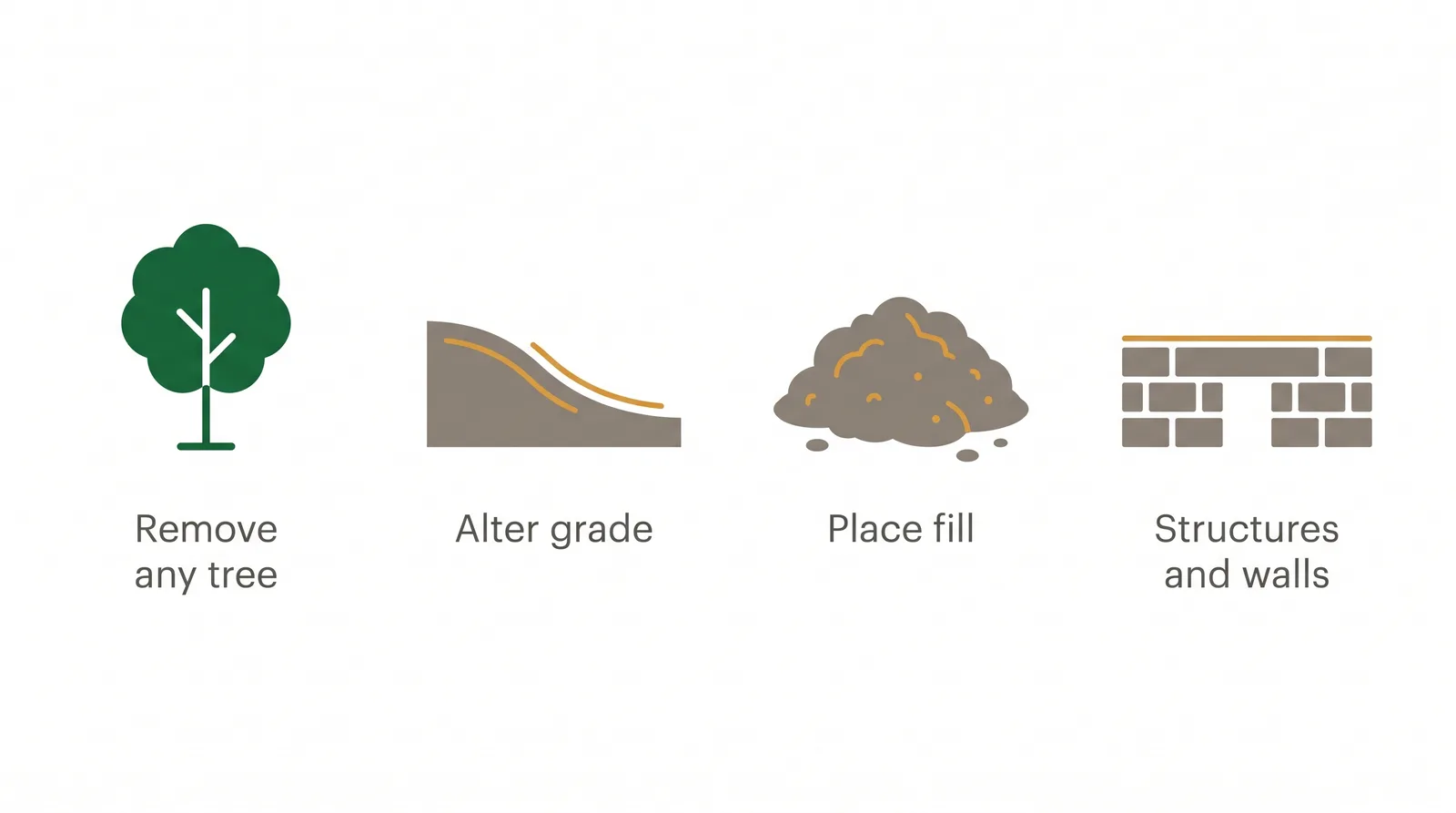
Quotable: Toronto's ravine bylaw (Chapter 658) requires a permit not just to remove trees, but to regrade land, dump fill, or build a retaining wall inside a protected area, all of which are prohibited without City approval.
Are all trees protected near a ravine, even small ones?
Yes. Inside a designated ravine area there is no minimum size. This is the single biggest difference from the everyday tree rules. The private tree bylaw only protects trees 30 centimetres or more in diameter, but Chapter 658 protects every tree in the protected zone, down to a young sapling.
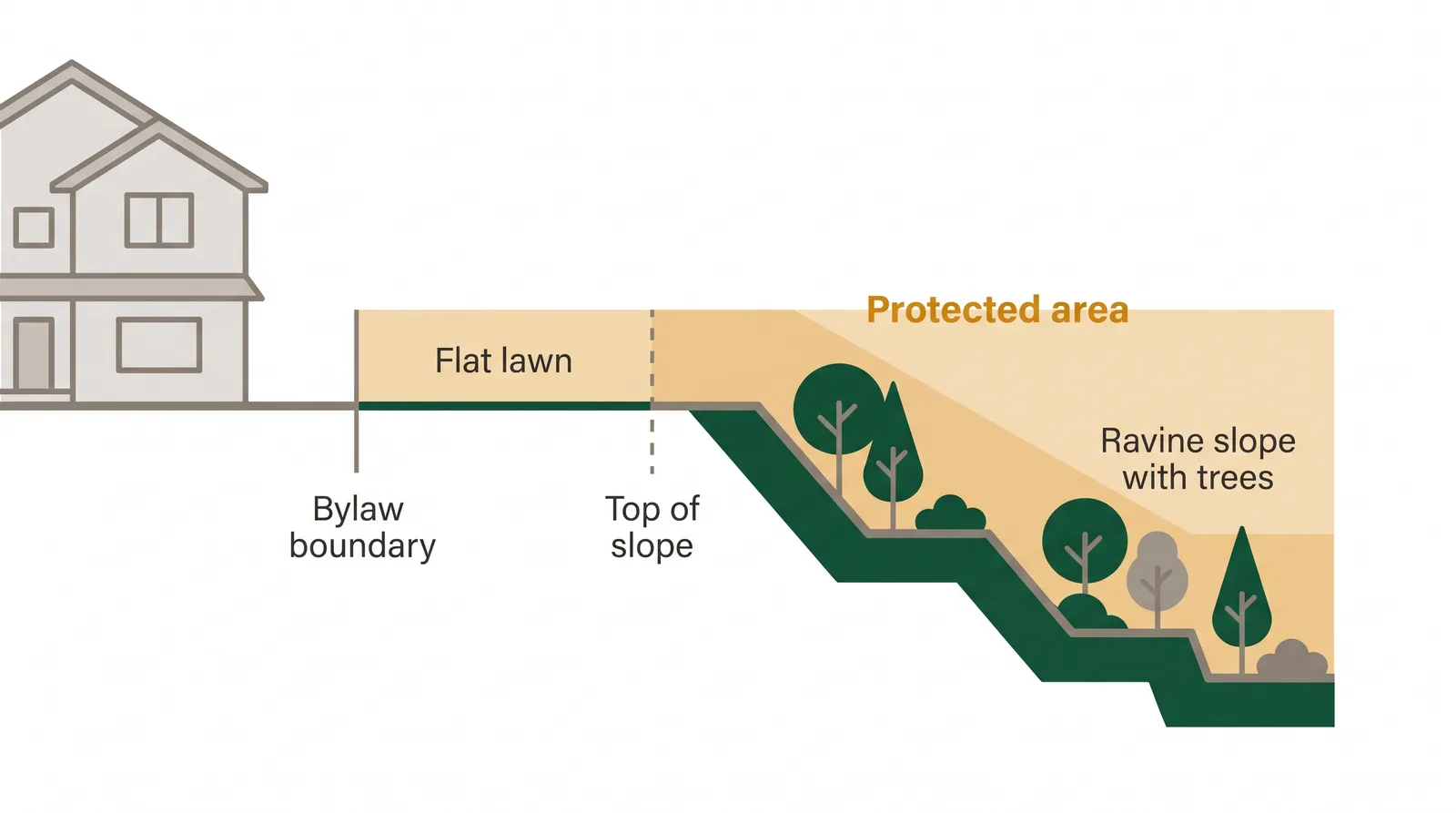
Protected area — the land shown as a shaded overlay on the City's ravine data maps, defined by land form such as a valley or slope with a change in grade, rather than by whether a given spot looks wooded or flat.
So a homeowner who checks the 30-centimetre threshold, measures a small tree, and decides it is fine to cut can still be offside if the tree sits inside a ravine boundary. The size rule they relied on simply does not exist here.
How do I know if my backyard is in a ravine area?
Look it up on the City's Ravine and Natural Feature Protection map, or call 311. The protected boundary follows the City's mapping, not the visible edge of the slope, so you cannot judge it by eye.
Here is the reliable way to check before you plan any work (City of Toronto):
- Open the City's ravine bylaw map and search your address.
- Turn on the Ravine and Natural Feature Protection layer so the shaded overlay appears.
- Check whether any part of your lot falls inside the shaded zone, including the flat portion near the house, not just the slope.
- Call 311 to confirm if the boundary runs through your property or you are unsure.
From the data: YardQuote tracks 61 retaining wall contractors and 650 landscaping companies across the GTA, with rated firms averaging 4.8 and 4.77 stars (July 2026). On a ravine lot, the pro who asks about the bylaw map before quoting is the one worth shortlisting; the one who does not is a liability.
What is the fine for breaking the ravine bylaw?
A minimum of $500 and a maximum of $100,000, plus a possible $100,000 special fine, and up to $10,000 per day for continuing offences. The penalty section of Chapter 658 spells this out, and it applies whether the violation involves a tree or any other prohibited activity.
The daily piece is what makes this bylaw especially serious. Some violations, like failing to comply with permit conditions, are treated as continuing offences, carrying a minimum of $500 and a maximum of $10,000 for each day or part of a day the problem persists. A regrading job left non-compliant for a month is not one fine; it can be counted day by day.
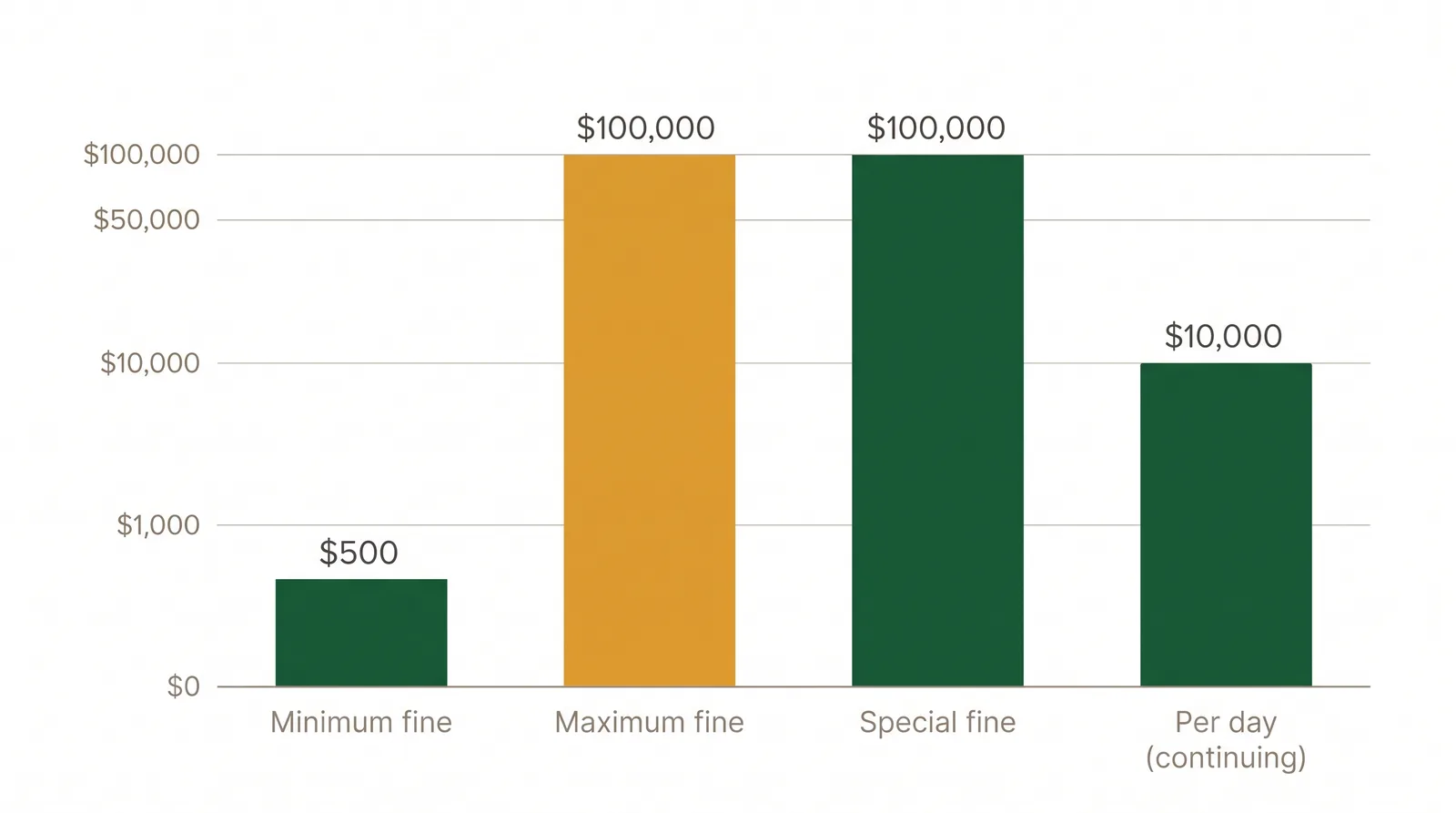
| Penalty | Amount |
|---|---|
| Minimum fine | $500 |
| Maximum fine (tree or other offence) | $100,000 |
| Special fine | up to $100,000 |
| Continuing offence, per day | $500 to $10,000 |
Quotable: Under Toronto's Chapter 658, a ravine bylaw violation can cost up to $100,000, plus a $100,000 special fine, and continuing offences add up to $10,000 for every day the violation lasts.
Does the ravine bylaw stack with other rules?
Often, yes. A ravine lot can be governed by three regimes at once, each with its own permit.
- Chapter 658, the ravine bylaw, for trees, grade, fill, and structures inside the protected area.
- The private tree bylaw (Chapter 813), if a protected 30-centimetre tree sits on the part of the lot outside the ravine boundary.
- Toronto and Region Conservation Authority (TRCA) regulation, which controls development and site alteration near valleys, watercourses, and wetlands under provincial rules.
Because these overlap, a single backyard project near a valley can need more than one approval. Treat "near a ravine" as a signal to slow down and check, not a technicality.
The safe move is to confirm your property's status before you design anything, then hire a contractor who builds to the permit conditions. You can compare rated pros on the landscaping cost page or the retaining wall cost page, browse by neighbourhood such as landscaping in Scarborough, or start at the costs hub. Our guide to Toronto tree cutting fines covers the standard 30-centimetre tree rule that applies just outside the ravine line.
Working on a ravine or slope lot? Request a quote and compare up to three vetted local pros who handle ravine and tree permits properly, side by side. Your contact details only go to the one you pick.