Answer First: In Toronto you need a City permit to injure or remove any private tree measuring 30 centimetres or more in diameter, measured 1.4 metres above the ground, whether the tree is alive or dead, under the Private Tree Bylaw (Municipal Code Chapter 813). Removing a protected tree without a permit carries a fine from a $500 minimum to a $100,000 maximum per tree. A fully dead tree is exempt, but City street trees are protected at any size.
Toronto's older neighbourhoods are shaded by big trees for a reason: the City treats a mature tree on private land as a shared asset, not just your problem. That silver maple crowding your Leaside garage or the oak lifting a High Park walkway is protected the moment it crosses 30 centimetres across the trunk. Cutting it down is a permit decision, sometimes an expensive one, and this guide walks through exactly when the rule bites and how to do it properly.
Do you need a permit to remove a tree in Toronto?
You need a permit if the tree is a private tree 30 centimetres or more in diameter at 1.4 metres above the ground, a City street tree of any size, or a tree in a regulated ravine or natural-feature area. If none of those apply, you generally do not. The table below sorts the common cases.
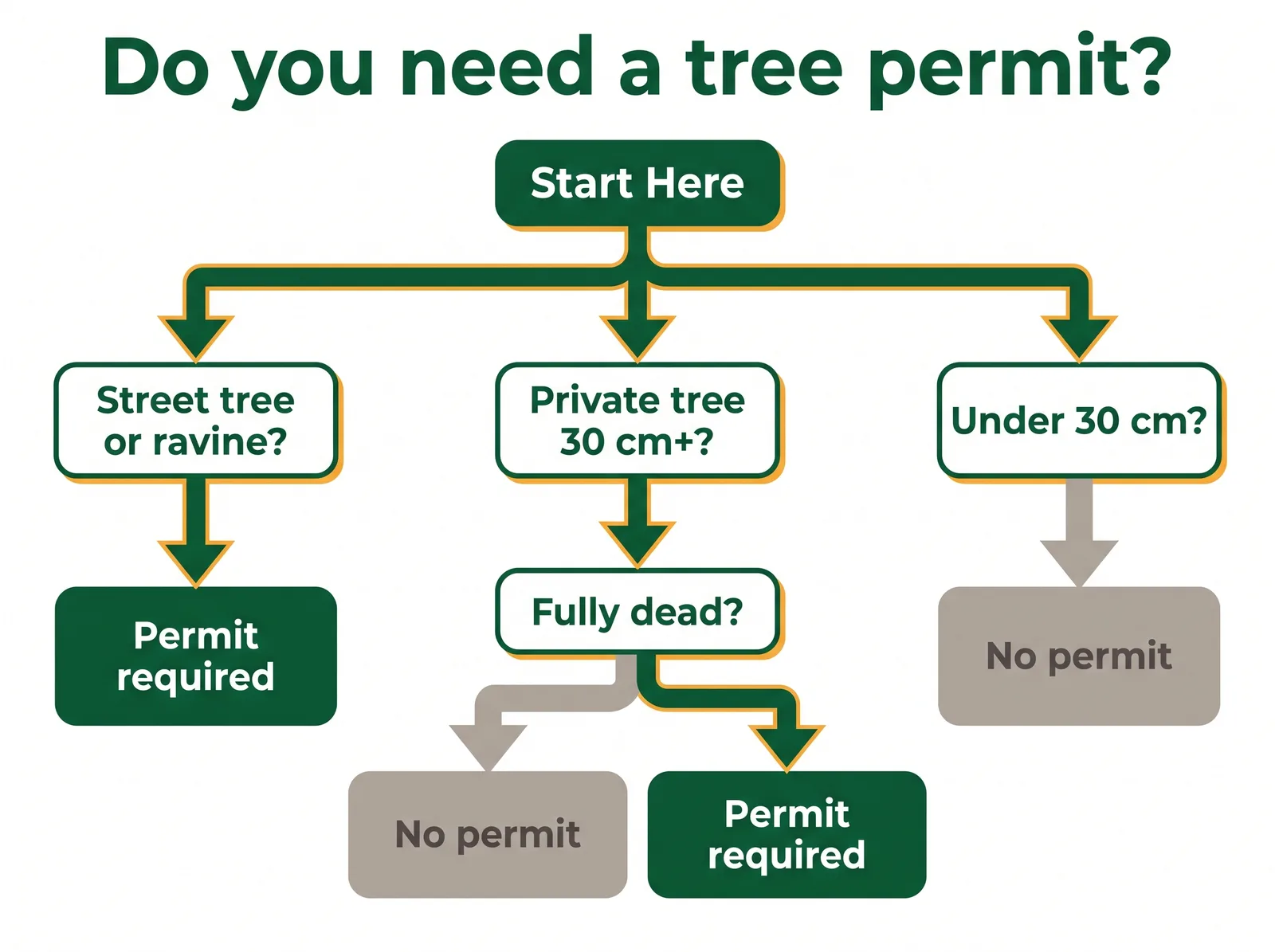
| The tree | Permit needed? | Why |
|---|---|---|
| Private tree, 30 cm+ diameter (at 1.4 m), alive | Yes | Protected under Chapter 813 |
| Private tree, 30 cm+ diameter, dead but not fully dead (declining) | Yes | Bylaw makes no exception for a living-but-dying tree |
| Private tree, under 30 cm diameter | No (private tree rule) | Below the protected size |
| Private tree, 100% dead | No | Fully dead trees are exempt |
| City street tree (boulevard / road allowance), any size | Yes | City-owned; only the City authorizes work |
| Tree in a regulated ravine or natural feature | Yes | Protected regardless of size |
Quotable: In Toronto, a permit to remove a private tree is triggered by size, not by whether the tree is a nuisance: any private tree 30 cm or more in diameter at 1.4 m is protected under Chapter 813, alive or dead.
How big is 30 centimetres, and how do you measure it?
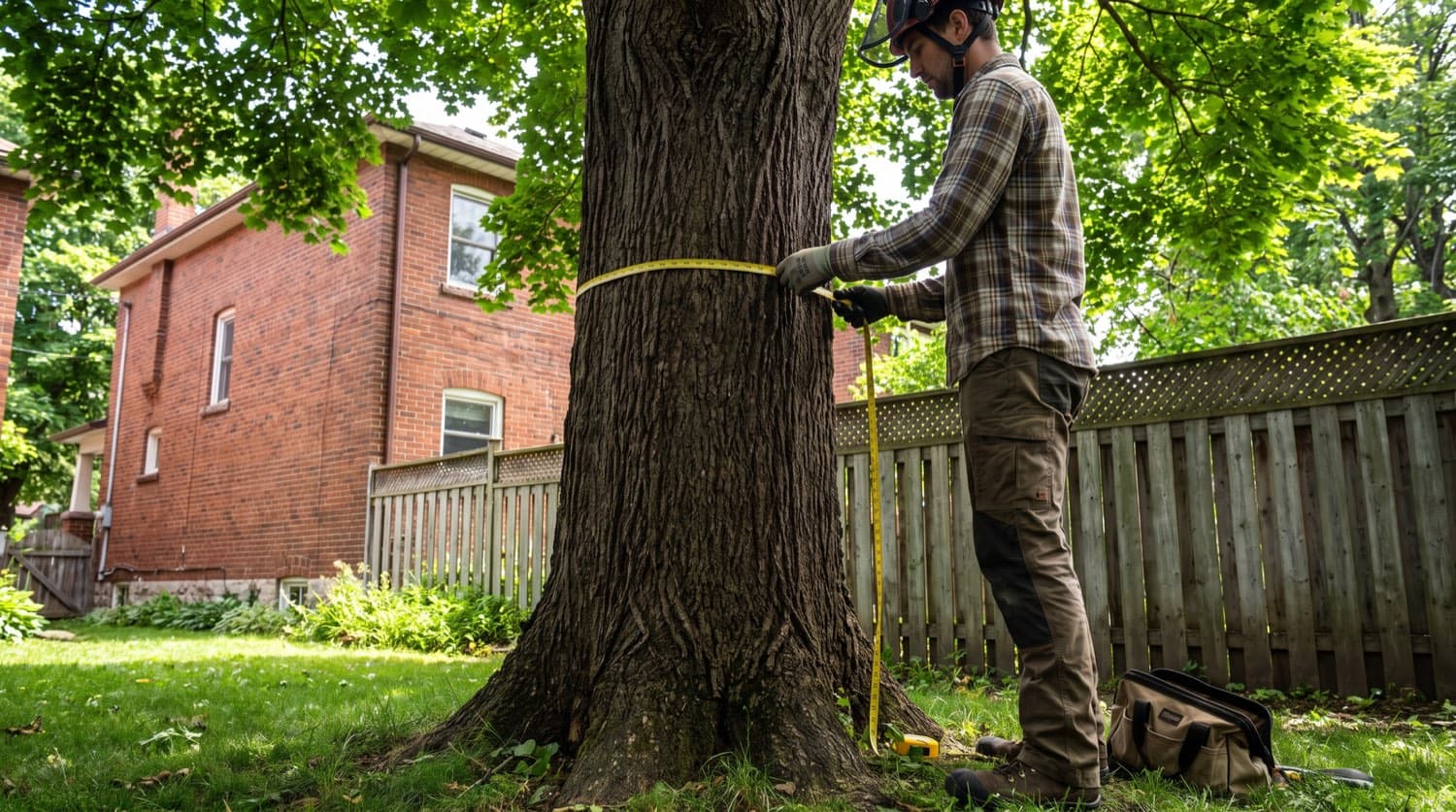
Thirty centimetres of diameter is measured across the trunk at 1.4 metres above the ground, roughly chest height, a point foresters call diameter at breast height, or DBH. Most people cannot eyeball 30 centimetres accurately, so measure it, because guessing wrong is what leads to an illegal cut.
The easiest way is to measure the circumference (the distance all the way around the trunk) at 1.4 m and divide by 3.14. A trunk that measures about 94 centimetres or more around is at or over the 30 cm diameter threshold and is protected. Anything under roughly 94 centimetres around is below it.
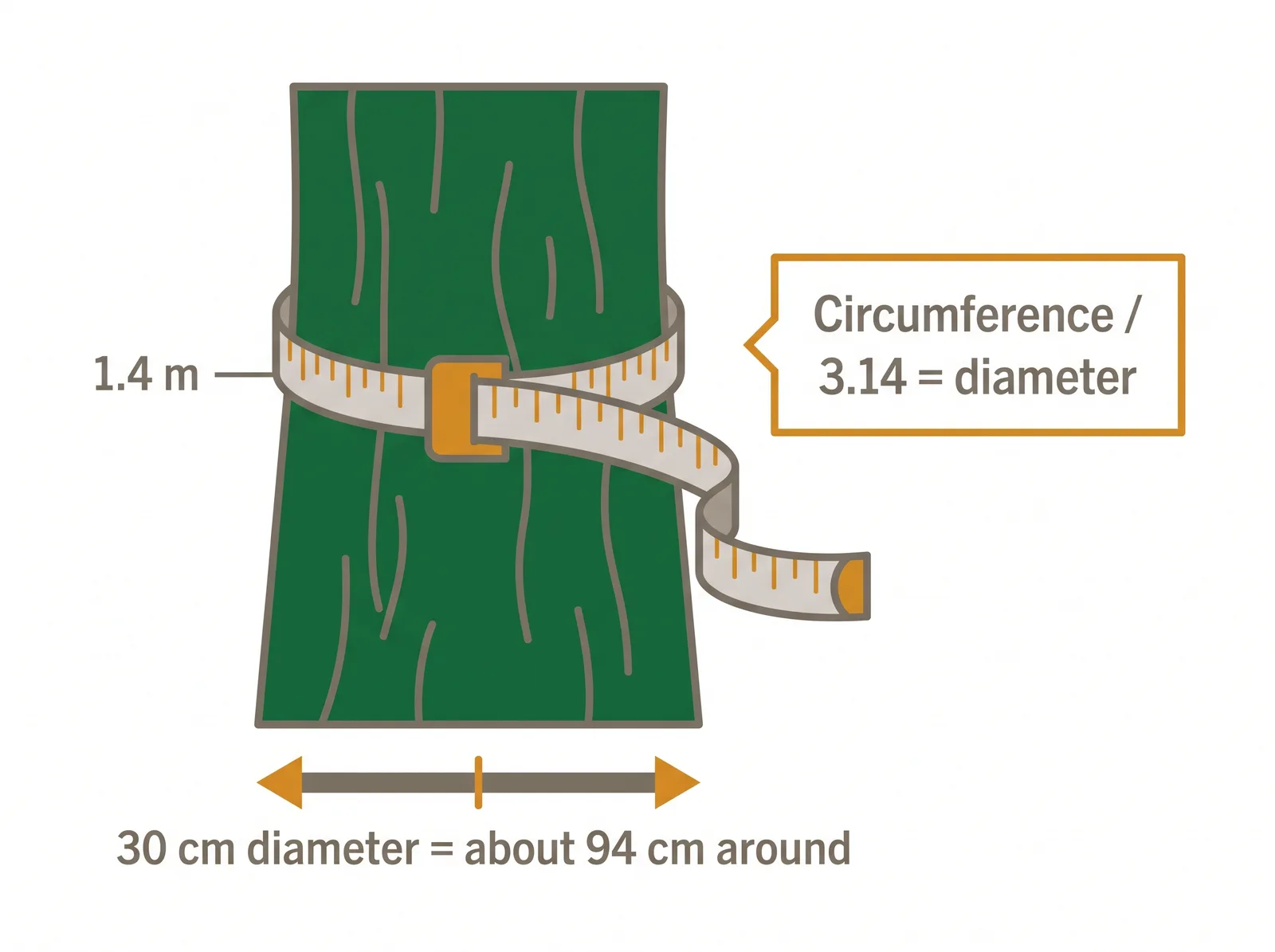
Diameter at breast height (DBH), the width of a tree trunk measured at 1.4 metres above the ground, the standard reference point the City uses to decide whether a private tree is protected. If the trunk splits below 1.4 m, the City has specific rules for measuring multi-stem trees, which is one reason a professional measurement matters on a borderline tree.
Quotable: A private tree in Toronto is protected once its trunk is about 94 centimetres around at chest height, that circumference works out to the 30 cm diameter threshold in the Private Tree Bylaw.
When is a tree exempt from the permit?
The main exemption is a tree that is completely dead. A 100% dead private tree can generally be removed without a private-tree permit. So can normal pruning, as long as it follows good arboricultural practice and does not effectively destroy the tree.
Two situations sit in a grey zone and should never be treated as automatic exemptions. An imminently hazardous tree, one genuinely at risk of failing onto people or property, may be removed, but usually only after Urban Forestry confirms the exception. A terminally diseased or unmaintainable tree may also qualify for an exception. In both cases the safe move is to contact the City first, because a tree you decide is "basically dead" may not meet the bylaw's test, and the penalty for being wrong is steep.
A declining tree that still has life in it is not exempt. Neither is a healthy tree that is simply inconvenient, dropping leaves, shading the garden, or lifting a bit of interlock. Those are permit applications, not exemptions.
How do you apply for a Toronto tree removal permit?
You apply to the City for a permit to injure or remove trees, online or in person at a service counter. The City no longer accepts new tree permit applications by email. The process has a few moving parts, and the arborist report is usually the one that takes planning.
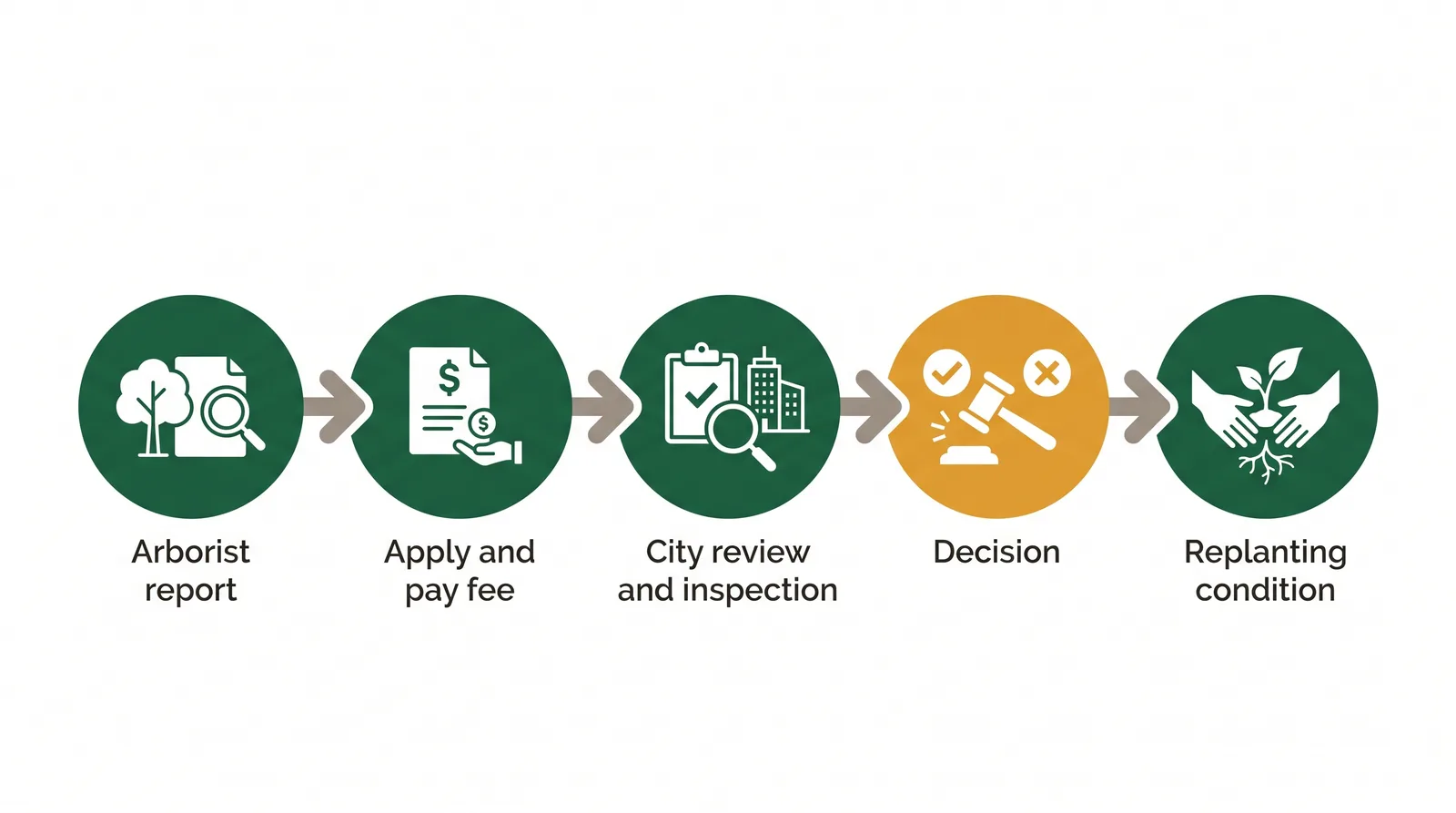
- Commission an arborist report. For a private-tree removal at or above 30 cm, the City requires a report prepared by an arborist covering the tree's species, size, location, condition, structural integrity, disease or infestation, and health. This is a private cost you arrange yourself, and it is often the single biggest line in the process.
- Prepare the supporting plans. Since a 2015 update, the application can require a tree protection plan and a landscaping or replanting plan for the site where the tree stood.
- Submit the application and pay the fee. File online or in person and pay the application fee set on the current form, typically by certified cheque or money order.
- City review and possible inspection. The City reviews the file and may inspect the tree or post notice before deciding. Timelines shift with the season, so apply early rather than the week you want the tree gone.
- Decision and conditions. If approved, the permit can come with conditions, most commonly replacement planting. The City can require you to plant replacement trees or contribute cash-in-lieu, so budget for that on top of removal.
From the data: Removing a protected tree is rarely the whole cost of the project. Between the private arborist report, the permit fee, the removal itself, and a replanting condition, homeowners are usually pricing a small landscaping project, not a single service, which is why comparing quotes on the same defined scope matters, the same lesson in why Toronto landscaping quotes vary 3x.
What happens if you remove a tree without a permit?
The fine is designed to hurt. Under Chapter 813, a person convicted of injuring or removing a protected tree without a permit faces a fine from a $500 minimum up to a $100,000 maximum per tree. If the City proves the offender benefited financially, say, clearing a protected tree to make way for a build, it applies a special or additional fine to reduce or eliminate that gain, on top of the base penalty.
The "per tree" wording matters. Clear three protected trees for a backyard project and each one is a separate offence. The City can also require replacement planting as part of enforcement, so an unpermitted removal can end with a fine and an order to plant new trees you did not want. Between the penalty and the replanting, the permit route is almost always the cheaper path.
Quotable: Removing a protected private tree in Toronto without a permit carries a fine of up to $100,000 per tree, plus an additional fine to strip any financial benefit, and the City can still order replacement planting.
Boundary trees and street trees: the ownership trap
Not every tree near your house is yours to decide on. A tree whose trunk straddles the property line is a shared, or boundary, tree, and removing it needs your neighbour's agreement as well as any City permit, one owner cannot remove a boundary tree unilaterally. Disputes over boundary trees are common and best settled before a saw comes out.
A tree growing on the City boulevard or road allowance in front of your home is a City street tree, protected at any size, and only the City can authorize work on it. That includes the young trees the City plants along residential streets. If you are unsure whether the tree by your driveway is on your land or the City's, confirm with the City before anyone touches it, because the wrong assumption here is what turns a routine removal into a bylaw file. When ownership and permits are clear, a reputable landscaping company in your area can handle the removal and the replanting the permit requires.
The bottom line before you cut
Measure first. If the trunk is about 94 centimetres or more around at chest height, assume it is protected and apply for a permit unless the tree is fully dead. If it is a street tree or sits in a ravine, it is protected regardless of size. The permit takes time and an arborist report, but it costs far less than a $100,000 exposure and a replanting order. When you are planning the project, you can compare current ranges on the landscaping cost page before you hire.
Planning a tree removal or a yard project around a protected tree? Request a quote and compare up to three vetted local pros who can manage the arborist report, the permit, and the replanting. Your contact details only go to the one you pick.