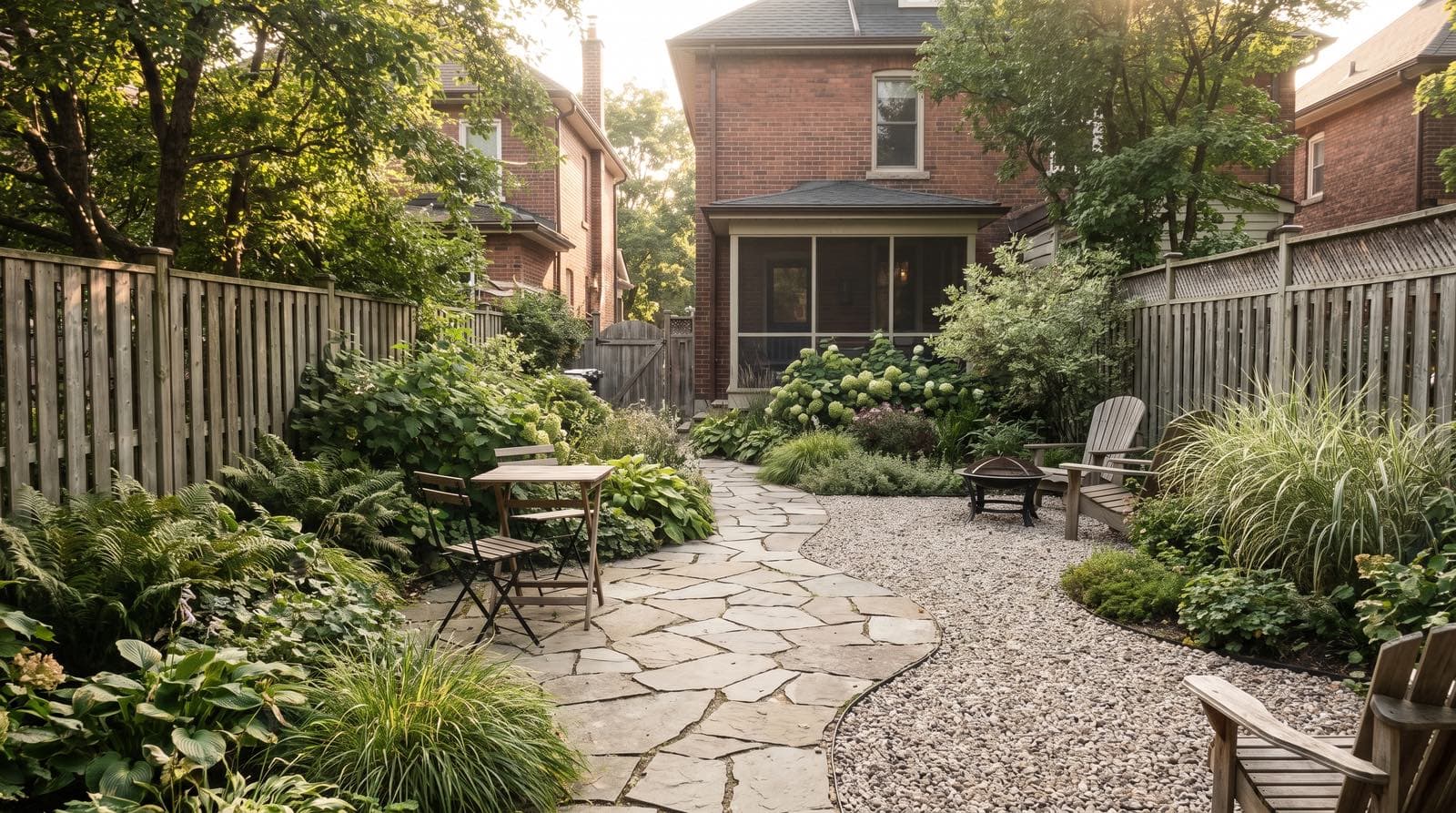
Answer First: You can landscape a backyard without grass using patios and decks, gravel and stone, mulched planting beds, native groundcovers, ornamental gardens, or artificial turf. Pick by your main goal: gravel and hardscape for the least maintenance, groundcover or artificial turf for a green no-mow look, native beds for pollinators. Most no-grass yards blend three or four of these, and the one thing to watch is drainage, since replacing lawn with solid hardscape sheds more water.
A lawn is the default, not the only option, and for a lot of Toronto yards it is the wrong one: too shady, too much work, or too dry to look good. Taking the grass out opens up a yard that is easier to live with, as long as you replace it with a mix rather than a single hard surface.
What can replace a lawn in a Toronto backyard?
Six proven options, each solving a different problem. The best yards combine a few of them rather than committing to one.
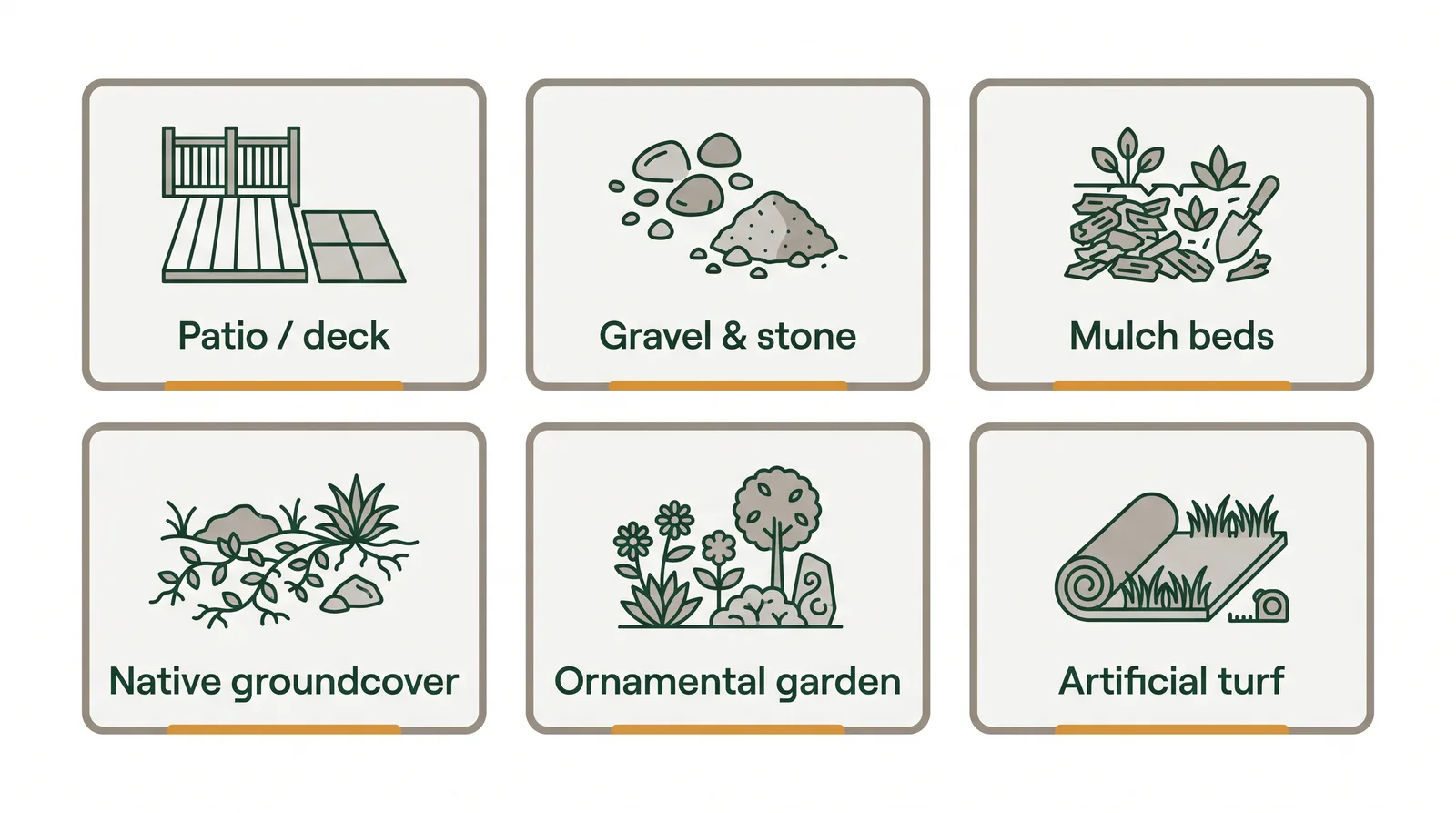
- Patio or deck gives you usable outdoor living space, the part of the yard you actually sit in.
- Gravel or stone is the low-maintenance filler: no mowing, good drainage, and a clean modern look.
- Mulched planting beds cover ground cheaply while feeding shrubs and perennials.
- Native groundcovers stay low and green without mowing, and many handle foot traffic.
- Ornamental or native gardens bring colour and pollinators where lawn did nothing.
- Artificial turf keeps a green, walkable surface with no water or mowing, useful for kids and pets.
The mistake is paving the whole thing. A yard that is all stone feels hard and hot, and it sheds water. The good ones layer a usable hard surface with planted, permeable areas that soften the look and let rain soak in.
Quotable: A no-grass backyard is not one surface, it is a mix. A patio to use, gravel or groundcover to fill, and planted beds to soften and drain, which together need a fraction of a lawn's upkeep.
How do you choose the right no-grass design?
Start from your main goal, then pick the elements that serve it. Four goals cover most yards.
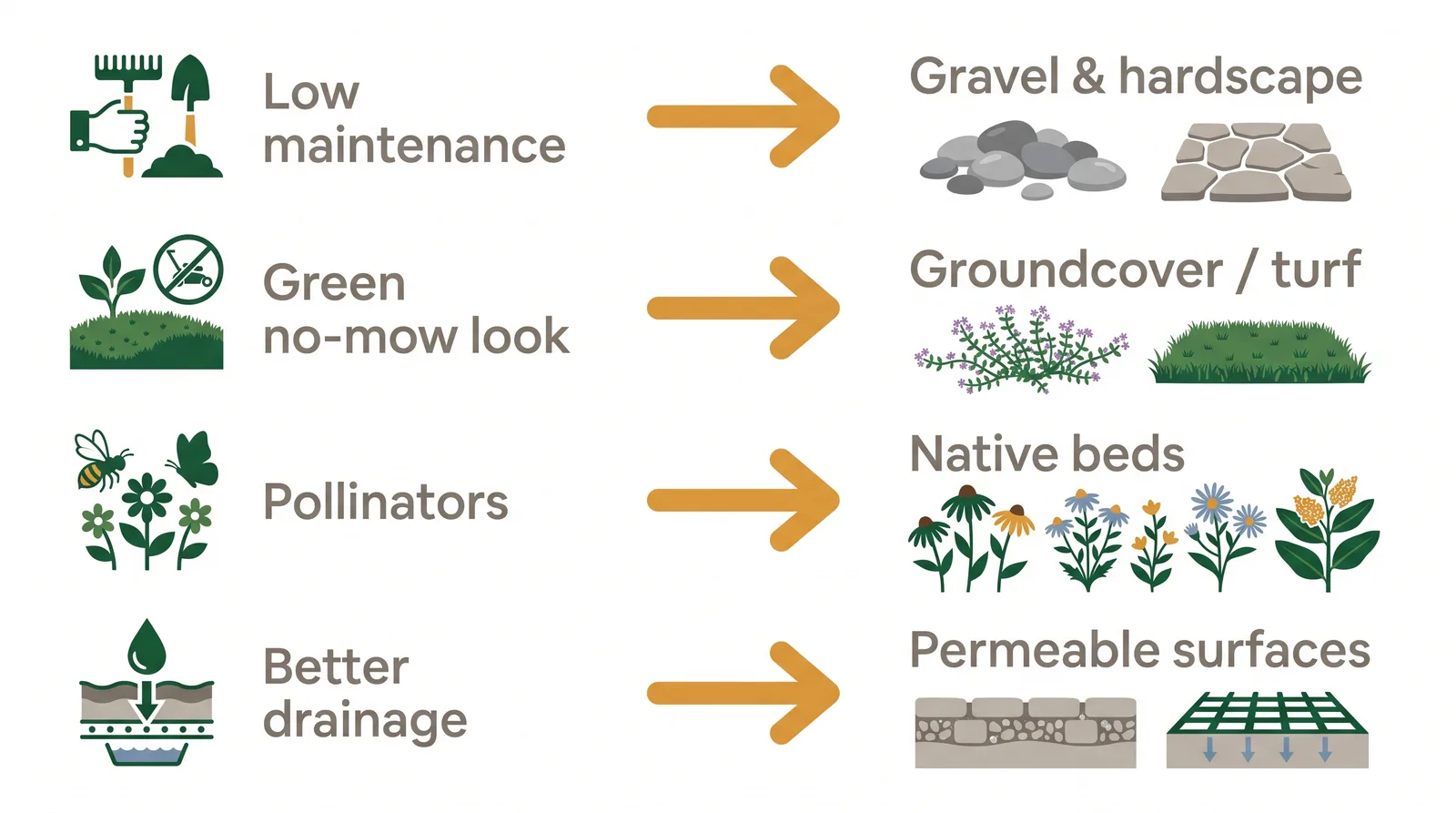
- Lowest maintenance: gravel and hardscape with a few hardy shrubs. Nothing to mow or water.
- A green, no-mow look: artificial turf or a low groundcover like clover, covered in our guide on clover lawns in Ontario.
- Pollinators and colour: native and ornamental planting beds over mulch, which do the ecological work a lawn never did.
- Better drainage: permeable pavers and gravel that let water pass through, explained in our guide on permeable pavers in Toronto.
If cutting water use is part of the appeal, the whole approach has a name, and our guide on xeriscaping in Ontario covers designing a low-water yard that still looks lush. The balance of hard and soft surfaces is the same design question covered in hardscaping versus softscaping.
Quotable: Choose a no-grass yard by your main goal. Low maintenance means gravel and hardscape; a green look means groundcover or artificial turf; pollinators mean native beds. Almost no yard needs just one.
What should Toronto homeowners keep in mind?
Drainage and clay, mostly. The same two conditions that make hardscape tricky here shape a no-grass plan.
Toronto's heavy clay drains slowly, so a yard paved edge to edge with solid surface pushes runoff toward your foundation and your neighbours. Keep part of the yard permeable, with gravel, planted beds, or permeable pavers, and grade hard surfaces to fall away from the house. Where the yard is shaded by mature trees, which is where lawns fail anyway, a shade garden over mulch or a simple stone surface is far easier than fighting for grass.
From the data: YardQuote tracks 650 landscaping companies across the GTA, and 613 carry three or more Google reviews with an average rating of 4.77 (YardQuote tracking, July 2026). Many now design lawn-free yards as a specialty, driven by homeowners tired of watering grass that never thrives in shade or clay, so it is worth asking a pro to plan the mix rather than paving first and planting later.
To compare local designers and current ranges, see the Toronto landscaping cost page or browse landscaping companies in North York and other areas.
Want a backyard that works without a lawn? Request a quote and compare up to three vetted local pros side by side. Your contact details only go to the one you pick.