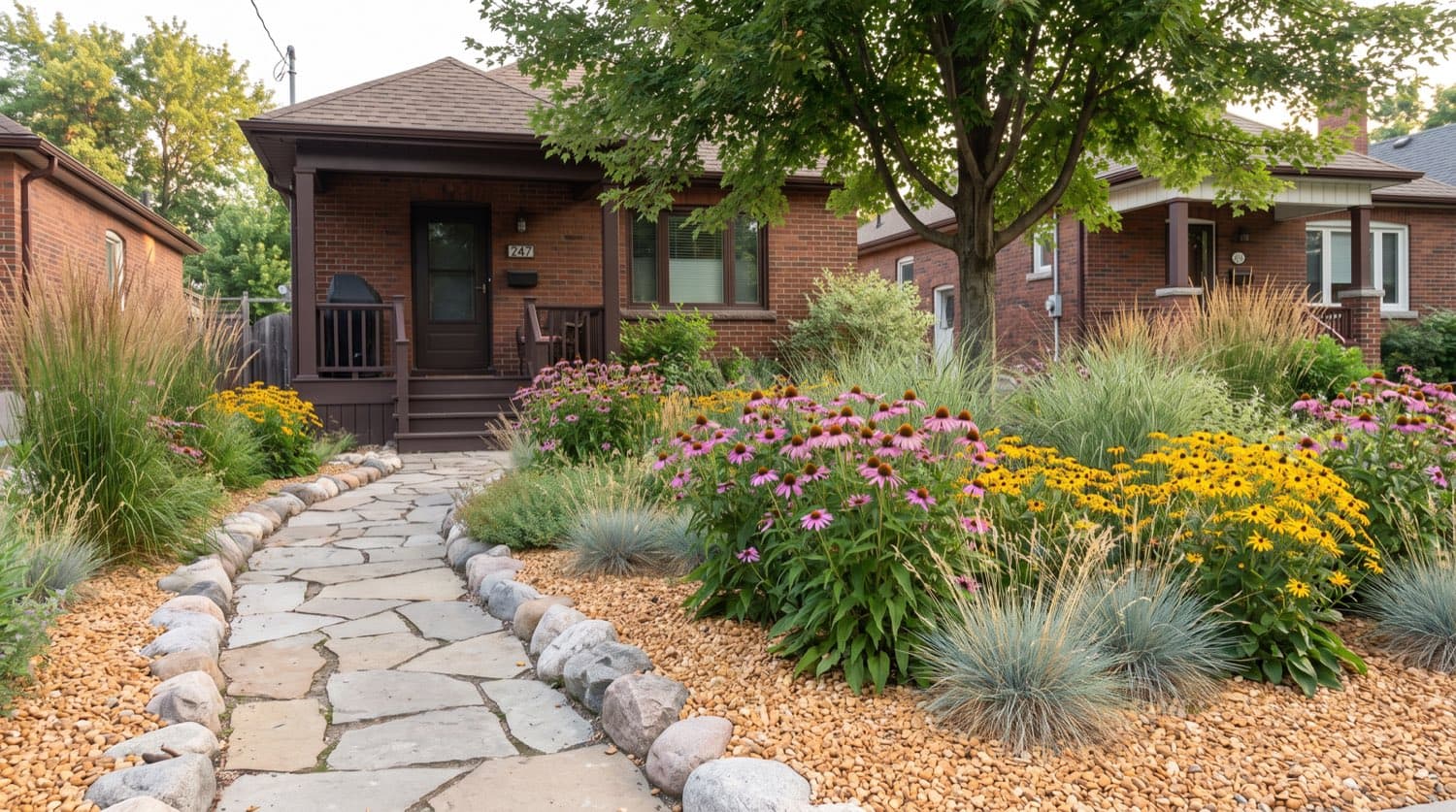
Answer First: Xeriscaping in Ontario means designing a yard to need little supplemental water, using drought-tolerant plants (including hardy natives), efficient irrigation, grouped plantings, and mulch. It is not a cactus-and-gravel desert look; an Ontario xeriscape can be a lush bed of coneflower, black-eyed Susan, and native grasses. It runs on seven principles and, once plants establish over a season or two, largely lives on rainfall.
The word sounds arid, and that scares people off. But xeriscaping was never about rocks and cactus. It is about using water wisely, and in Ontario that looks like a full, colourful native garden that happens to shrug off a dry August.
What does xeriscaping actually mean?
Xeriscaping is landscaping built to need little or no extra watering. The term joins the Greek word "xeros," meaning dry, with "landscape," and it was coined by Denver Water in 1981 to promote water-wise gardening (Denver Water).
The crucial misunderstanding to clear up first: xeriscaping is not a desert aesthetic. Horticulturalists are blunt that it "isn't about making your garden look like a desert" unless that is what you want (Colorado State University). It works in Ontario because our summers still bring dry stretches and watering limits, and it can be as lush as any traditional garden.
Quotable: Xeriscaping means water-wise, not desert. The word joins the Greek "xeros" (dry) with "landscape," and an Ontario xeriscape can be a lush native garden, not gravel and cactus.
The seven principles of xeriscaping
Xeriscaping runs on seven principles that work together, no single one carries it. Applied to an Ontario yard, they turn a thirsty lawn into a garden that mostly lives on rainfall.
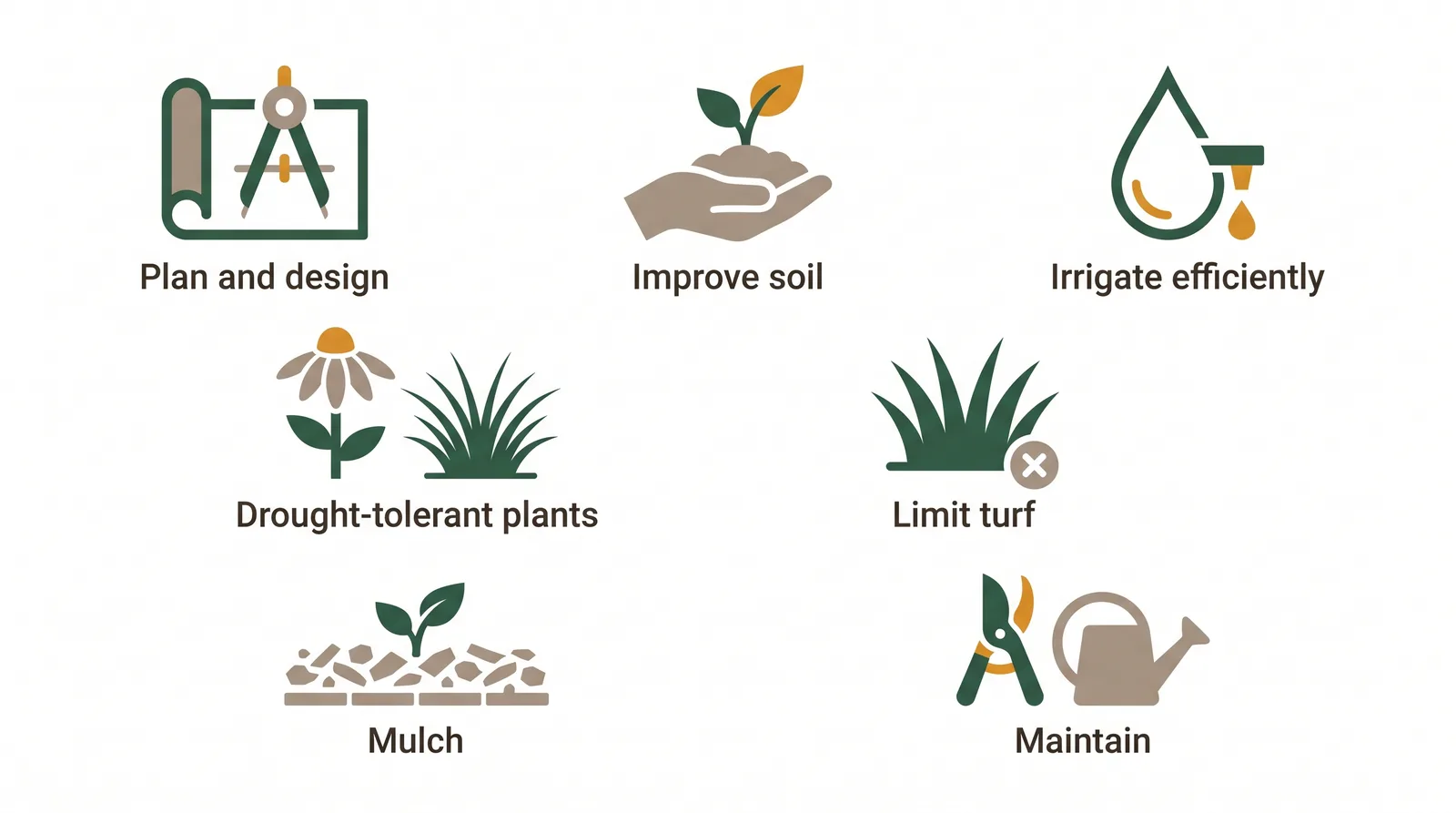
- Plan and design. Map sun, shade, slope, and drainage before planting so water-saving is built in from the start.
- Improve the soil. Work in organic matter so soil holds moisture and roots go deep.
- Irrigate efficiently. Water deeply and infrequently to build deep roots; drip irrigation limits evaporation.
- Use drought-tolerant plants. Choose species, especially Ontario natives, that thrive on little water.
- Limit turfgrass. Keep lawn only where it is used, and plant the rest.
- Use mulch. A mulch layer holds soil moisture and suppresses weeds.
- Maintain appropriately. Light, seasonal care keeps a water-wise yard working.
Group plants by thirst: hydrozoning
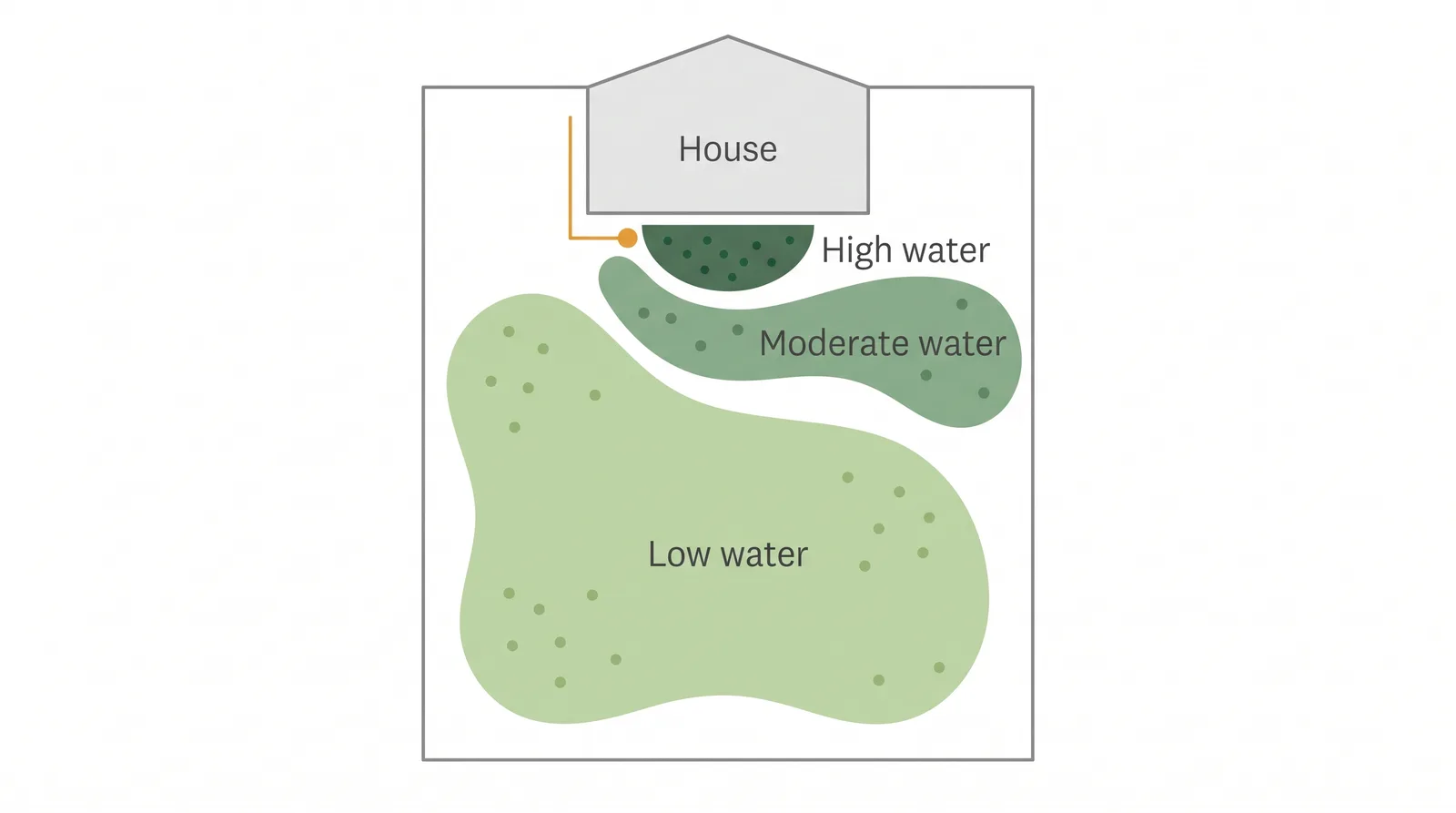
The principle that saves the most water is also the least known. Hydrozoning means grouping plants by how much water they need, so you water each zone to its actual demand instead of soaking the whole yard.
Hydrozoning — arranging a landscape so plants with similar water needs are grouped together, letting drought-tolerant beds run on rainfall while any thirstier plants share a single, separately watered zone.
In practice, that means a dry, sunny bed of coneflower and native grasses gets almost no supplemental water, while a small zone of thirstier plants near the house is watered on its own. Without hydrozoning, one thirsty corner drags the whole yard onto a watering schedule it does not need.
The best plants for an Ontario xeriscape
Ontario-hardy, drought-tolerant plants make the whole approach work, and natives are the strongest choice because they evolved with local soils and rainfall. Once established, they run on what the sky provides.
- Perennials: purple coneflower, black-eyed Susan (native), yarrow, lavender, sedum (native), wild bergamot (native), butterflyweed (native).
- Native grasses: little bluestem, switchgrass, big bluestem, Indian grass, for texture and movement with a single spring cutback.
- Groundcovers: creeping thyme, moss phlox, and native cranesbill to cover ground and crowd out weeds.
The one catch is patience. Even drought-tolerant plants need supplemental watering through their first season or two; after a few growing seasons they generally survive on natural rainfall alone (Toronto Master Gardeners).
From the data: YardQuote tracks 650 landscaping companies across the GTA, and 613 carry three or more Google reviews at an average of 4.77 stars (July 2026). Native and water-wise plantings are a growing request, so finding a well-reviewed crew to design and install one is straightforward.
Getting started on a Toronto lot
Start small and let the yard convert in stages. Pick the sunniest, driest, hardest-to-water spot, often a south-facing front yard or a strip that never grew good grass, and make it your first xeriscape bed. Improve the soil, plant Ontario natives grouped by water need, mulch well, and water deeply while they establish.
From there, the same logic spreads across the property, and it pairs naturally with the rock and gravel ideas for paths and drainage and the broader low-maintenance landscaping approach. To plan and price a conversion, see the landscaping cost page and the landscape design cost page, or browse landscaping in North York.
Want a drought-proof yard that still looks full? Request a quote and compare up to three vetted local pros side by side. Your contact details only go to the one you pick.