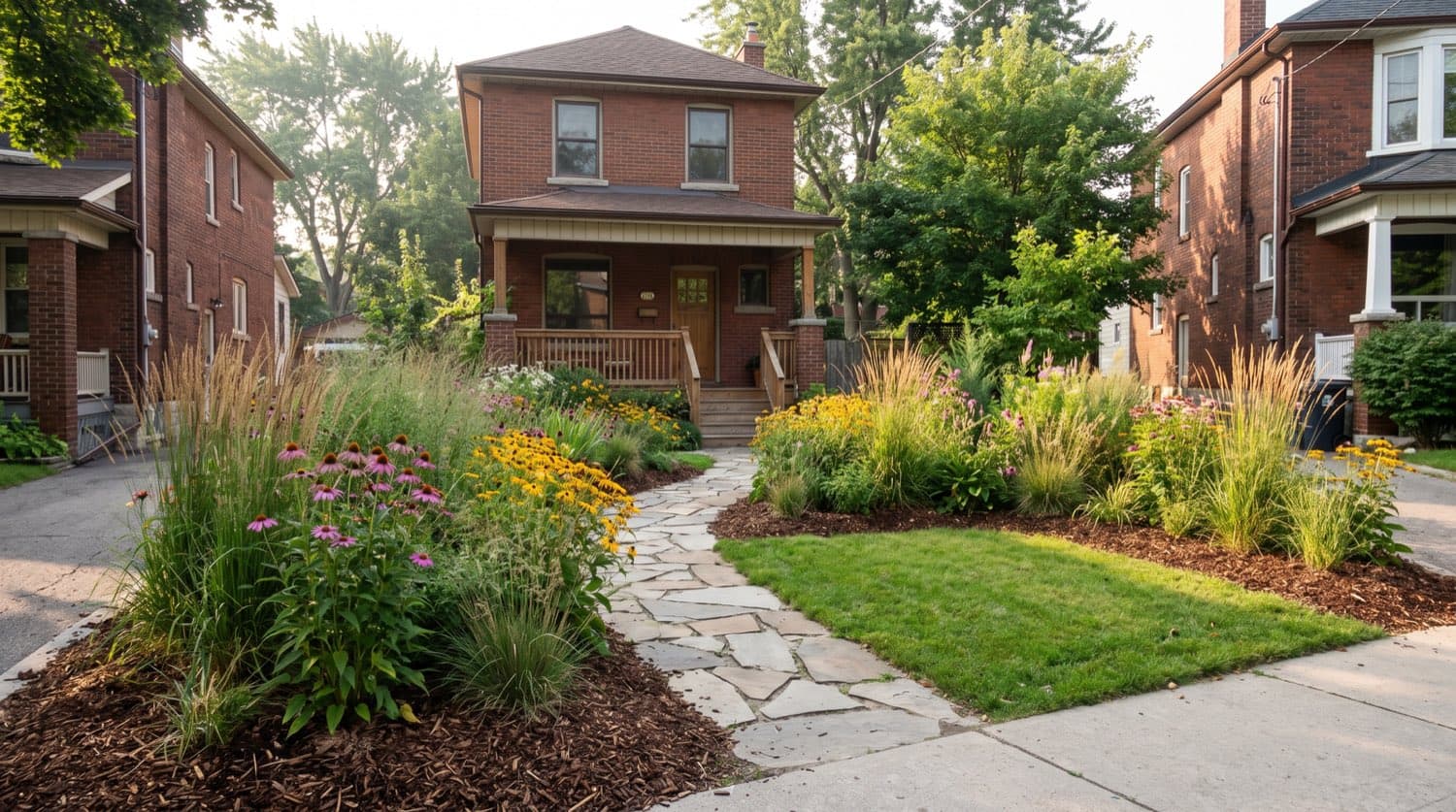
Answer First: The most effective low-maintenance landscaping for Ontario shrinks the lawn and replaces it with beds of native, drought-tolerant plants and mulch. Grass is the highest-upkeep part of any yard, so trading much of it for Ontario-hardy perennials and grasses, chosen by the "right plant, right place" rule, cuts watering, mowing, and weeding the most. Native plantings need care for a season or two to establish, then largely run on rainfall.
Low-maintenance does not mean low-effort forever, and it does not mean a gravel lot with three sad shrubs. It means designing a yard that mostly takes care of itself once it settles in, and in Ontario that starts with rethinking the lawn.
Why the lawn is most of your yard work
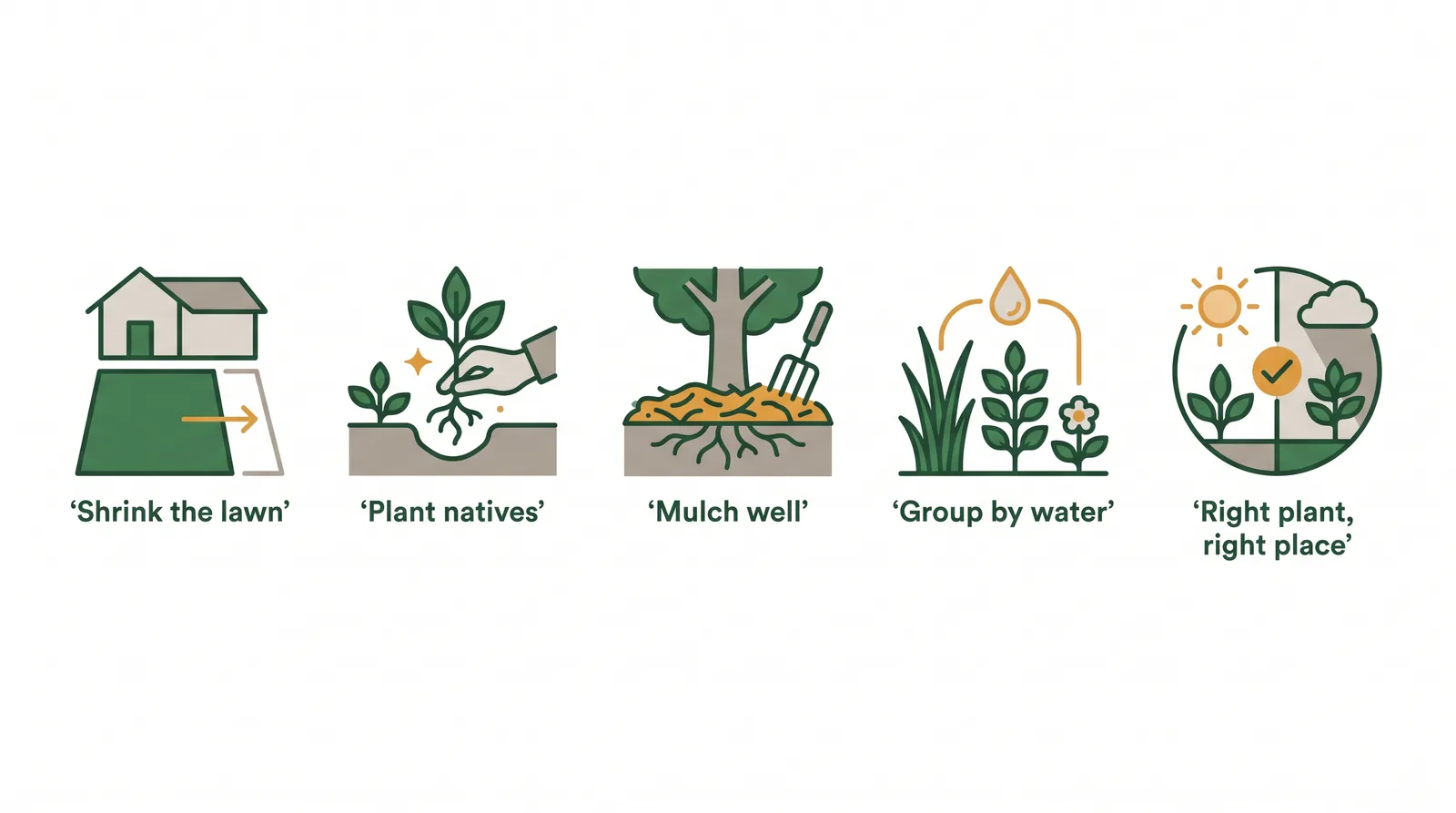
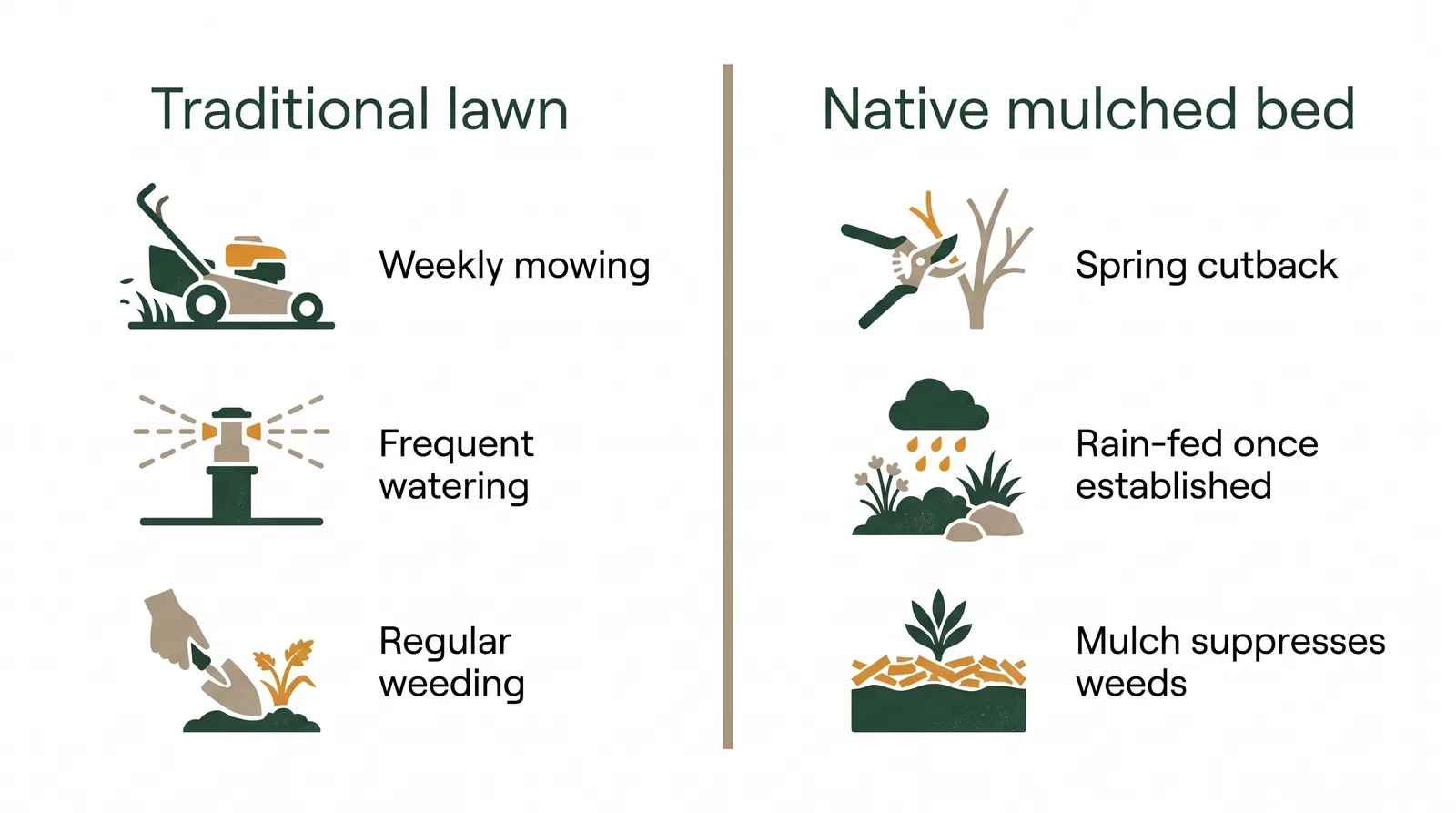
Grass is the single highest-maintenance surface in a yard. Mowing, watering, feeding, aerating, and weeding a lawn is most of what a homeowner does outdoors, so the biggest maintenance cut is simply having less of it.
This is not an argument for zero lawn. A patch where kids and dogs actually play earns its keep. But the strips along fences, the deep shade under a maple, the steep slope no mower likes, and the narrow side yard that never grew good grass anyway are all upkeep with no payoff. Convert those first, and the weekly routine shrinks fast.
Quotable: Grass is the highest-upkeep surface in a yard. The fastest way to cut landscaping work is to keep lawn only where you use it and plant the rest.
Right plant, right place: the rule that saves the most work
The most reliable way to reduce maintenance is to stop fighting your site. "Right plant, right place" means choosing species suited to your yard's light and soil rather than amending the ground to keep the wrong plant alive (Toronto Master Gardeners).
A sun-loving coneflower in full sun thrives on neglect; the same plant in dry shade struggles and demands attention. Read your conditions first, hot and dry, damp and shady, windy and exposed, then pick plants that already want to live there. This one habit prevents most of the replacing, babying, and troubleshooting that makes a yard feel like work.
The best low-maintenance plants for Ontario
Ontario-hardy, drought-tolerant plants are the backbone of a low-upkeep yard because they come back yearly and, once established, largely fend for themselves. Native species are especially well-adapted to local soils and climate.
- Perennials: purple coneflower, black-eyed Susan (native), yarrow, wild bergamot (native), butterflyweed (native), goldenrod (native), sedum (native).
- Groundcovers: creeping thyme, moss phlox, wild ginger (native), cranesbill (native), for filling space and crowding out weeds.
- Native grasses: little bluestem, switchgrass, big bluestem, and Indian grass, which add height and movement and stay tidy with a single spring cutback.
Establishment period — the first season or two after planting, when even drought-tolerant plants need supplemental watering in dry spells; after a few growing seasons they can usually survive on natural rainfall alone.
From the data: YardQuote tracks 650 landscaping companies across the GTA, and 613 carry three or more Google reviews at an average of 4.77 stars (July 2026). Lawn-reduction and native planting projects are increasingly common requests, so a well-reviewed crew for the conversion is easy to line up.
Mulch: the low-effort multiplier
A good mulch layer does two jobs that otherwise eat your weekends: it suppresses weeds and holds soil moisture. Mulching well is the difference between a bed that needs constant weeding and one that mostly minds itself.
Use the mulch that fits the spot. Wood chips or chopped leaves suit shaded beds and break down to feed the soil, while gravel mulch works best over drought-tolerant plants in sunny rock gardens (Toronto Master Gardeners). Either way, mulch is what keeps a low-maintenance bed actually low-maintenance.
Making it look finished, not bare
The bare, unfinished look that gives low-maintenance yards a bad name comes from thin planting, not from less lawn. A few plants dotted across mulch reads as sparse; the fix is density and layers.
Plant in layers of height, low groundcovers, mid perennials, taller grasses and shrubs, so beds fill in and shade out weeds. Keep clean edges between bed and path, and let plants knit together rather than sitting as islands. A densely planted native bed looks lush and intentional while asking for far less than the lawn it replaced. The same principles carry straight into xeriscaping in Ontario for the driest sites, and pair well with the rock and gravel ideas that handle paths and drainage.
To plan and price a conversion, see the landscaping cost page and the landscape design cost page, or browse landscaping in Etobicoke.
Ready to trade some lawn for a yard that mostly minds itself? Request a quote and compare up to three vetted local pros side by side. Your contact details only go to the one you pick.