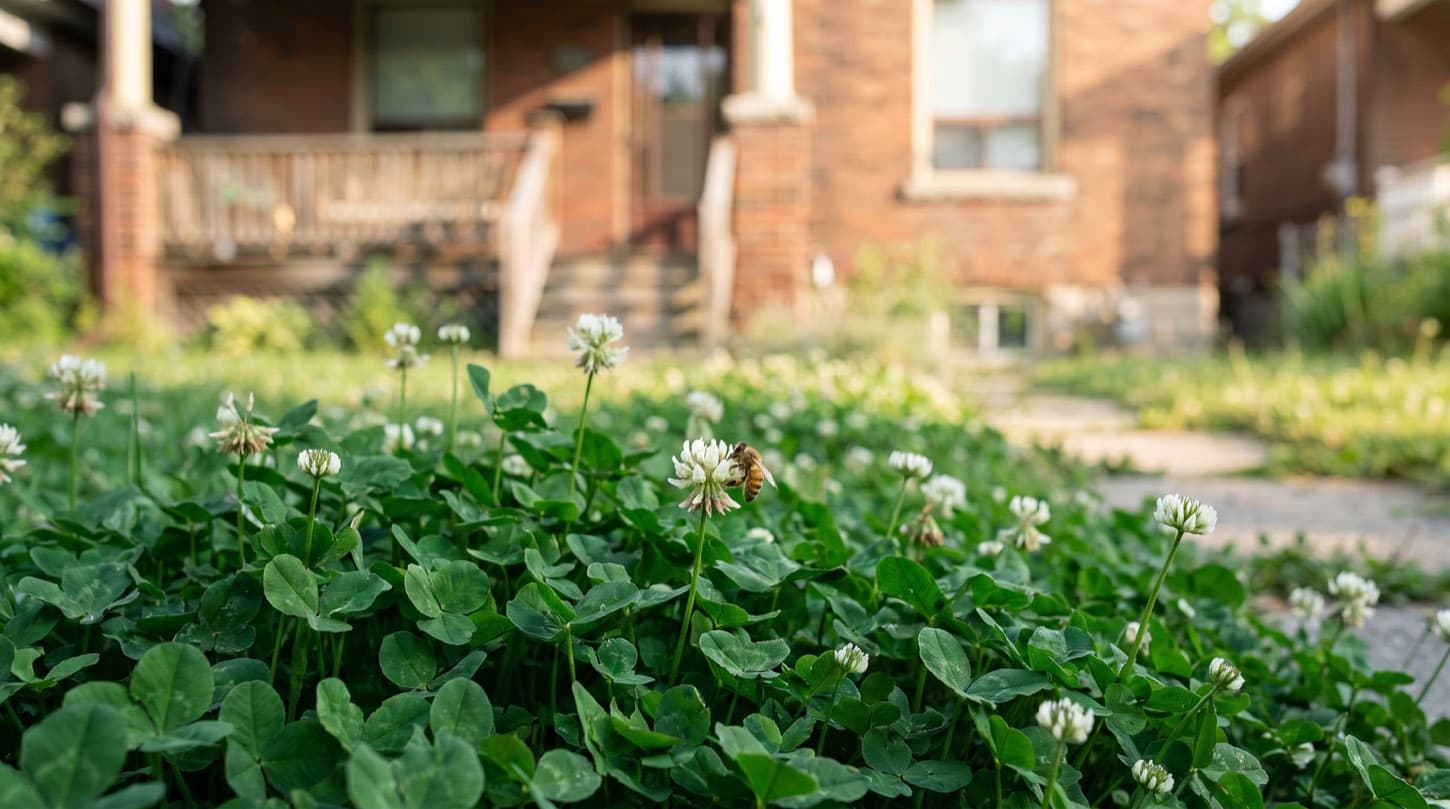
Answer First: Clover lawns suit Ontario well. White clover fixes its own nitrogen from the air, so it needs little or no fertilizer; it's drought-tolerant and stays green through July heat when regular grass goes dormant; and it thrives with the low-input, low-spray approach Ontario's pesticide ban effectively requires. The real trade-offs are bees — the flowers attract them, a sting risk for bare feet — and durability, since clover doesn't take hard play-surface wear. It works best mixed into a fescue lawn, not as a pure stand.
For decades, clover in a lawn meant you'd failed. Homeowners sprayed it out as a weed. Then Ontario banned the spray, the water bills for keeping grass green climbed, and clover quietly turned from problem to feature. Here's the honest ledger on whether it belongs in your yard.
Why is clover suddenly a good idea in Ontario?
Two things changed at once: the rules and the priorities. The rule change is the big one. The broadleaf herbicide 2,4-D that homeowners once used to wipe clover out of a lawn is now banned for cosmetic use in Ontario. You can't easily kill clover selectively anymore, so fighting it became a losing game.
At the same time, the things clover does well — feeding itself, staying green in drought, needing little care — became exactly what people want from a lower-input lawn. The result is that clover went from the thing you spray to the thing you seed on purpose.
Quotable: The 2,4-D that homeowners once used to kill clover as a weed is banned for cosmetic use in Ontario. With no easy way to remove it, and every reason to want a self-feeding lawn, Ontarians increasingly plant clover on purpose.
What are the actual benefits of a clover lawn?
They're real, and they're why the trend has legs. The headline is self-fertilization.
Nitrogen fixation — the process by which a legume like clover, working with Rhizobium bacteria on its roots, pulls nitrogen gas from the air and converts it into a form plants can use, effectively fertilizing itself and neighbouring grass for free.
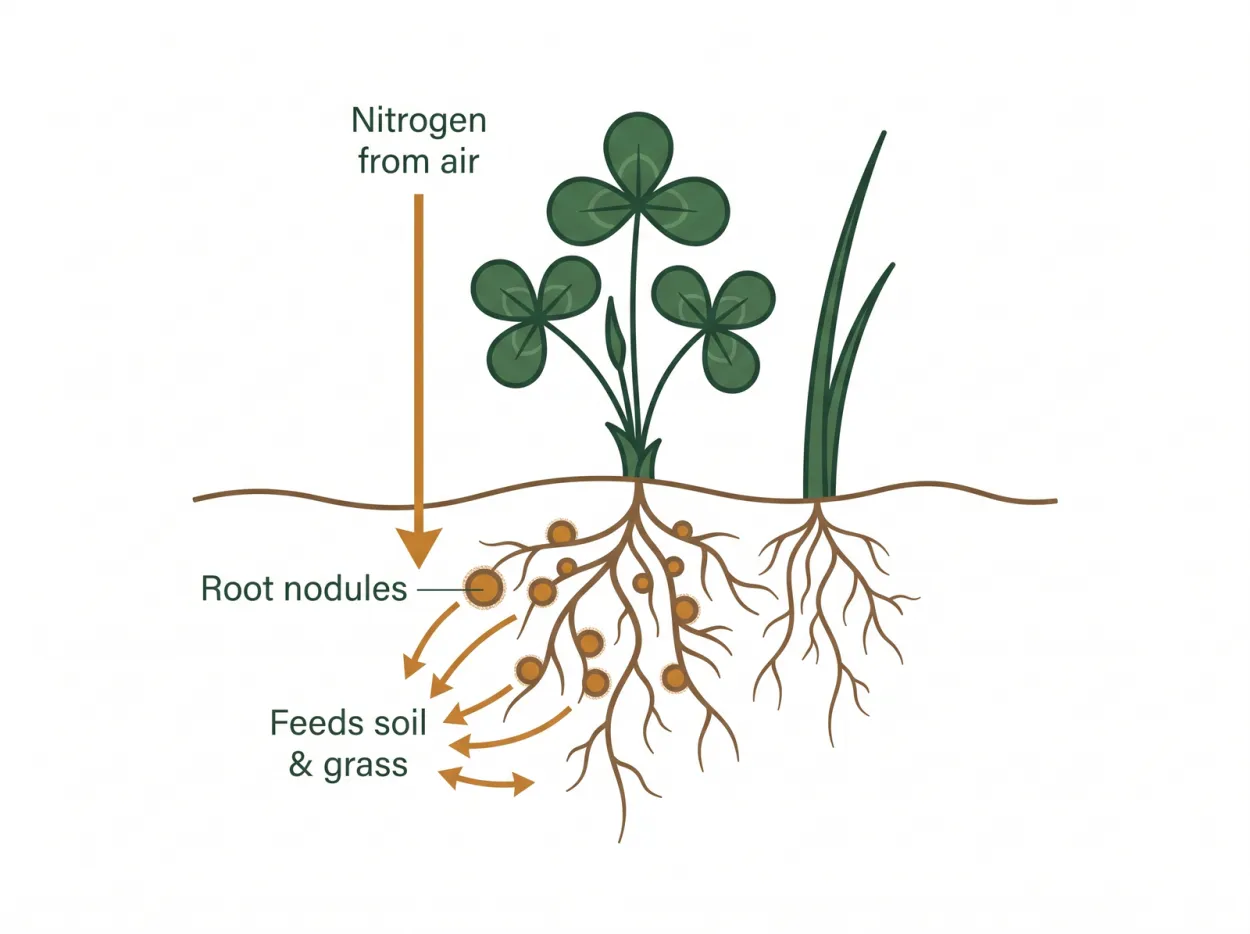
Beyond the free nitrogen, the benefits stack up:
- Drought tolerance. Clover's deeper roots keep it green through a Toronto July heatwave, when unwatered grass goes brown and dormant.
- Less fertilizer and less mowing. With nitrogen handled and slower vertical growth, a clover lawn is genuinely lower-input. Penn State notes white clover's value in low-maintenance lawns for this reason.
- Pollinator support. The flowers feed bees through the season; the University of Minnesota builds white clover into its bee lawn seed mixes alongside fine fescue for exactly this.
- Natural weed suppression. A dense clover-grass lawn crowds out other weeds, which matters more now that herbicides are off the table.
What are the real downsides?
Two of them are genuine, and worth being honest about before you seed.
- Bees. The flowers that feed pollinators also mean bees at ankle height. For a household that goes barefoot or has kids and pets on the lawn, that's a real sting risk. Mowing off the blooms reduces it, at the cost of the pollinator benefit.
- Durability and looks. Clover doesn't take heavy foot traffic or backyard sports as well as turf, it can look uneven, and it spreads into flower beds. A pure clover lawn is softer and less hard-wearing than a grass one.
The usual fix for both is not going all-clover. Mixed into a fine-fescue lawn at a modest rate, clover delivers the nitrogen and drought benefits while the grass carries the wear — a blend that suits Ontario yards better than a pure stand.
Microclover or white clover — which should I plant?
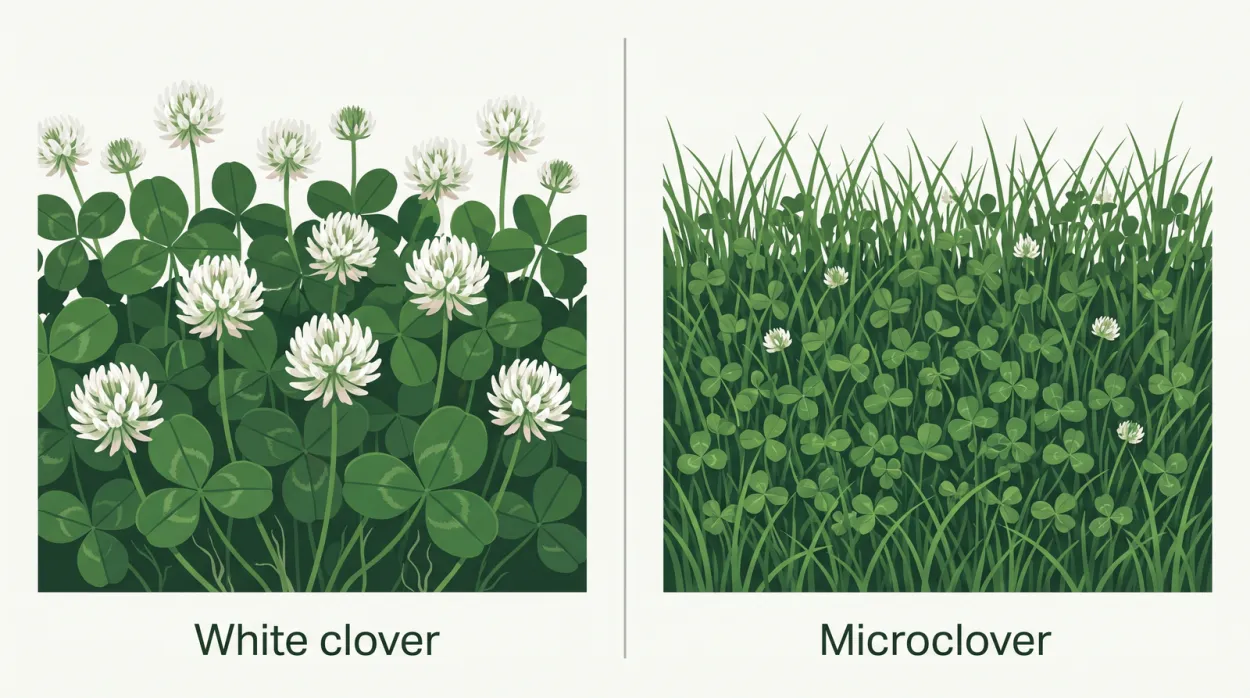
It's a look-versus-value choice. Standard Dutch white clover is cheaper, fixes more nitrogen, and flowers more, but has bigger leaves and a coarser, more obviously "clover" appearance. Microclover has smaller leaves, grows lower, and blends more evenly into grass for a tidier lawn — though it needs regular mowing to stay small and can revert toward regular white clover after a few years.
For most Toronto homeowners wanting a low-input lawn that still reads as a lawn, microclover mixed into fescue is the sweet spot. If pollinators and maximum free nitrogen are the goal, plain white clover wins.
Clover pairs naturally with the other low-spray lawn choices Ontario's rules push you toward. See our guide to shade grass that actually grows for the tree-shaded parts of the yard, and our take on wild violets, another plant you now can't easily spray. You can compare local rates on the lawn care cost page, weigh it against a traditional sod lawn's cost, or browse lawn care companies near you.
Thinking about switching to a clover or clover-grass lawn? Request a quote and compare up to three vetted local pros side by side — your contact details only go to the one you pick.