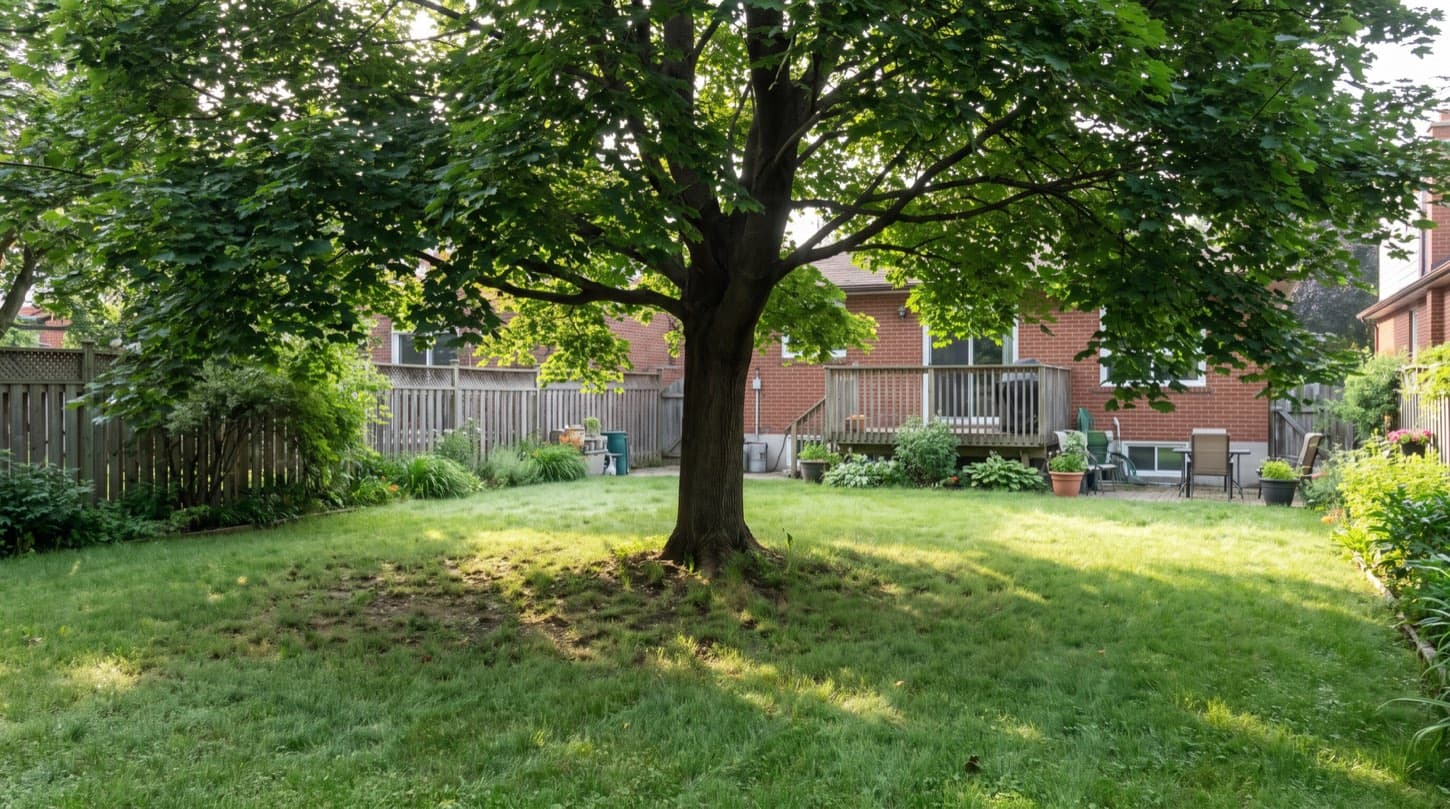
Answer First: The best grass for a shady Toronto yard is fine fescue — hard, chewings, or creeping red fescue — which tolerates more shade than any other cool-season grass and also handles the dry soil under mature trees. But there's a hard floor: turf needs at least about four hours of direct sun or roughly 50% dappled light a day. Below that, no grass will hold, and a ground cover is the honest fix. The Kentucky bluegrass in most cheap seed mixes is a sun grass and will keep dying in the shade.
Every Toronto street has that one backyard corner under the maple where grass simply refuses to grow. You reseed it every May, it comes up thin, and by August it's bare dirt again. The problem usually isn't your effort or the seed brand. It's that you're planting a sun grass in a shade spot.
What is the best grass for shade in Toronto?
Fine fescue, and it isn't close. The fine fescues — a group covering hard fescue, chewings fescue, and creeping red fescue — are the most shade-tolerant cool-season turfgrasses, and they double as low-water, low-maintenance grasses. That combination is exactly what a Toronto shade lawn needs, because Toronto shade is almost always dry shade.
Fine fescue — a group of narrow-bladed cool-season grasses (hard, chewings, and creeping red fescue) known for tolerating shade, drought, and poor soil with little fertilizer. It's the grass in most "shade" and "dense shade" seed blends worth buying.
The mistake to avoid is the default. Kentucky bluegrass is the grass in most bargain seed mixes and in most sod, and it needs full sun. Lay it or seed it under a tree and it thins, weakens, and dies, which is the exact cycle most homeowners are stuck in. Read the seed label: for a shady spot you want a blend that is mostly fine fescue, not mostly bluegrass.
Quotable: Kentucky bluegrass, the grass in most cheap seed mixes and most sod, is a full-sun grass. Planting it under a Toronto maple is why the same shady patch dies every single year. Fine fescue is the fix.
How much sun does grass actually need?
There's a threshold, and it's worth measuring before you spend another dollar on seed. NC State turf guidance is specific: if an area gets less than four hours of sunlight per day, or less than 50% open sunlight, it is much too shady for turfgrass to grow well.
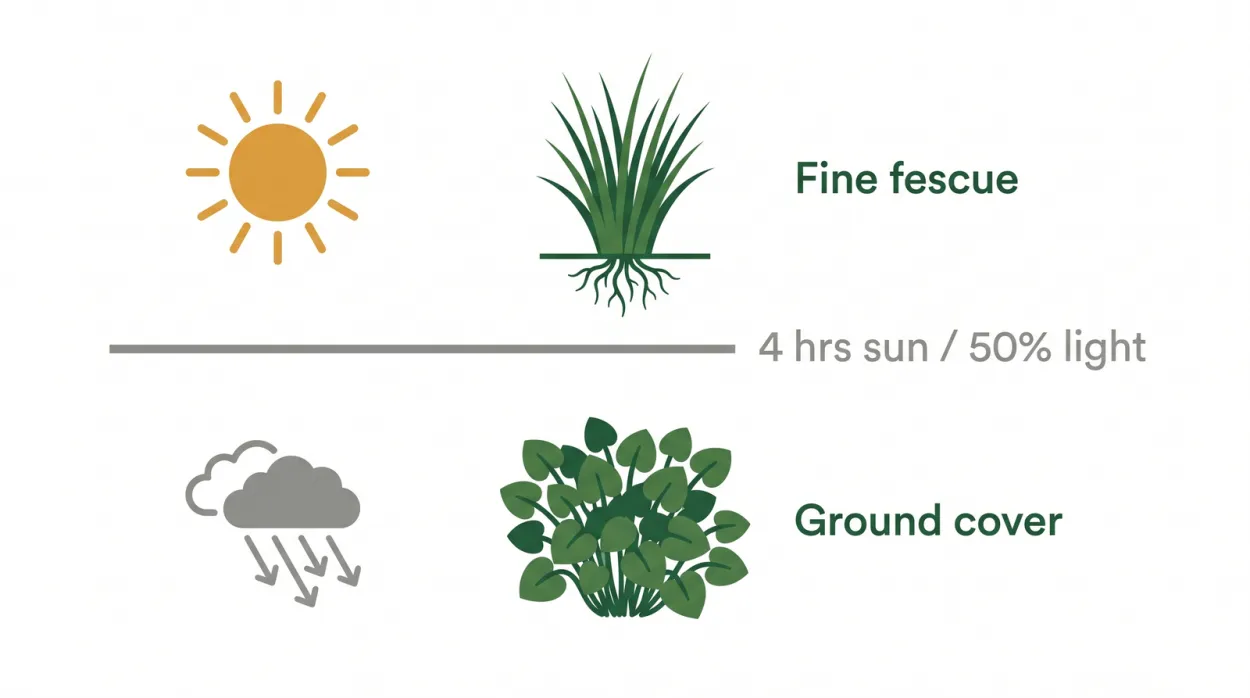
So the first job is honest measurement. Watch the spot across a summer day and count the hours it gets real, direct sun. Dappled light filtering through a high canopy counts for something; deep, all-day shade against a north wall or under a dense maple does not. If you're above the line, seed fine fescue. If you're below it, no grass will save that spot, and you're better off with a ground cover.
Why does grass die under a Toronto maple specifically?
Because a maple takes both things grass needs. The light problem is obvious. The water problem is the one people miss: a mature Norway or silver maple, both everywhere in Toronto's older neighbourhoods, fills the top few inches of soil with a dense mat of fibrous roots that drink the rain before your grass roots get any. That's dry shade — low light and low moisture together — and it's the hardest lawn condition there is.
Fine fescue is the one grass that shrugs off both at once, which is why it, and not a "miracle" bluegrass mix, is the right call. The University of Minnesota Extension notes fine fescue's value in low-input, low-water settings for exactly this reason.
From the data: Of the 249 lawn-care and 113 sod-installation companies YardQuote tracks across the GTA, the recurring spring complaint is a shady patch that "won't take sod." Usually it's bluegrass sod laid in a fescue spot. The fix is matching the grass to the light, not buying more sod.
What if grass just won't grow there?
Then plant something that will. Below the four-hour line, a shade-tolerant ground cover looks far better than a thin, muddy, half-dead lawn, and it stops you rebuying seed every spring.
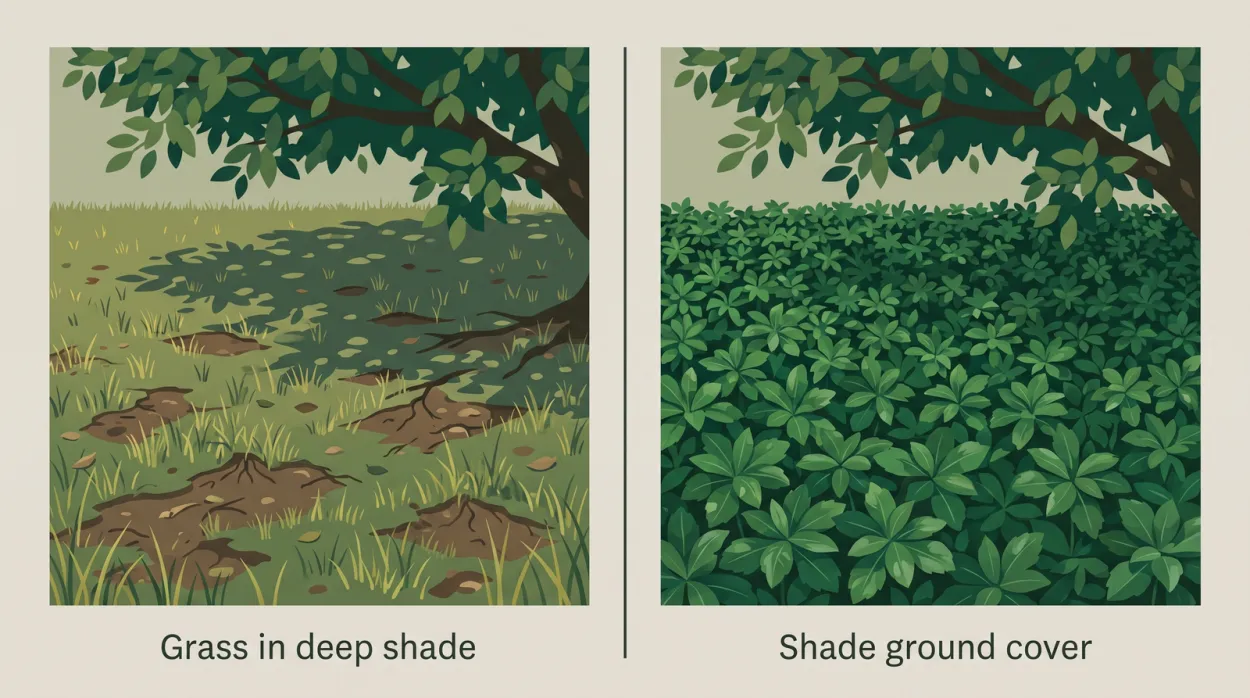
Ground covers that work in Toronto shade:
- Pachysandra — dense, evergreen, and the classic under-tree carpet.
- Ajuga (bugleweed) — low, spreading, with blue spring flowers.
- Hostas — for a leafier, planted-bed look in part shade.
- Wild ginger — a native option that handles deep shade and pairs well with existing trees.
For the parts of your yard that do get enough light, a fine-fescue overseed is the move. Because most sod is sun-grown bluegrass, seeding usually beats sodding in shade — see how the numbers compare on the sod installation cost page and our breakdown of sod cost per square foot. If part of your shade problem is a lawn full of other survivors like violets or clover, our guides on wild violets and clover lawns cover whether to keep or fight them. You can also compare local rates on the lawn care cost page.
Not sure whether your shady yard needs fescue or a ground cover? Request a quote and compare up to three vetted local pros side by side — your contact details only go to the one you pick.