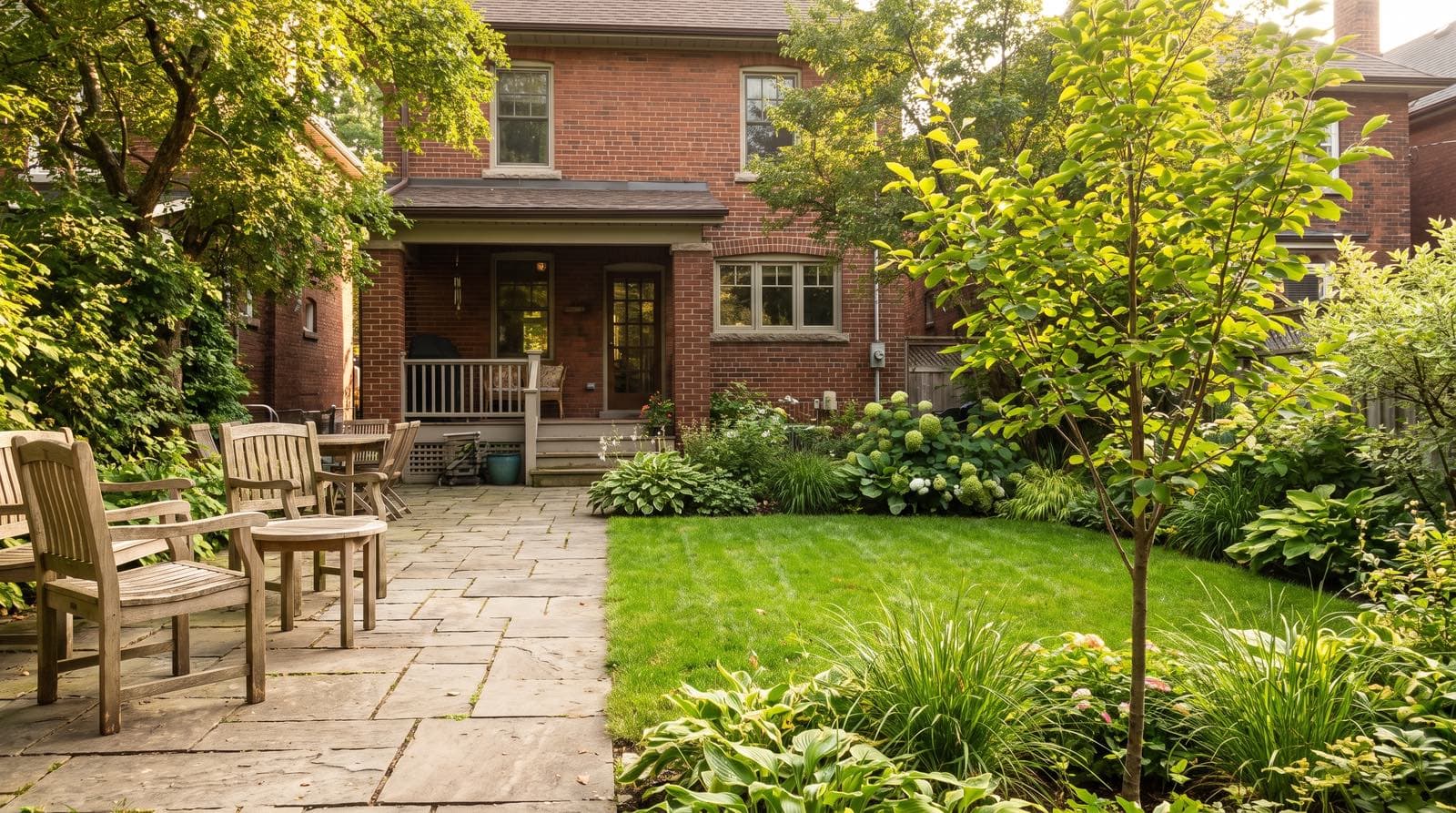
Answer First: Hardscape is the built, non-living part of a yard (patios, walls, walkways, pavers) and softscape is the living part (lawn, plants, trees, soil). A balanced residential yard runs roughly 40 to 60 percent each, with a common default around 60 percent softscape to 40 percent hardscape. Too much hardscape looks sterile and worsens drainage; too much softscape means endless upkeep. The right ratio depends on how you use the space, and in Toronto, on keeping enough soft ground for water to drain.
A backyard is a balance of two ingredients, and most yards get the mix wrong in one direction. Pave too much and you have a hot, sterile slab; plant too much and you have a weekend job that never ends. Getting the ratio right is the difference between a yard you use and a yard you maintain.
What are hardscaping and softscaping?
They are the two halves of every landscape: the built part and the living part.
Hardscape is the non-living structure of a yard: patios, decks, retaining walls, walkways, steps, and anything built from pavers, stone, concrete, or wood. It gives you usable, durable, low-maintenance surface and defines the shape of the space.
Softscape is everything alive: the lawn, garden beds, shrubs, trees, groundcovers, and the soil they grow in. It adds colour, texture, and shade, softens the hard edges, and lets rainwater soak into the ground.
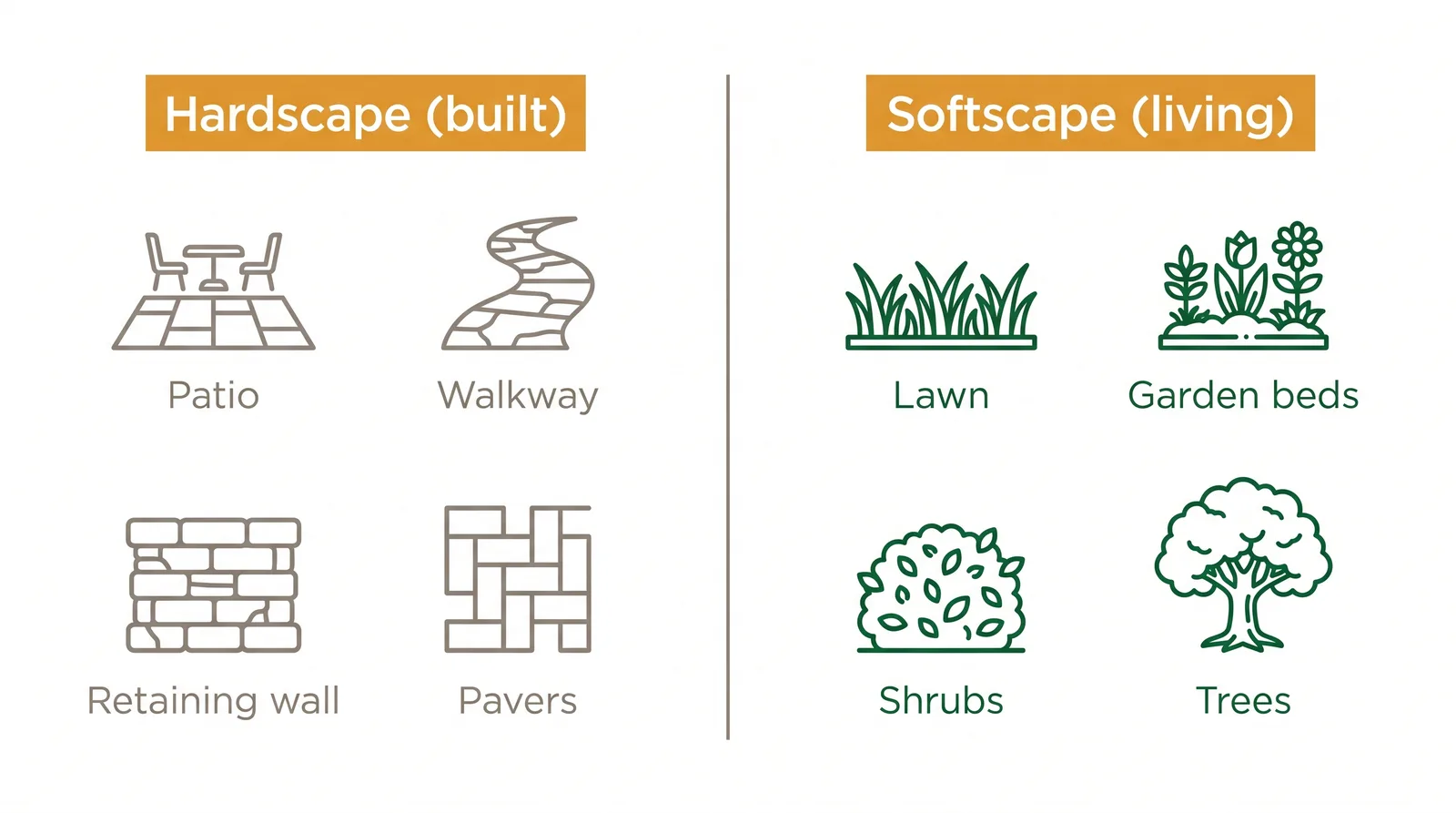
A yard that is all hardscape has structure but no life. A yard that is all softscape has life but nowhere to sit and a long maintenance list. Every good design uses both, which turns the real question into how much of each.
Quotable: Hardscape is the bones of a yard and softscape is the skin. A landscape with only one is either a parking lot or a jungle; the craft is in the ratio between them.
What is the right ratio of hardscape to softscape?
Aim for roughly 40 to 60 percent of each, and treat about 60 percent softscape to 40 percent hardscape as a sensible default. There is no single right number, because the best ratio follows how you use the yard.
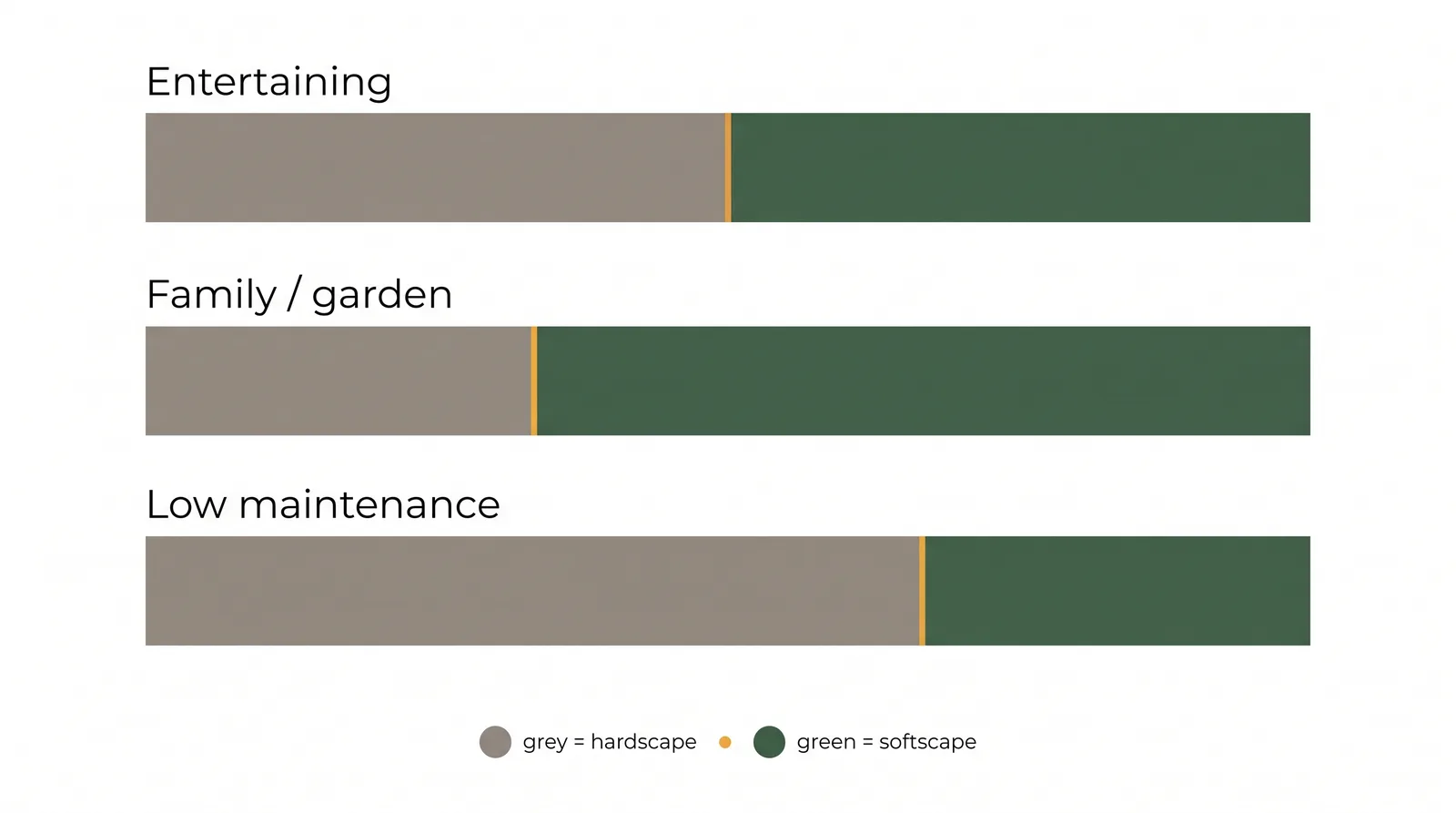
- Entertaining-focused yard: nearer 50/50 or more hardscape. A patio, dining zone, and fire feature all need solid surface, with planting beds restoring balance around the edges.
- Family or garden yard: lean softer, toward 60 to 70 percent softscape, keeping open lawn and beds with just enough hardscape for a path and a seating area.
- Low-maintenance yard: more hardscape, since paved surface does not need mowing or weeding, offset with hardy shrubs and permeable areas so it does not read as sterile.
The two failure modes are opposite. Too much hardscape makes a home feel cold and commercial; too much softscape turns the yard into a maintenance treadmill of mowing, weeding, and watering. The balance is what keeps a yard both usable and alive.
Quotable: Landscape designers commonly aim for 40 to 60 percent hardscape and softscape each, with about 60 percent soft as a default. Entertainers push toward more hard surface, gardeners toward more green, but almost no good yard lives at either extreme.
Why does the ratio matter more in Toronto?
Because of clay soil and stormwater. Toronto's heavy clay drains slowly, and every square foot of solid hardscape is a square foot that rain cannot soak into, so it runs off instead.
Excess hardscape increases stormwater runoff, which can cause erosion and drainage problems and push water toward your foundation or a neighbour's property. On slow-draining clay, that runoff has nowhere easy to go. Keeping part of the yard as planted softscape gives rain a place to percolate, and permeable pavers, which let water pass through the joints into a stone base below, are a middle path that adds usable surface without sealing the ground.
Permeable pavers are paving units laid with open, aggregate-filled joints over a deep stone base, designed so rainwater drains through the surface into the ground rather than running off.
There is a freeze-thaw angle too. Poorly based hardscape heaves over Toronto winters, so the hard surfaces you do install need proper base preparation, the same lesson covered in our guide on the best time for interlocking in Toronto. And if your yard is heavy clay, the softscape side has its own fix, covered in compacted clay soil in GTA lawns.
From the data: YardQuote tracks 650 landscaping companies and 503 interlocking contractors across the GTA, with average ratings of 4.77 and 4.73 (YardQuote tracking, July 2026). The strongest-reviewed designers plan hardscape and softscape together from the start, rather than pouring a patio first and planting around it later, which is the tell of a yard that will actually balance.
If you are planning a full yard, compare local pros and current ranges on the Toronto landscaping cost page, see what a hard surface runs on the paver patio cost guide, or browse landscaping companies in North York and other areas.
Want a yard that balances patio and planting the first time? Request a quote and compare up to three vetted local landscapers side by side. Your contact details only go to the one you pick.