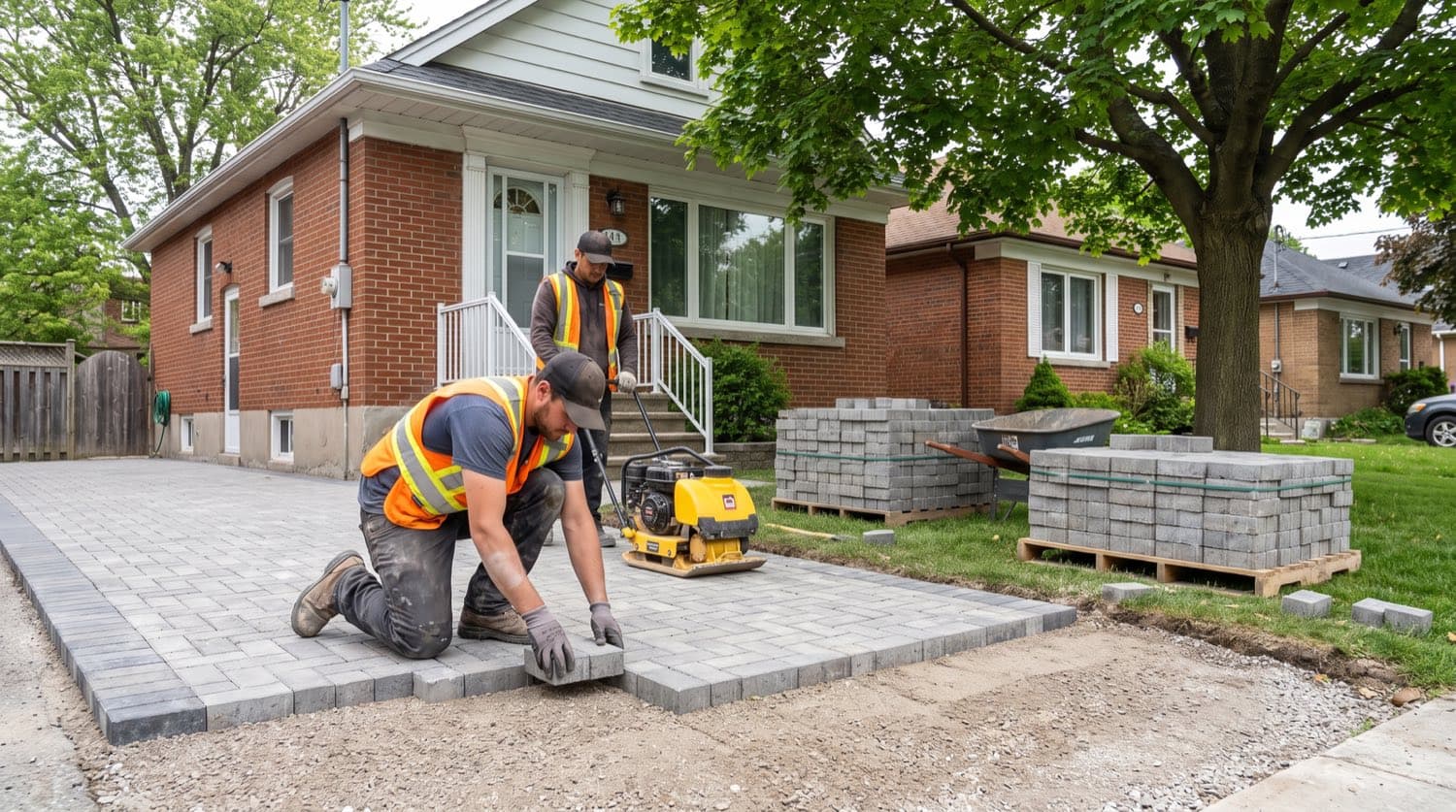
Answer First: The best time for interlocking in Toronto is late spring through early fall, roughly May to October, when the ground is thawed and there are enough warm, dry days for the base to compact and the polymeric sand to cure. Spring books out because that six-month window is all the crews get, so the most-reviewed contractors fill their calendars early. Book your quotes in late winter or early spring to get the crew you want.
Every year the same thing happens. Homeowners decide in July that this is the summer for a new paver driveway, start calling around, and discover the good crews are booked into fall. The season is shorter than it looks, and the calendar is the real constraint.
When is interlocking season in Toronto?
Roughly May to October. Interlocking is outdoor construction that depends on thawed ground and dry, above-freezing weather, so the working window in the GTA opens after the spring thaw and closes before the first hard freeze. Everything, from excavation to the final jointing, has to happen inside that stretch.
The two ends of the season are soft, not fixed. An early, dry spring can let base work start in April; a mild fall can stretch installs into November. But the reliable core is the warm months, and that is when the bulk of Toronto's driveways, patios, and walkways get built.
Quotable: Interlocking in Toronto is a roughly six-month trade. The ground has to be thawed to excavate and compact, and polymeric sand will not cure below freezing, so the working season runs about May to October in the GTA.
Why does spring book out so fast?
Because the season is finite and the good crews know it. A contractor has about six warm months to fit an entire year of driveways and patios, and a single full driveway build can take several days on site. Do that math across a crew's whole book and the calendar fills quickly once quoting starts in late winter.
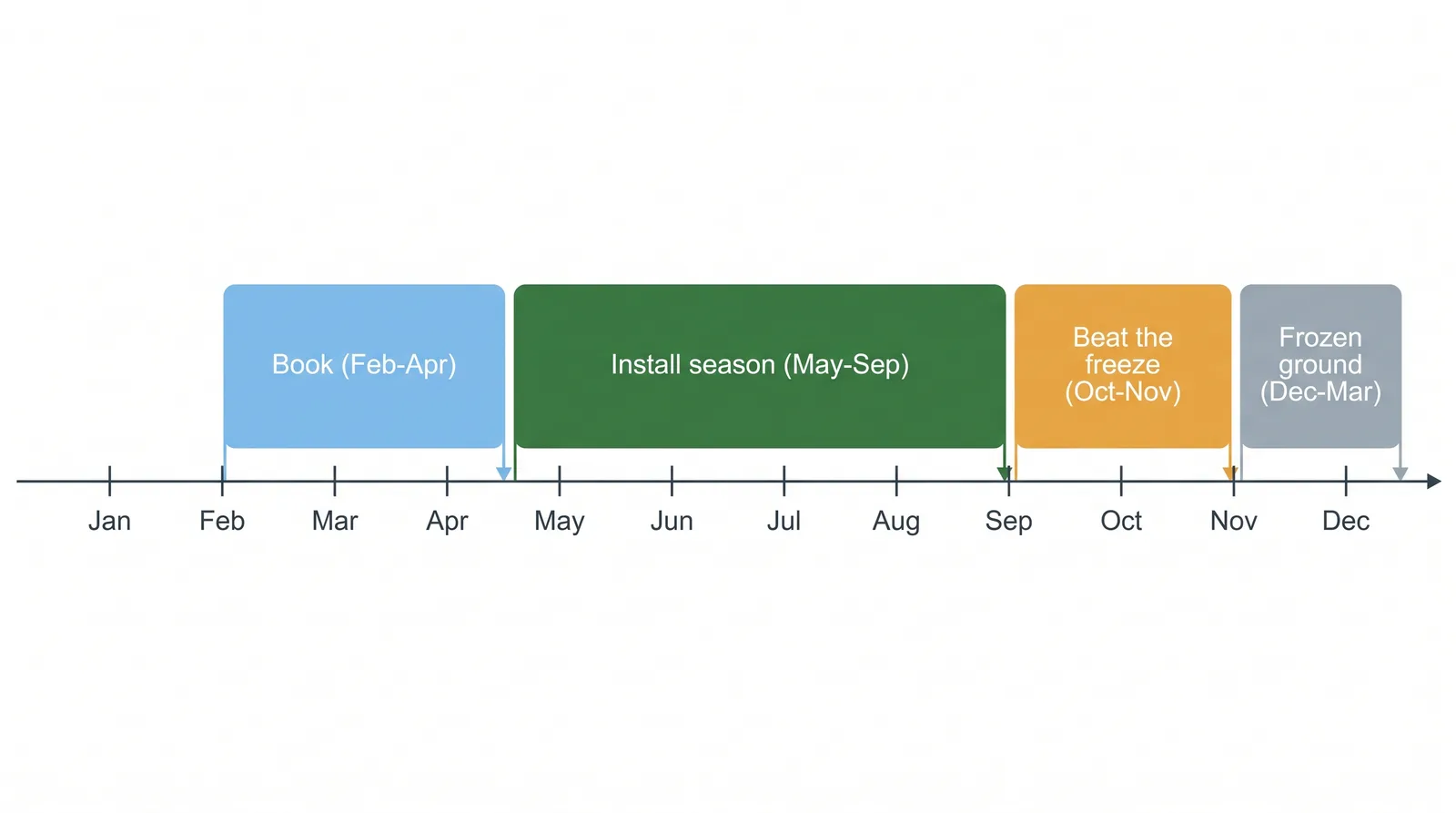
The homeowners who get the best crews at the best prices are the ones quoting in February and March, not July. By late spring, the most-reviewed contractors are frequently booking weeks or months ahead. Wait until mid-summer and your shortlist quietly shrinks to whoever still has a gap, which is not the same as whoever is best.
From the data: YardQuote tracks 503 interlocking contractors across the GTA, and the spread between the cheapest and priciest quote for the same driveway job runs roughly 2x to 3x. The strongest crews book out first, so the longer you wait in the season, the more your available options skew toward the ones nobody else picked.
What does the timing actually protect? The base.
This is the part that makes seasonal timing matter beyond convenience. A paver driveway is only as good as what is under it, and that base takes time and dry weather to build right.
Interlocking base — the compacted layers beneath the pavers, typically geotextile fabric over the subsoil, then up to 18 inches of compacted gravel and a thin bedding-sand layer. It does all the structural work; the pavers are the surface.
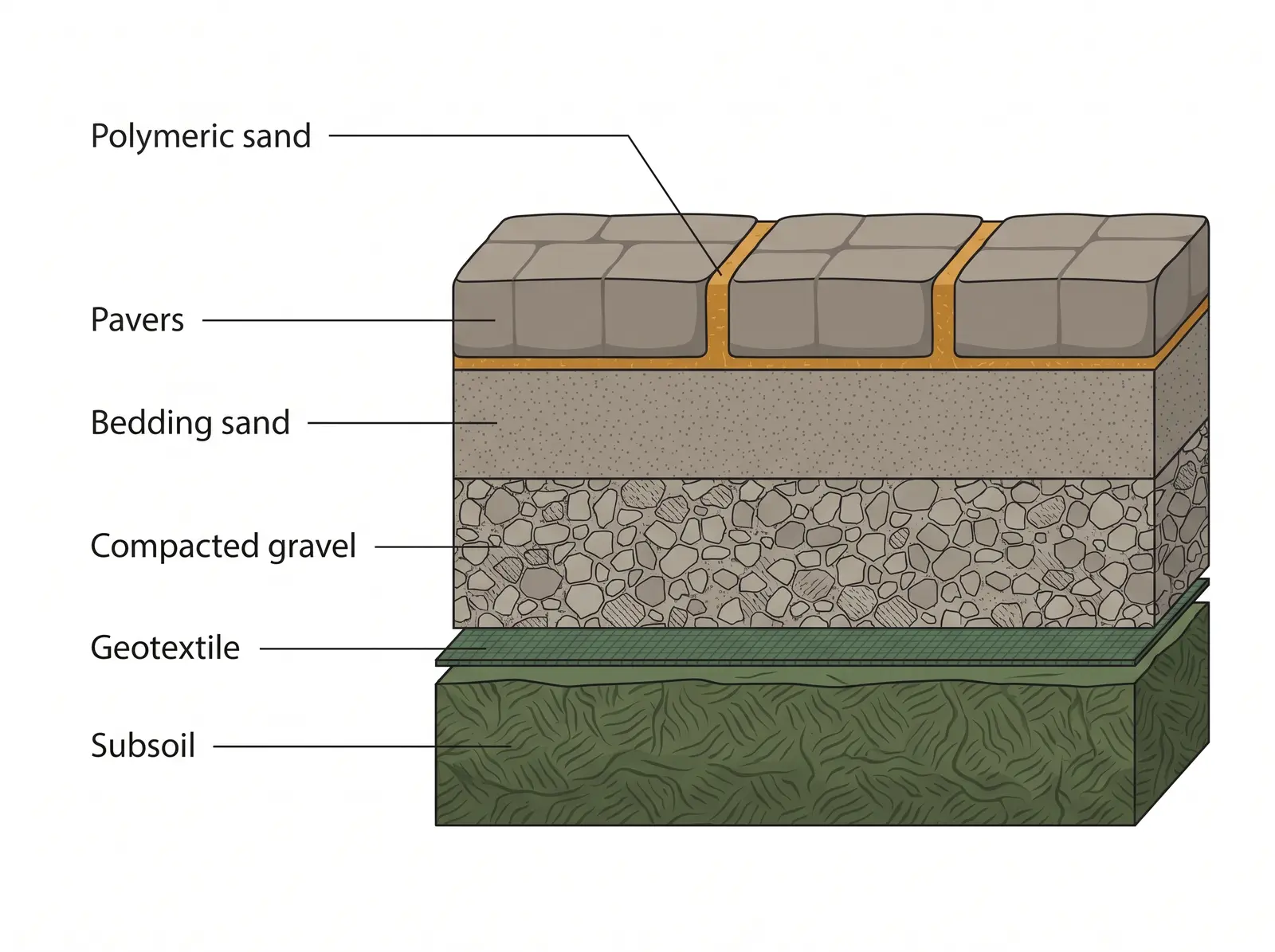
Toronto's freeze-thaw cycles are brutal on shortcuts. Water gets into a thin or poorly compacted base, freezes, expands, and heaves the pavers, which is the lumpy driveway you see two winters later. A base built carefully in June has months to prove itself; a base rushed in late October to beat the freeze does not. That is why a crew racing the calendar is a real risk, and why booking early to secure a proper build window pays off.
When should you book interlocking work?
Late winter to early spring, well before you want the work done. Getting your quotes and your deposit in during February through April puts you near the front of the calendar, when the crews you actually want still have open slots.
Price the job while you are at it. Standard installed interlock driveways run about $18 to $28 per square foot in the GTA, patios around $18 to $30, and a full-service excavation build with premium materials $32 to $55. You can see the current ranges on our interlocking cost page and browse interlocking contractors by area to build a shortlist before the season heats up. Compare the bids the same normalize-first way we lay out in why Toronto landscaping quotes vary 3x, and if the job is a front-yard driveway, check whether it needs a permit in our front yard parking pad guide.
Want to lock a strong crew before spring fills up? Request a quote and compare up to three vetted local pros side by side. Your contact details only go to the one you pick.