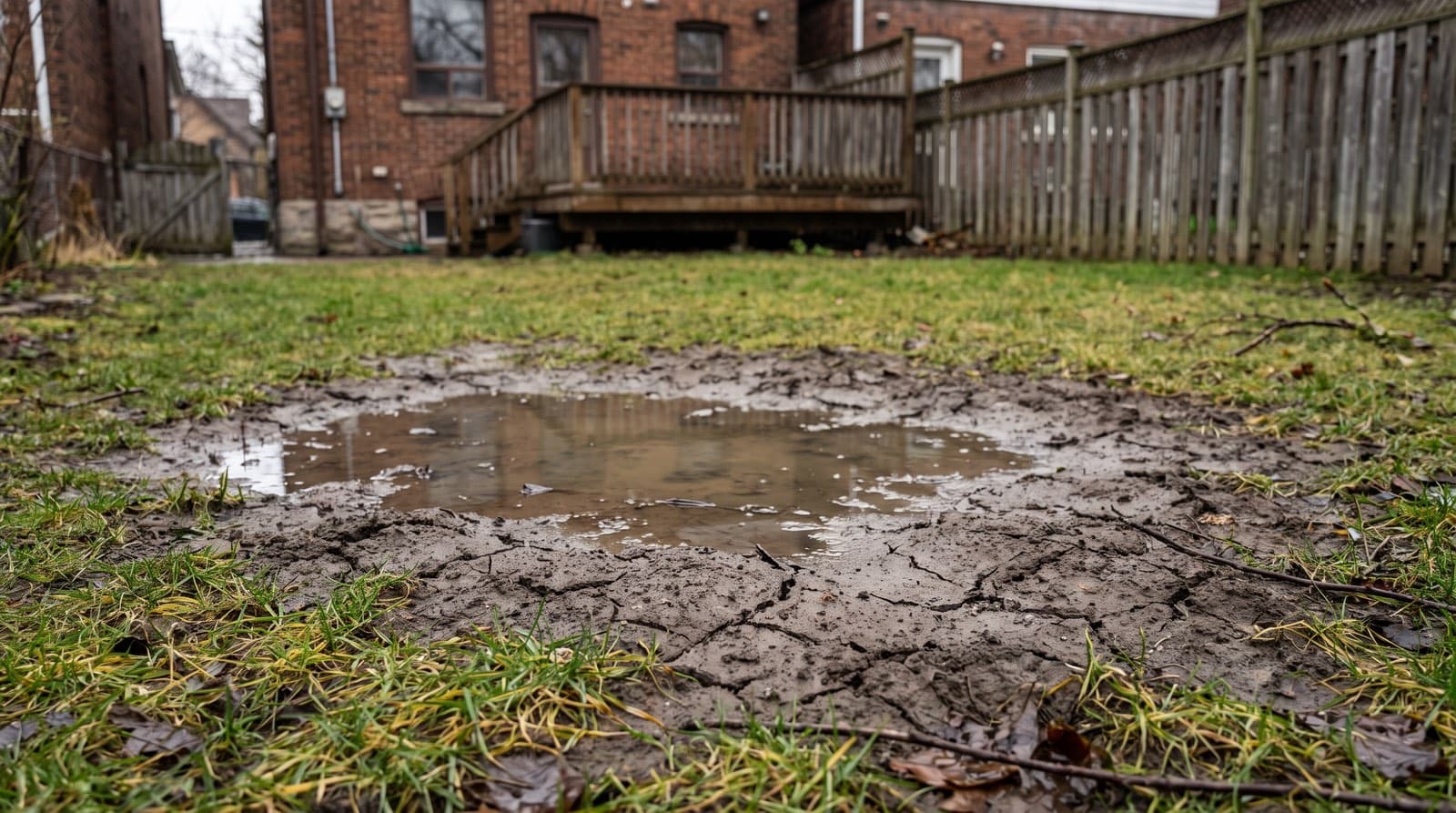
Answer First: Compacted soil shows up as water pooling or running off, thin patchy grass, and ground so hard you cannot push a screwdriver into it by hand. The cause across the GTA is usually heavy clay, common in Scarborough, Etobicoke and the inner suburbs, packed tighter by foot traffic, pets and working the soil wet. The main fix is core aeration, which pulls plugs of soil to reopen the channels roots need (Michigan State University Extension), best paired with compost topdressing and early-fall overseeding.
A struggling lawn on heavy clay is often blamed on the grass, the seed or the fertilizer. The real problem is usually under it. When the soil is compacted, nothing you spread on top can reach the roots.
What is compacted soil, and what are the signs?
Soil compaction — soil particles pressed so tightly together that the air pockets between them, the pore space that holds water and oxygen for roots, are squeezed out. On compacted ground, roots cannot breathe and water cannot drain, so the lawn thins even when you feed and water it.
The signs are consistent, and one simple test confirms it.
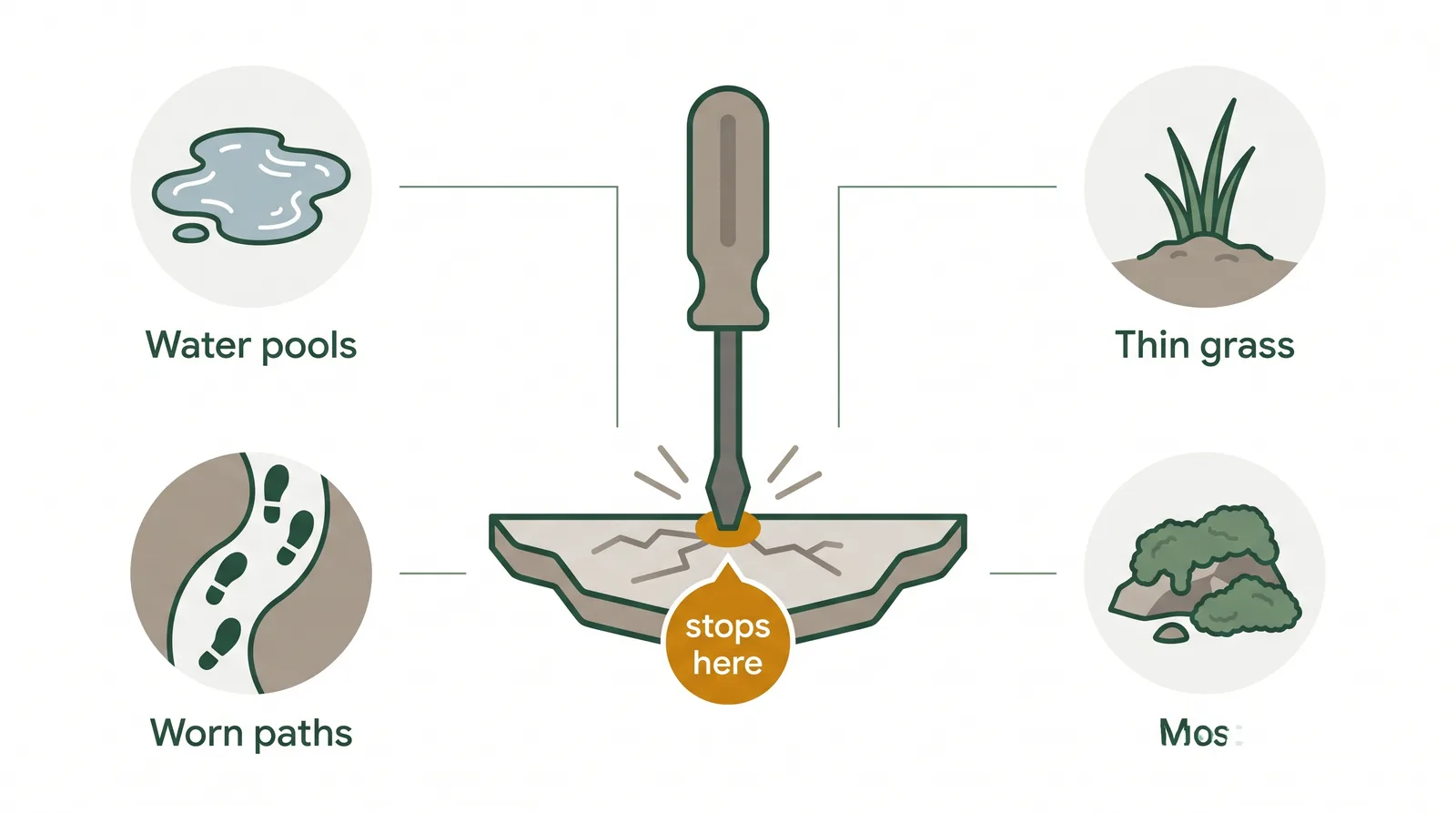
- The screwdriver test fails. After rain, a screwdriver should push into the soil easily. If it stops or needs force, the soil is compacted.
- Water pools or runs off instead of soaking in.
- Grass is thin, patchy or weak despite feeding and watering.
- Bare, worn paths appear where people and pets cross.
- Moss or weeds move into the spots grass has given up on.
Quotable: The quickest test for compacted soil is a screwdriver. If you cannot push one into the lawn by hand after rain, the pore space roots need has been squeezed out, and no amount of fertilizer will fix it until you aerate.
Why does GTA clay compact so badly?
Because clay is built to. Clay is made of fine, flat particles that pack together tightly, so it compacts far more easily than coarse sandy soil, and much of the GTA, particularly Scarborough, Etobicoke and the inner suburbs, sits on exactly that heavy clay. Add the everyday load a lawn carries and the ground seals up.
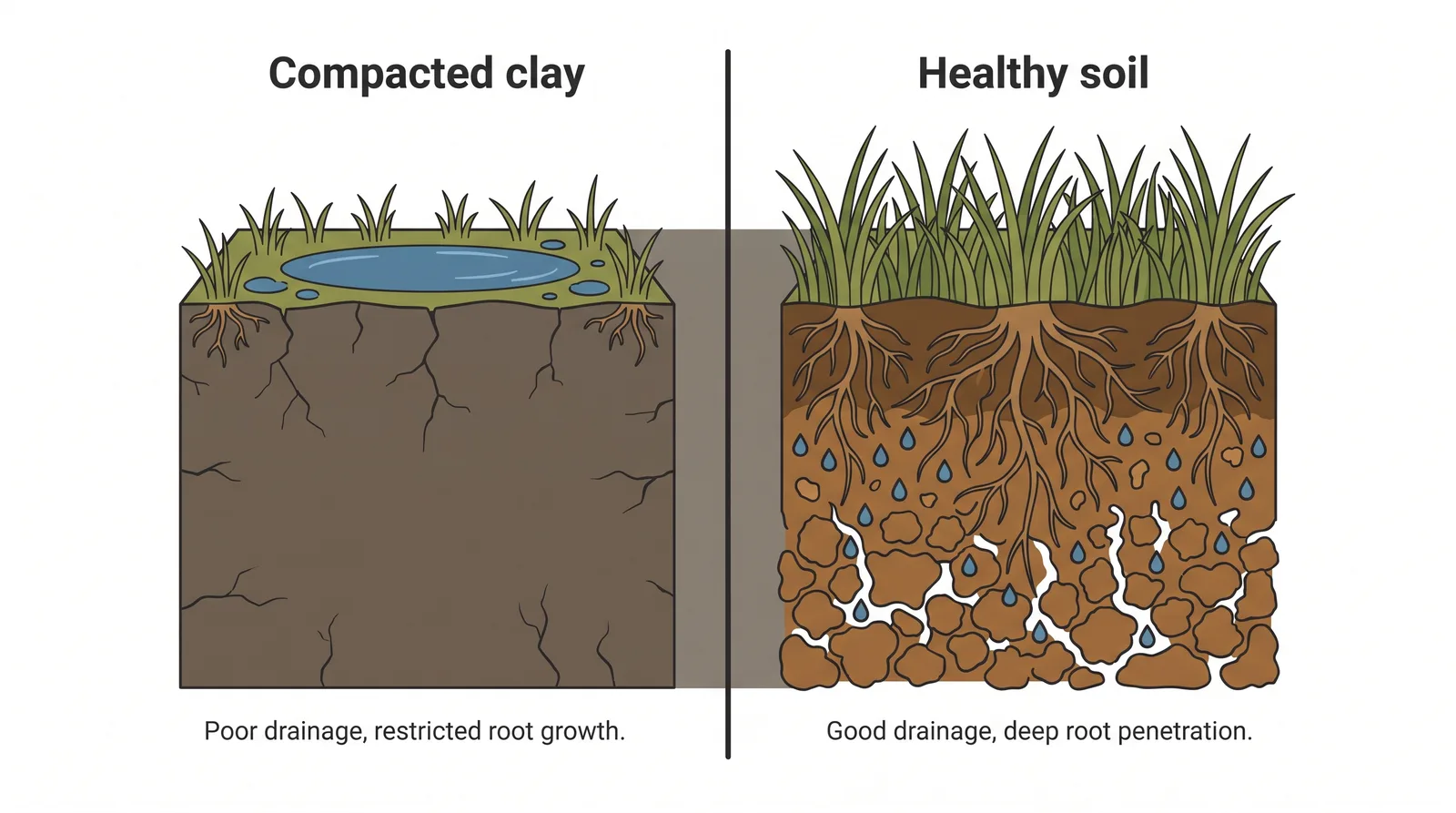
The usual culprits stack up fast: foot traffic and pets, kids playing, a car parked on the grass, and the big one in Toronto, working or walking clay while it is wet, which molds it solid. New-build lots in Brampton and Mississauga often start compacted, because grading equipment strips the topsoil and presses the subsoil down before the sod ever goes on.
From the data: Of the 249 lawn-care companies YardQuote tracks across the GTA (July 2026), 220 carry three or more reviews at an average of 4.75 stars, and nearly all sell core aeration. On Toronto clay it is the single most requested fix, because compaction, not neglect, is what quietly kills these lawns.
How do you fix compacted soil?
Core aeration first, then rebuild the soil over time. Core aeration removes plugs of soil, creating channels that carry water, air and nutrients down to the roots and relieving compaction, and it is especially effective in clay-heavy soils (Michigan State University Extension). It is the one step that directly reverses the problem.
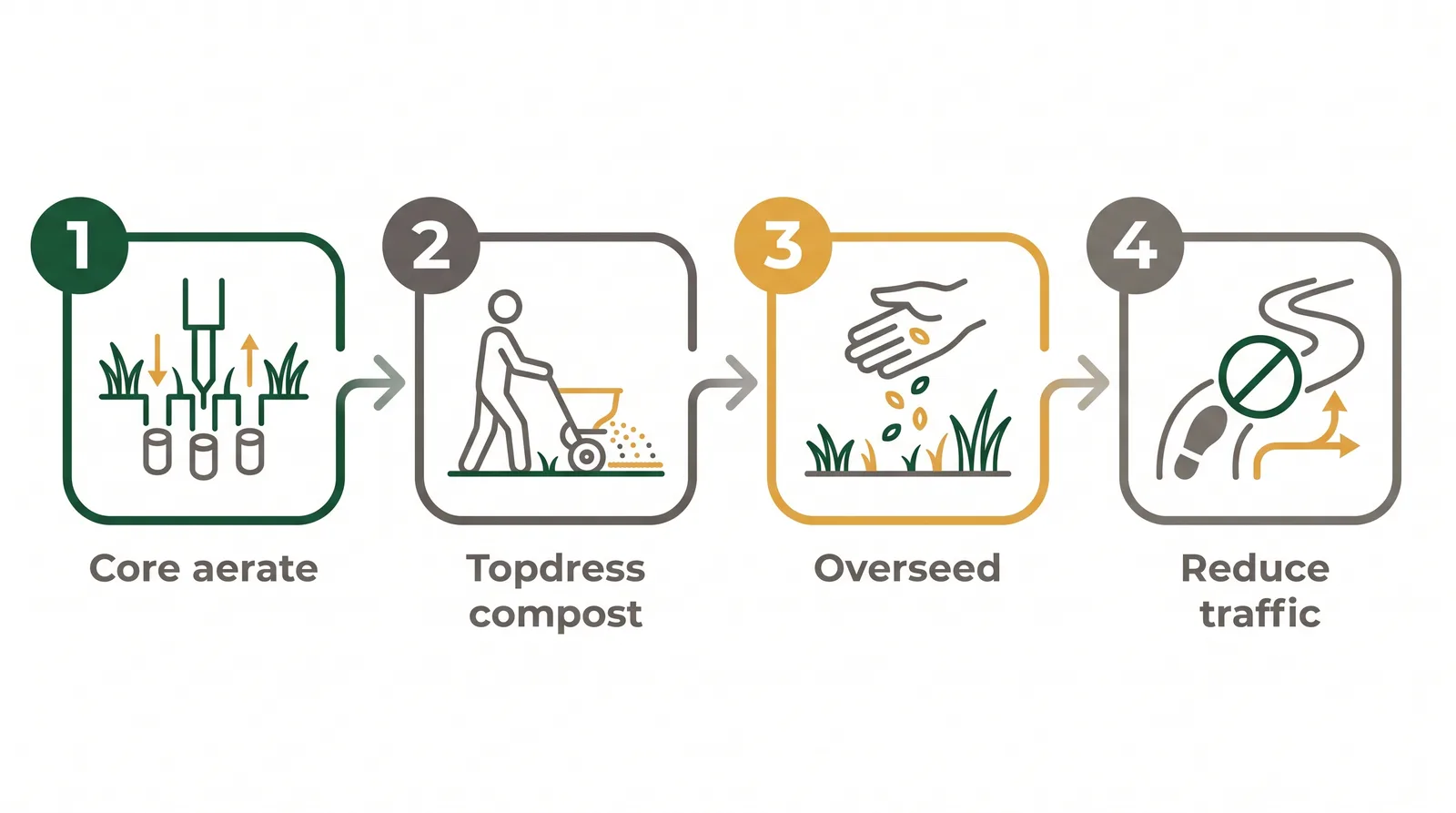
Do all four, in this order, ideally in early fall:
- Core aerate to open the compacted soil, once a year on heavy clay.
- Topdress with a thin layer of compost, which works organic matter into the aeration holes and loosens clay over seasons.
- Overseed so new grass fills the holes while the soil is open.
- Reduce the traffic that caused it, rerouting the worn paths or adding a stepping-stone walk.
This is also why timing matters: aeration and overseeding both work best in early fall, laid out in when to aerate your lawn in Toronto. Core aeration runs $70 to $200 for a standard lawn, and you can see the full breakdown on the Toronto lawn care cost page.
What if the lawn is spongy, not hard?
Then you may be dealing with thatch, not compaction, and they need opposite reads. Compacted soil is hard underfoot with water pooling; a thatch problem feels spongy and bouncy. If it is spongy, check when to dethatch your lawn instead. Many Toronto lawns have both, in which case you dethatch the surface first, then aerate the compacted ground beneath.
Once the soil is open and reseeded, deep, infrequent watering keeps the new roots chasing moisture downward, covered in the best time to water grass in Toronto. Watering deeply, about 2.5 cm a week, works with aeration to drive roots deeper into the loosened soil (City of Toronto).
Want to know what aeration and topdressing should cost for your yard? Request a quote and compare up to three vetted local lawn-care pros side by side, on the same scope. Your contact details only go to the one you pick.