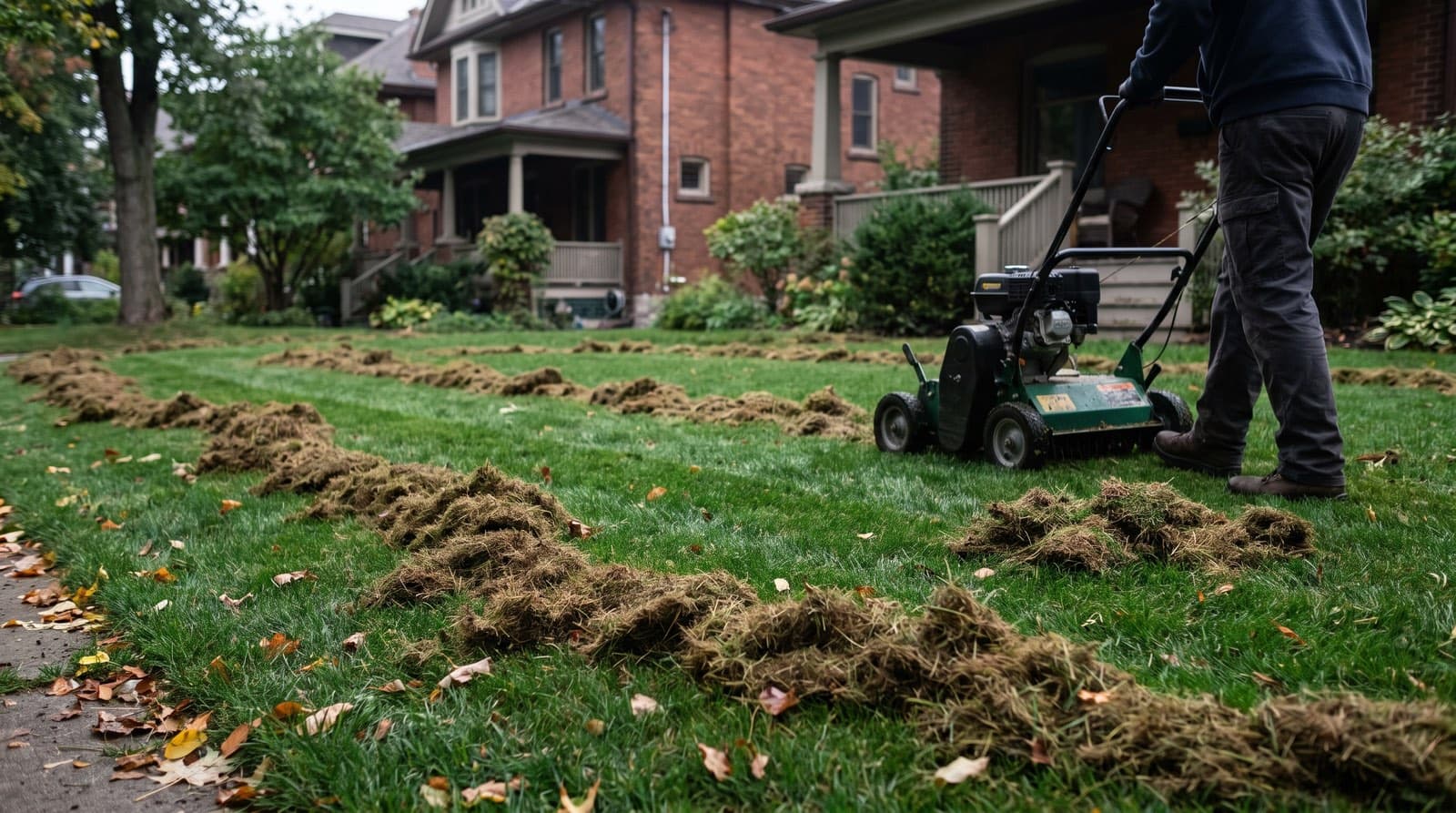
Answer First: Dethatch a Toronto lawn when the spongy brown layer between the grass and the soil passes half an inch deep, and especially once it passes one inch (Michigan State University Extension). Below half an inch, thatch is normal and helps insulate the lawn, so leave it. The right time is early fall, in cool weather with moist soil, so the cool-season grass recovers fast, never during summer heat or drought. Dethatching or power raking a standard GTA lawn runs $100 to $295.
Half the lawns that get dethatched did not need it, and half the ones that need it never get measured. The job is aggressive, so the first step is not renting a machine, it is checking whether you actually have a thatch problem.
What is thatch, and how much is too much?
Thatch — a layer of living and dead stems, roots and runners that builds up between the green grass blades and the soil surface. A thin layer of half an inch or less is normal and helps insulate the growing point of the plant; the problem starts when it accumulates past half an inch, and especially once it gets over an inch deep (Michigan State University Extension).
Above that threshold, thatch stops being a blanket and starts being a barrier. Water beads off instead of soaking in, fertilizer never reaches the soil, and grass roots start growing into the spongy thatch itself instead of the ground, which leaves the lawn shallow-rooted and drought-fragile.
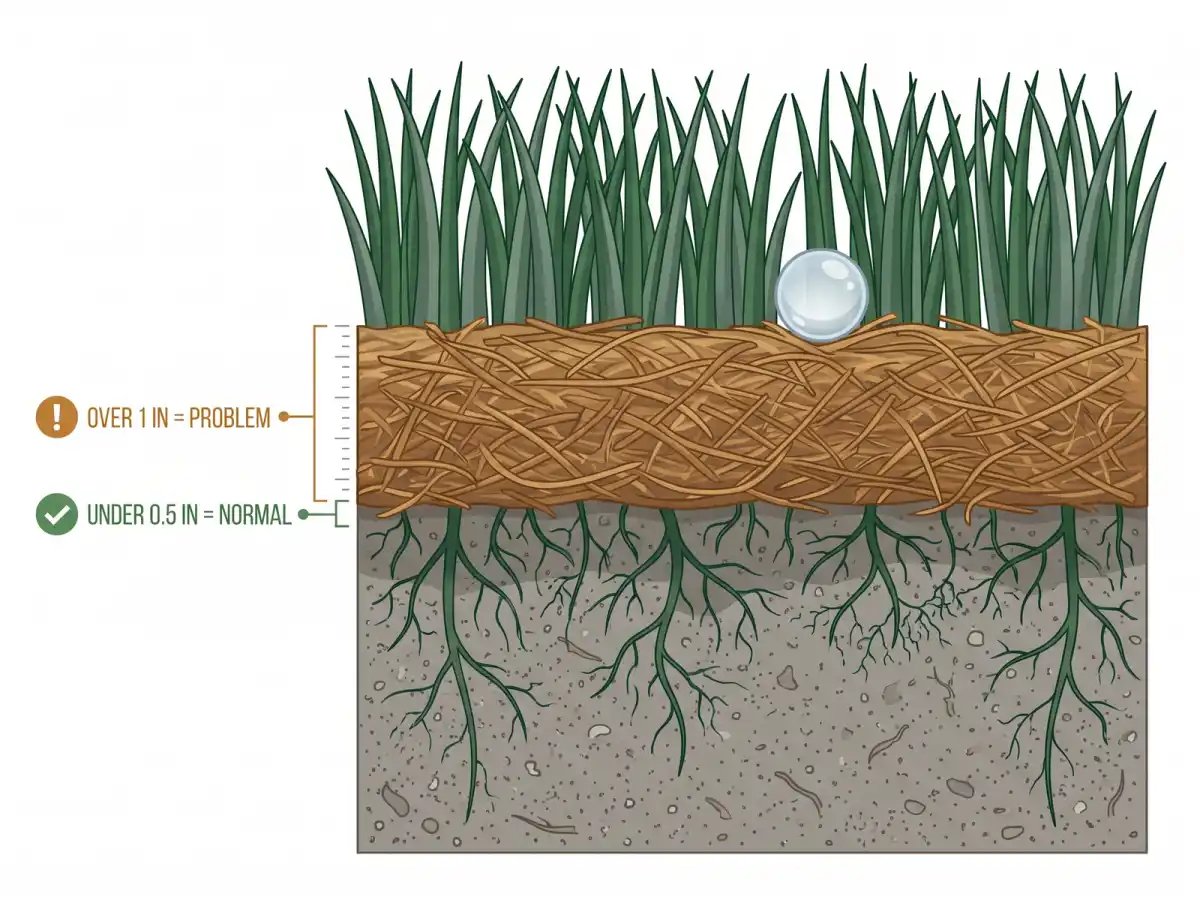
Quotable: A thatch layer under half an inch is normal and insulates the lawn. Dethatching is only warranted once it passes half an inch, and especially past one inch, when it starts shedding water and starving the roots (Michigan State University Extension).
What are the signs my lawn needs dethatching?
The lawn feels wrong before it looks wrong. Walk across it: a healthy lawn is firm, a thatch-bound one feels spongy and bouncy, like a thin mattress. That springy underfoot feel is the single most reliable everyday sign.
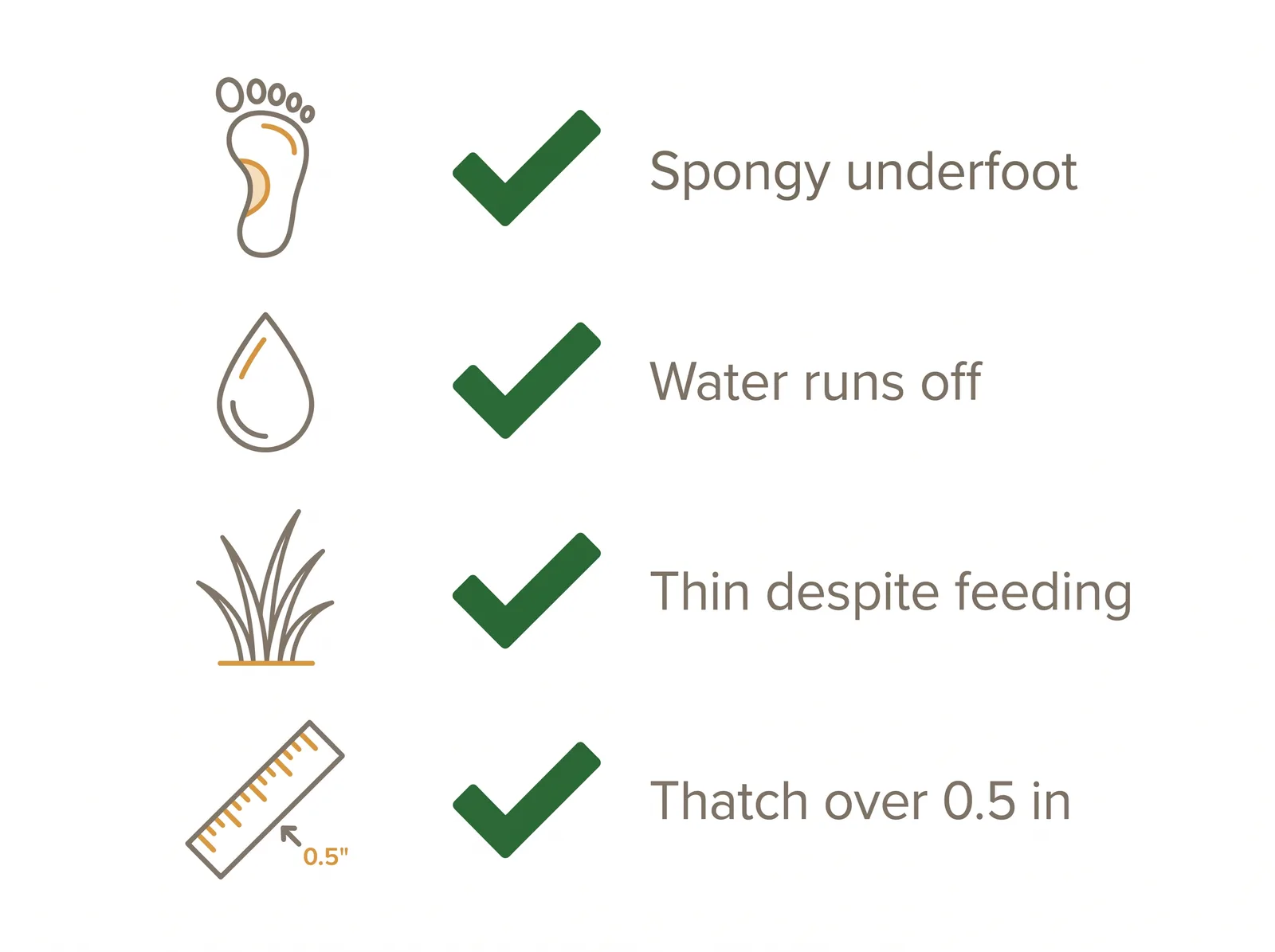
- It feels spongy or bouncy when you walk on it.
- Water runs off or pools instead of soaking in after rain or watering.
- It stays thin or patchy even after feeding and watering, because inputs cannot reach the soil.
- The measured layer is over half an inch when you part the grass and check.
If you see one of these, measure before you act. Cut a small wedge out with a spade, look at the cross-section, and only dethatch if the brown layer is genuinely over half an inch. A thin, healthy layer should be left alone.
When is the best time to dethatch in Toronto?
Early fall, in cool weather with moist soil, is the best window, with early spring as a solid second choice. Dethatching should be done only during periods of cool weather and adequate moisture, and not during high temperatures, drought, or late fall when winter damage can set in (Michigan State University Extension). Toronto's cool-season lawns do their strongest recovery growth in September, so a lawn dethatched then heals fast and heads into winter dense.
The timing rule exists because dethatching is a controlled injury. Do it to a heat-stressed July lawn and you can set it back badly; do it to a cool, moist September lawn and it recovers in a couple of weeks. Season is not a detail here, it is half the job.
From the data: Of the 249 lawn-care companies YardQuote tracks across the GTA (July 2026), 220 carry three or more reviews at an average of 4.75 stars. Most offer power raking as a spring or fall add-on, and the good ones will tell you your thatch is fine rather than sell you a job you do not need.
Dethatching versus aerating: which does my lawn need?
They fix different problems, and people confuse them constantly. Dethatching removes the spongy layer sitting on top of the soil and is aggressive, leaving debris to rake. Aeration pulls plugs from below to relieve compaction and only removes some thatch in passing (Michigan State University Extension).
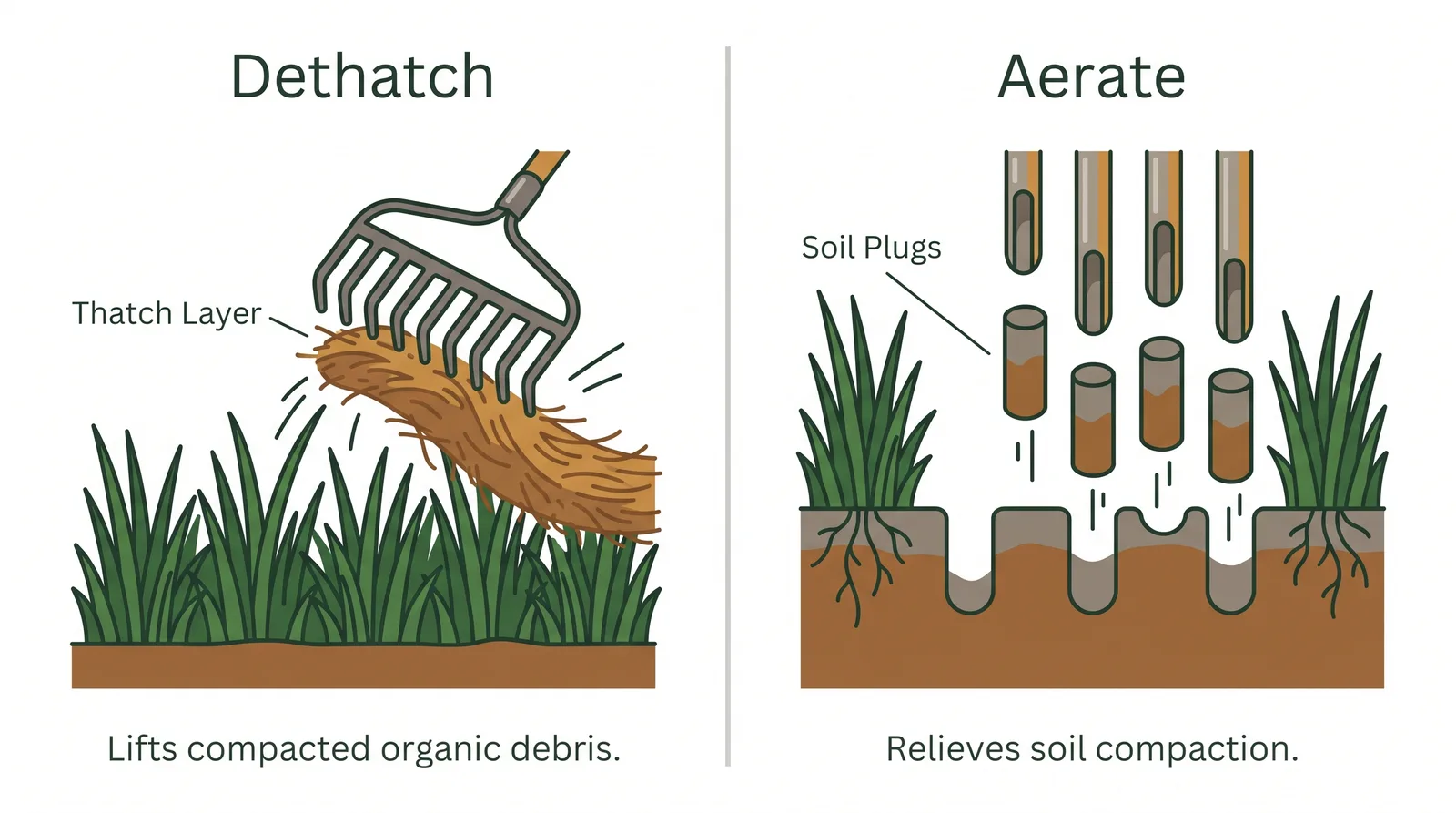
The quick test: if the lawn is spongy on top, dethatch it; if water pools and the soil under the thatch is rock-hard, aerate it. On the heavy clay across much of the GTA, a lawn often needs both, and the order is dethatch first to clear the surface, then aerate to open the compacted ground beneath. The full timing case for aeration is in when to aerate your lawn in Toronto.
What does dethatching cost in Toronto?
Dethatching or power raking a standard residential lawn runs $100 to $295 per service, typically around $160 (GTA 2026 pricing). It is a fully taxable service in Ontario, so add 13% HST to pre-tax quotes, and no permit is required for it or any routine lawn maintenance in the GTA.
You can see the dethatching line alongside every other service on the Toronto lawn care cost page or compare vetted crews near you, such as lawn care in North York or Scarborough. After dethatching, the lawn is thin and open, so overseeding and correct watering are what fill it back in, covered in the best time to water grass in Toronto.
Want to know whether your lawn actually needs dethatching, and what it should cost? Request a quote and compare up to three vetted local lawn-care pros side by side. Your contact details only go to the one you pick.