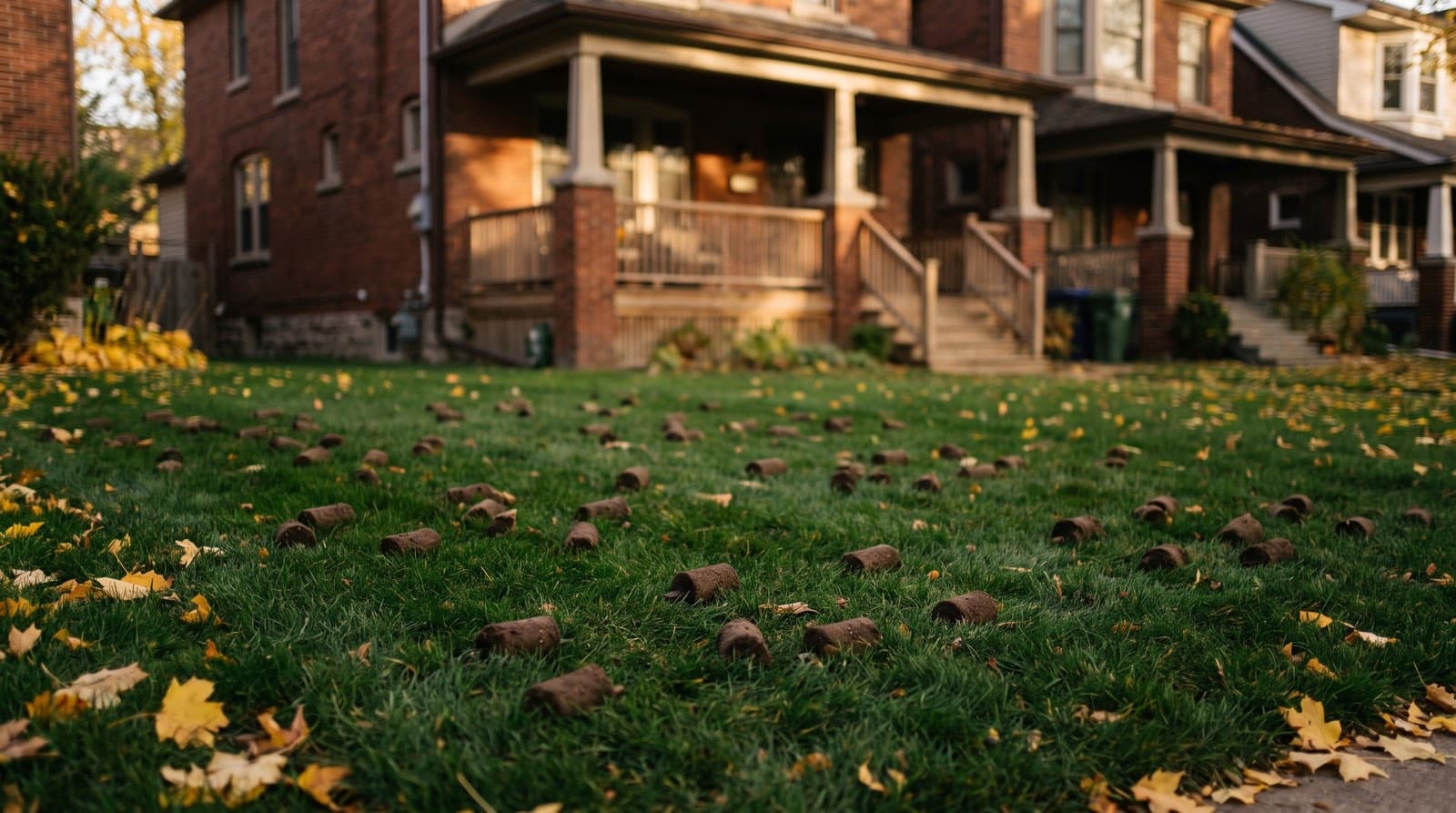
Answer First: The best time to aerate a lawn in Toronto is early fall, roughly late August through early October, when the city's cool-season grasses are growing strongly and under the least stress, so they recover fastest (Michigan State University Extension). Spring aeration works once the soil dries out, but fall wins because the lawn heals without fighting summer heat and weeds. Core aeration matters most on the heavy clay soils common across Scarborough and Etobicoke, and it runs $70 to $200, or $150 to $300 bundled with overseeding.
A compacted lawn is not a fertilizer problem, and you cannot fix it from a bottle. The soil under the grass has been squeezed so tight that water runs off and roots cannot breathe. Aeration is the mechanical fix, and in Toronto the calendar decides how well it works.
When is the best time to aerate a lawn in Toronto?
Early fall, from late August through early October, is the best window for a Toronto lawn. Fall is optimal because the turfgrass is not under stress at that time of year and has favorable growing conditions for recovery (Michigan State University Extension). Toronto lawns are overwhelmingly cool-season grasses, Kentucky bluegrass and fescue, which do their strongest root growth in the cool, moist weeks of September.
That timing does two jobs at once. The lawn is actively growing, so it knits the aeration holes closed quickly, and the open soil is primed for overseeding right when new grass has a full cool season ahead of it. Aerate in the heat of July and you stress an already stressed lawn; aerate in early fall and you work with the grass instead of against it.
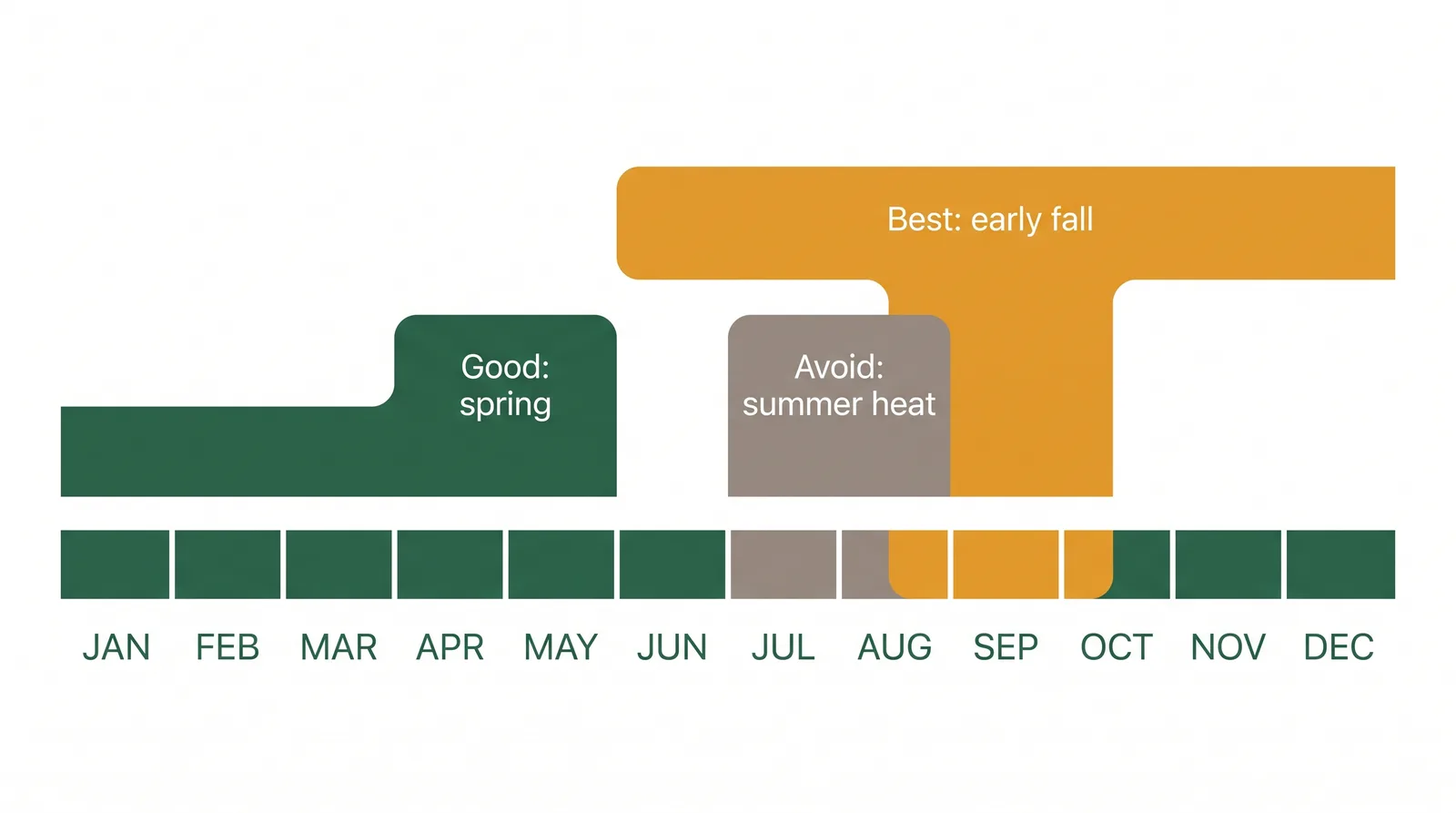
Quotable: The best time to aerate a Toronto lawn is early fall, late August through early October, because the city's cool-season grasses recover fastest when they are growing strongly and not heat-stressed (Michigan State University Extension).
Why is fall better than spring for aeration?
Both work, but fall recovery is cleaner. Aerate in spring and you open the soil surface at the exact moment crabgrass and other annual weeds are germinating, so you can hand weeds an easier path in. Aerate in fall and the lawn heals into cool weather with far less weed competition, then goes dormant strong.
Spring is still the right call in one case: a lawn compacted hard enough that water pools on it should not wait another six months. Once GTA soil has thawed and dried enough that walking on it leaves no footprints, usually mid-to-late spring, spring aeration is worth doing. It is the second-best window, not a bad one.
What does core aeration do, and why does Toronto clay need it?
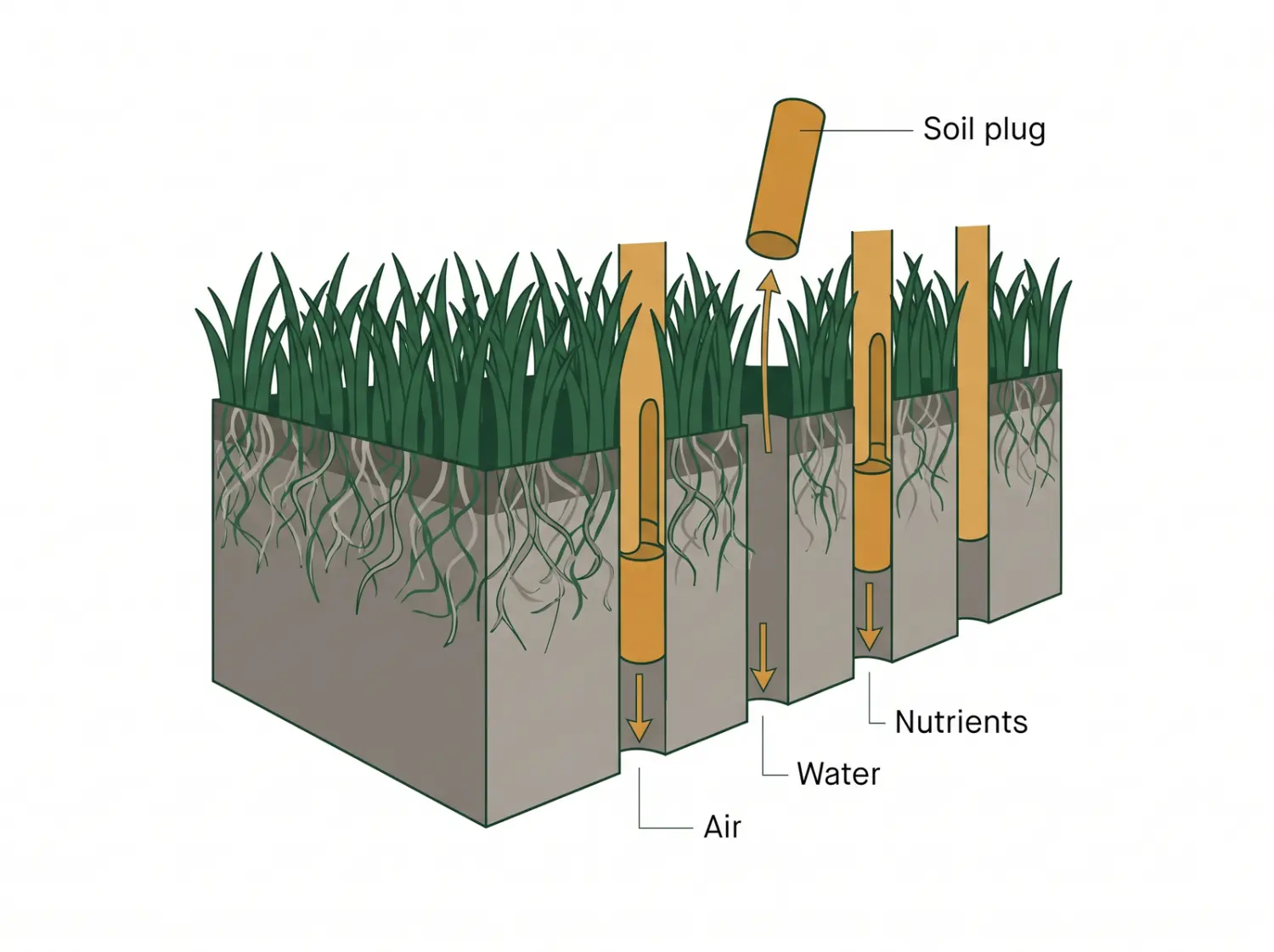
Core aeration removes plugs of soil from the lawn, creating channels that carry water, air and nutrients down to the roots and relieving the compaction that chokes them. It also pulls up some thatch along the way (Michigan State University Extension).
Core aeration — a machine punches hollow tines into the lawn and pulls out finger-sized plugs of soil and thatch, leaving evenly spaced holes across the surface. It is different from spike aeration, which just pokes holes and can compact the sides further.
This is where Toronto's ground matters. Core aeration is especially effective in clay-heavy soils, and much of the GTA, particularly Scarborough, Etobicoke and the inner suburbs, sits on dense clay that compacts fast and drains slowly. On that ground, a lawn that looks thin and struggles after rain is often not underfed, it is suffocating. Aeration is the reset.
From the data: Of the 249 lawn-care companies YardQuote tracks across the GTA (July 2026), 220 carry three or more reviews and the average rating is 4.75, with 88% at 4.5 stars or higher. Most of them sell a fall aeration-plus-overseeding package, because the two jobs work best on the same September visit.
How much does lawn aeration cost in Toronto?
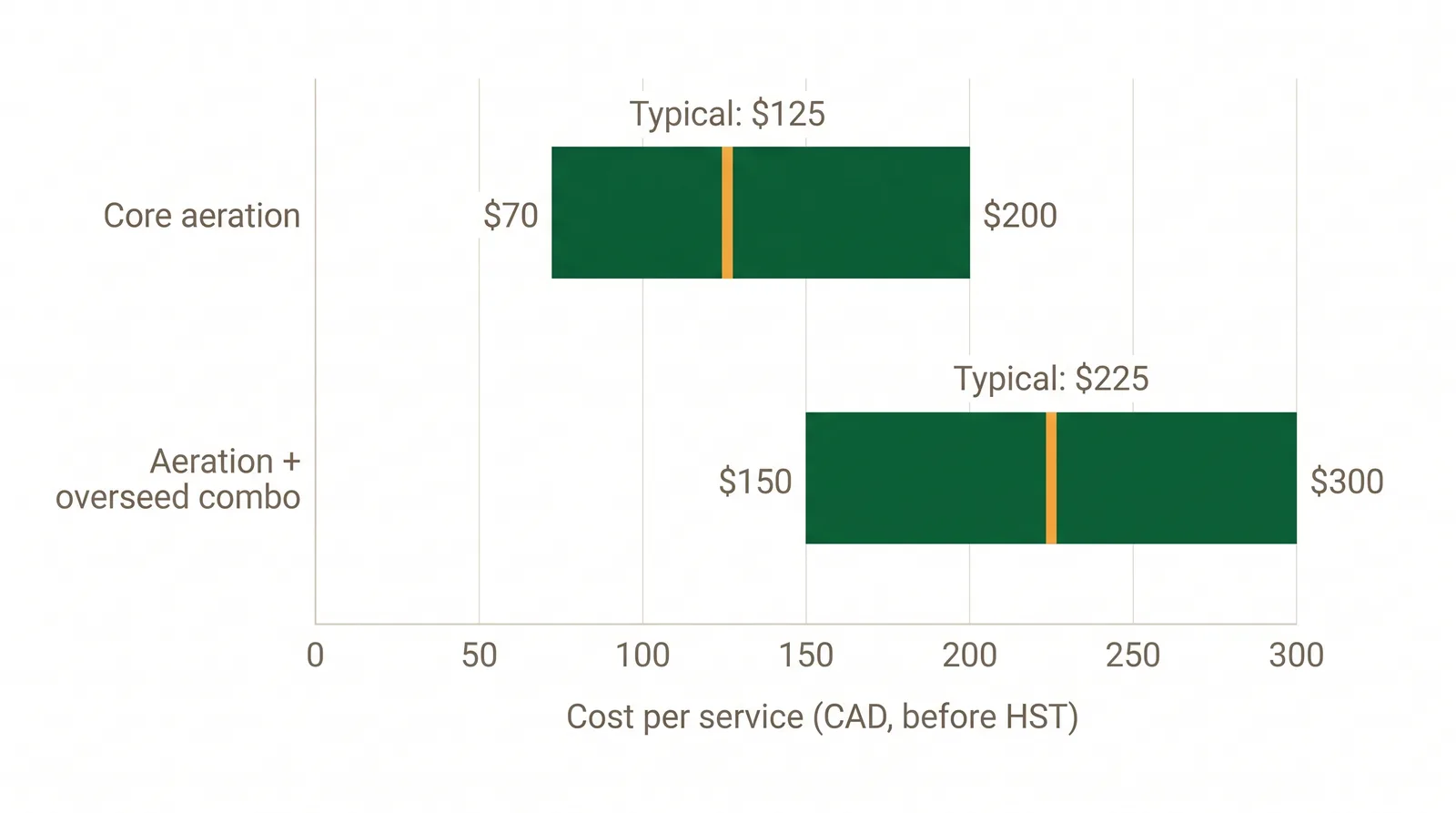
Core aeration for a standard residential lawn runs $70 to $200 per service, with a typical price around $125. Bundle it with fall overseeding and the combo runs $150 to $300, typically about $225 (GTA 2026 pricing). Lawn care is a fully taxable service in Ontario, so add 13% HST to figures quoted before tax.
No permit is needed for aeration or any routine lawn maintenance in Toronto or the surrounding GTA. You can see the full breakdown on the Toronto lawn care cost page or compare vetted crews near you, such as lawn care in Scarborough or Etobicoke, where clay soil makes annual aeration an easy call.
What should I do right after aerating?
Leave the plugs where they fall, water deeply, and overseed if it is fall. The soil cores break down on their own within a couple of weeks and feed the lawn as they go, so raking them up wastes the free topdressing. A good deep watering afterward, the City recommends about 2.5 cm (1 inch) a week for a lawn, helps the roots chase the new channels down (City of Toronto).
If your lawn also has a spongy, thick layer of dead material at the base, aeration alone may not be enough, and it is worth checking whether it needs dethatching first. And once the new seed is down, right watering is what makes or breaks it, which we cover in the best time to water grass in Toronto.
Want to know what aeration and overseeding should cost for your yard? Request a quote and compare up to three vetted local lawn-care pros side by side, on the same scope and timing. Your contact details only go to the one you pick.