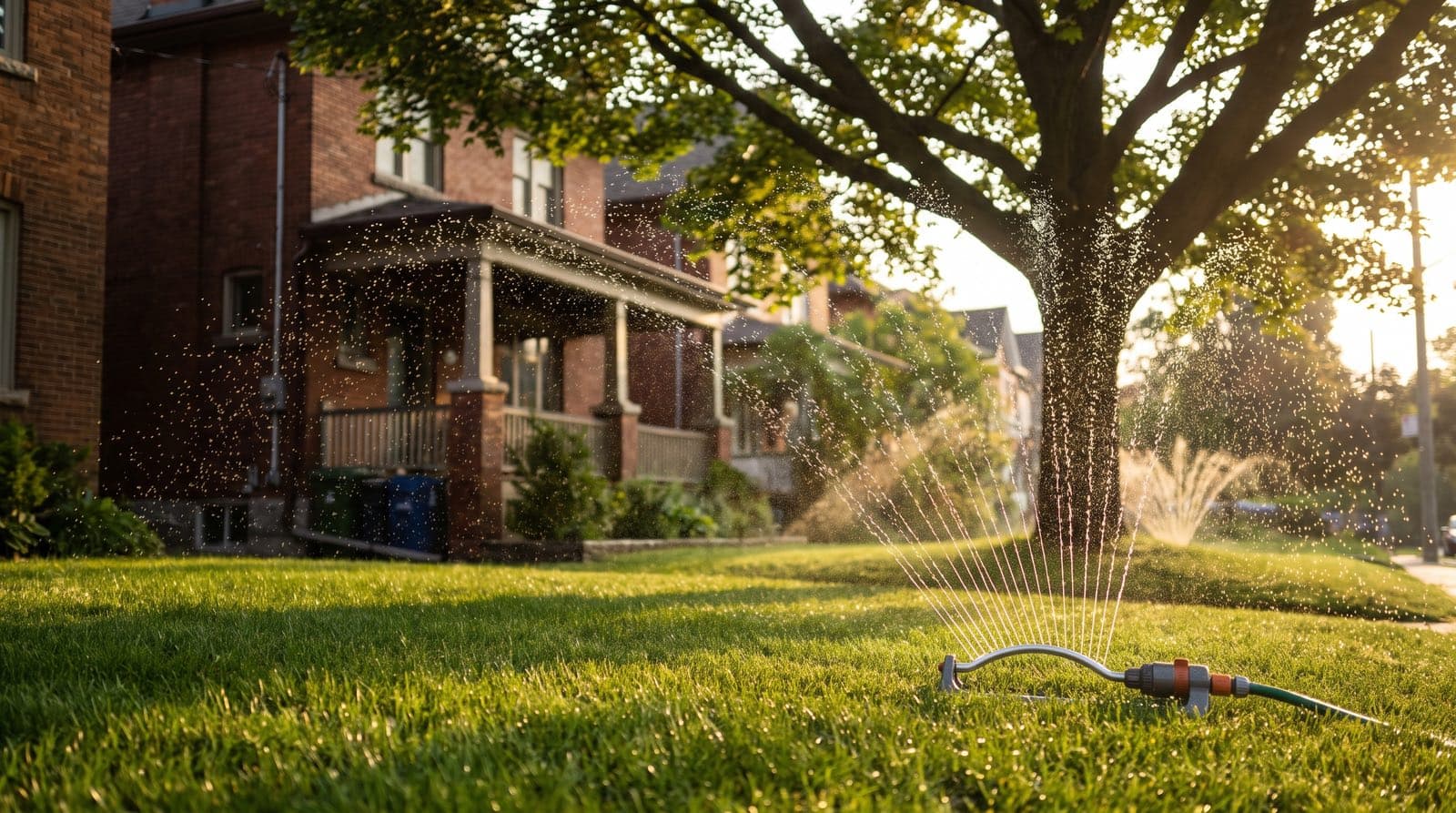
Answer First: The best time to water grass in Toronto is early morning, which the City recommends to cut evaporation and to let the blades dry before night, since overnight wetness promotes fungal disease (City of Toronto). Aim for about 2.5 cm (1 inch) a week, including rain, watering deeply once a week on clay soil or twice a week on sandy soil. Toronto does not assign watering days or run a mandatory odd/even schedule; its guidance is voluntary conservation.
Most Toronto lawns are watered wrong in two ways at once: too often and at the wrong time of day. Fixing both costs nothing and does more for the lawn than any product on the shelf.
What is the best time of day to water grass?
Early morning. The City of Toronto's official guidance is to water in the morning to prevent evaporation, and to avoid night watering because it leaves the grass wet for long periods, which can promote fungal disease (City of Toronto). Morning watering hits the sweet spot: cool enough that little burns off, early enough that the blades dry through the day.
The other two windows both cost you. Midday watering loses the most to evaporation, so a chunk of what you pay for never reaches the roots. Evening and overnight watering keeps the lawn damp for hours in the dark, which is exactly the condition lawn fungi need to take hold. Same sprinkler, same water, very different result depending on the hour.
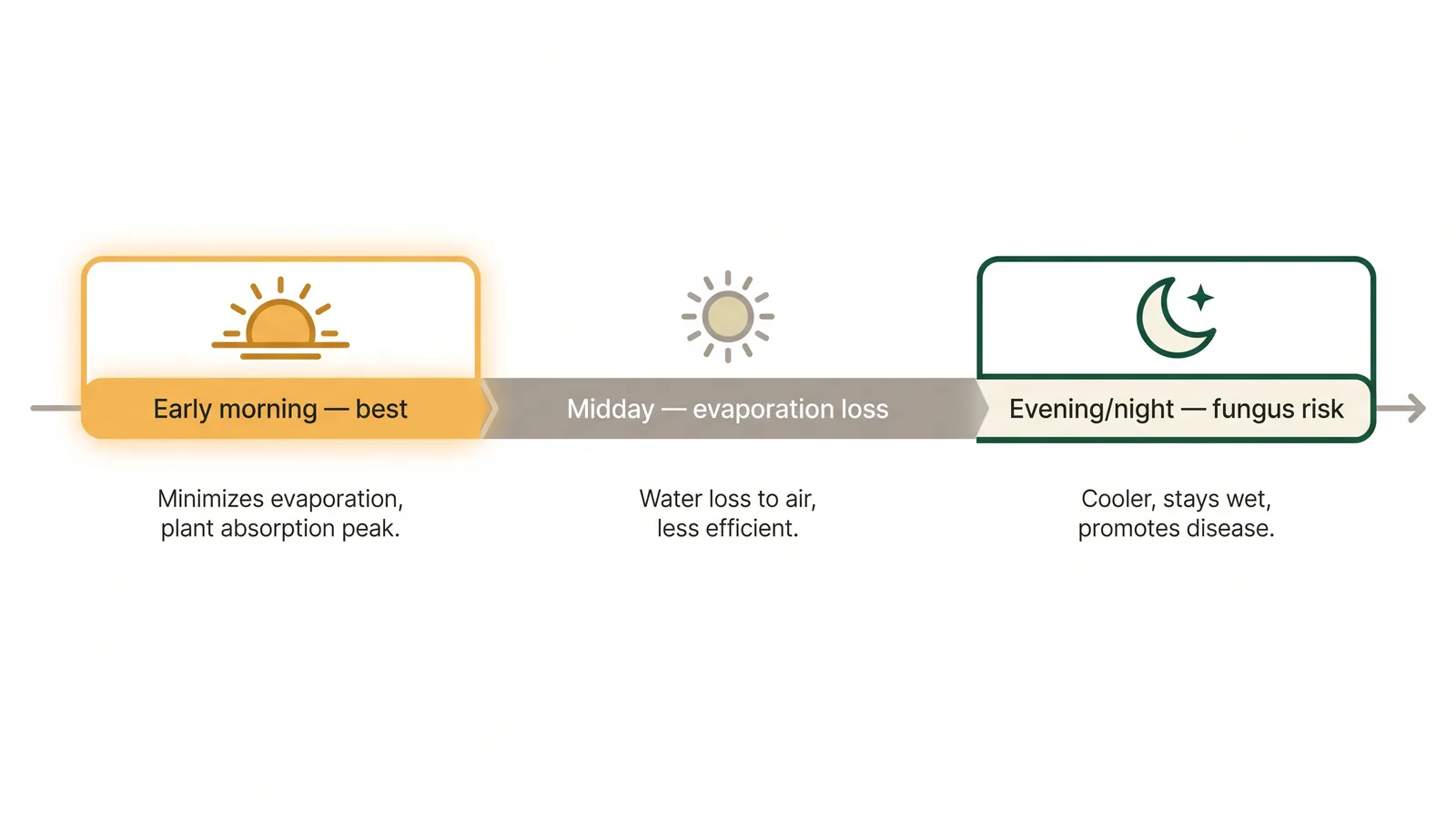
Quotable: The City of Toronto recommends watering lawns in the morning to prevent evaporation, and warns against night watering because leaving grass wet for long periods promotes fungal disease.
How much water does a Toronto lawn actually need?
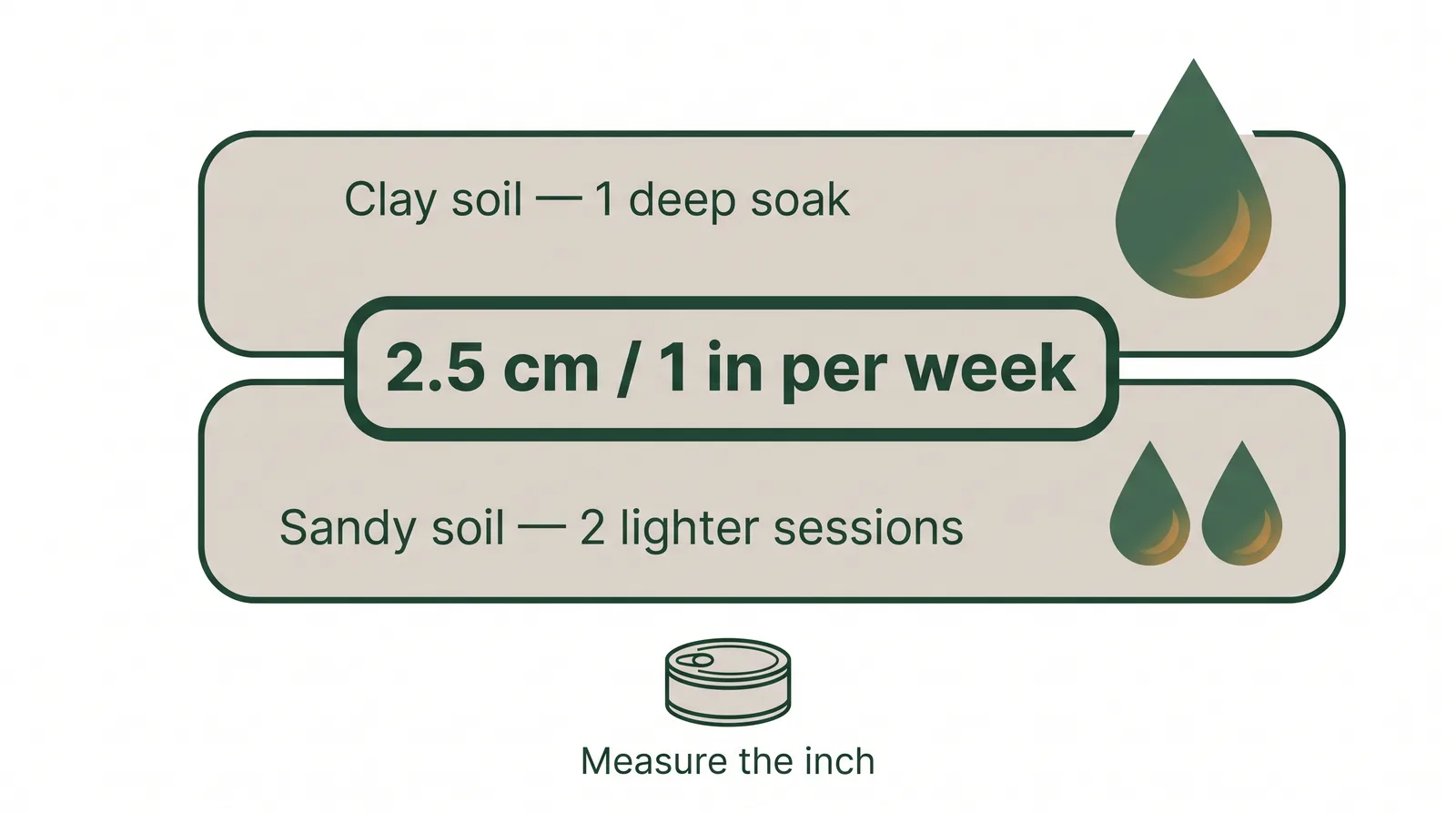
About 2.5 cm, or 1 inch, a week, rainfall included. The City recommends watering deeply, once a week for clay soil and twice a week for sandy soil (City of Toronto). That is the whole target, and most GTA lawns get far more than they need through daily sprinkling.
The soil split matters in Toronto. Much of the city sits on heavy clay, which holds water long enough that one deep soak a week is plenty; overwater clay and it stays soggy. Sandy or well-drained lots drain faster and take two lighter sessions. To measure an inch, set an empty tuna can on the lawn and run the sprinkler until it fills.
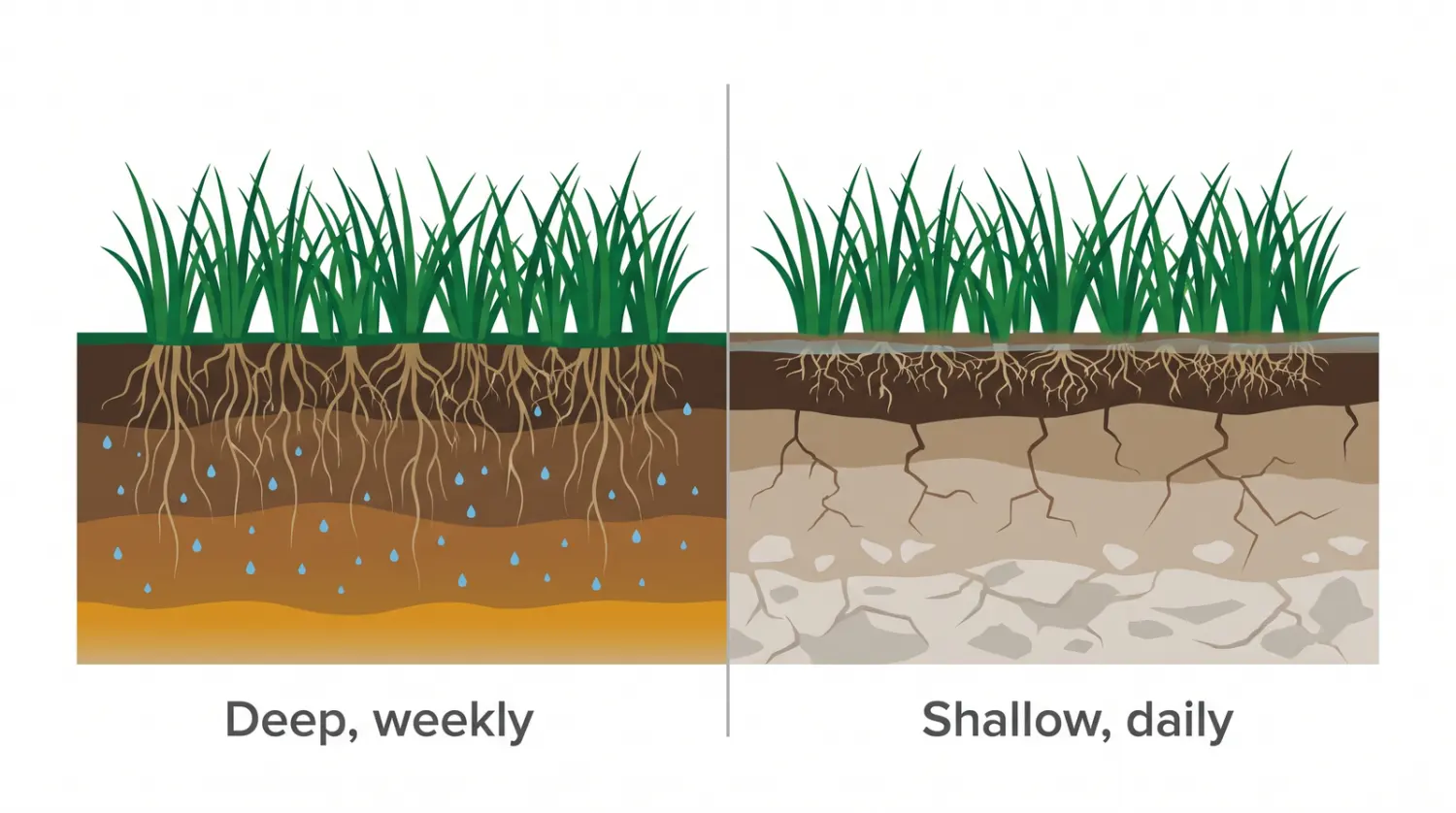
Deep, infrequent watering — soaking the soil to root depth once or twice a week rather than sprinkling lightly every day. It pulls roots downward toward the moisture, building a lawn that survives heat; frequent shallow watering keeps roots near the surface where they dry out first.
Why does deep, infrequent watering beat a daily sprinkle?
Because roots follow water. Water deeply and the roots grow down to reach it, giving the lawn a reservoir to draw on in a dry spell. Water a little every day and the roots stay shallow, sitting in the top inch of soil that bakes out first in a heat wave. The daily-sprinkle lawn looks fine in June and collapses in a July drought.
Two habits stretch every drop further. Mow high, at 6 to 7.5 cm (2.5 to 3 inches), which the City notes strengthens roots and helps the lawn retain water and nutrients. And keep new grass in mind: freshly laid sod or seed is the one case that needs frequent light watering until it takes, which is covered in the sod installation cost guide.
From the data: Of the 249 lawn-care companies YardQuote tracks across the GTA (July 2026), 220 carry three or more reviews at an average of 4.75 stars. The best-reviewed ones tend to push clients toward deep weekly watering and higher mowing, not more product, because that is what actually keeps a lawn alive through a Toronto summer.
Are there lawn watering rules in Toronto?
Toronto does not assign residents watering days or run a mandatory odd/even schedule the way some Ontario regions do. The City's official position is voluntary water-efficient landscaping: water in the morning, aim for about 2.5 cm a week, and let the lawn ease off naturally in summer (City of Toronto). During a dry summer, it is still worth checking the City's current guidance, since voluntary conservation asks can tighten when supply is stressed.
That voluntary approach includes permission to relax. Grass grows less quickly in dry spells and summer, so you can water less and mow less then, and a healthy cool-season lawn is built to go dormant and brown in a heat wave, greening back up when the rain returns. Dormant is not dead.
Putting it together for your yard
Water once a week if you are on clay, twice if you are on sand, always in the early morning, about an inch total including rain, and mow high. That routine uses less water than daily sprinkling and grows a deeper-rooted, tougher lawn. When you want it greener still, the fix is usually aeration or overseeding, not more water, covered in when to aerate your lawn in Toronto.
You can compare vetted lawn-care crews near you on the Toronto lawn care cost page, or browse pros in your area, such as lawn care in Etobicoke or North York, if you would rather hand off the maintenance.
Want a lawn that stays green without daily watering? Request a quote and compare up to three vetted local lawn-care pros side by side, on the same scope. Your contact details only go to the one you pick.