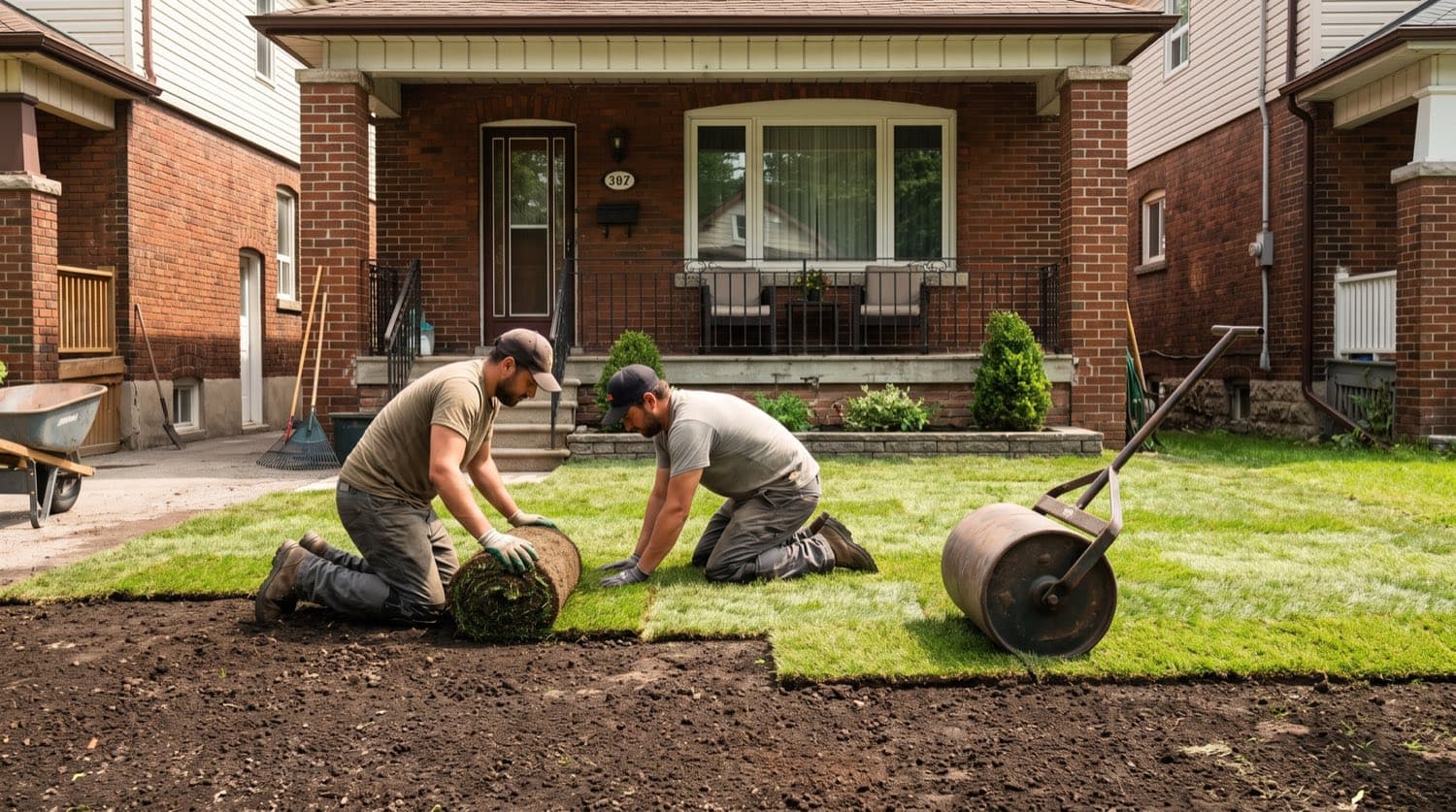
Answer First: Most sod that dies was set up to fail before it was laid. The seven big mistakes are: skipping soil prep, poor grading, laying on dry or hot soil, installing sod that dried out on the pallet, leaving gaps at unstaggered seams, not rolling for soil contact, and under-watering afterward. Sod needs firm contact with moist, prepared soil to root, and roll it right after laying to remove air pockets (UGA Extension).
New sod fails more often than any other lawn method relative to its cost, and it is almost never the sod's fault. The lawn is usually doomed by decisions made before and during the install, not by bad grass.
Why does new sod fail?
Because the roots never knit into the soil. Fresh sod arrives nearly rootless and has one job in its first two weeks: send roots down into the ground below. Anything that blocks that, dry soil, air pockets, hard ground, gaps, or missed watering, browns the sod fast. The seven mistakes below are the usual culprits, and each has a simple fix.
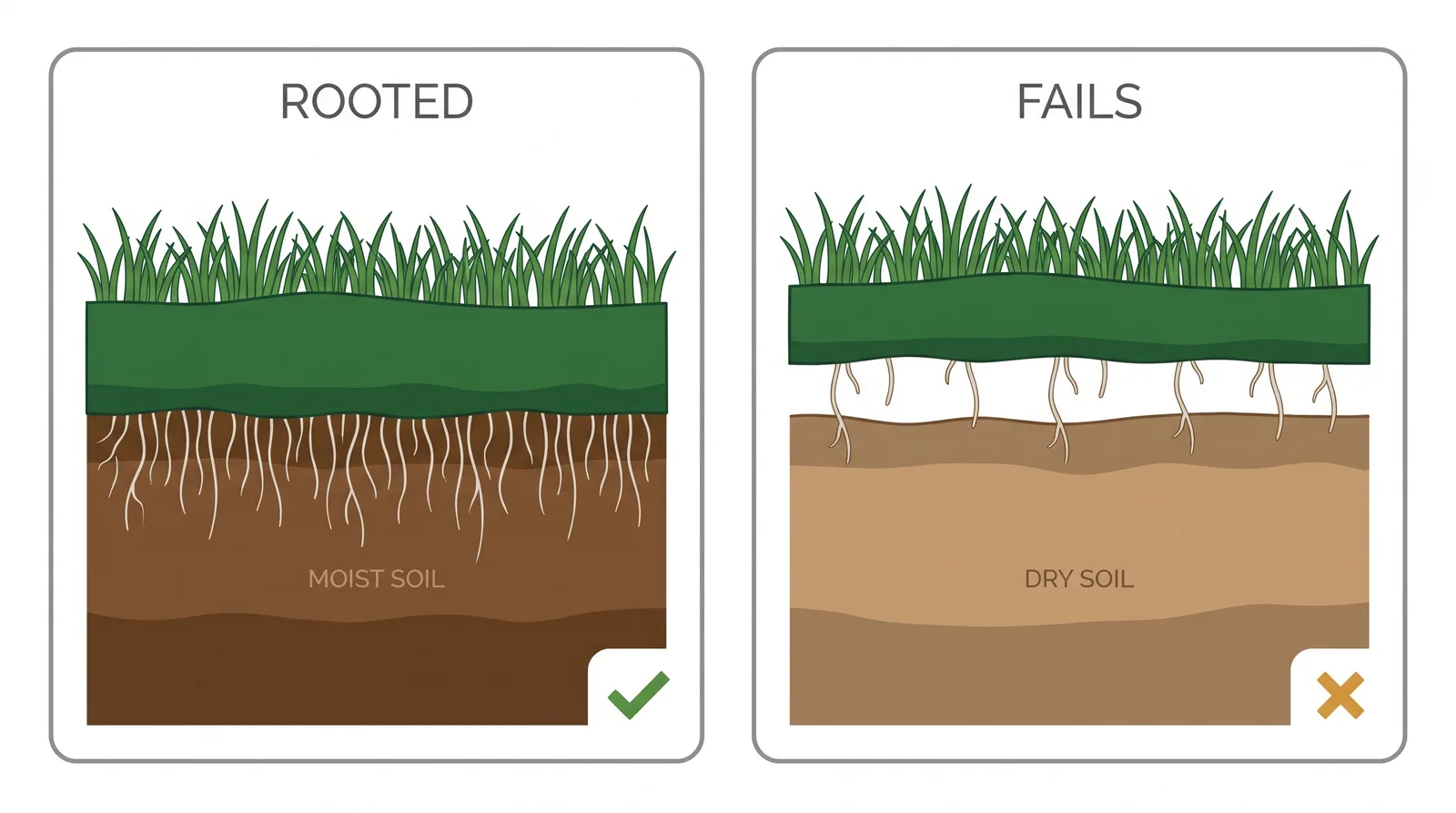
Quotable: Sod fails when its roots cannot reach the soil. Firm contact with moist, prepared ground is what lets it root, which is why rolling right after laying and dampening the soil first matter as much as watering (UGA Extension).
The 7 installation mistakes that kill sod
Here are the seven, with the fix for each. The first two happen before a single strip is laid, and they cause the most failures.
| # | Mistake | The fix |
|---|---|---|
| 1 | No soil prep: rocks, weeds, hard ground | Clear debris, add topsoil, loosen top 2–4 in |
| 2 | Unlevel or poorly graded ground | Level ruts and mounds; 1–2% slope from the house |
| 3 | Laying on dry, hot soil | Dampen the soil just before laying |
| 4 | Installing old, dried-out sod | Lay within ~24 h of delivery; keep it moist until then |
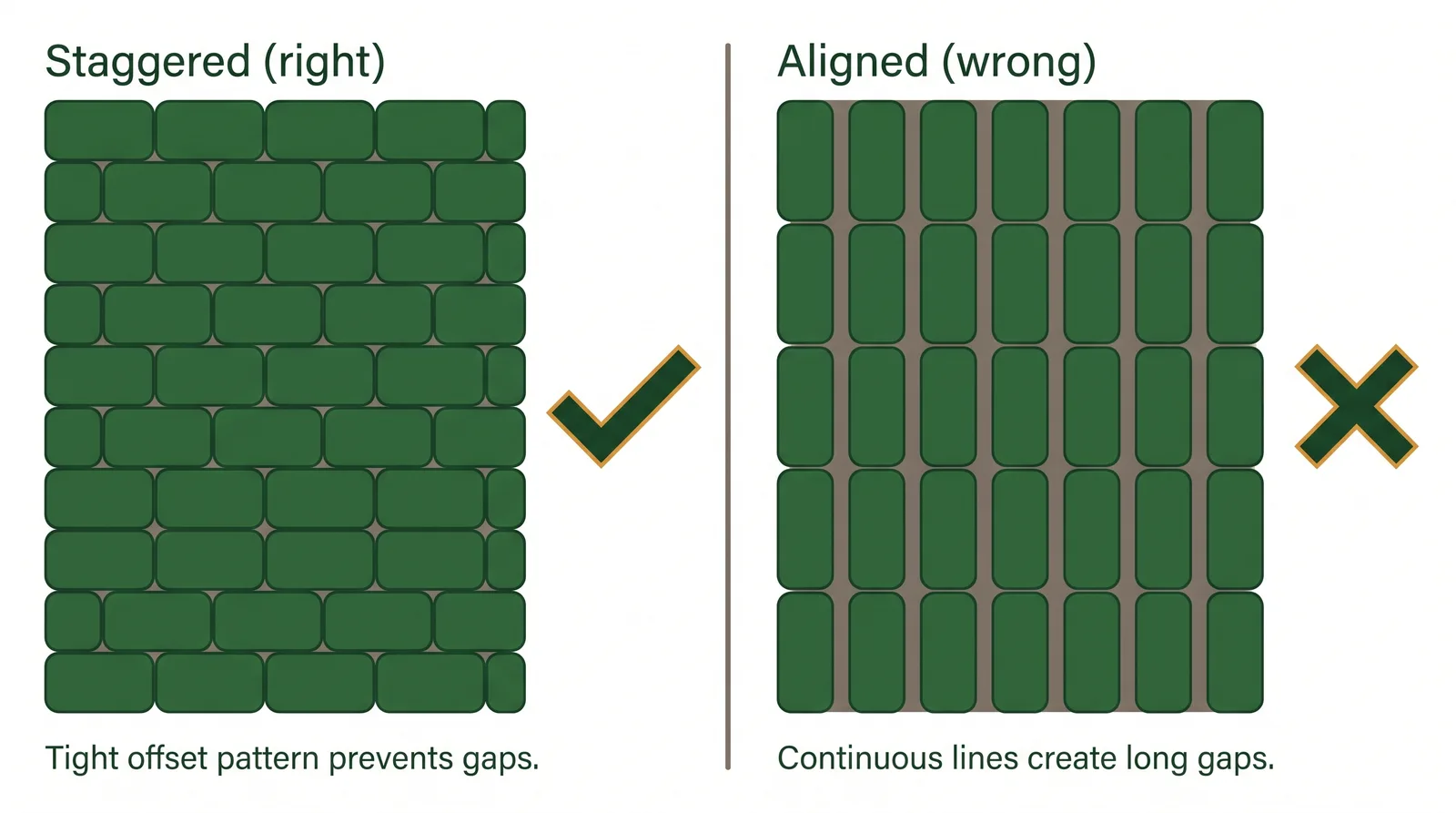
| 5 | Gaps and aligned seams | Stagger like bricks, butt pieces tight |
| 6 | Not rolling after laying | Roll or tamp to remove air pockets |
| 7 | Under- or over-watering after | Constant moisture 2 weeks, then taper |
Mistakes one and two are the foundation. Sod laid on compacted, rocky, or uneven ground cannot root evenly, and low spots pond water while high spots dry out. Prep the soil, grade it smooth with a gentle slope away from the house, and you have prevented most failures before you start.
From the data: Sod is expensive to get wrong. Installed sod runs about $1.50 to $4.50 per square foot in the GTA (YardQuote pricing, July 2026), so a botched 1,000 sq ft install is up to $4,500 to redo. YardQuote tracks 113 sod installation companies across the GTA, and the 107 with reviews average 4.81 stars, so a careful, well-reviewed installer is not hard to find.
How do you get it right?
Prep, lay fresh, roll, and water. Start with clean, loosened, leveled soil and a light grade away from the house. Dampen that soil just before the sod arrives, and lay the strips the day they are delivered, staggering the seams like bricks and butting them tight so no gaps open. Roll the whole lawn right after laying to press out air pockets, then begin watering immediately.
The install is only half the job. Even a flawless lay fails without the right watering, so follow a proper day-by-day sod watering schedule for the first two weeks, and hold off cutting until it passes the tug test, as we cover in when you can mow new sod. If sod is already browning, the new sod rescue guide helps you tell dormant from dead.
This is also a strong argument for hiring a pro who preps correctly. You can compare rates on the sod installation cost page or browse sod installation companies by area to find one with the reviews to back the work.
Want sod that actually takes? Request a quote and compare up to three vetted local pros side by side. Your contact details only go to the one you pick.