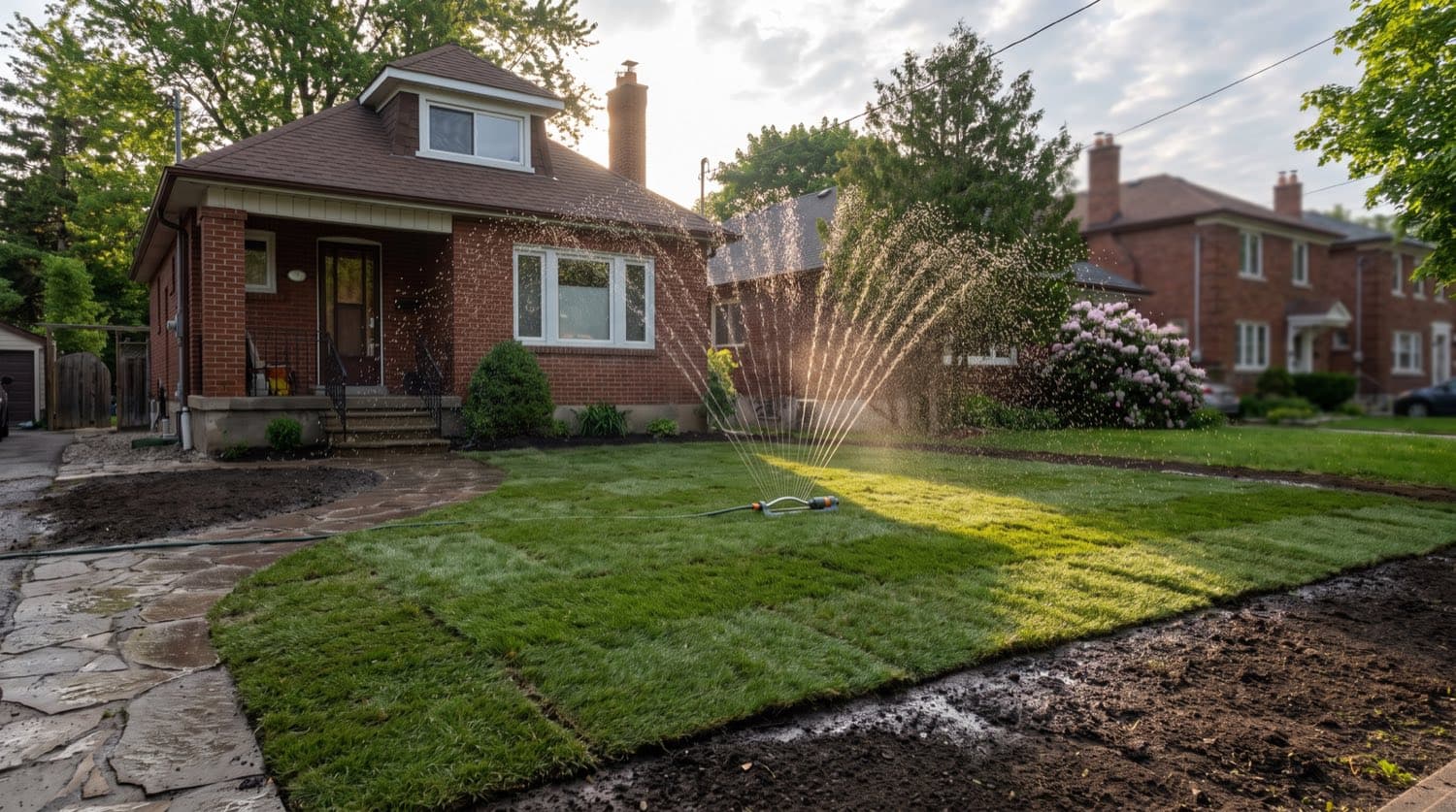
Answer First: New sod needs to stay constantly moist for its first two weeks, because it has almost no roots and dries out fast. Water it within the first half hour so moisture reaches 4 inches into the soil below, then water daily, or several times a day in heat, until a tug test around day 10 to 14 shows it has rooted. After that, taper to deep, infrequent watering; full establishment takes up to four weeks (University of Maryland Extension).
Fresh sod looks like a finished lawn, which is exactly the trap. It is really thousands of nearly rootless grass plants that will die within days if they dry out, and watering is the whole game for the first two weeks.
How do you water new sod in the first two weeks?
Constantly, and generously. The instant the sod is down, soak it so water passes through the roots and wets the prepared soil about 4 inches below. That first deep watering settles the sod against the soil and gives the roots somewhere moist to grow into.
After that, the job is to never let it dry out. Water daily, and in hot, dry, or windy weather break that into several lighter waterings through the day. New sod cannot pull moisture from deep soil the way an established lawn does, so a single hot afternoon can brown it if the top layer bakes dry.
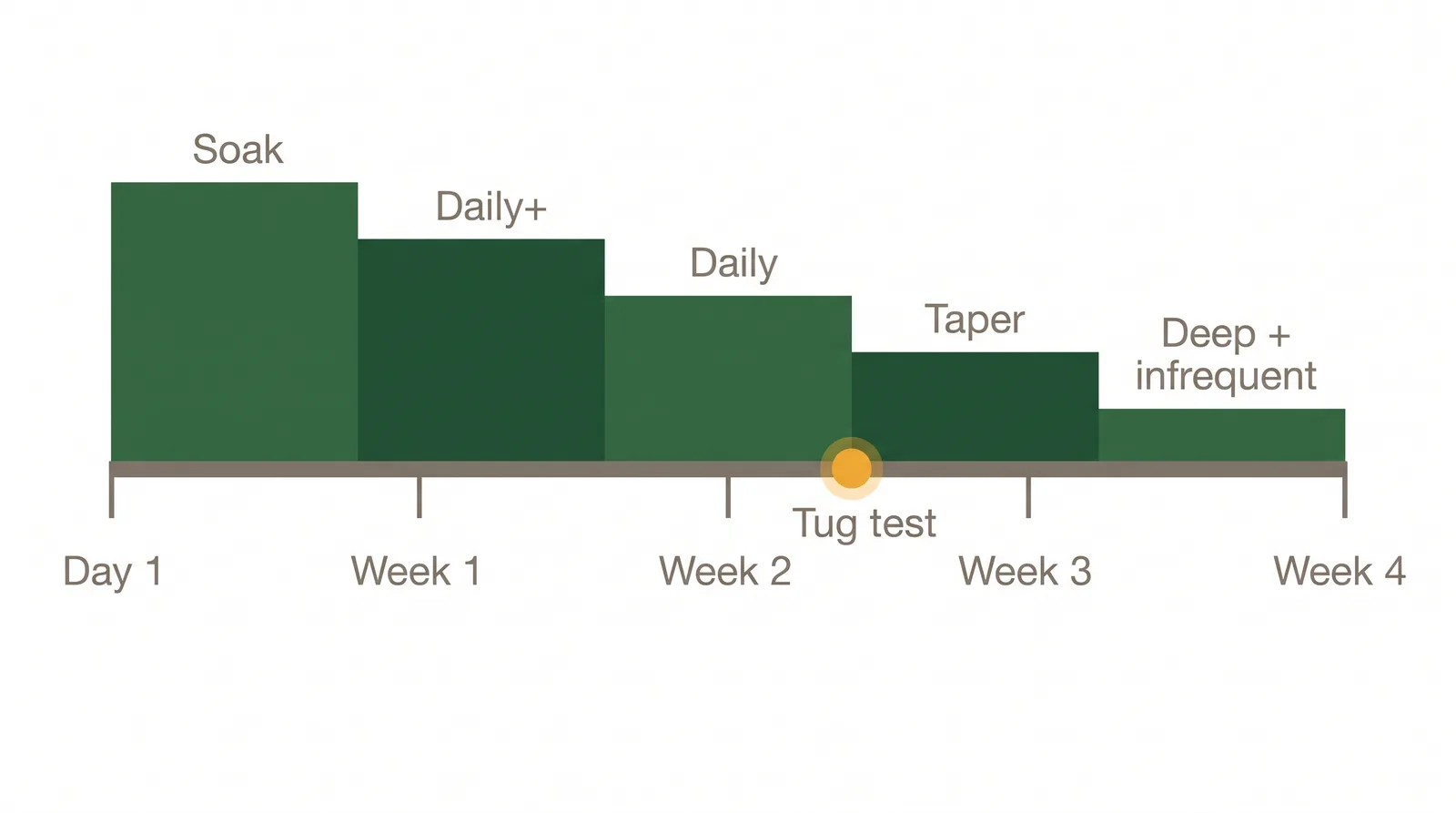
Here is the schedule laid out day by day.
| Stage | Watering | Goal |
|---|---|---|
| Day 1 (install) | Soak within 30 min, deep | Wet soil 4 in below sod |
| Days 1–7 | Daily; 2–3x/day in heat | Sod and topsoil always moist |
| Days 8–14 | Once daily, watch weather | Moist but not soggy |
| Day 10–14 | Tug test | Confirm roots have taken |
| Days 15–28 | Fewer, deeper waterings | Train deep roots |
| Week 4+ | ~1 inch, deep and infrequent | Normal lawn watering |
Quotable: New sod has almost no roots, so it cannot reach water in the soil below and will brown within days if the surface dries. Keep it constantly moist for the first two weeks, watering several times a day in hot weather (University of Maryland Extension).
How do you know when the sod has rooted?
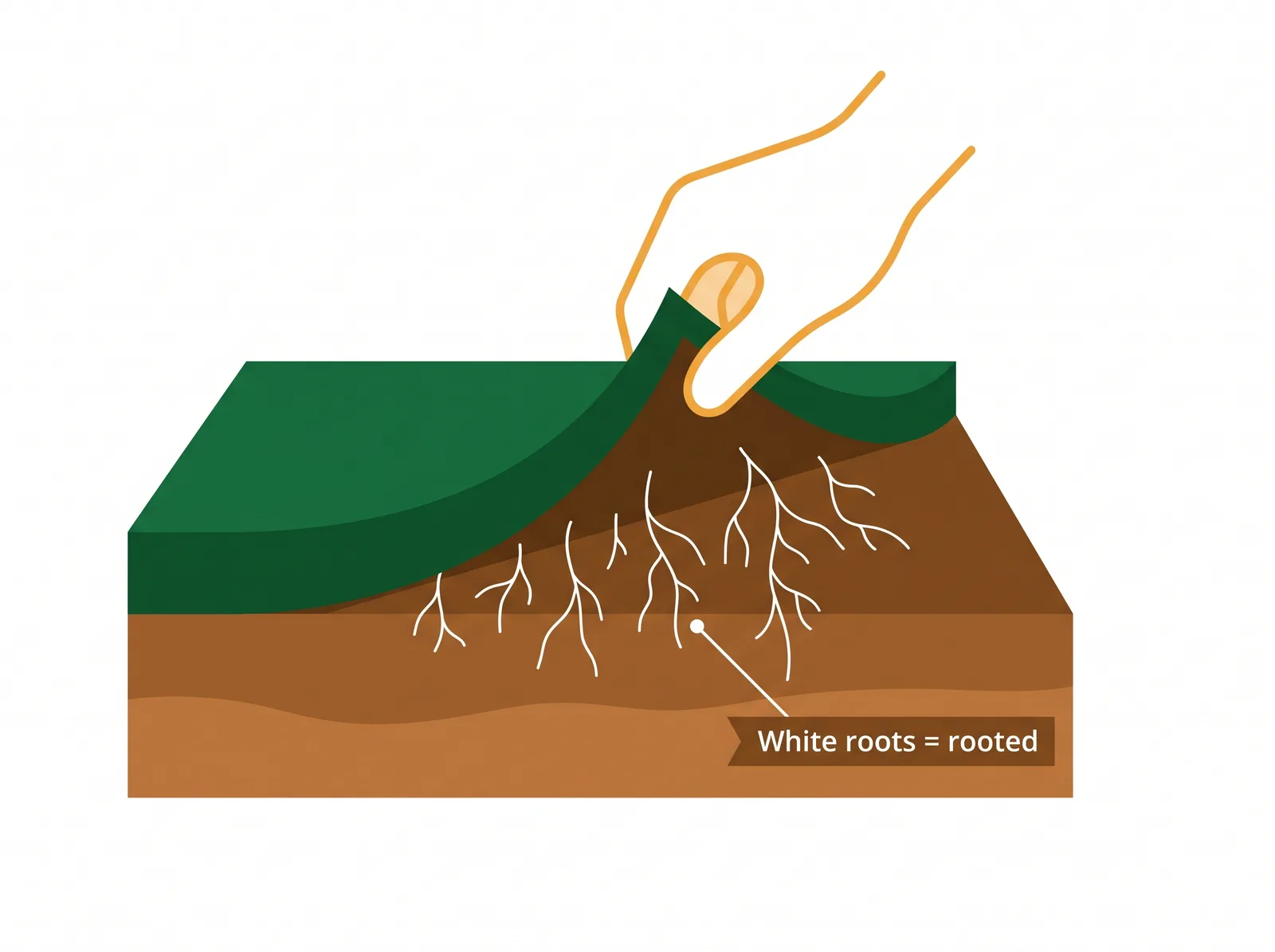
Do the tug test. Around day 10 to 14, gently lift a corner of a sod piece. If it pulls up easily with no resistance, the roots have not knit into the soil yet and you keep watering daily. If it resists and you can see white young roots reaching down, it has rooted.
That resistance is your signal to change the watering, not to stop it. Actively growing sod usually roots in two to three weeks, but full establishment can take up to four weeks depending on the soil, the season, and the weather. Stay off the sod entirely until it passes the test, since foot traffic on unrooted sod shifts the seams and tears the fragile new roots.
From the data: A new sod lawn is a real investment to protect. Installed sod runs about $1.50 to $4.50 per square foot in the GTA, so a modest 1,000 sq ft front yard is a $1,500-to-$4,500 lawn (YardQuote pricing, July 2026). Two weeks of disciplined watering is what keeps that money from turning brown at the seams.
When and how do you taper the water off?
Gradually, and in the right direction: fewer waterings, but deeper each time. Once the sod has rooted, switch from daily surface watering to fewer, heavier sessions of roughly an inch, letting the surface dry slightly between them. This is the "deep and infrequent" habit that trains roots to grow down instead of sitting shallow.
Timing helps too. Water early in the day so the blades dry before nightfall, which lowers the risk of the fungal diseases that thrive on wet overnight grass. And avoid laying and watering sod through a heat wave in the high 20s or 30s if you can, since that stacks heat stress on top of the establishment challenge.
Once it is rooted and about 3 to 3.5 inches tall, you can take the first cut. From there it follows normal lawn rules, including how often to mow through the season. If your sod does start browning despite watering, work through our new sod rescue guide before you assume it is dead.
To price a sod job or compare installers, see our sod installation cost guide, the lawn care cost page, or browse sod installation companies by area.
Planning a new lawn and want it done right? Request a quote and compare up to three vetted local pros side by side. Your contact details only go to the one you pick.