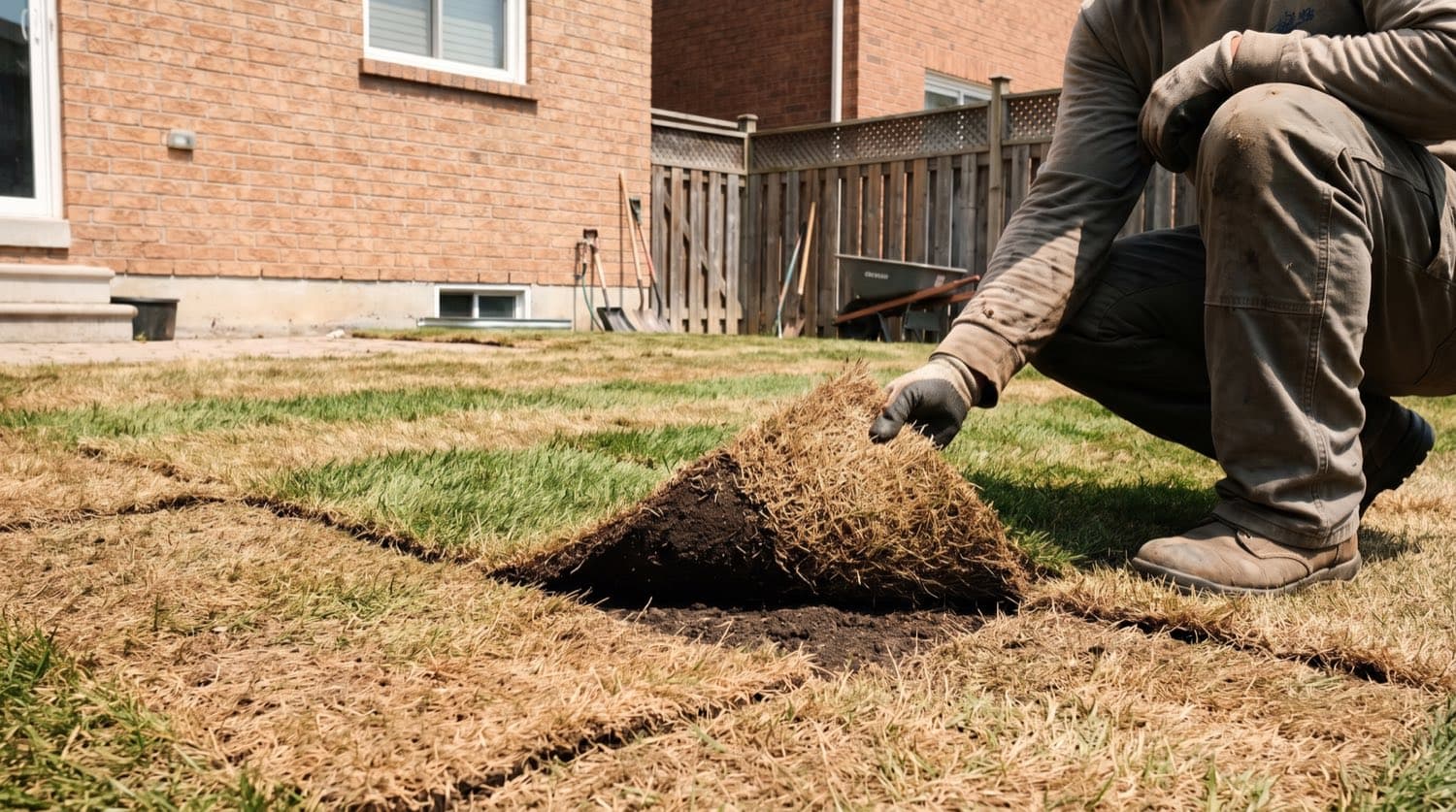
Answer First: Most new sod that browns is thirsty, not dead. Under-watering and heat stress are the leading causes, and sod dries out at the seams and edges first. Before replacing anything, check the crown where the blade meets the roots: if it is still green and the soil below is moist, the grass is likely recoverable with consistent deep watering. Do not fertilize stressed sod, which makes heat damage worse (University of Maryland Extension).
You laid a perfect green lawn a week ago and now it is going brown at the edges. It feels like failure, but new sod browning is usually a fixable watering problem, not a dead lawn, if you act fast and diagnose before you react.
Why is my new sod dying?
Almost always because it dried out. New sod is nearly rootless for its first two weeks, so it cannot reach water in the soil and depends entirely on you keeping it moist. Miss that and it browns quickly, starting at the seams and edges where sun and wind pull moisture out fastest.
A few causes drive most cases, and they call for different fixes, which is why diagnosing first matters.
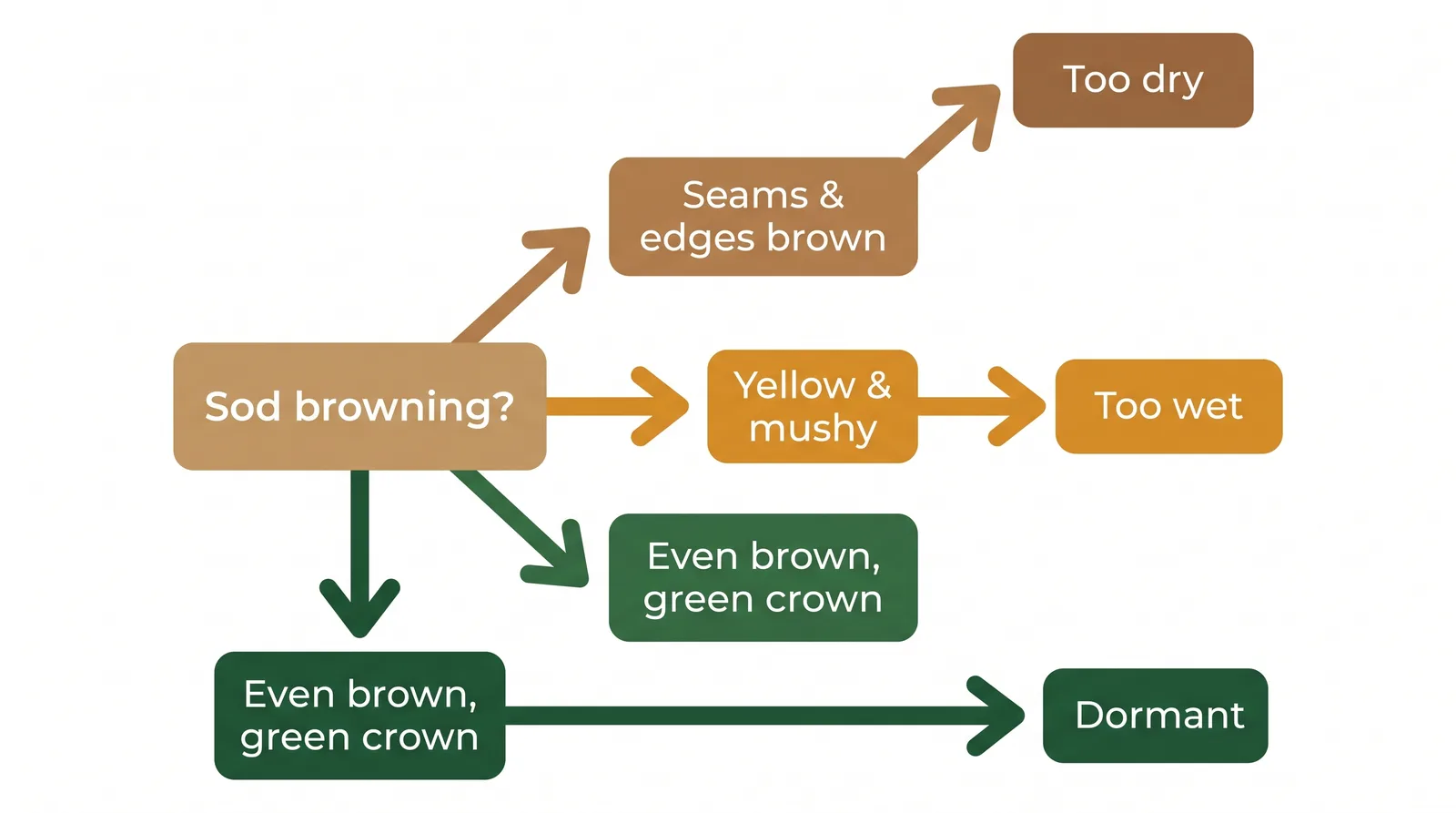
| What you see | Likely cause | First fix |
|---|---|---|
| Browning at seams and edges | Under-watering, dry soil | Soak deeply, keep moist |
| Whole pieces crisp and curling | Heat stress or laid on dry soil | Water more often, shade if possible |
| Yellow, soft, mushy patches | Over-watering, poor drainage | Ease off, let surface dry |
| Uniform brown, crown still green | Dormancy or shock | Consistent water, wait |
| Gaps opening between pieces | Edges shrinking as they dry | Water seams, push pieces together |
Quotable: New sod browns at the seams and edges first because those are the most exposed to sun and wind. It is the classic sign of under-watering, the single most common reason a fresh sod lawn fails (University of Maryland Extension).
Is the sod dead, or just dormant?
Check the crown before you write it off. The crown is the small growing point where the grass blade meets the roots at the soil line, and it is the part that matters for survival. Brown blades can sit on top of a crown that is very much alive.
Pull back a browning piece and look. If the crown is green and firm and the soil underneath is still moist, the grass is stressed or dormant, not dead, and it can green up again with proper watering. If the crown is brown and dry, the piece lifts away with no roots, and it crumbles, that section has died and will need replacing. Grass that greens up after a few days of good watering was dormant; grass that stays brown was dead.
From the data: Replacing failed sod is not cheap. Installed sod runs about $1.50 to $4.50 per square foot in the GTA, so re-sodding a browned-out 500 sq ft section can mean $750 to $2,250 over again (YardQuote pricing, July 2026). Diagnosing before you rip it out is worth the ten minutes.
How do you rescue struggling new sod?
Fix the water first, and be patient. If the diagnosis points to dryness, which it usually does, soak the sod thoroughly so water reaches the soil beneath it, then keep it consistently moist while it tries to root, watering deeply each session rather than a daily sprinkle.
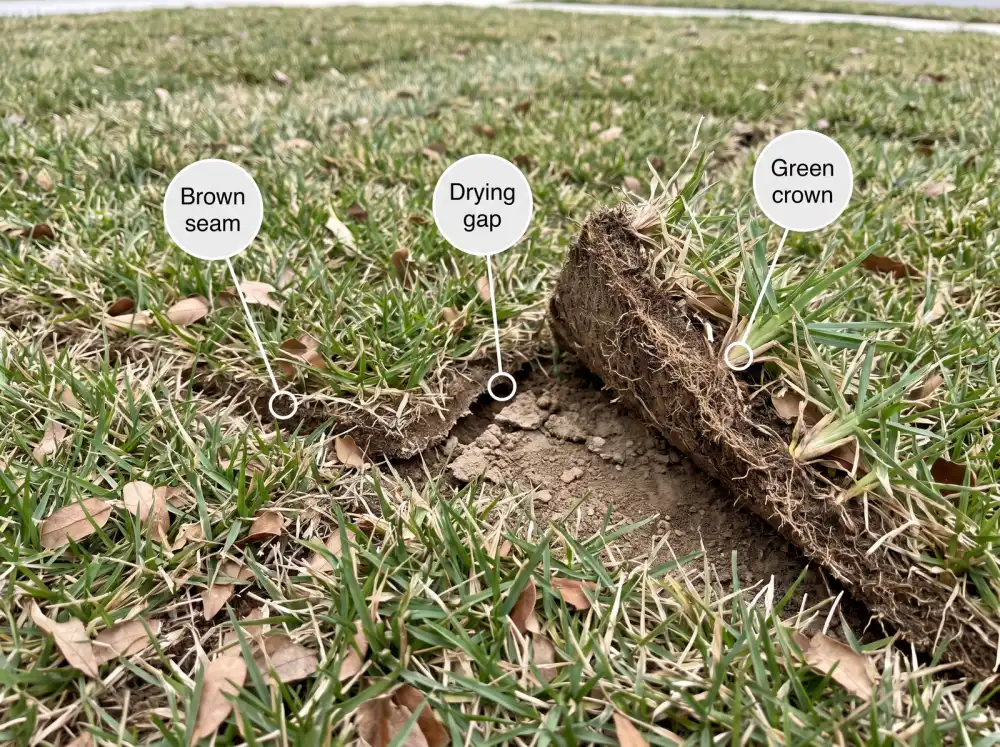
Then handle the mechanical problems. Press or roll any lifted, curling pieces back into firm contact with the soil, and gently push shrinking pieces together to close the drying gaps at the seams. Keep foot traffic off it, and if the sod went down in a heat wave, temporary shade during the hottest hours helps. One thing not to do: do not fertilize. Feeding stressed, heat-damaged sod pushes growth the weak roots cannot support and often makes the browning worse.
Get the watering right and most stressed sod recovers within a couple of weeks. To avoid the whole problem next time, follow a proper day-by-day sod watering schedule from the moment it goes down, and time the install away from peak heat.
If sections are genuinely dead and need redoing, compare what a fix costs on our sod installation cost guide and the lawn care cost page, or line up a pro among sod installation companies by area.
Not sure if your lawn is savable or needs redoing? Request a quote and compare up to three vetted local pros side by side. Your contact details only go to the one you pick.