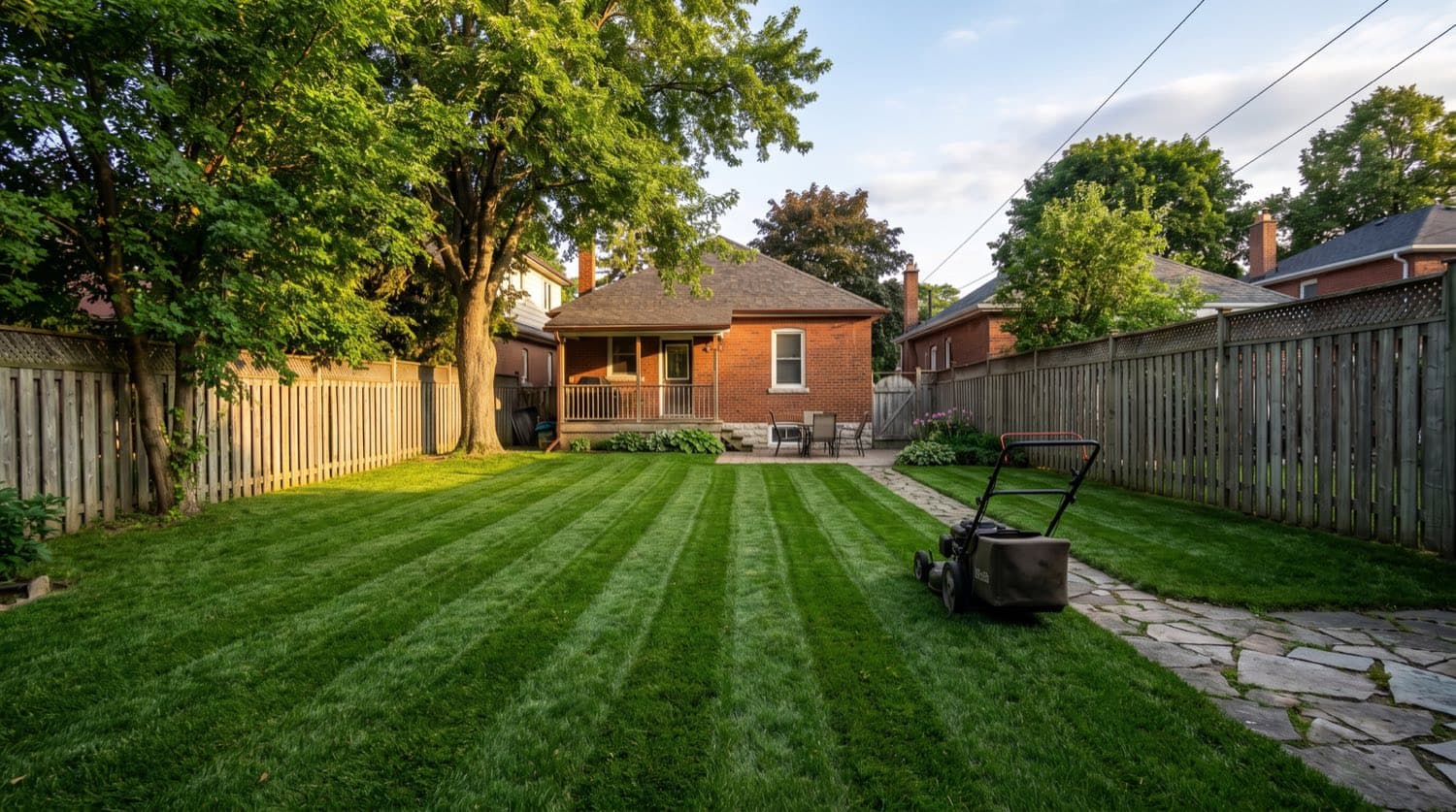
Answer First: Mow by how fast your grass is growing, not by a fixed day. The rule is to cut whenever the lawn is about one-third taller than your target height, removing no more than a third of the blade (University of Minnesota Extension). In Toronto that works out to roughly every 4 to 6 days in spring and every 10 to 14 days in summer, when heat slows growth. Hold cool-season grass at 2.5 to 3.5 inches.
"Every Sunday" is the most common lawn-mowing schedule and one of the least sensible. Grass does not grow on a weekly timer, and the calendar approach either scalps it in spring or lets it get away from you.
How often should you actually mow?
As often as the grass grows into cutting range, which changes week to week. The single rule that governs healthy mowing is the one-third rule — never remove more than one-third of the grass blade's height in a single mow. Everything about frequency follows from it.
Work backward from your target height. If you keep the lawn at 3 inches, you mow when it hits about 4 inches, taking off the top inch. How long that takes depends entirely on growth rate, which shifts with temperature, moisture, sunlight, and soil fertility. Fast growth in May means mowing every few days; slow growth in a dry August means waiting a week or two.
Quotable: The right mowing frequency is set by the grass, not the calendar. Mow whenever the lawn is about a third taller than your target height, so a fast-growing spring lawn may need cutting twice a week while a heat-stalled summer lawn waits two weeks.
What is the mowing schedule through a Toronto season?
It rises and falls with the growing season. Cool-season grasses, the ones that dominate GTA lawns, grow hardest in the mild, moist stretches of spring and fall and slow down in summer heat, so your mowing cadence should do the same.
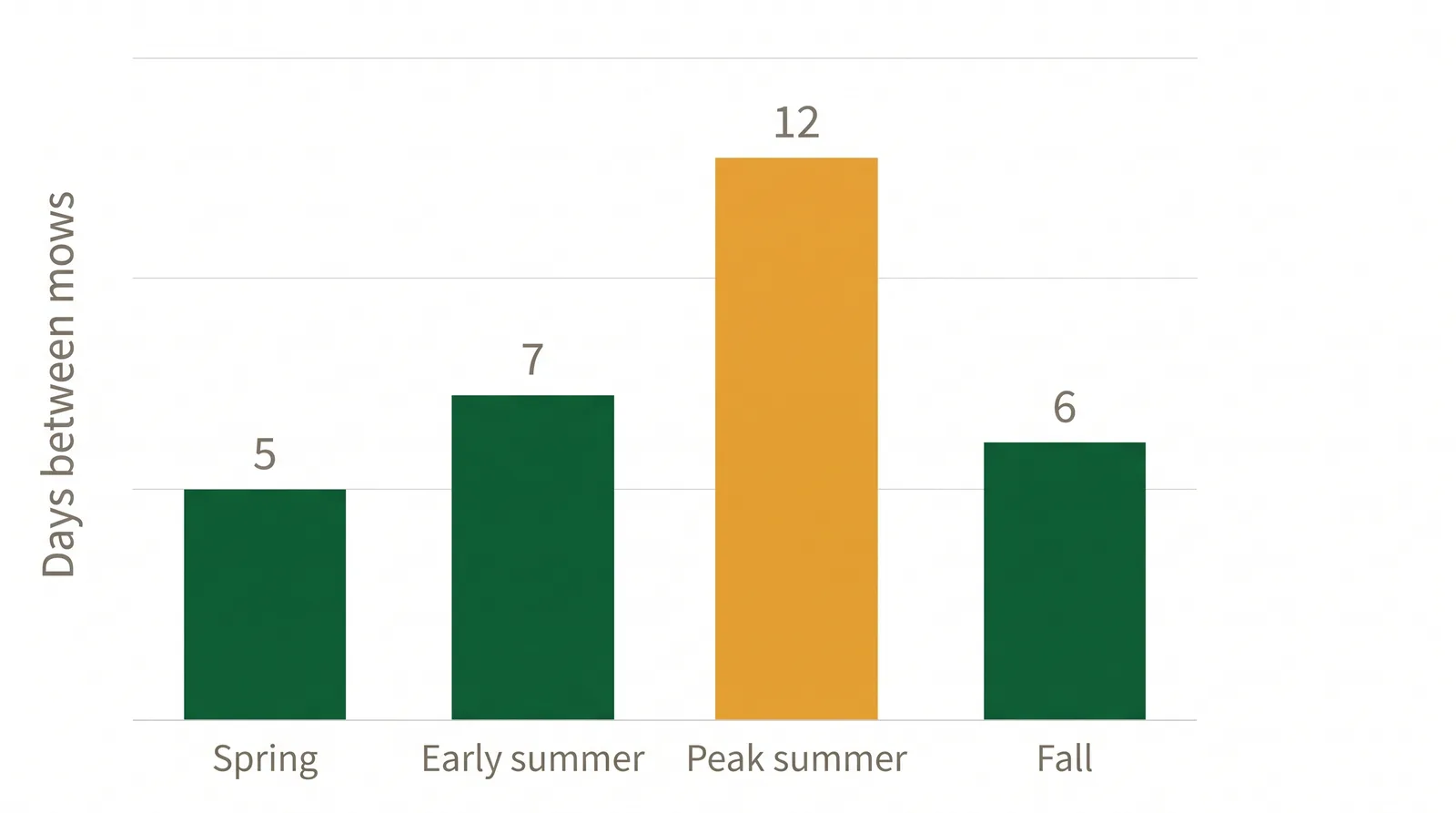
| Season | Typical gap between mows |
|---|---|
| Spring (May–June) | Every 4–6 days |
| Early summer | Every 7 days |
| Peak summer heat (July–Aug) | Every 10–14 days |
| Fall (Sept–Oct) | Every 5–7 days |
| Late fall | Slowing to a final cut |
These are typical ranges, not rules. A rainy, mild July can push growth back up and shorten the gap; a hot dry spell can stall the lawn into near-dormancy where it barely needs cutting at all. Watch the height, and let it set the pace.
From the data: YardQuote tracks 249 lawn care companies across the GTA, and among the 236 with review data the average rating is 4.75, with 88% at 4.5 stars or higher (YardQuote tracking, July 2026). Recurring mowing is the anchor service most of them sell, so if a growth-driven schedule is more than you want to manage, the market to hand it off is deep.
Why does cutting too much at once hurt the lawn?
Because the blade feeds the roots. When you remove more than a third of the leaf in one pass, you cut the plant's ability to photosynthesize, which stresses it and can stop the roots from growing. In summer that shock forces extra watering just to keep the grass alive.
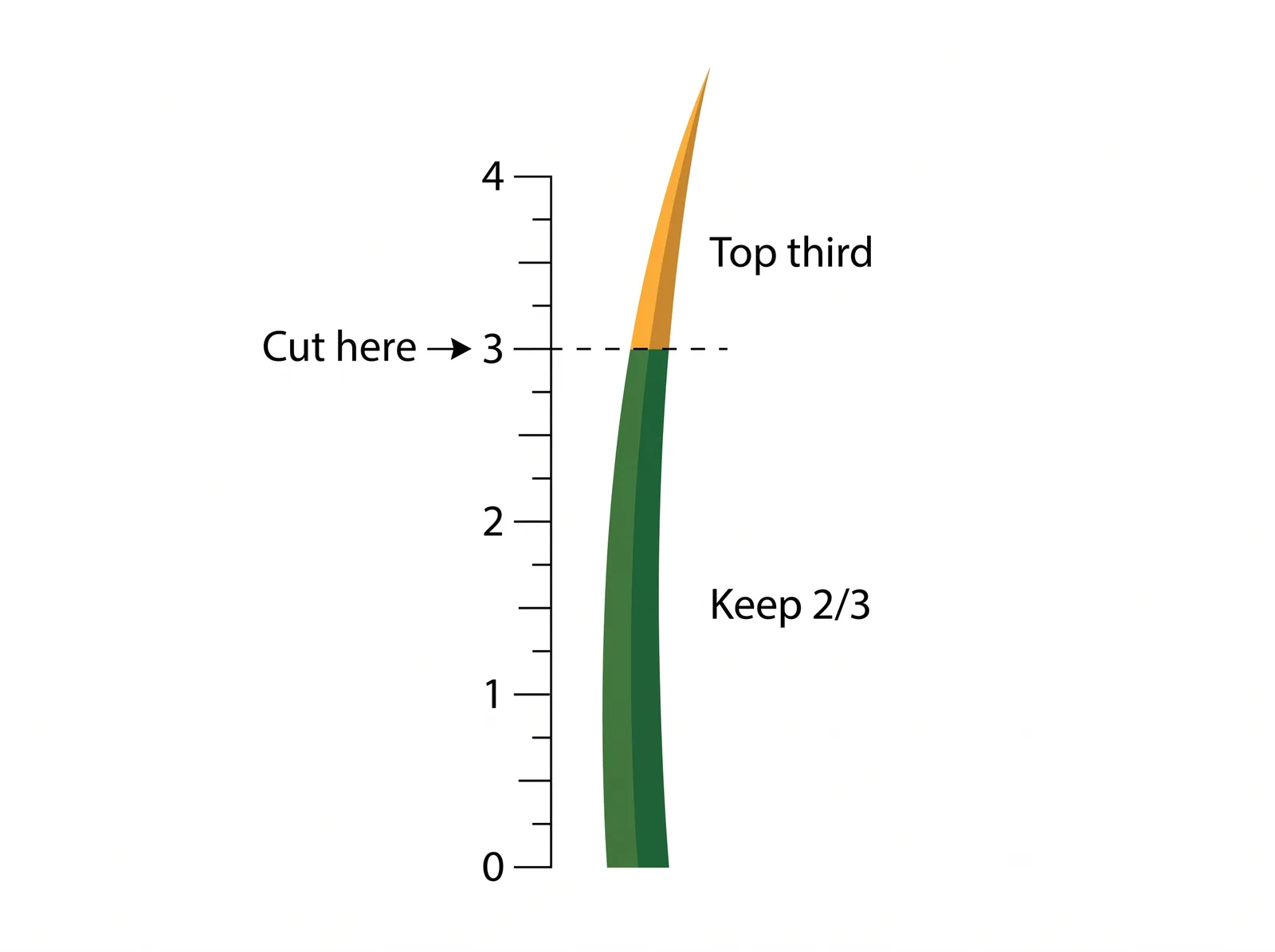
This is why letting the lawn get long and then scalping it back is the worst pattern. If you skipped a couple of weeks and the grass is now 5 inches, do not drop it straight to 3. Cut a third off, let it recover for a few days, then cut again. Two gentle passes beat one brutal one.
Height, mulching, and the rest of the routine
Set the height first and the frequency sorts itself out. Cool-season Toronto lawns do best at 2.5 to 3.5 inches, and raising the deck toward the top of that band in summer shades the soil, holds moisture, and blocks the light crabgrass needs to sprout. A taller lawn is a lower-maintenance lawn.
Leave the clippings where they fall in most cases; short clippings break down fast and feed nitrogen back to the soil, so mulching cuts your fertilizer need. The same restraint you use on the first mow of spring carries through the whole season, and if the lawn is thin enough that mowing alone will not fix it, that is a cue to plan overseeding in the fall.
To hand the weekly cut to a pro, or price a full lawn program, compare current rates on our lawn care cost page or browse lawn care companies by area.
Want a cared-for lawn without tracking growth rates yourself? Request a quote and compare up to three vetted local pros side by side. Your contact details only go to the one you pick.