Answer First: Fall is the better time to overseed an Ontario lawn. Cool-season lawns establish best when overseeded in autumn, and the Ontario window is late August through mid-September, when the soil is still summer-warm, the air is cooling, rain is reliable, and weeds are at their weakest (University of Maryland Extension). Spring, late April to mid-May, works as a backup but faces cool soil, more weeds, and looming summer heat.
If your lawn thinned out over the summer, the instinct is to fix it the moment the snow melts. For Ontario grass, patience pays: the same seed you scatter in April does far better in September.
Should you overseed in fall or spring in Ontario?
Fall, in most cases. Overseeding means spreading fresh grass seed over an existing lawn to thicken it and crowd out weeds, and the timing decides whether that seed thrives or struggles. Ontario lawns are cool-season grasses, and cool-season grasses establish best when overseeded in autumn, according to university turf research.
The reason is a rare alignment of conditions. In early fall the soil still holds summer heat, which seed needs to germinate, while the air has cooled to a range young grass finds comfortable. Rain is steadier than in high summer, and the weeds that would otherwise race your seedlings for space are winding down for the year.
Quotable: Cool-season lawns like Ontario's establish best when overseeded in fall. The soil is still warm enough to germinate seed while the cooling air and low weed pressure give young grass room to root before winter (University of Maryland Extension).
When exactly is the fall window in Ontario?
Late August through mid-September. That timing is deliberate: it hands new seedlings roughly six to eight weeks of active growth before the first hard frost, which is about what they need to root deeply enough to survive a Toronto winter.
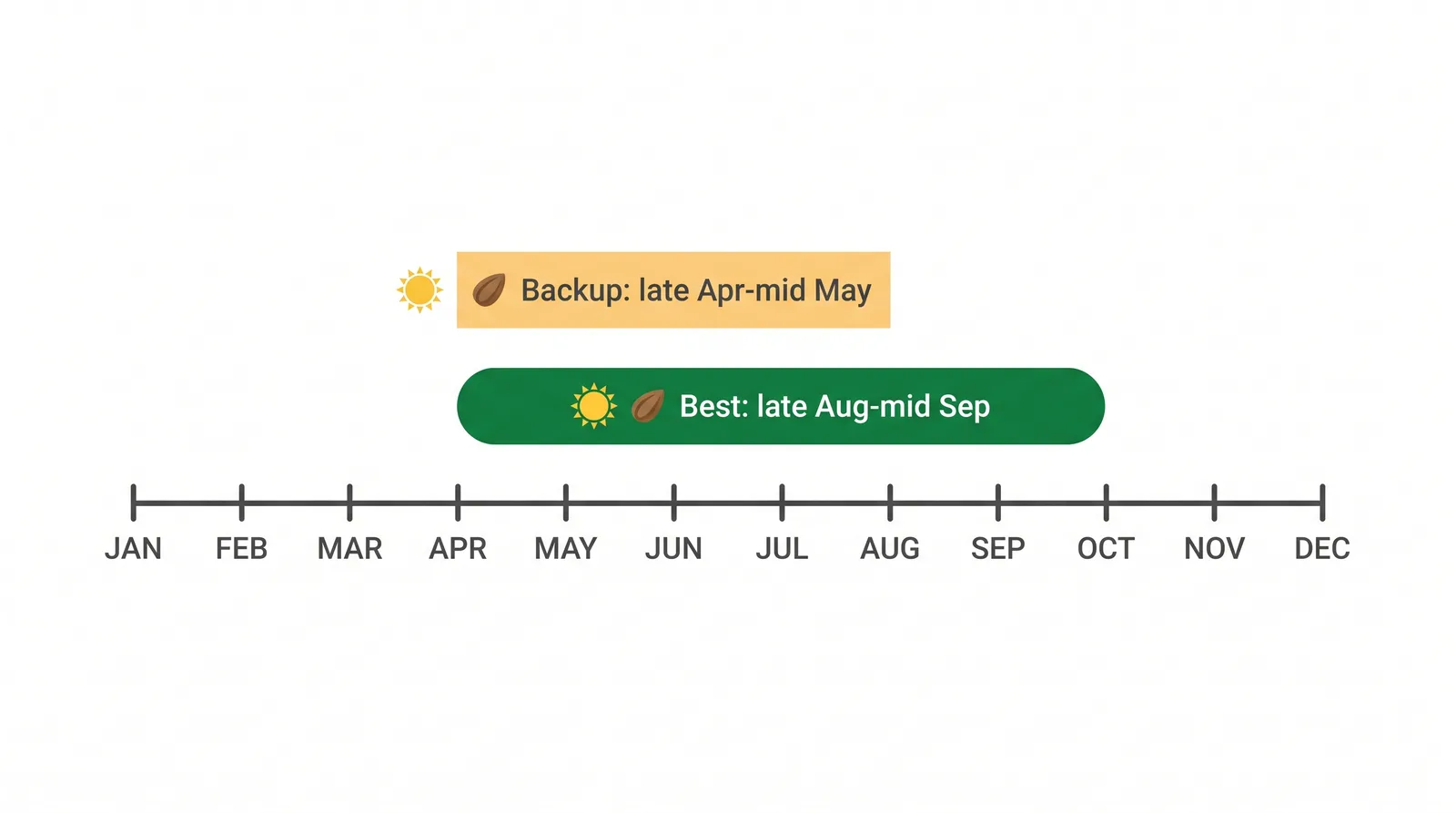
Soil temperature is the real trigger, not the calendar date. Cool-season seed germinates best when the soil sits around 13 to 21°C (55 to 70°F). After a GTA summer the ground holds that warmth well into September, which is why the fall window is so productive. Seed the lawn too late in October and the soil has cooled past the point of reliable germination, and the seedlings run out of runway before frost.
Why is spring the weaker choice?
Because spring stacks three problems against new grass. It still works, and it is the right call if your lawn is too damaged to wait until fall, but you are fighting the season rather than riding it.
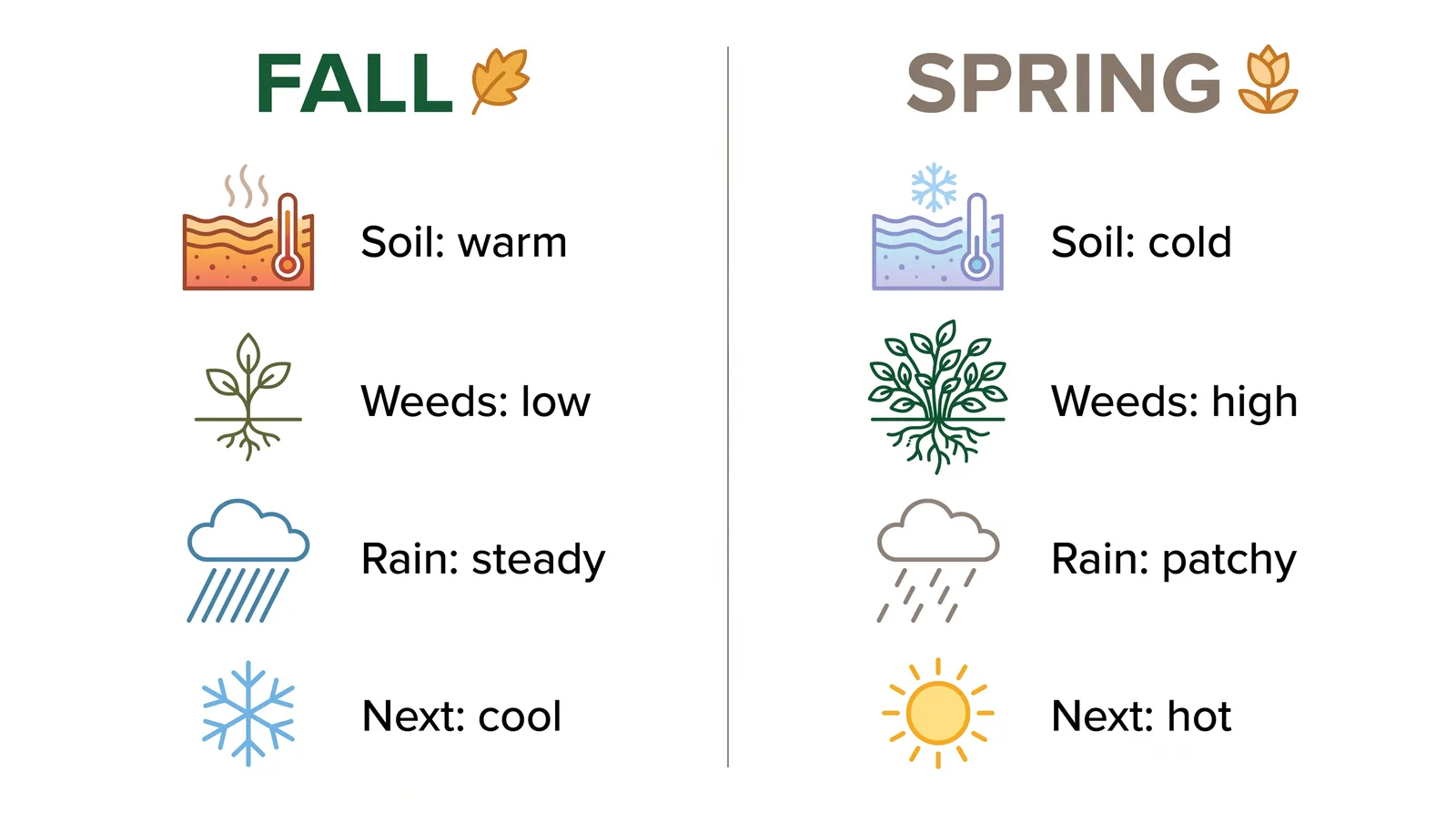
| Factor | Fall (late Aug–mid Sep) | Spring (late Apr–mid May) |
|---|---|---|
| Soil temperature | Warm from summer, ideal | Cold early, warms unevenly |
| Weed competition | Lowest of the year | High, crabgrass germinating |
| What comes next | Cool weather, then dormancy | Summer heat stress |
| Establishment time | 6–8 weeks before frost | Weeks before heat hits |
The killer for spring seeding is what follows it. A seedling that sprouts in May has only a few weeks to toughen up before Toronto's summer heat and dry spells arrive, and immature grass is exactly what heat and drought kill first. Fall seedlings face the opposite: cooling weather and a gentle slide into dormancy, then a head start next spring.
From the data: YardQuote tracks 249 lawn care companies across the GTA, and among the 236 with review data the average rating is 4.75 (YardQuote tracking, July 2026). Overseeding and aeration are standard offerings for these crews, so if you want the fall window done right, there is a deep, well-reviewed bench to hire from.
How do you overseed so it takes?
Seed into a lawn that is ready to receive it, then protect the seedbed. Mow the existing lawn a little shorter than usual and rake or aerate so the seed reaches soil, not thatch. Spread a quality cool-season blend built for Ontario, Kentucky bluegrass, perennial ryegrass, and fescues, and keep the seedbed lightly moist until germination.
Then leave it alone. Wait until the new grass reaches mowing height, about four to six weeks, before the first cut, and follow the one-third rule so you never scalp young seedlings. The same restraint applies to your first mow of spring once the lawn wakes up.
If your lawn is more bare dirt than thin grass, overseeding may not be enough, and fresh sod or a full reseed is the better fix. You can compare what each approach costs on our lawn care cost page and sod installation guide, or browse lawn care companies by area to line up a fall crew before the window closes.
Not sure whether to overseed, aerate, or start fresh? Request a quote and compare up to three vetted local pros side by side. Your contact details only go to the one you pick.