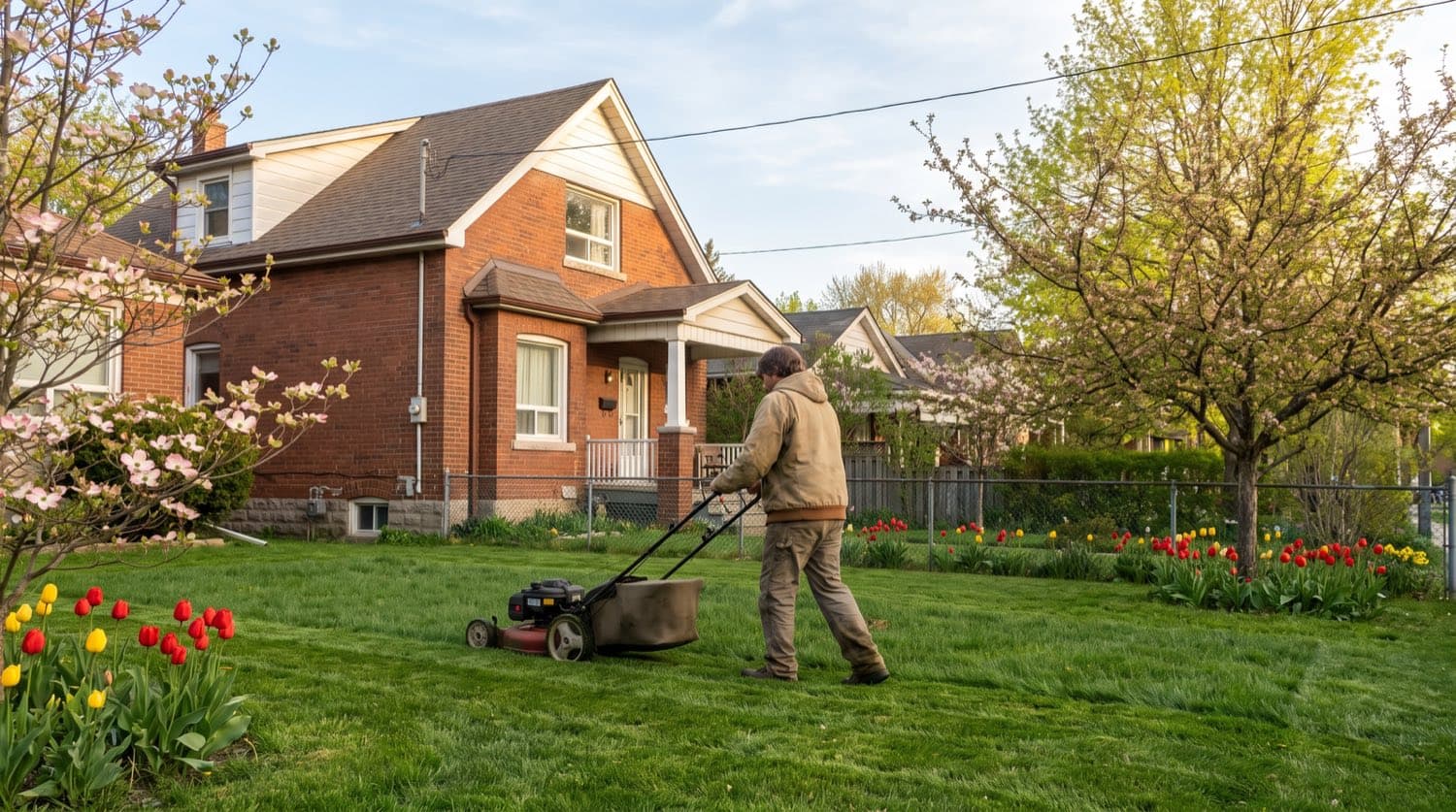
Answer First: Make your first spring mow in Toronto once the lawn greens up and reaches about 3 inches (7.5 cm), typically late April to early May, and only after the ground has dried and firmed. Cut no more than a third of the blade in that first pass under the one-third rule, and hold the lawn at 2.5 to 3.5 inches (University of Minnesota Extension). Rushing onto wet spring soil does more harm than waiting a week.
The first warm Saturday sends everyone to the shed for the mower. The lawn usually is not ready, and cutting it too early, too wet, or too short can set your grass back for the whole season.
When should you do the first mow of spring?
When the grass tells you, not the calendar. Cool-season lawns, the Kentucky bluegrass, perennial ryegrass, and fescue mixes that grow across Toronto, stay dormant through winter and only start active vertical growth once conditions warm. Waiting for that signal beats picking a date.
The trigger is roughly when daytime air holds around 14 to 16°C and the soil warms past about 10°C, which in the GTA usually lands between late April and early May. In practice, watch the lawn: once it has greened up and reached about 3 inches tall, it is ready for its first cut.
Quotable: Time your first spring mow by the grass, not the date. Once a Toronto lawn greens up and reaches about 3 inches, cool-season grass has broken dormancy and is ready to cut, usually late April to early May.
Why you should wait for the ground to dry
Because wet spring soil is the fastest way to damage a lawn you are trying to help. After the thaw the ground is soft and often saturated, and rolling a mower across it does real harm that lasts well past spring.
Mowing saturated ground compacts the soil, tears fragile roots out of the soft earth, and leaves tire ruts you will see all summer. Wet clippings also clump and mat down, smothering the grass underneath. A simple field test: if you cross the lawn and leave deep footprints, it is too wet to cut.
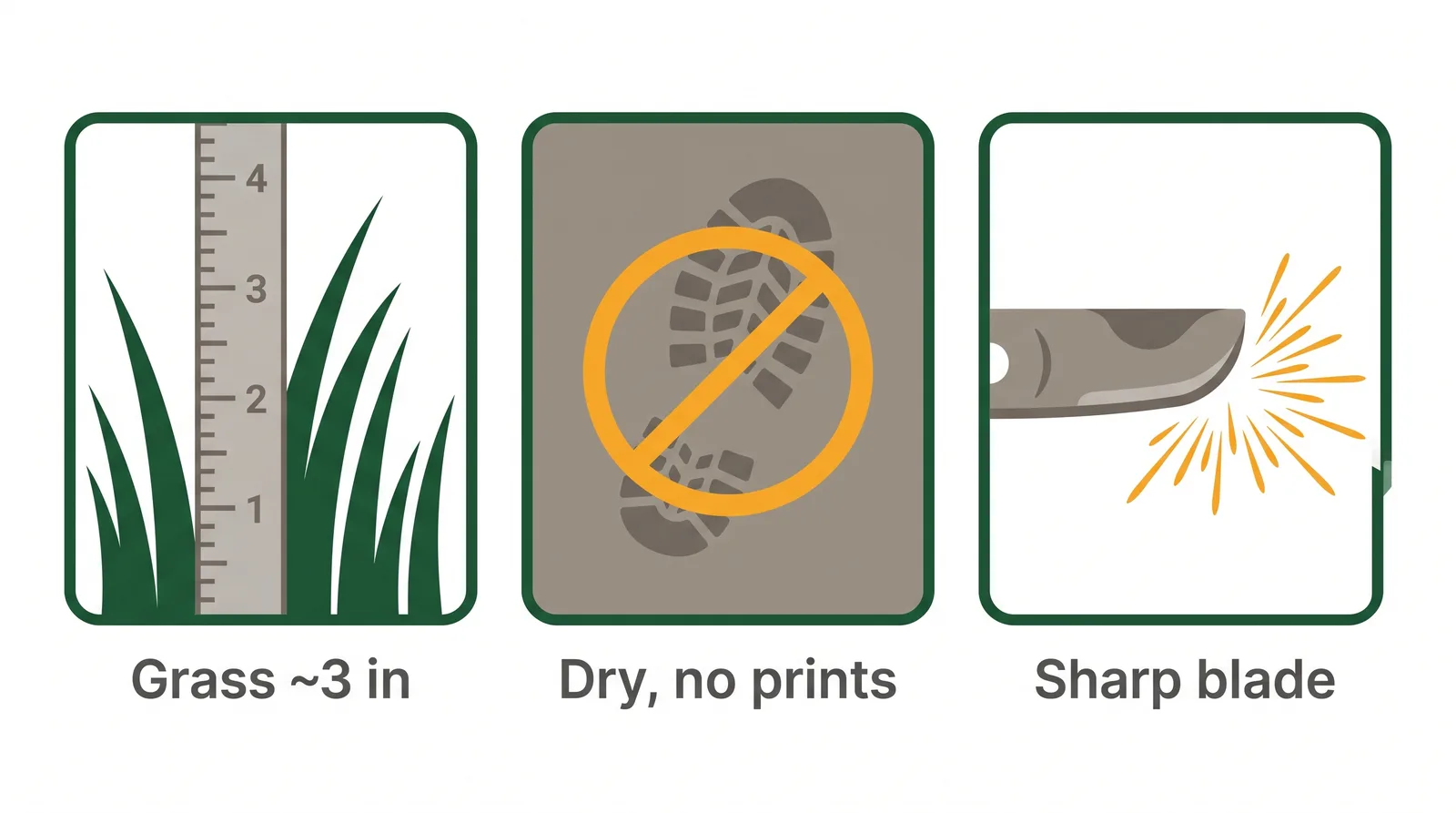
There is a small pre-mow job worth doing while you wait: sharpen the mower blade. A dull blade tears grass tips instead of slicing them, leaving a ragged, whitish lawn that dries out and invites disease. One sharpening in early spring pays off all season.
How short should the first cut be?
Modest. The instinct to scalp the lawn short so you mow less often is exactly backwards, and it is the most common first-mow mistake. Cool-season Toronto lawns do best held at 2.5 to 3.5 inches, and the first cut should respect that range.
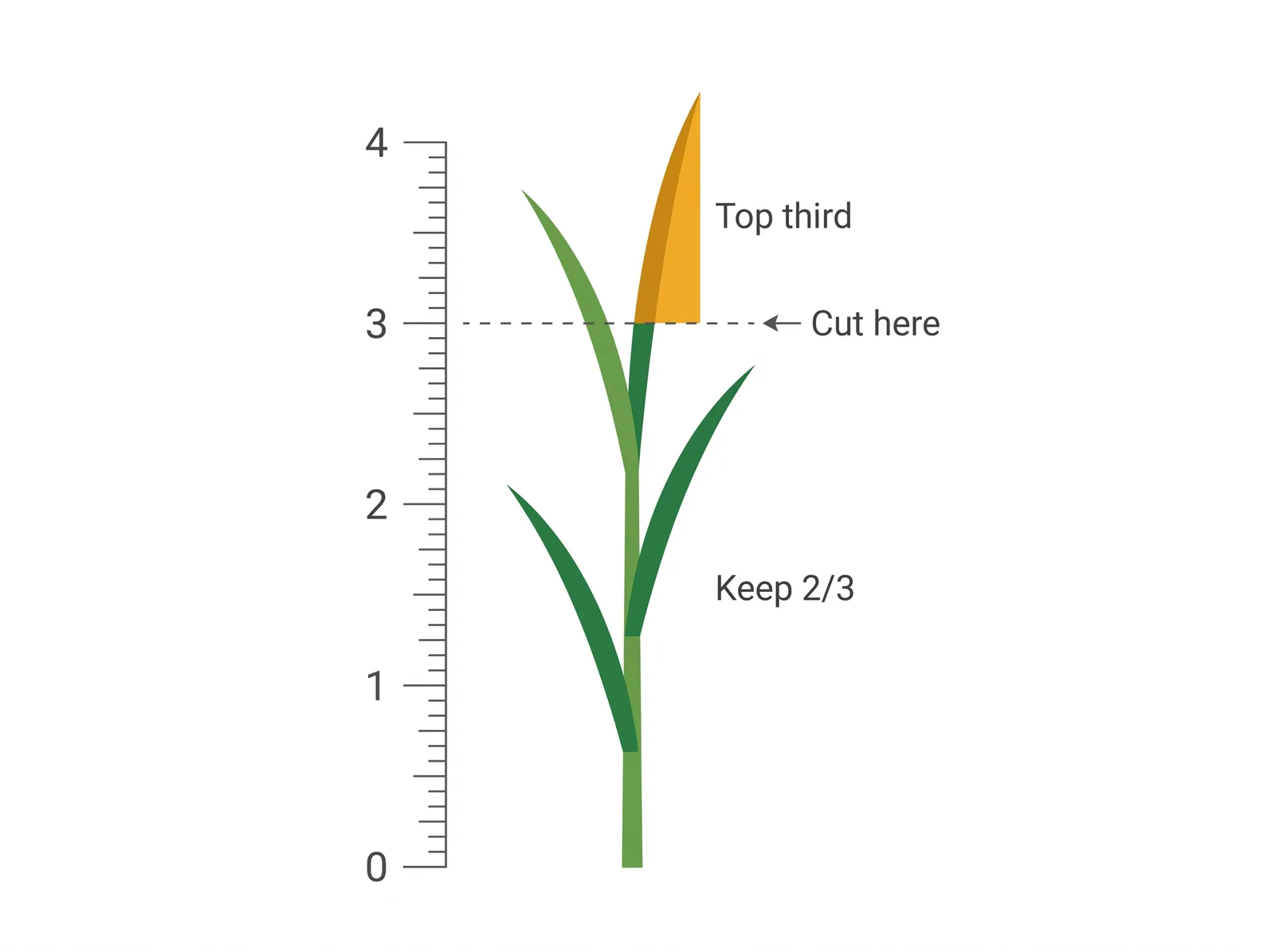
The rule that protects the lawn is the one-third rule — never remove more than a third of the blade's height in a single mow. Taking off more than that at once shocks the plant, cuts its ability to photosynthesize, and can brown the lawn just as it is trying to green up. So if the lawn is at 3 inches, take it to about 2.5, not down to the dirt.
From the data: YardQuote tracks 249 lawn care companies across the GTA, and among the 236 with review data the average rating is 4.75, with 88% sitting at 4.5 stars or higher (YardQuote tracking, July 2026). Recurring mowing is the anchor service most of them sell, so if you would rather hand off the weekly cut, the market is deep and well-reviewed.
Height, weeds, and the rest of the season
The taller-lawn habit you set on the first mow pays off for months. Grass held at 2.5 to 3.5 inches shades the soil, which keeps it cooler and moister and crowds out weed seeds before crabgrass can establish. A lawn scalped short in April is an open invitation for the weeds you will fight all summer.
Keep the rhythm simple: mow on the one-third rule, mulch the clippings back to feed the soil for free, and only bag when the grass is long and clumping or matted with leaves. If your lawn came out of winter thin or patchy, the first mow is also your cue to plan repairs, and the timing runs opposite to what most people expect, as we cover in overseeding in fall versus spring.
For bigger fixes, or to hand the weekly mow to a pro, you can compare current rates on our lawn care cost page, read how sod installation is priced per square foot if you are starting from bare ground, or browse lawn care companies by area to line up a season.
Want a lawn that looks cared-for without the guesswork? Request a quote and compare up to three vetted local pros side by side. Your contact details only go to the one you pick.