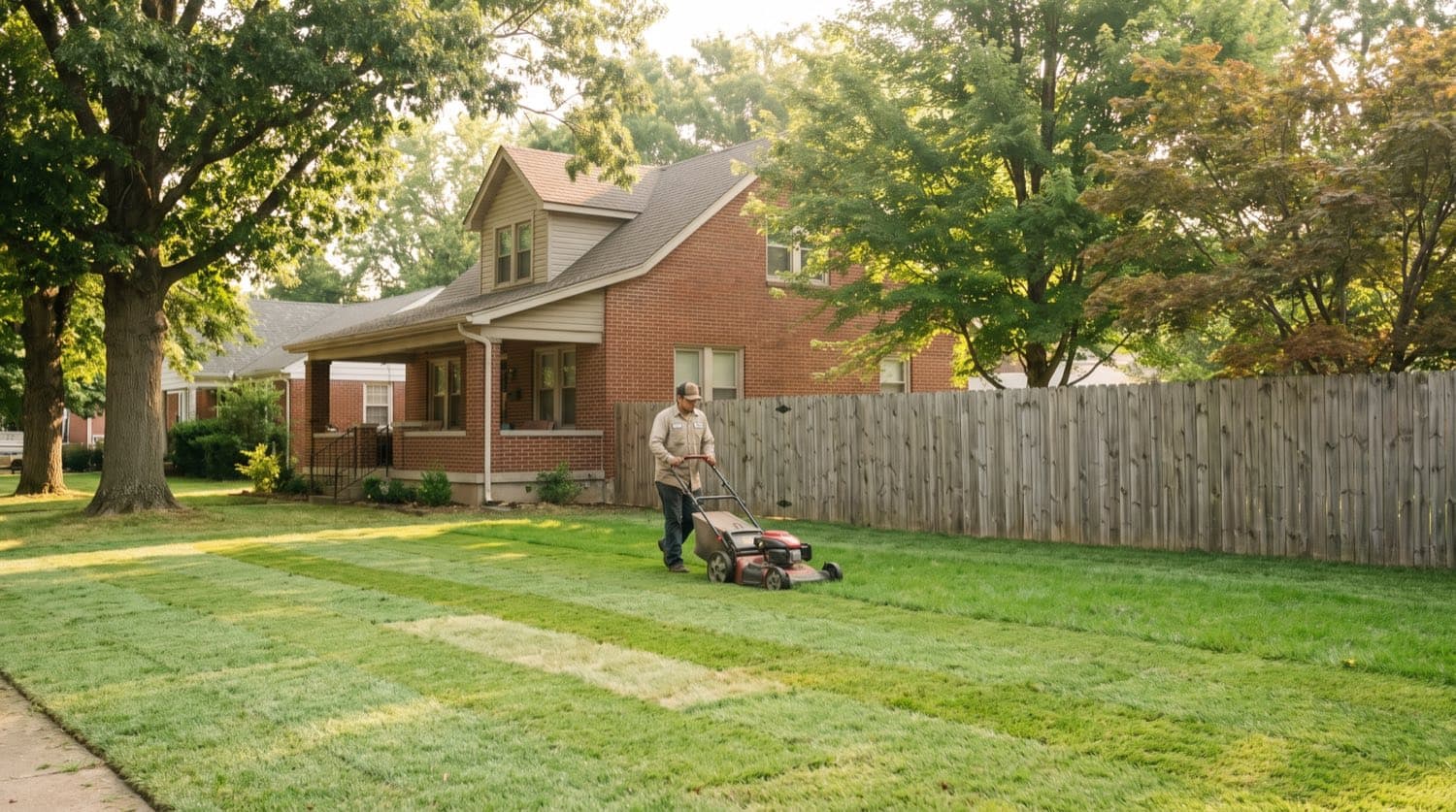
Answer First: Do not mow new sod until it has rooted into the soil, usually 2 to 3 weeks after laying and up to 4 weeks in cool conditions. Confirm it is ready with a tug test: gently lift a corner, and if it resists with white roots showing, it has taken (University of Maryland Extension). Let the grass reach about 3 to 3.5 inches, then cut no more than a third of the blade with a sharp mower on firm, moist-not-soggy ground.
A new sod lawn looks mowable the day it goes down. It is not. Cutting it before the roots knit into the soil is one of the fastest ways to wreck an install you just paid for.
How long before you can mow new sod?
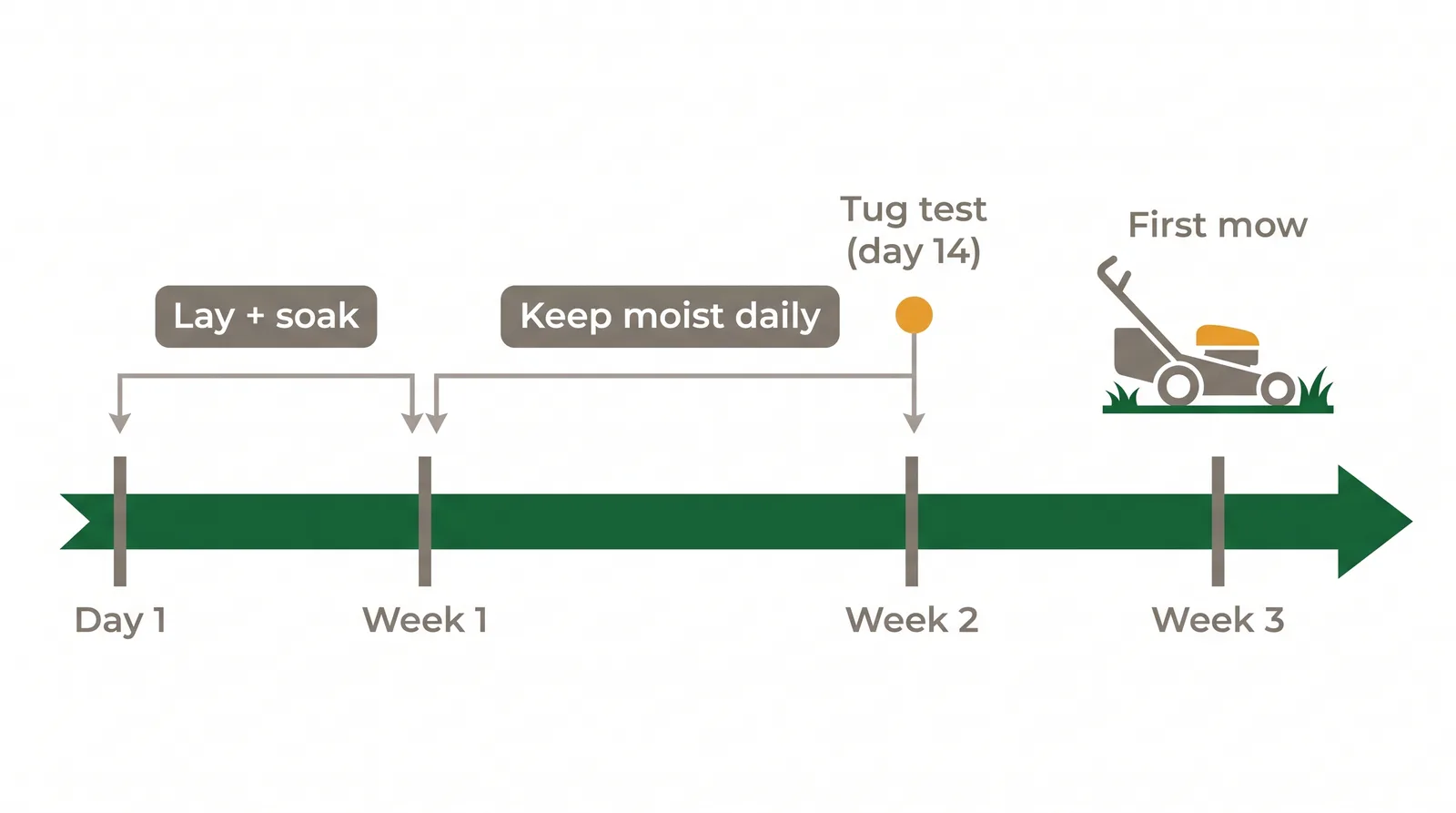
Usually 2 to 3 weeks, and the clock is really counting root growth, not days. Fresh sod arrives with its roots cut short, so for the first couple of weeks it is held in place by little more than its own weight. Only once new roots grow down and grip the soil can it survive a mower.
That timeline stretches in cool or dry conditions, sometimes to 4 weeks, and shortens in warm weather with good watering. Rather than trusting a fixed date, test it. Until the sod passes the tug test below, stay off it entirely, since foot traffic and mower wheels drag unrooted pieces and open gaps at the seams.
Quotable: New sod is held down only by its own weight until it roots, usually in 2 to 3 weeks. Mowing before then catches the loose pieces and tears out the new roots, which is why the tug test comes before the first cut (University of Maryland Extension).
How do you know the sod has rooted? The tug test
Lift a corner and feel for resistance. Around day 14, gently pull up an edge of a sod piece. If it comes away easily with no resistance, the roots have not knit in yet and you keep watering. If it holds firm and you can see white young roots reaching into the soil, it has rooted and can take a careful mow.
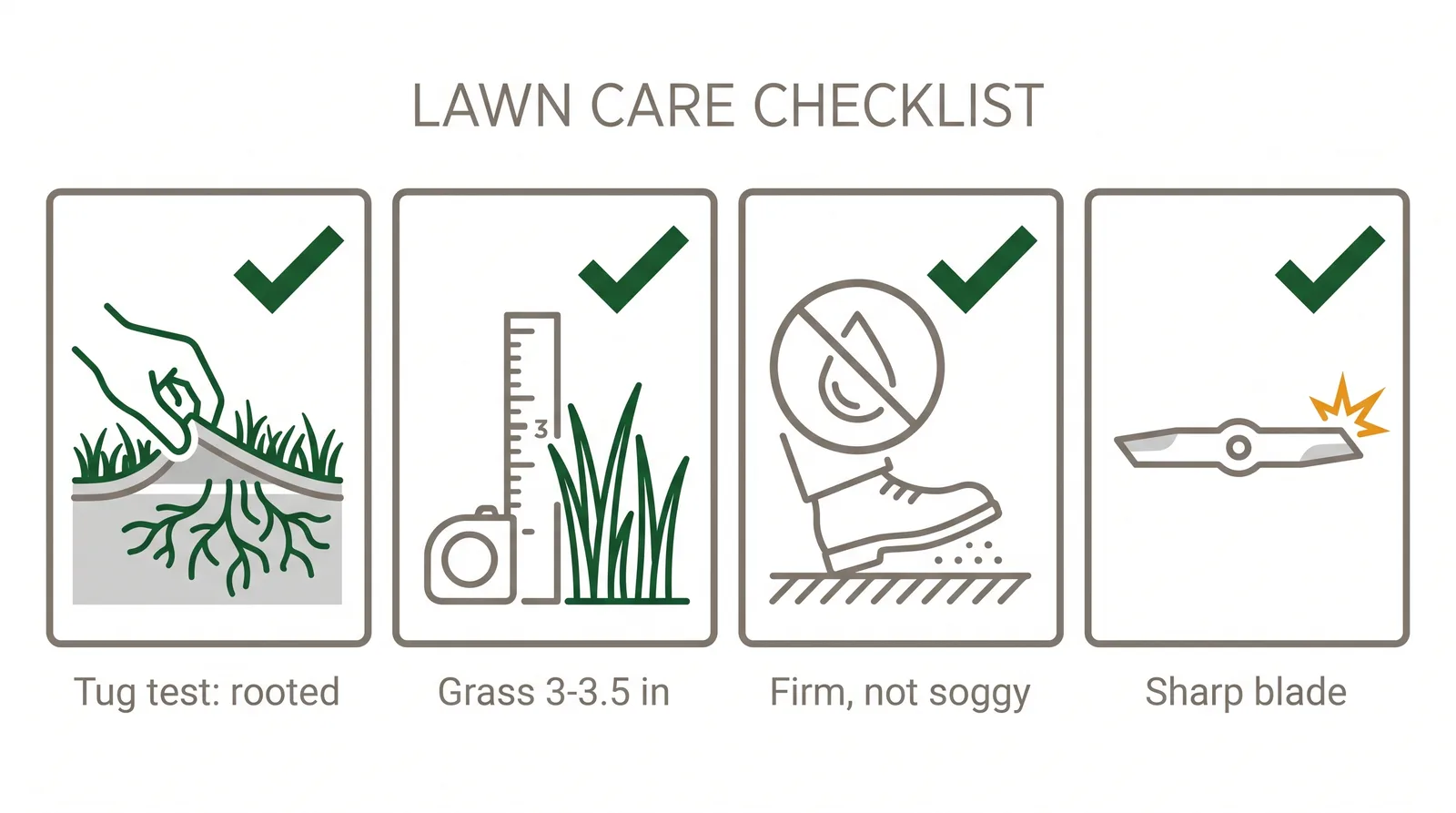
Rooting is necessary but not the only condition. The grass should also have grown to about 3 to 3.5 inches so there is enough blade to cut without scalping, and the ground should be firm rather than saturated so the mower does not sink or shift the sod. When all four line up, you are clear to mow.
From the data: A sod lawn is a real investment: installed sod runs about $1.50 to $4.50 per square foot across the GTA (YardQuote pricing, July 2026), so a 1,000 sq ft yard is $1,500 to $4,500 on the ground. Waiting the extra few days for the tug test is cheap insurance on that spend.
How do you make that first cut?
Gently, high, and with a sharp blade. Set the mower deck high and let the sod reach 3 to 3.5 inches, then take off only the top third under the one-third rule, leaving it around 2.5 to 3 inches. Keep it on the taller side for the first several mows while the roots deepen.
Two details protect the young lawn. Use a sharp blade, because a dull one tears and pulls at grass that is barely anchored, and mow when the surface has firmed up rather than right after a watering, so the wheels do not rut or drag the pieces. Skipping the watering just before that first cut helps the ground firm up without letting the sod dry out.
After the first mow, the lawn graduates to normal care, including how often to mow through the season. Getting there depends on the two weeks before, so follow a proper day-by-day sod watering schedule, and if the sod starts browning before it roots, work through the new sod rescue guide.
To price a sod job or line up an installer, see our sod installation cost page or browse sod installation companies by area.
Planning a new sod lawn and want it done right? Request a quote and compare up to three vetted local pros side by side. Your contact details only go to the one you pick.