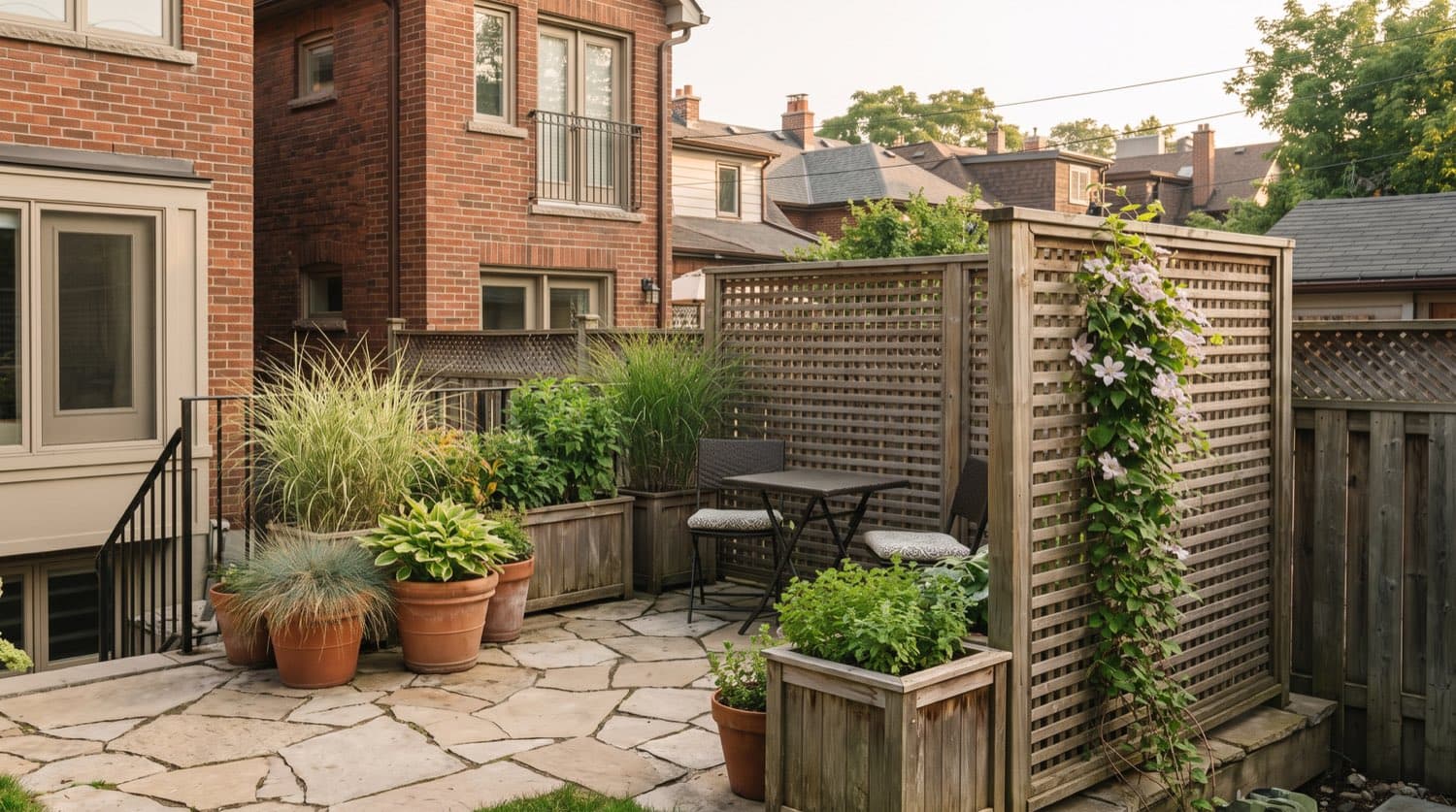
Answer First: A small townhouse patio or condo balcony becomes a garden through layers, not square footage: group container plants of varying heights, go vertical with trellises and wall planters, and add a privacy screen or tall plants to make it feel enclosed. Choose tough, drought-tolerant plants because pots dry out fast, and on a balcony always check weight, wind, water runoff, and your building's rules before you build.
You do not need a big yard to have a garden. A well-designed balcony or postage-stamp patio can feel lusher and more usable than a neglected quarter-acre. The constraint is space, so the whole game is using it cleverly.
How to make a tiny space feel like a garden
Think in layers and vertical space, because floor area is the one thing you cannot add. A small patio reads as a garden when greenery surrounds you at different heights rather than sitting in a single row of pots on the ground.
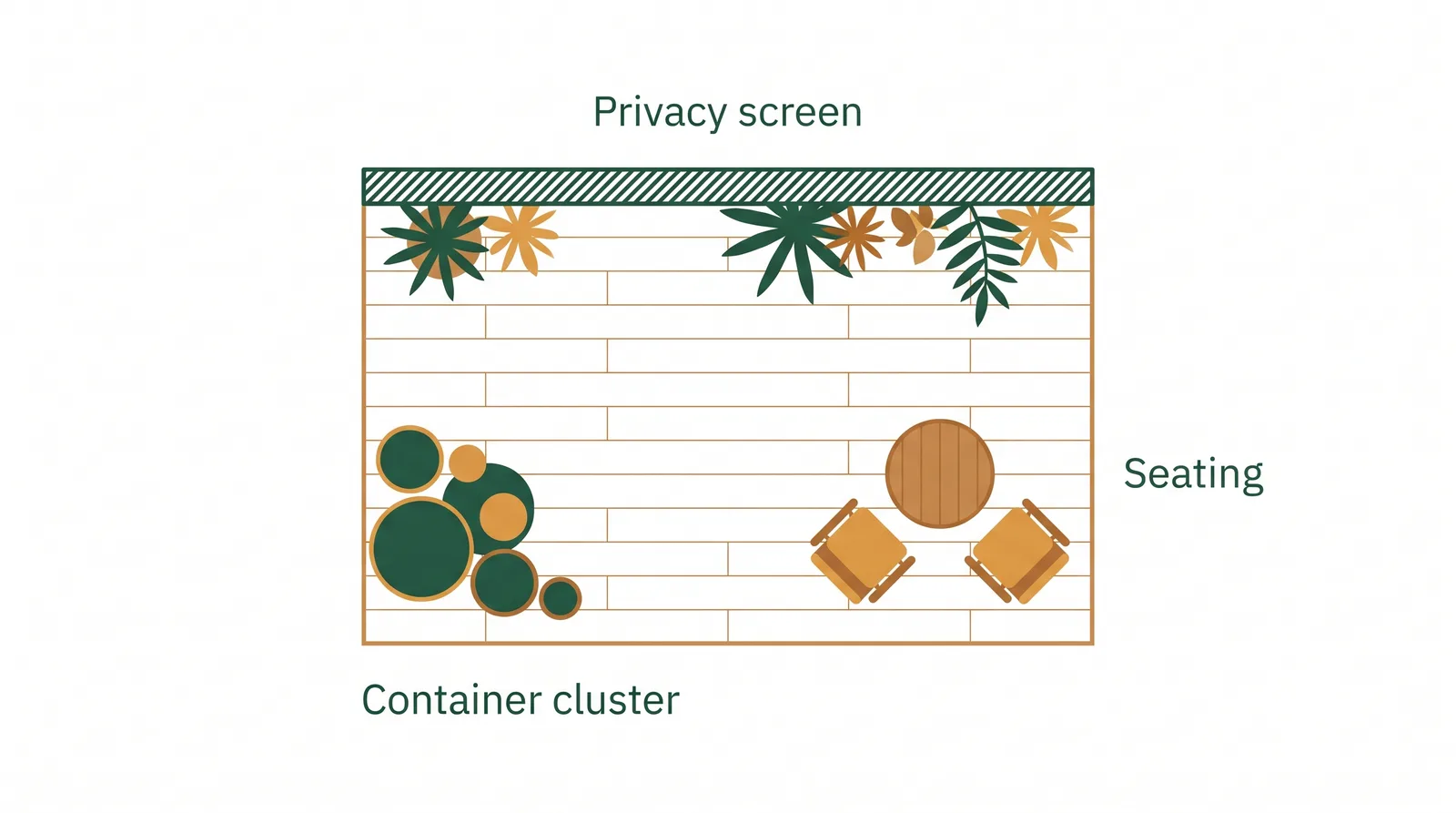
The core moves are simple: cluster containers of varying heights for instant depth, run greenery up walls and railings with trellises and wall planters, and keep the floor simple and uncluttered so the space feels larger. A few bold, larger plants beat a scatter of tiny ones, which just reads as busy.
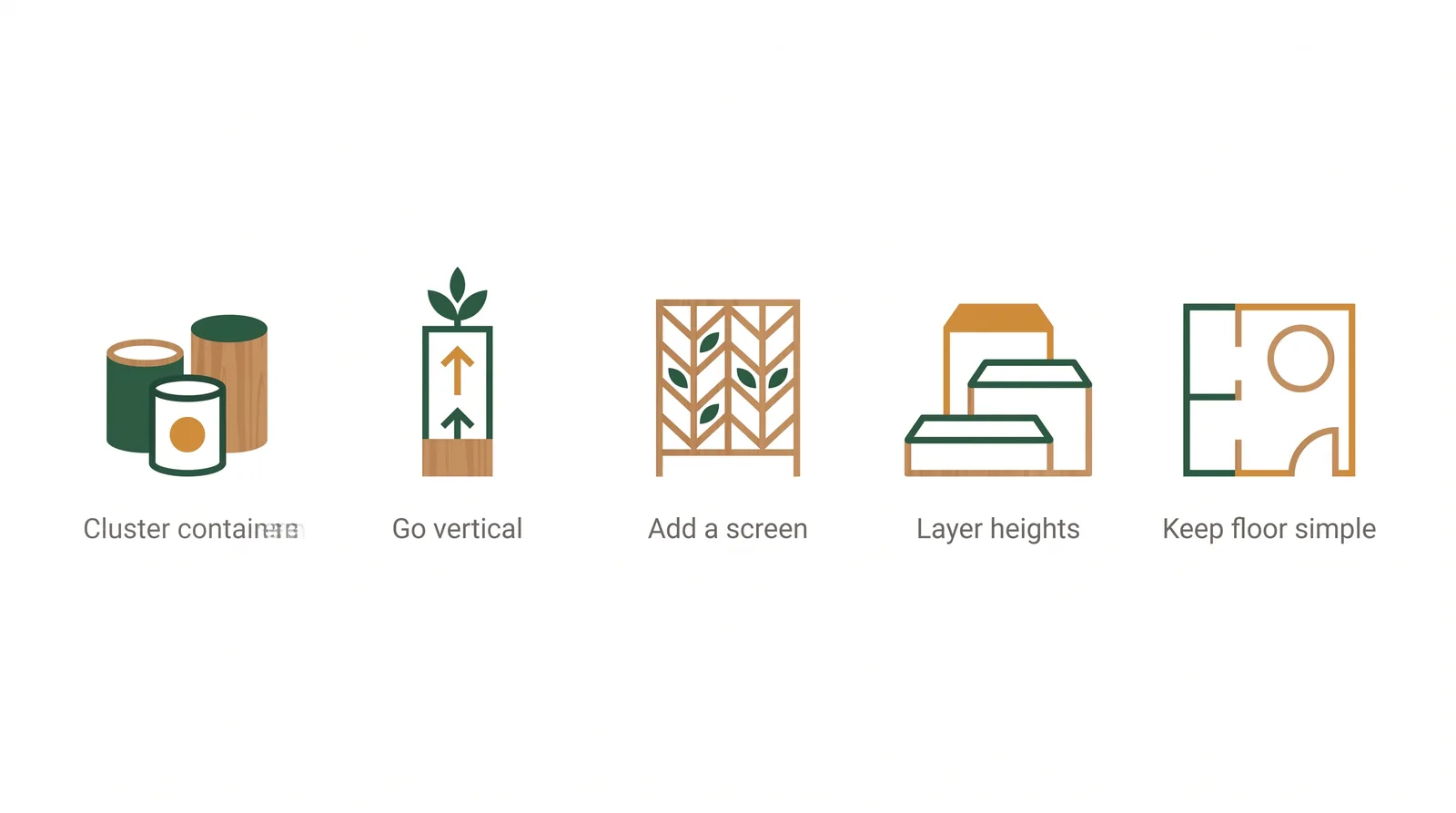
Quotable: In a small patio, layers beat square footage. Clustered containers, vertical greenery on walls and rails, and a privacy screen make a compact balcony feel like a lush garden room.
Containers: the small-space toolkit
Containers do almost all the work on a patio or balcony, and grouping them is the trick. A cluster of pots in different heights creates the layered look of a planted bed while staying completely flexible.
The one catch is water. Pots hold limited soil and dry out fast, especially in sun and wind, so container plants need watering far more often than garden beds, sometimes daily in a Toronto summer. Larger pots dry more slowly, grouping containers shades their sides, and a good moisture-holding potting mix all stretch the time between waterings. Choose drought-tolerant plants, ornamental grasses, sedums, coneflower, and hardy herbs, so a missed watering is forgiving (Toronto Master Gardeners).
Designing for privacy
Privacy is what turns an exposed patio into a space you actually use. In a townhouse yard or on a balcony overlooked by neighbours, screening comes first, and plants can do most of it.
- Screens and lattice. A freestanding screen or lattice panel gives instant privacy and a frame for climbers.
- Tall plants in narrow planters. A row of ornamental grasses, bamboo in containers, or columnar shrubs creates a living wall along an edge.
- Trellis with a climber. A trellis mounted to a planter grows a green screen upward without permanent construction, ideal where you cannot attach to the building.
Layering a planting in front of a screen softens the hard line and makes the space feel enclosed rather than boxed in.
From the data: YardQuote tracks 650 landscaping companies across the GTA, and 613 carry three or more Google reviews at an average of 4.77 stars (July 2026). Plenty handle small-space and container design, so even a balcony project can be matched to a well-reviewed pro.
Balcony basics: weight, wind, water, and the rules
A condo balcony adds four constraints a backyard does not, and ignoring them turns a nice setup into a problem. Check these before you buy anything.
- Weight. Wet soil and large pots are heavy, and balconies have load limits. Use lightweight potting mix and keep the heaviest containers near the building wall.
- Wind. High balconies are exposed, so choose wind-tolerant plants and secure pots and screens so nothing blows over.
- Water runoff. Drainage from your pots should not spill onto the balcony below; use saucers or self-watering planters.
- The rules. Many Toronto condo boards restrict what you can install, attach, or hang on a balcony. Confirm your building's rules first.
Get those right and the same layering-and-privacy ideas that work in a townhouse yard work eleven floors up.
Vertical gardening — growing plants upward on walls, railings, trellises, or stacked planters instead of across the ground, the key technique for adding greenery where floor space is scarce.
For inspiration that scales down to a patio, our guides to low-maintenance landscaping for Ontario and native plant landscaping cover plant choices that thrive in containers, and the rock and gravel ideas suit small paved areas. To plan a design, see the landscape design cost page and the landscaping cost page, or browse landscaping in downtown Toronto.
Want help making a small space feel like a garden? Request a quote and compare up to three vetted local pros side by side. Your contact details only go to the one you pick.