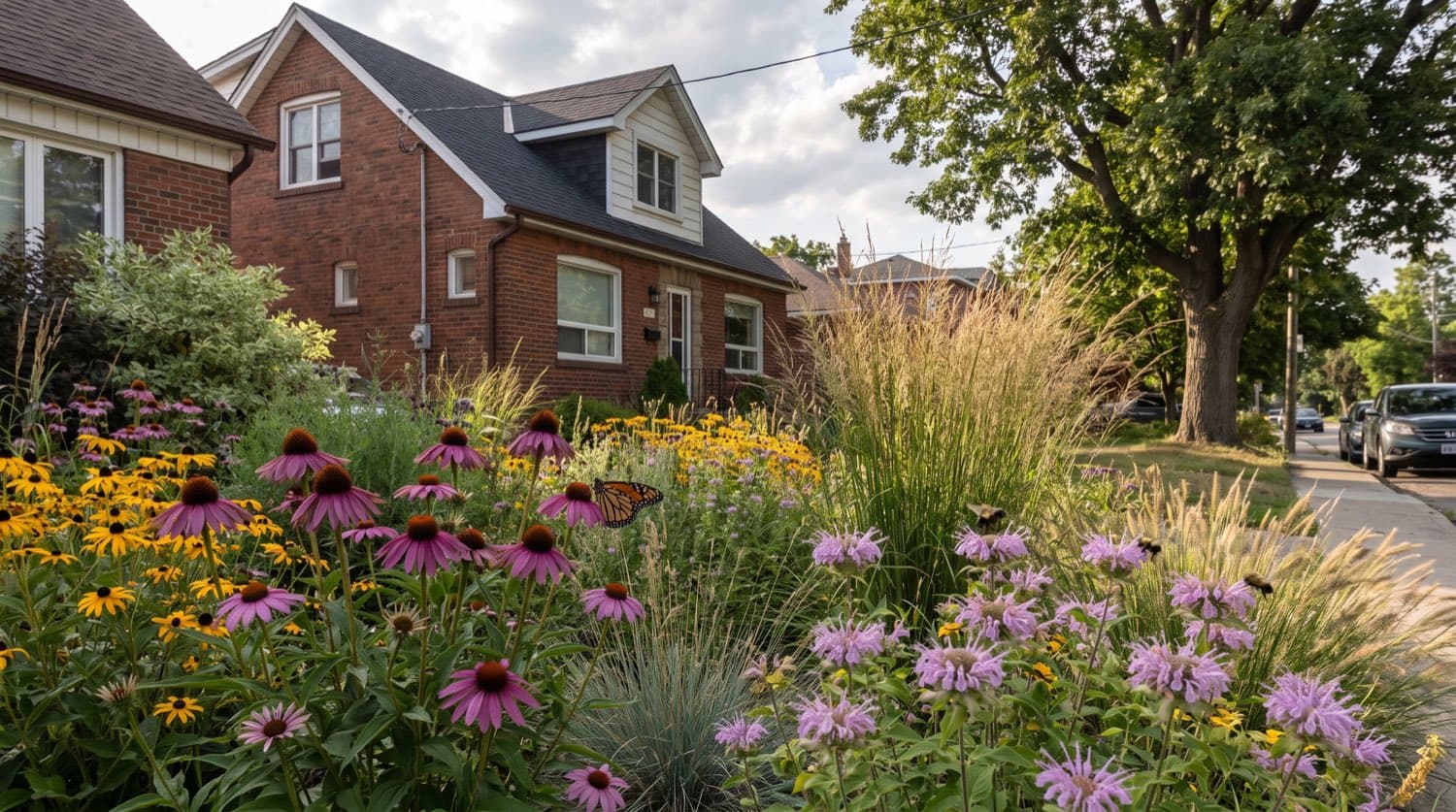
Answer First: Native plant landscaping uses species that evolved in the Toronto region, so once established they need little water, no fertilizer, and minimal upkeep while feeding local pollinators and birds. Strong starter natives include purple coneflower, black-eyed Susan, wild bergamot, butterflyweed, and native grasses like little bluestem. Match each to your light and soil, and the garden largely takes care of itself. The City backs this through its PollinateTO pollinator-habitat program.
A native garden is not a compromise between beauty and ecology. Done well, it looks better than a fussy ornamental bed, costs less to run, and turns your yard into habitat, which is exactly what the City is trying to encourage.
Why plant natives in Toronto?
Because they are built for here. Native plants evolved with Toronto's soil, climate, and wildlife, so they thrive on natural conditions that leave many imported ornamentals needing constant water, feeding, and replacement.
That local fit produces three payoffs at once: lower maintenance, better drought tolerance, and real habitat value. Native perennials feed the bees, butterflies, and birds that non-native flowers often cannot, which is why the City of Toronto runs PollinateTO to fund and expand native pollinator habitat across the city. Planting natives puts your yard on the same side as that effort.
Quotable: Native plants evolved with Toronto's soil and wildlife, so once established they need little water, no fertilizer, and less upkeep than most imported ornamentals, while feeding pollinators those ornamentals can't.
The best native plants to start with
Begin with proven, widely available performers rather than hunting for rare species. These natives are tough, beautiful, and forgiving, and they cover sun, shade, and structure.
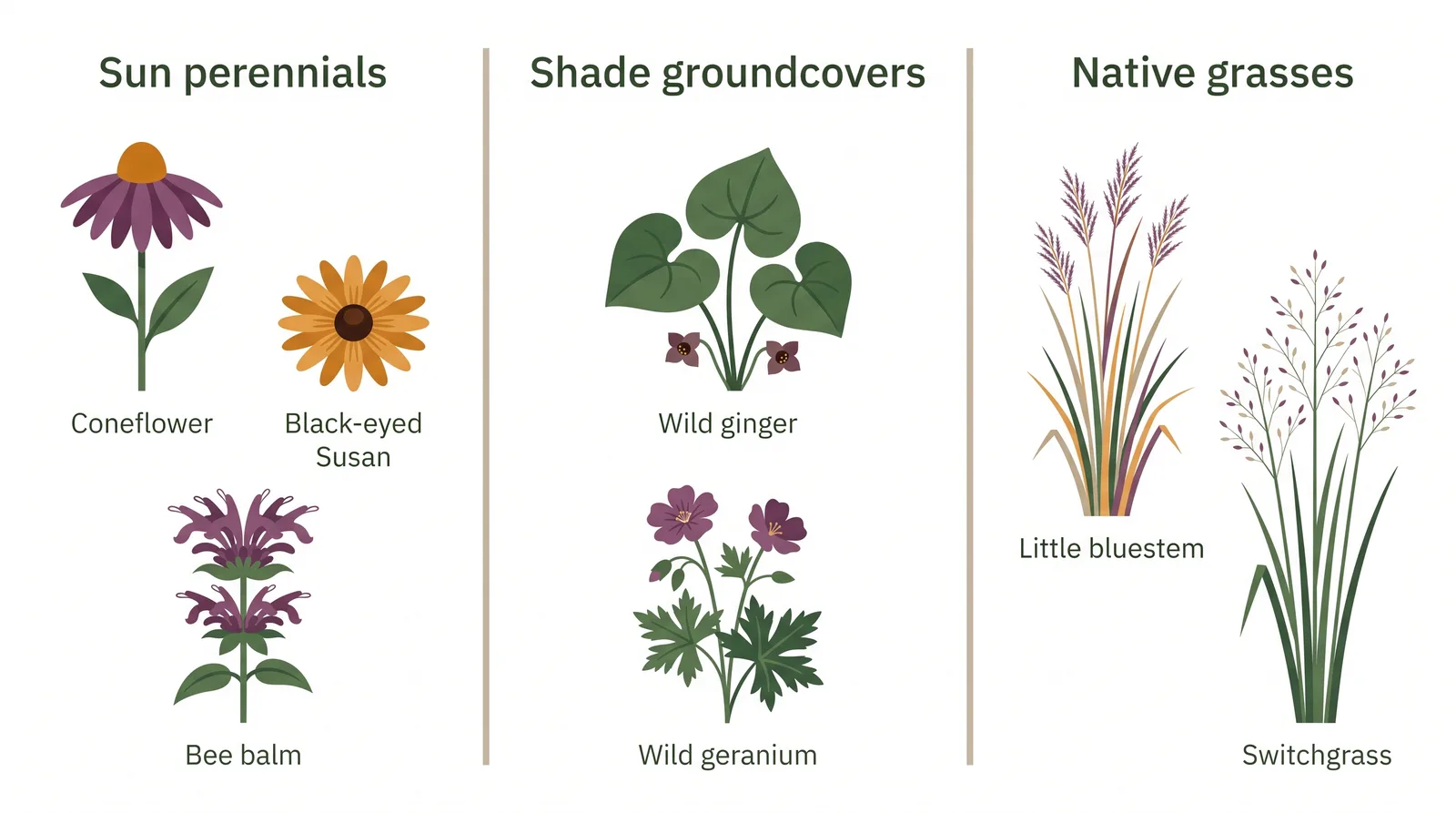
- Sun perennials: purple coneflower, black-eyed Susan, wild bergamot (bee balm), butterflyweed, and goldenrod, all strong pollinator plants that handle full sun and dry spells once established (Toronto Master Gardeners).
- Shade groundcovers: wild ginger and native cranesbill (wild geranium) for the dry, shady spots under trees where grass struggles.
- Native grasses: little bluestem, switchgrass, big bluestem, and Indian grass, which add height, movement, and winter structure and need only a single spring cutback.
Native plant — a species that occurs naturally in a region and evolved there over thousands of years, as opposed to an introduced ornamental; natives are adapted to local soil, climate, and wildlife.
What native plants do for the yard
The benefits stack up in a way ornamentals rarely match, which is the real case for going native.
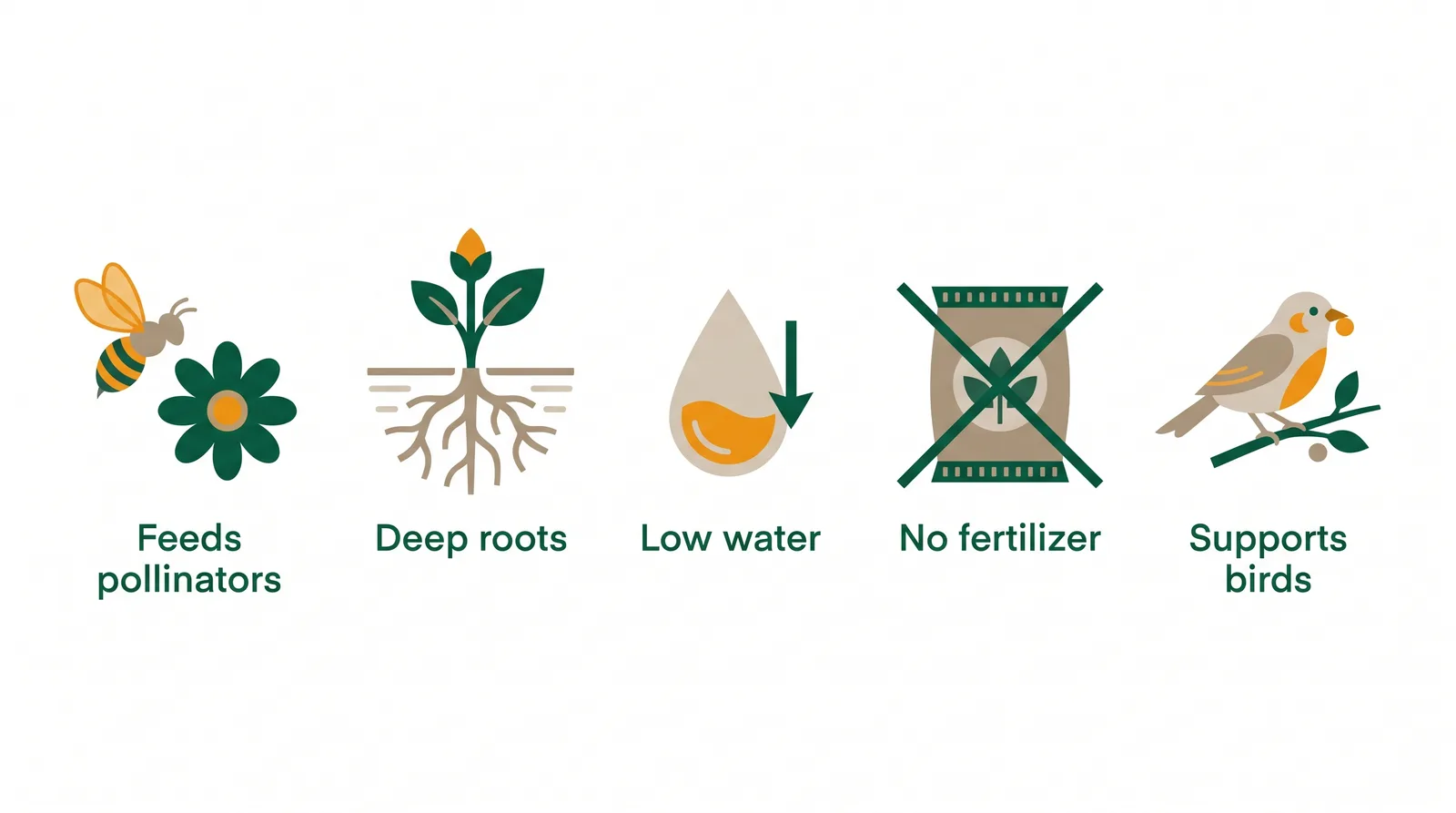
- They feed pollinators. Native flowers are the food source local bees and butterflies actually use.
- They build deep roots. Prairie natives in particular root deeply, improving soil and drought resilience.
- They cut water and feeding. Once established, natives largely run on rainfall and need no fertilizer.
- They support birds. Native plants host the insects and seeds that birds rely on through the seasons.
From the data: YardQuote tracks 650 landscaping companies across the GTA, and 613 carry three or more Google reviews at an average of 4.77 stars (July 2026). Native and pollinator plantings are a growing request, so finding a well-reviewed crew to design and install one is straightforward.
Designing a native garden that looks intentional
The knock on native gardens, that they look messy, is a design problem, not a plant problem. A native bed reads as deliberate the moment you give it structure.
Plant in drifts of the same species rather than one-of-everything, layer heights from low groundcovers to tall grasses, keep a clean mown or stone edge, and match each plant to its spot using the "right plant, right place" rule, sun lovers in the open, woodland natives in shade (Toronto Master Gardeners). Done that way, a native garden looks as tidy as any ornamental border while doing far more for the neighbourhood's wildlife.
This is the same thinking behind low-maintenance landscaping for Ontario and xeriscaping in Ontario, where natives do the heavy lifting, and it pairs well with the rock and gravel ideas for paths and mulch. To plan and price a planting, see the landscaping cost page and the landscape design cost page, or browse landscaping in Etobicoke.
Want a native garden that looks finished and feeds pollinators? Request a quote and compare up to three vetted local pros side by side. Your contact details only go to the one you pick.