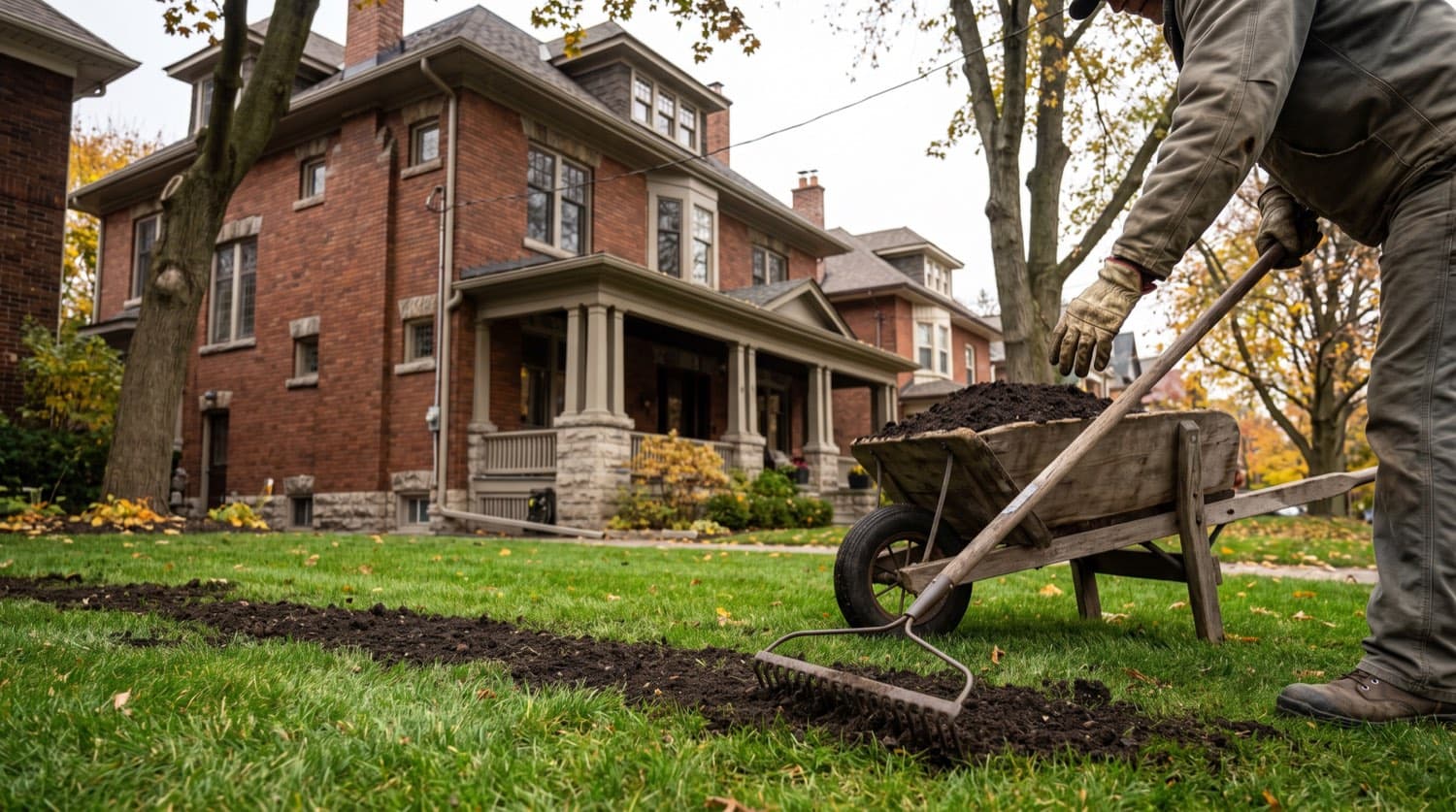
Answer First: Topdressing is spreading a thin layer, a quarter-inch or less, of compost or a compost-and-soil blend over your lawn to feed the soil, smooth minor bumps, and thicken the turf. On GTA cool-season lawns, do it in early fall right after aerating and overseeding, work the material down into the canopy so the blades still show, and never leave a layer thick enough to bury the grass. Budget about three-quarters of a cubic yard per 1,000 square feet for a quarter-inch pass.
Topdressing is the soil-building step most homeowners skip, because it looks like extra work for an invisible payoff. The payoff is real, it just compounds slowly: better soil, denser grass, and a gradually smoother surface. Done wrong, though, it smothers the lawn, so the technique matters as much as the intent.
What is topdressing, and why do it?
Topdressing means applying a thin layer of quality material, usually compost or a soil blend, evenly over an existing lawn. It does three useful things at once. It adds organic matter and soil microbes that help break down thatch naturally (UMN Extension). It gradually levels minor surface unevenness as the material fills small low spots. And when combined with overseeding, it gives new grass seed a fine, moisture-holding bed to germinate in, which thickens thin turf.
Over the heavy clay soils common across the GTA, that top-down soil improvement is the main draw. You cannot easily amend the soil under an established lawn without tearing it up, but a light topdressing every year or two builds better structure from the surface without killing the grass.
Quotable: Topdressing is the one way to improve the soil under an established lawn without tearing it up. A quarter-inch of compost a year builds structure from the top down.
What material should you use?
Match the material to your goal and your soil. The common options:
- Compost: the default. Adds organic matter and microbes, works on all soil types, and is the best single choice for feeding the soil.
- Compost-and-sand blend: the most practical residential mix. The sand improves drainage in heavy GTA clay while the compost adds nutrients.
- Topsoil: cheap and good for smoothing, but low in organic matter, so it is often blended in rather than used alone.
- Straight sand: a golf-course practice. Avoid it on a home cool-season lawn, where it can do more harm than good.
For most Toronto backyards, screened compost or a compost-sand blend is the right call. Use screened material so you are not raking rocks and clumps across the lawn.
When to topdress in Ontario
Early fall. On cool-season grass, that timing works because the soil is still warm enough to keep microbes active breaking the material down, and the grass is in its root-building season, so loose amended soil near the surface helps it establish (Penn State Extension; Landscape Ontario). It also lets you fold topdressing into the same early-fall visit as aeration and overseeding. Spring is a workable backup, but summer heat is the wrong time.
Topdressing a lawn, step by step
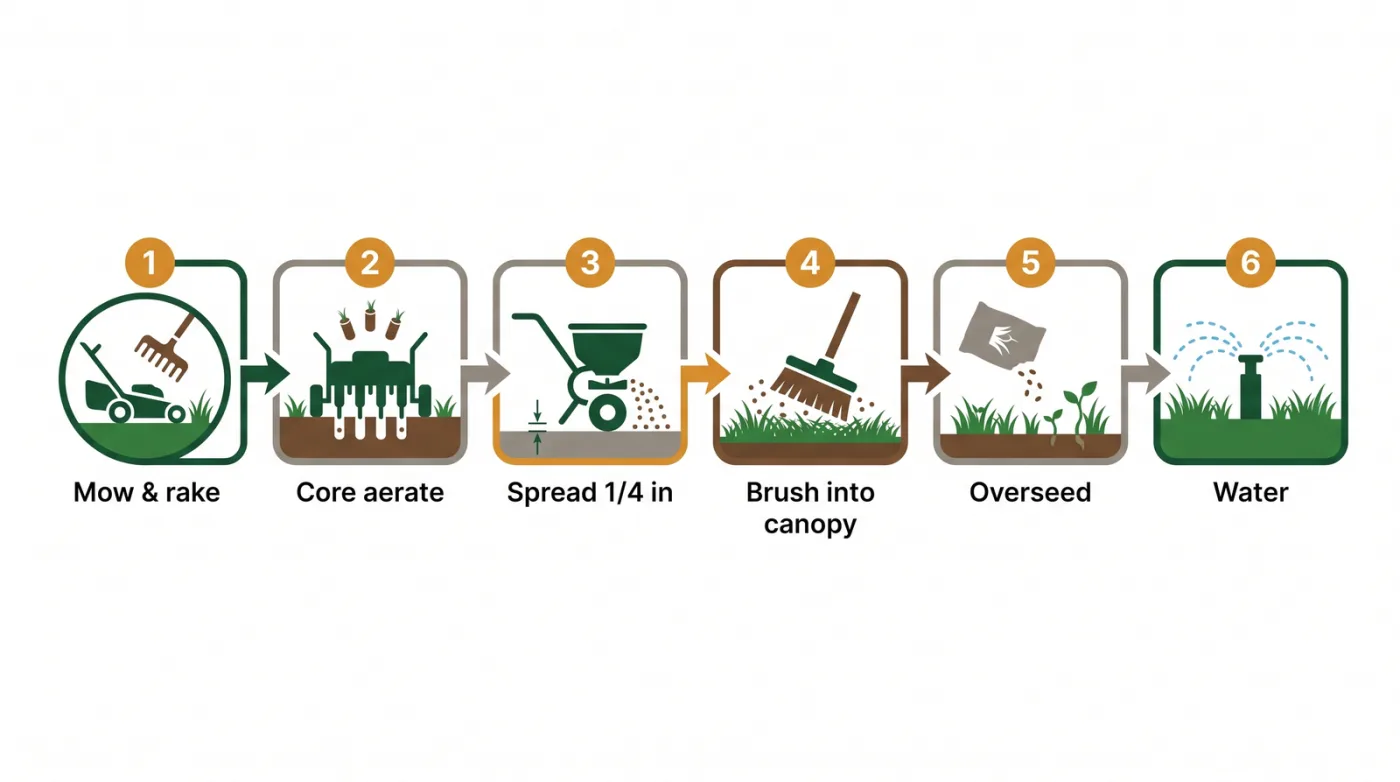
- Mow a little low and rake. Cut the lawn slightly shorter than usual and rake off clippings and loose debris so the topdressing reaches the soil surface.
- Aerate first (recommended). Core-aerate the lawn so the material works into the holes, improving the soil deeper than the surface alone.
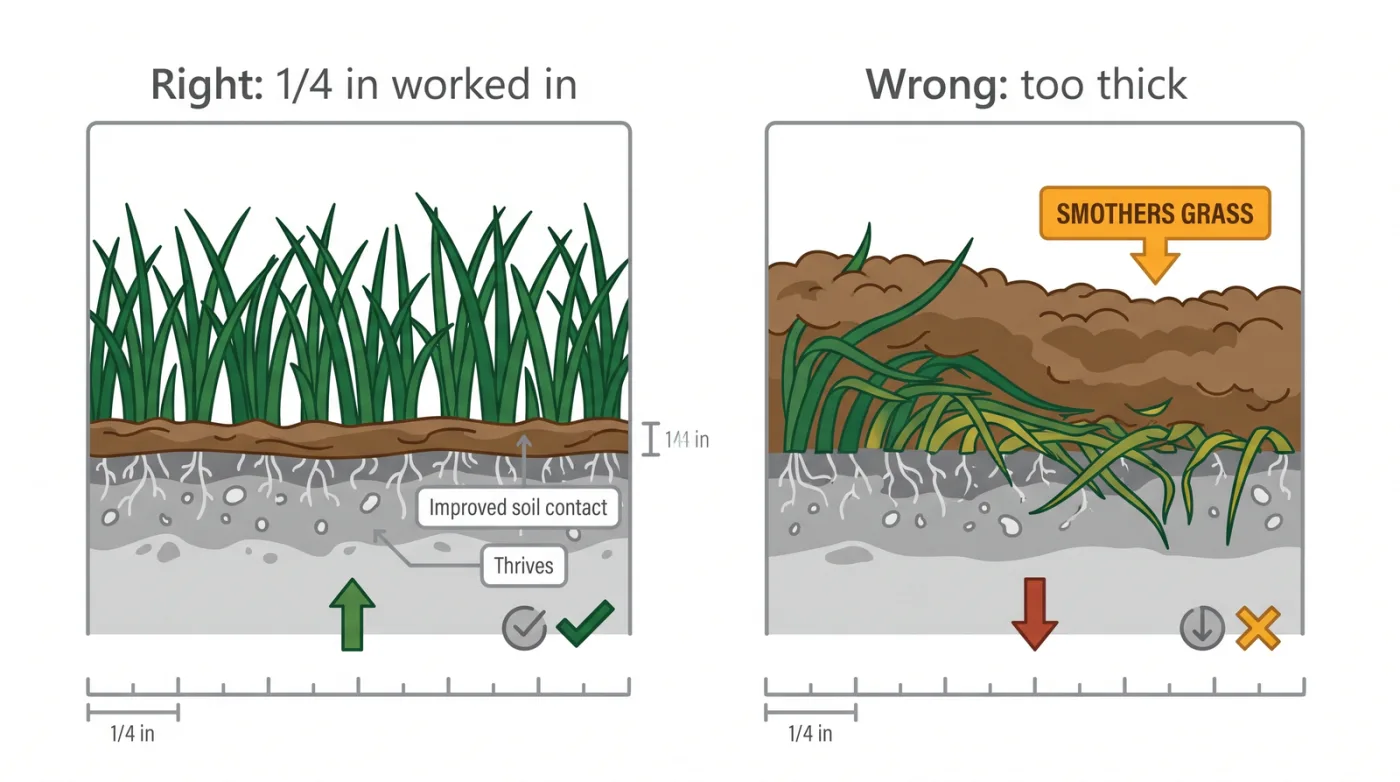
- Spread the material thin. Drop small piles across the lawn and spread them to a quarter-inch or less. Do not exceed a quarter-inch.
- Work it into the canopy. Use the back of a rake or a stiff push broom to brush the material down between the blades. The grass must still show through; never leave it buried.
- Overseed (optional but ideal). Spread grass seed before or right after topdressing so it settles into the fresh surface, then let the topdressing act as its seedbed.
- Water it in. A light watering settles the material and, if you seeded, starts germination.
Quotable: The rule that saves a topdressing job: the grass blades must still show through when you finish. If you have buried the lawn, the layer is too thick.
How much material do you need?
Enough for a quarter-inch, no more. The math is worth running so you order once: a quarter-inch layer over 1,000 square feet is roughly 21 cubic feet, or about three-quarters (0.77) of a cubic yard. So budget about 0.75 cubic yard of material per 1,000 square feet of lawn, plus a little extra if you are filling low spots.
Buy in bulk by the cubic yard rather than in bags for a whole lawn; bagged product costs far more per volume. If your lawn is bumpy enough that a single quarter-inch pass will not fix it, do not pile it thicker. Build the low areas up gradually over several seasons, which is the leveling method covered in our guide on how to level a bumpy lawn.
Common mistakes to avoid
Three errors ruin most topdressing jobs: spreading it too thick and smothering the grass, using straight sand on a cool-season lawn, and doing it in summer heat. A fourth is skipping aeration, which leaves the benefit at the surface instead of reaching the root zone. Keep it thin, keep it seasonal, and pair it with aeration.
From the data: Of the 249 lawn-care companies YardQuote tracks across the GTA, 220 carry three or more Google reviews, the average rating is 4.75, and 88% of rated companies hold 4.5 stars or higher (YardQuote tracking, July 2026). Many bundle aeration, overseeding, and topdressing into one fall renovation visit.
Topdressing pairs naturally with the rest of a fall renovation. If your lawn is spongy, first check whether you actually need dethatching, then feed it correctly using our Ontario lawn fertilizer calendar. To hand the whole renovation to a crew, compare rates on the lawn care cost page or browse rated providers on the North York lawn care directory.
Want a pro to aerate, overseed, and topdress in one visit? Request a quote and compare up to three rated GTA lawn-care pros side by side. Your contact details only go to the one you pick.