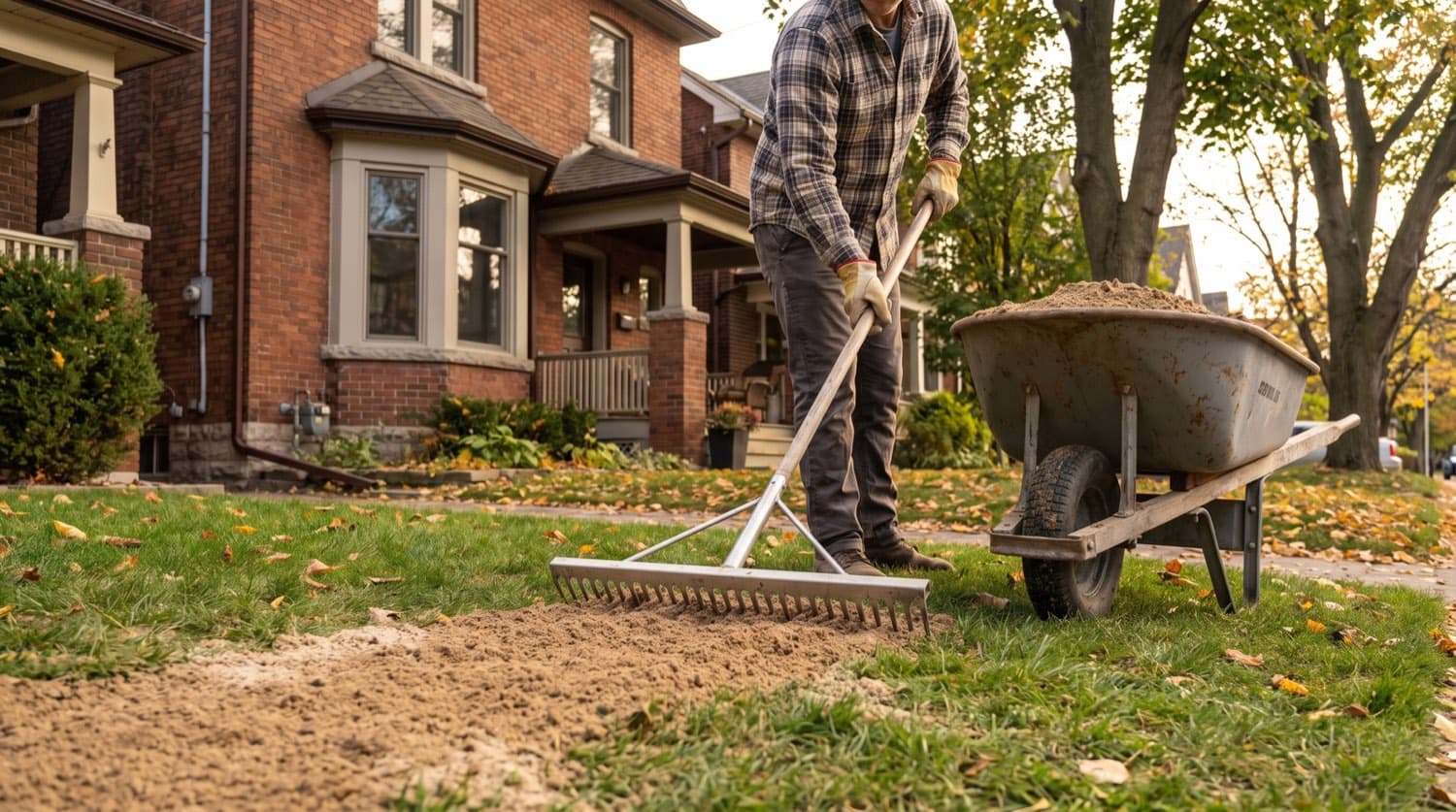
Answer First: Match the fix to the depth. Minor bumps and shallow low spots level with thin topdressing passes, a quarter-inch of a soil-sand-compost blend brushed into the grass over a few seasons. Deep dips and humps need the sod cut, lifted, and soil added or removed underneath before you relay it. If water pools or the whole yard slopes the wrong way, that is a grading job, not a leveling one, and GTA regrading runs about $2 to $12+ per square foot.
A bumpy lawn is annoying to mow and easy to trip on, and the fix is genuinely doable yourself, right up until it isn't. The mistake people make is treating every uneven lawn the same way. A shallow dimple and a yard that floods every spring are different problems, and using the topdressing fix on a drainage problem just wastes soil.
Why is your lawn bumpy?
Uneven lawns come from a handful of causes, and naming yours tells you whether a surface fix will hold:
- Soil settling after construction, a new build, or a trench dug for utilities.
- Poor original grading that was never level to begin with.
- Freeze-thaw heaving over Toronto winters, which pushes the surface around.
- Drainage and erosion washing soil from high spots to low ones.
- Pests, especially grubs loosening the root layer or voles tunnelling.
- Buried debris or tree roots creating fixed humps you cannot topdress away.
The distinction that matters: a few settled dimples are a surface problem you can fix with soil. Water pooling, a slope toward the house, or a whole yard out of level are grade and drainage problems that keep returning until the grade is corrected.
Quotable: A few settled dimples are a surface fix. Water pooling or a whole-yard slope is a grading problem, and topdressing over it just wastes soil until you correct the grade.
Match the fix to the depth
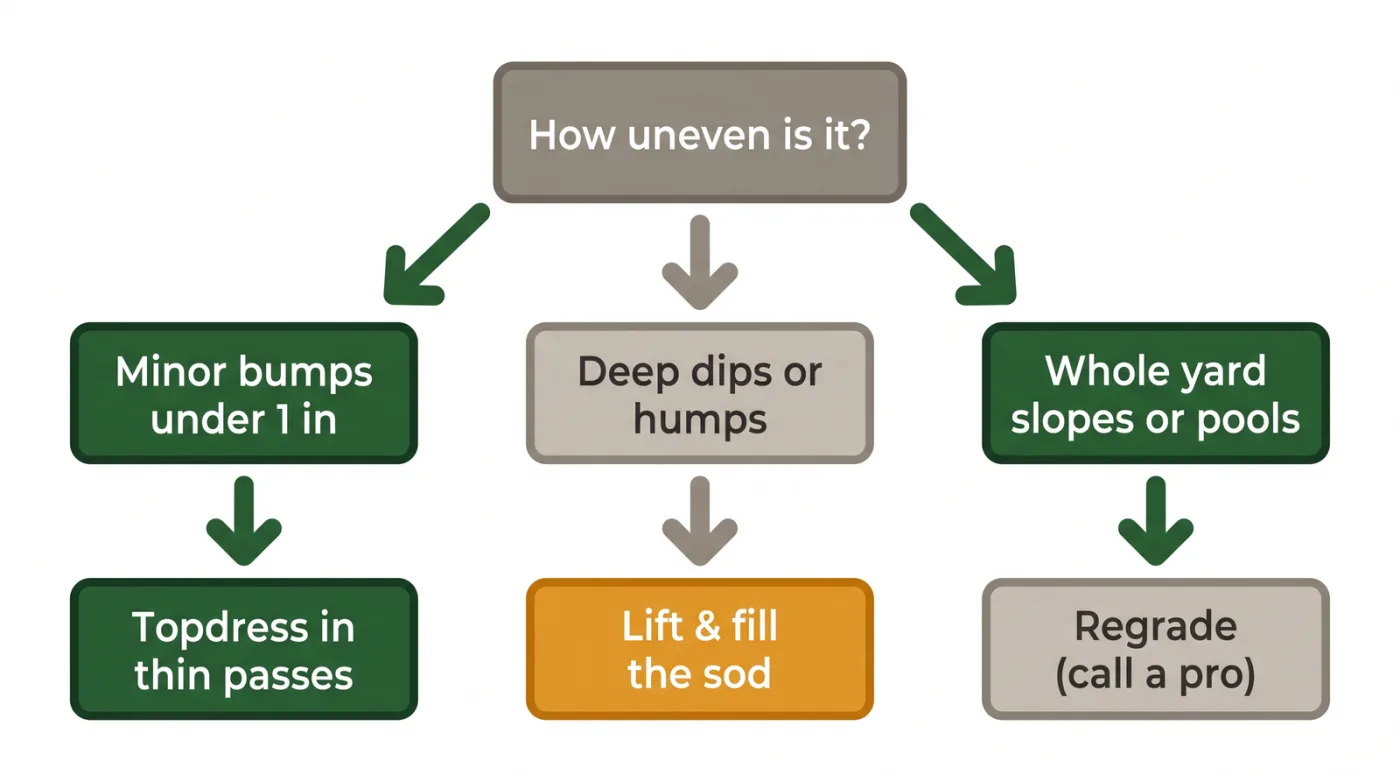
- Minor bumps and shallow low spots (under about an inch): topdressing. Thin passes of soil blend, brushed in, repeated seasonally.
- Deep dips or raised humps: lift the sod, add or remove soil underneath, and relay it.
- Whole-yard slope, pooling water, or drainage failure: regrading, a professional job.
Get this match right and the rest is straightforward.
How to level minor bumps and low spots
This is the topdressing method, applied to the uneven areas. Mow the lawn and rake it clean first. Then fill each low spot with a quarter-inch to half-inch of your soil blend, and use a stiff push broom or the back of a rake to work it down into the grass so the blades still poke through. Do not bury the grass; anything more than a quarter-inch general layer or a smothered blade kills the turf you are trying to keep (UMN Extension, Penn State Extension).
For a spot deeper than half an inch, do not fill it all at once. Build it up over several thin passes across seasons, letting the grass grow up through each layer before adding the next. It is slow, but it keeps the lawn alive. Early fall is the best time on GTA cool-season grass, since the lawn recovers fastest then. The full method is in our step-by-step topdressing guide.
How to fix a deep low spot or hump
When a dip or hump is too deep to topdress, go under the sod. Cut an H or X shape through the turf over the spot with a spade, peel the sod flaps back, and either add screened soil to raise a low spot or scrape soil out to lower a hump. Firm the soil, fold the sod back over, press it down so it contacts the soil, and water it well. Done in early fall, the seams knit back together within a few weeks.
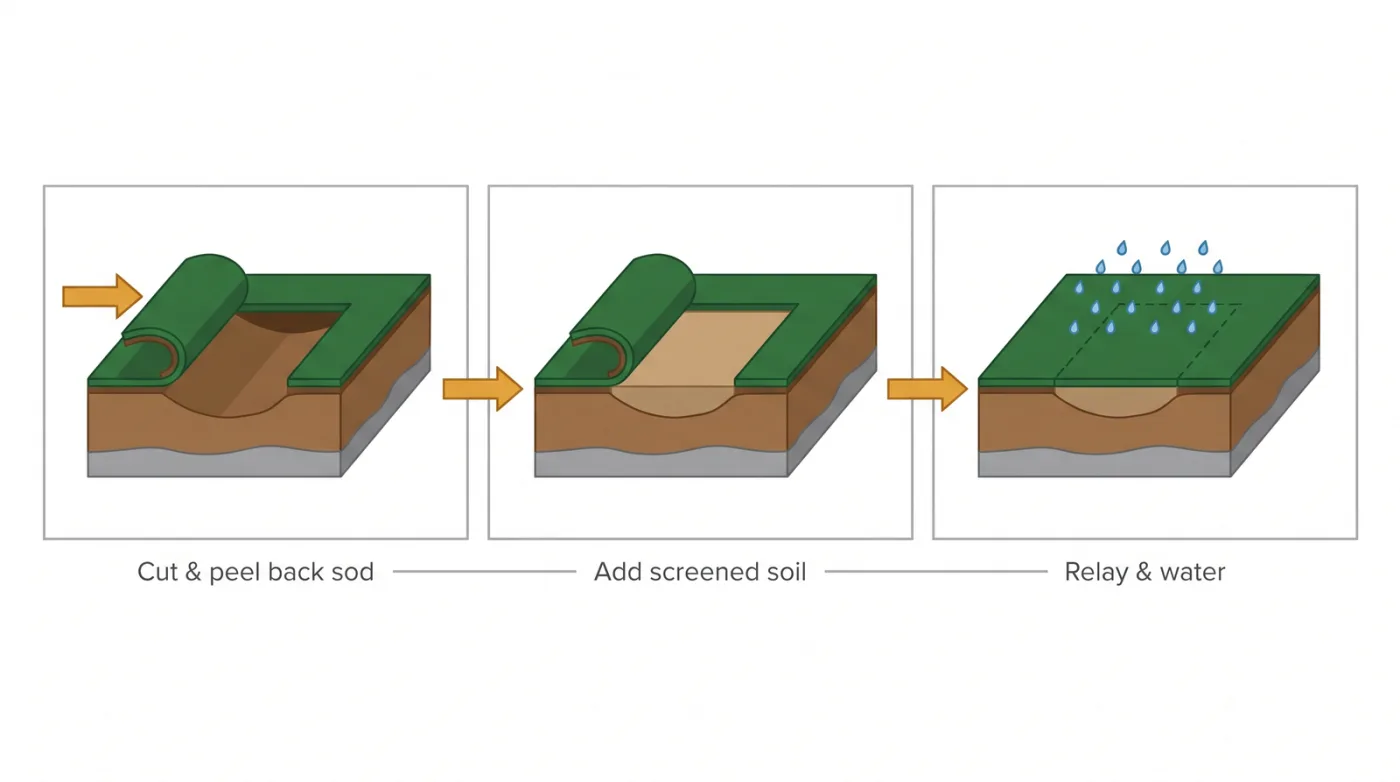
This is the right approach for a handful of deep spots. If most of the yard needs it, you are past a DIY leveling job.
Use the right soil mix
Fill and improve in one step with a screened blend of topsoil, sand, and compost, roughly equal parts topsoil and sand with a smaller share of compost. The sand helps drainage in heavy GTA clay, the topsoil does the filling, and the compost adds organic matter. Use screened material so you are not raking stones across the lawn. Skip straight sand on a cool-season lawn; it is a golf-course habit that does not build soil and can harm a home lawn.
When it's a grading job, not a leveling job
If water pools after rain, the ground slopes toward your foundation, or the whole yard is uneven rather than spotty, stop topdressing and call it what it is: a grading problem. Regrading reshapes the whole surface so water drains away from the house and the yard sits level, and it often includes drainage work. In the GTA, backyard regrading runs about $2 to $12+ per square foot, or roughly $1,500 to $5,000 for a typical yard, and a full grading-and-drainage package runs $3,500 to $9,000 (YardQuote tracking of GTA landscaping pricing, July 2026). See current ranges on the landscaping cost page.
Quotable: Regrading a Toronto backyard runs about $1,500 to $5,000, and grading-plus-drainage $3,500 to $9,000. If water pools or the yard slopes toward the house, that is the fix, not a bag of soil.
From the data: Of the 249 lawn-care companies YardQuote tracks across the GTA, 220 carry three or more Google reviews, the average rating is 4.75, and 88% of rated companies hold 4.5 stars or higher (YardQuote tracking, July 2026). Many handle both surface leveling and full regrading, so one crew can tell you which yours needs.
Before you level, rule out a thatch or soil issue underneath: our guide on what dethatching is and when it's a waste helps you check. To get a pro to assess whether it is a surface fix or a grading job, browse rated crews on the North York lawn care directory.
Want a pro to tell you whether your lawn needs leveling or regrading? Request a quote and compare up to three rated GTA pros side by side. Your contact details only go to the one you pick.