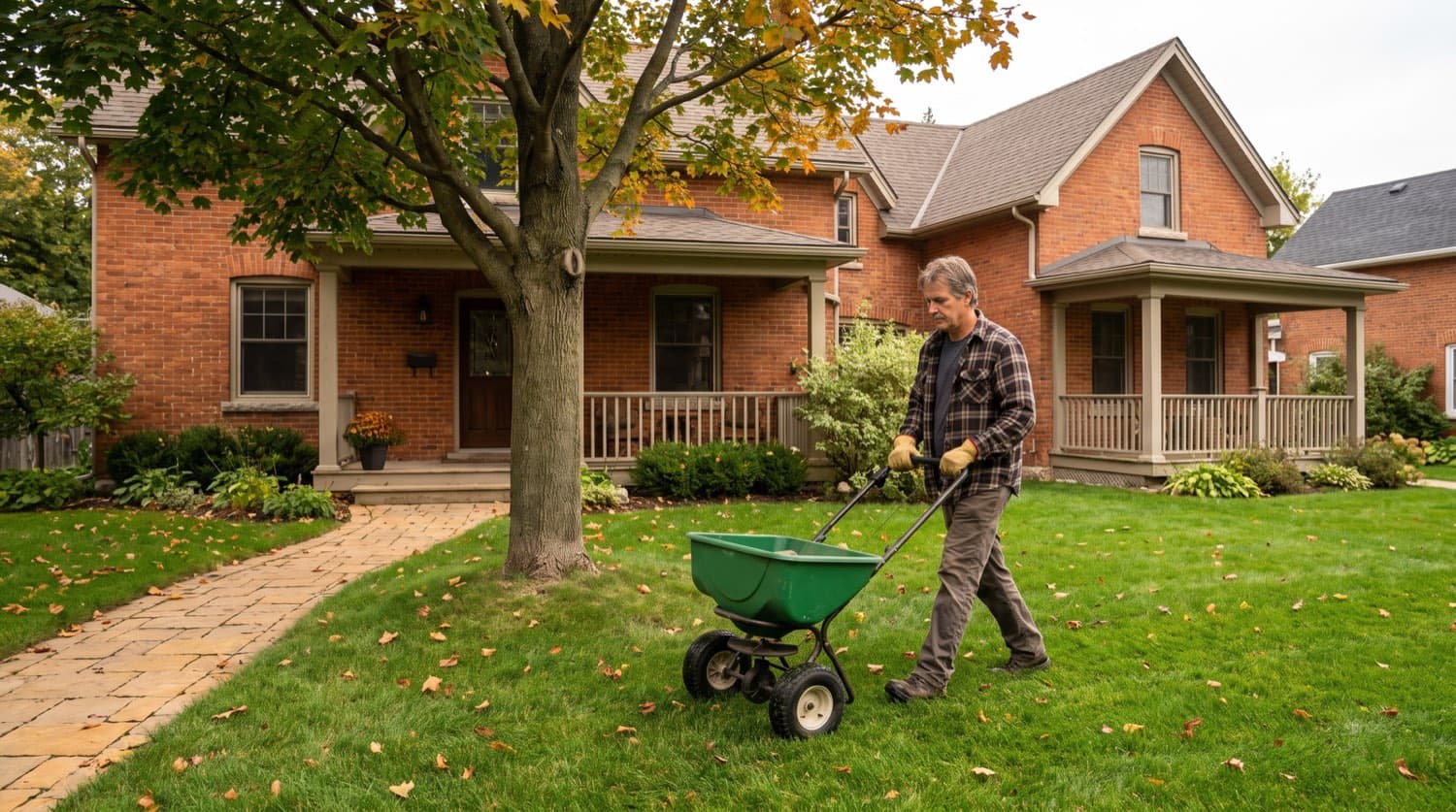
Answer First: Feed an Ontario lawn twice a year: once in late May or early June after spring green-up, and the important feeding in early fall, ideally by mid-September. Early fall is when cool-season grass builds roots and stores energy for winter and spring. Go easy on the traditional late-fall "winterizer," because OMAFRA found that 66 to 80% of nitrogen applied after mid-September leaches away in Ontario's wet autumn rather than feeding the lawn.
Most fertilizer advice online is written for warmer places and tells you to pile on a fall "winterizer." Ontario's own turf researchers have a more careful answer, and it saves you money and keeps nitrogen out of the groundwater. The short version: get the timing right twice a year and skip the habit of dumping nitrogen on a lawn that has stopped growing.
When should you fertilize an Ontario lawn?
Twice a year, at two specific windows. Landscape Ontario's healthy-lawn guidance is a late-May or early-June feeding after the lawn has greened up, plus a fall feeding. The fall feeding is the one that matters most, and the best timing for it is early fall, by about mid-September.
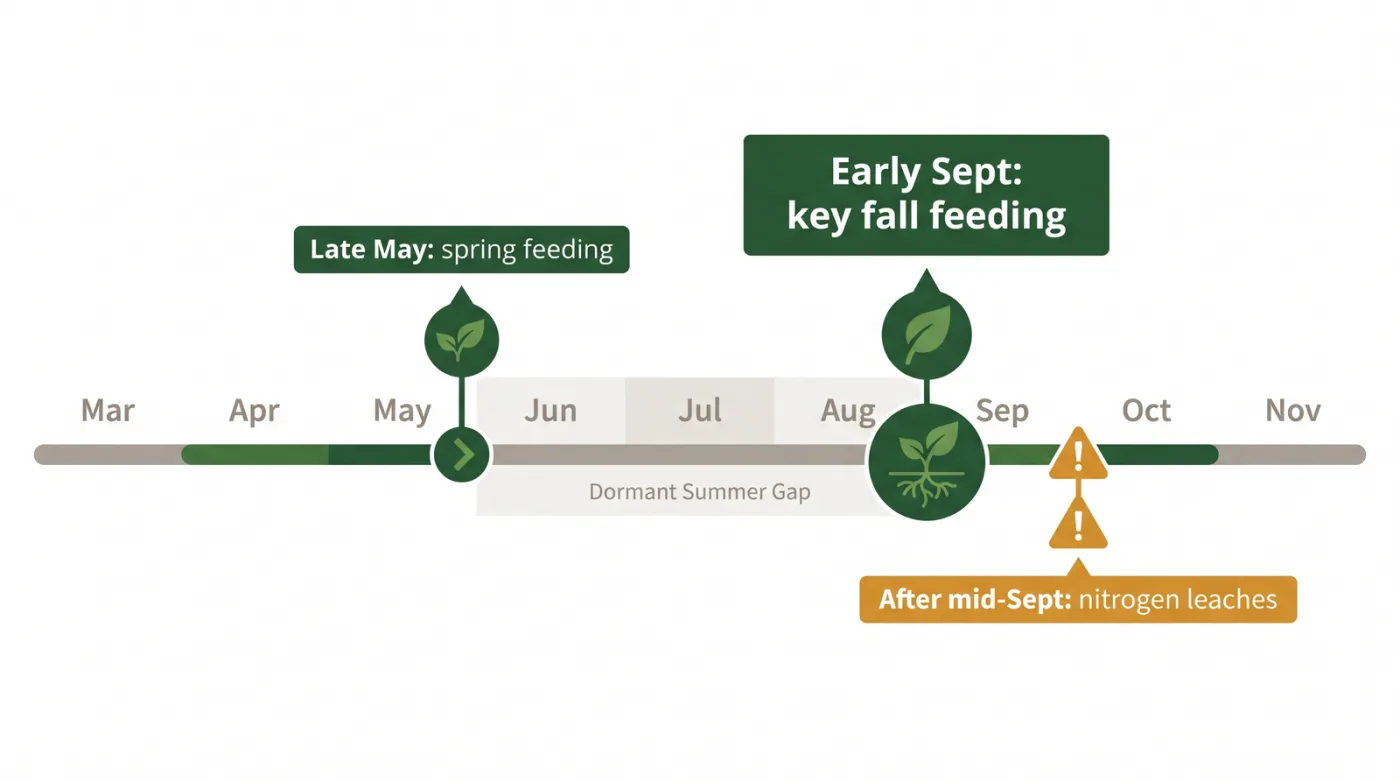
Here is the year in plain terms for a GTA cool-season lawn.
| Window | Action | Why |
|---|---|---|
| Late May / early June | Spring feeding after full green-up | Supports growth once the lawn is actively growing |
| Summer (July to mid-August) | Do not fertilize a dormant lawn | Heat-stressed or dormant grass can't use it |
| Late Aug to mid-September | The key fall feeding | Grass builds roots and stores energy for winter and spring |
| After mid-September | Go easy or skip nitrogen | Most of it leaches away in Ontario's wet fall (OMAFRA) |
Source: Landscape Ontario, OMAFRA (Pam Charbonneau).
Quotable: In Ontario, feed the lawn twice: after spring green-up in late May, and by mid-September for the fall. The early-fall feeding does more for next spring's lawn than any other application of the year.
Why early fall is the most important feeding
Because that is when cool-season grass changes jobs. From late August into mid-September, Kentucky bluegrass, fescue, and ryegrass shift from summer survival to building root mass and storing carbohydrates for winter and next spring (OMAFRA). Feed it in that window and you get a denser, quicker-greening lawn in April, without forcing soft top growth.
Feeding too early, in summer heat, wastes fertilizer on grass that may be dormant and can burn a stressed lawn. Feeding on a schedule copied from a warmer climate misses this Ontario-specific window. The early-September feeding is the one to protect if you only do one all year.
The late-fall winterizer is overrated in Ontario
This is where Ontario differs from the generic advice. The long-standing recommendation was a late-fall application, when the grass has stopped growing but is still green, at a rate of 1.0 to 1.5 kg of nitrogen per 100 square metres (OMAFRA). But the province's own turfgrass specialist, Pam Charbonneau, has flagged that this practice leaks nitrogen into the environment: research shows 66 to 80% of late-fall nitrogen is not absorbed by the turf and is lost to leaching in Ontario's wet conditions, with greater losses from applications made after September 15.
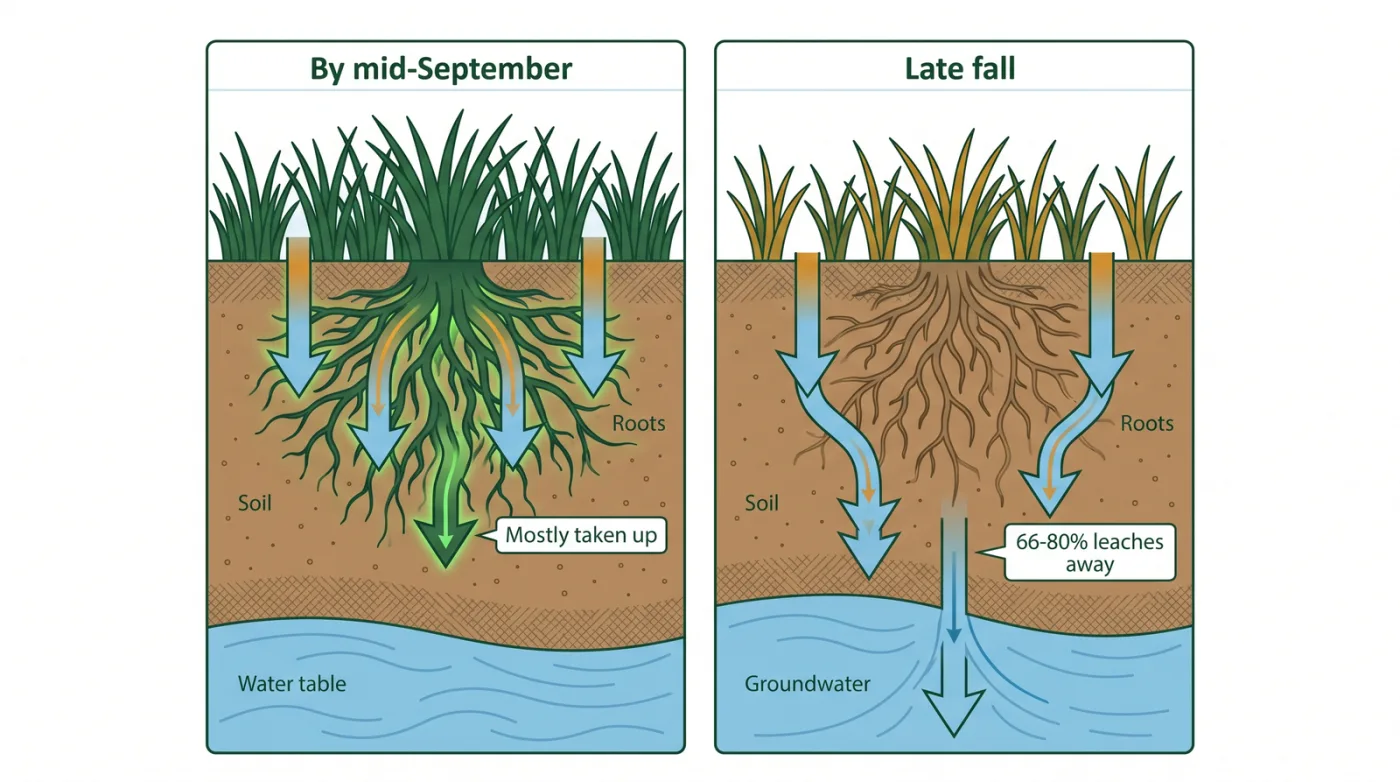
The practical takeaway: do your main fall feeding by mid-September, and treat the late-October "winterizer" as optional at best. If you want to feed late, use a slow-release nitrogen at a light rate rather than a heavy quick-release dose, so less is lost to leaching.
Quotable: OMAFRA research found 66 to 80% of nitrogen applied to Ontario lawns after mid-September isn't absorbed and leaches into groundwater. The fall feeding that works is the early-September one.
How much, and what kind
Rate and restraint matter more than frequency. The benchmark rate is 1.0 to 1.5 kg of nitrogen per 100 square metres per application (OMAFRA), and most homeowners cover a whole year with just the spring and early-fall feedings. Over-fertilizing does real harm: excess nitrogen pushes soft, disease-prone growth that is more vulnerable to winter injury, and the surplus washes into waterways.
One point of confusion worth clearing up: Ontario's cosmetic pesticide rules restrict many weed-killing products, but plain fertilizer is not a pesticide and is not restricted. You can fertilize normally. Just read the label on any "weed-and-feed" product, because the herbicide part may fall under the provincial rules even though the fertilizer part does not.
From the data: Of the 249 lawn-care companies YardQuote tracks across the GTA, 220 carry three or more Google reviews, the average rating is 4.75, and 88% of rated companies hold 4.5 stars or higher (YardQuote tracking, July 2026). Most run a spring-and-fall fertilizer program built around these same two windows.
Fit fertilizing into the rest of your fall lawn care
Feeding is one piece of putting a Toronto lawn to bed. The other two are mowing height and timing. Make the year's last cut a bit shorter to fend off snow mould, as covered in our guide on cutting your lawn short before winter, and time that final mow by temperature, not the calendar, using our guide on the last mow of fall.
If you would rather a crew run a proper spring-and-fall program, compare current rates on the lawn care cost page or browse rated providers on the North York lawn care directory.
Want a vetted local crew to handle fertilizing on the right Ontario schedule? Request a quote and compare up to three rated GTA lawn-care pros side by side. Your contact details only go to the one you pick.