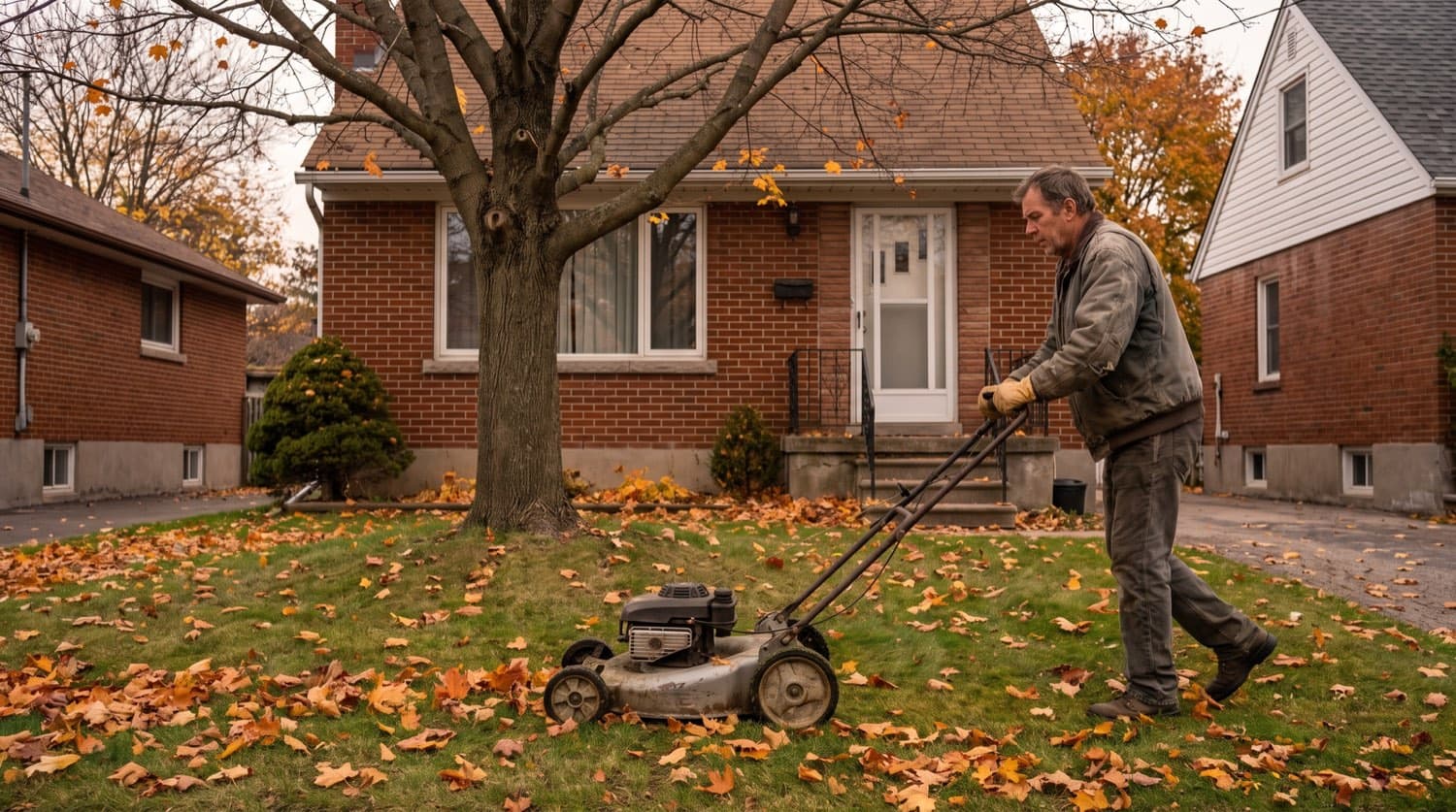
Answer First: Yes, but only slightly. Make your last fall cut about 2 to 2.5 inches, roughly half an inch shorter than the 6 to 8 cm (about 3 inches) Landscape Ontario recommends the rest of the year. Shorter than usual keeps the grass from matting under snow and breeding snow mould, but scalping below about 1.5 inches exposes the crown and does more harm than good. Lower the height gradually, never taking more than a third of the blade in one pass.
There is a real answer here, and it sits between two bad extremes. Leave a Toronto lawn long and it mats under the first heavy snow. Scalp it to the dirt and you strip the crown right before the coldest months. The sweet spot is a modest trim, and getting there safely matters as much as the number.
How short should the last cut be?
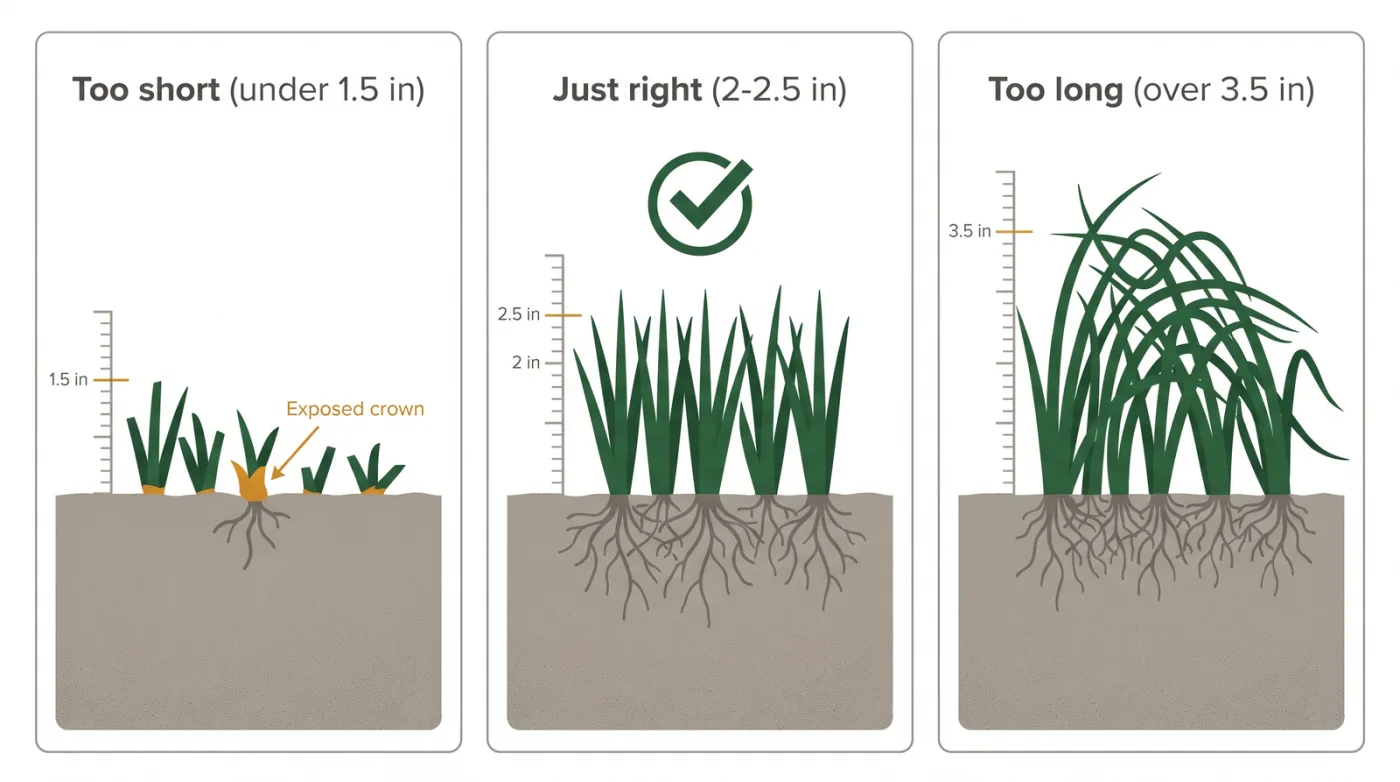
About 2 to 2.5 inches. That is a half-inch drop from the roughly 3-inch (6 to 8 cm) height Landscape Ontario recommends keeping a healthy Ontario lawn at through the growing season. You are not switching to a putting-green cut. You are shaving a little off the top so the canopy does not collapse under snow.
Toronto lawns are cool-season grasses, usually a mix of Kentucky bluegrass, red fescue, and perennial ryegrass (Landscape Ontario). These grasses keep growing in cool weather, so you mow into the fall, then bring the height down for the final cut once growth slows. The reduction is the point, not a specific mower setting you copy from a warm-climate video.
Quotable: The last cut of the Toronto season should be about 2 to 2.5 inches, half an inch below the 3-inch height Ontario recommends the rest of the year. Short enough to resist matting, tall enough to protect the crown.
Why does a shorter final cut help?
Because of snow mould. When grass goes into winter too long, it bends over under the weight of snow, mats down, and traps moisture against the soil for months. That cold, damp, matted layer is the ideal nursery for pink and grey snow mould, the crusty grey and pinkish patches you find when the snow melts in spring (OMAFRA, via Landscape Ontario). A shorter canopy does not collapse the same way and dries out faster once snow recedes.
A shorter cut also means fewer long clippings and less leaf litter smothering the crowns over winter. Clearing fallen maple and oak leaves before the snow flies does the same job. Matted leaves and matted grass cause the same problem.
How short is too short?
Below about 1.5 inches. At that point you are scalping, and you remove so much leaf that the crown, the growing point at the base of each plant, sits exposed to cold, drying winter wind and ice. Cool-season grass stores energy in its crown and roots to fuel spring green-up, and a scalped lawn heads into winter stressed instead of stored up.
Quotable: Scalping a lawn below 1.5 inches before winter exposes the crown and strips the energy reserves the grass needs for spring. Short and healthy is the goal, not shortest possible.
The difference between a helpful trim and a harmful scalp is only an inch, which is why the height number matters. Aim for the modest drop, not the lowest setting.
Lower the height gradually, not all at once
Whatever you do, do not take a shaggy November lawn down to 2 inches in a single pass. The one rule that governs all mowing applies double in fall: never remove more than one-third of the blade length in one cut (Landscape Ontario, Government of Ontario). Cutting more than that shocks the plant exactly when it should be conserving energy.
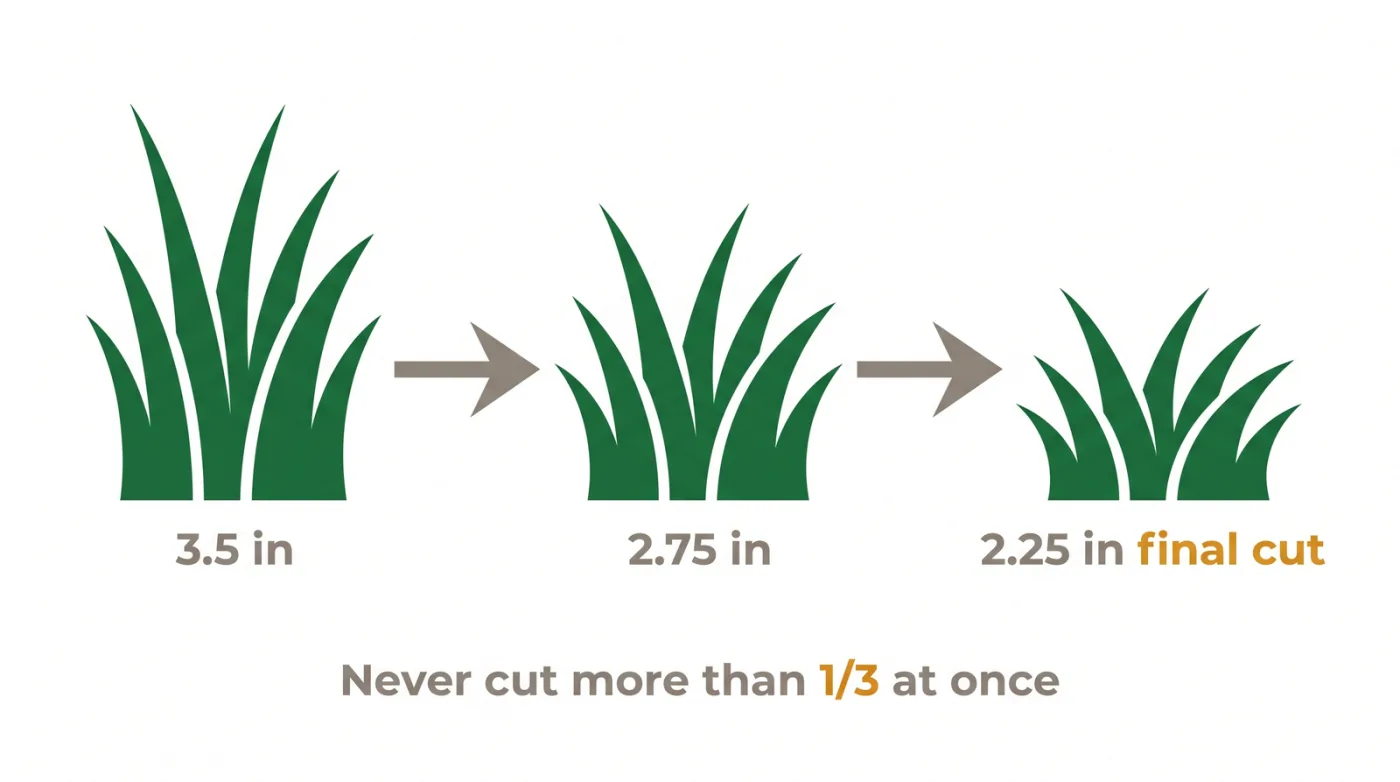
In practice, if your lawn is at 3.5 inches in late October, mow to about 2.75, wait a few days, then finish near 2.25 on your last cut of the year. That reaches the target height without ever violating the one-third rule. If a hard snow is in the forecast and you are out of time, one careful cut to remove obvious excess is still better than leaving the lawn long to mat.
From the data: Of the 249 lawn-care companies YardQuote tracks across the GTA, 220 carry three or more Google reviews, the average rating is 4.75, and 88% of rated companies hold 4.5 stars or higher (YardQuote tracking, July 2026). Fall cleanup and final-cut visits are a common line in their service lists.
When you make that final cut matters too
Height is only half the fall mowing question. The other half is timing: knowing which mow is actually the last one of the year, which comes down to temperature, not the calendar. That is covered in our companion guide on the last mow of fall and how to time it. Pair a well-timed last cut with the right fall feeding, and see our Ontario lawn fertilizer calendar for that.
If you would rather hand the fall cleanup and final cut to a pro, compare current rates on the lawn care cost page or browse rated crews on the North York lawn care directory.
Want a vetted local crew to handle the fall cutback and cleanup? Request a quote and compare up to three rated GTA lawn-care pros side by side. Your contact details only go to the one you pick.