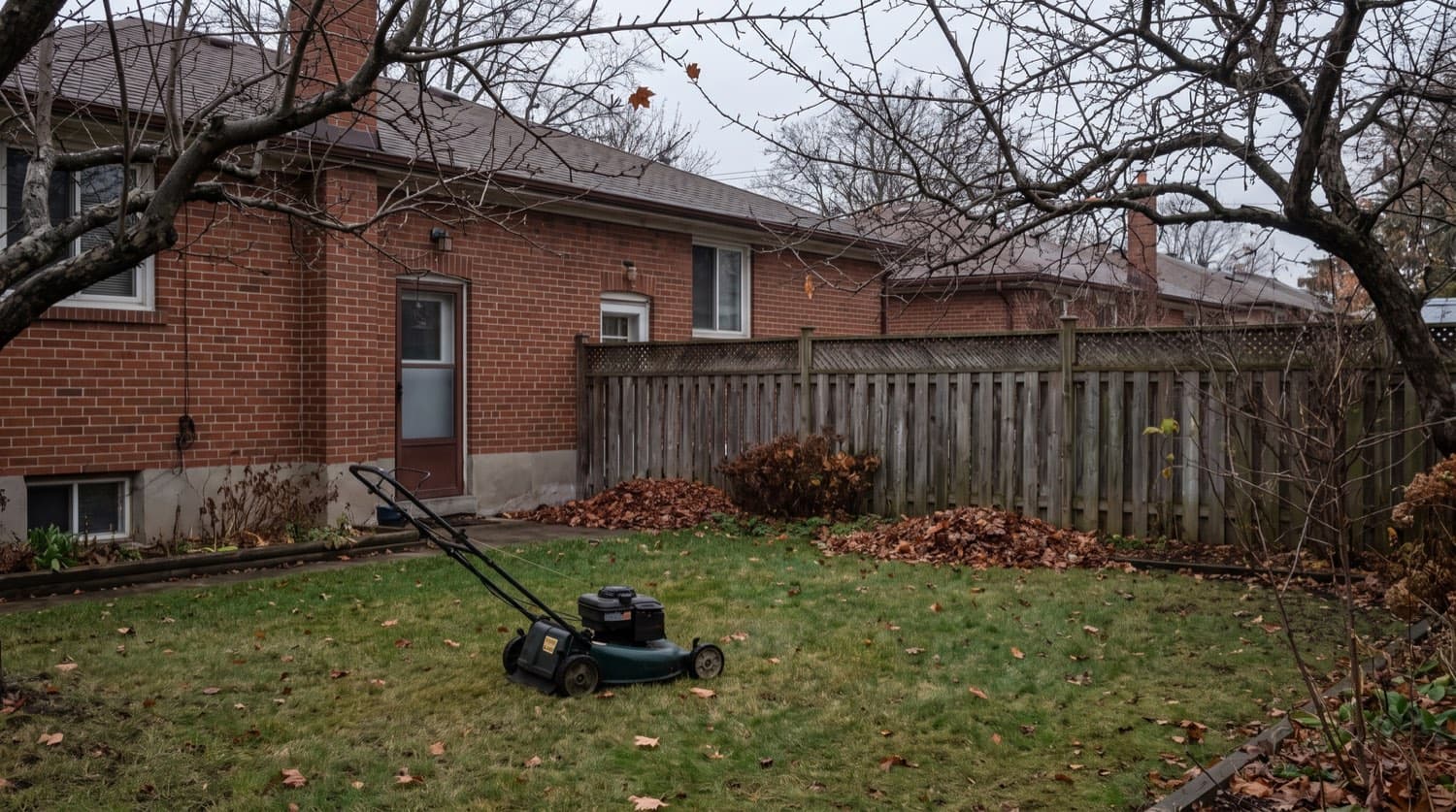
Answer First: Keep mowing until the grass stops growing, which in the GTA usually falls between late October and mid-November. The trigger is temperature, not a date: cool-season grass growth slows once daytime highs stay below about 10°C (50°F) for several days and effectively stops as soil cools toward 7°C (45°F). Watch the forecast, make one slightly shorter final cut of about 2 to 2.5 inches, and clear the leaves.
Every fall someone asks whether it is "too late" to mow. It almost never is, until suddenly it is. Grass does not read a calendar, and a mild Toronto November can keep a lawn growing well past the point most people have put the mower away. The honest answer is to let the temperature tell you when to stop.
When is the last mow of the fall in Toronto?
Usually late October to mid-November, but the range moves with the weather. Cool-season grasses, the Kentucky bluegrass, fescue, and ryegrass mixes common on GTA lawns, keep growing through cool autumn days and only stop when it gets cold enough. A mild fall can push your last mow into the second or third week of November; an early cold snap can end the season in the last days of October.
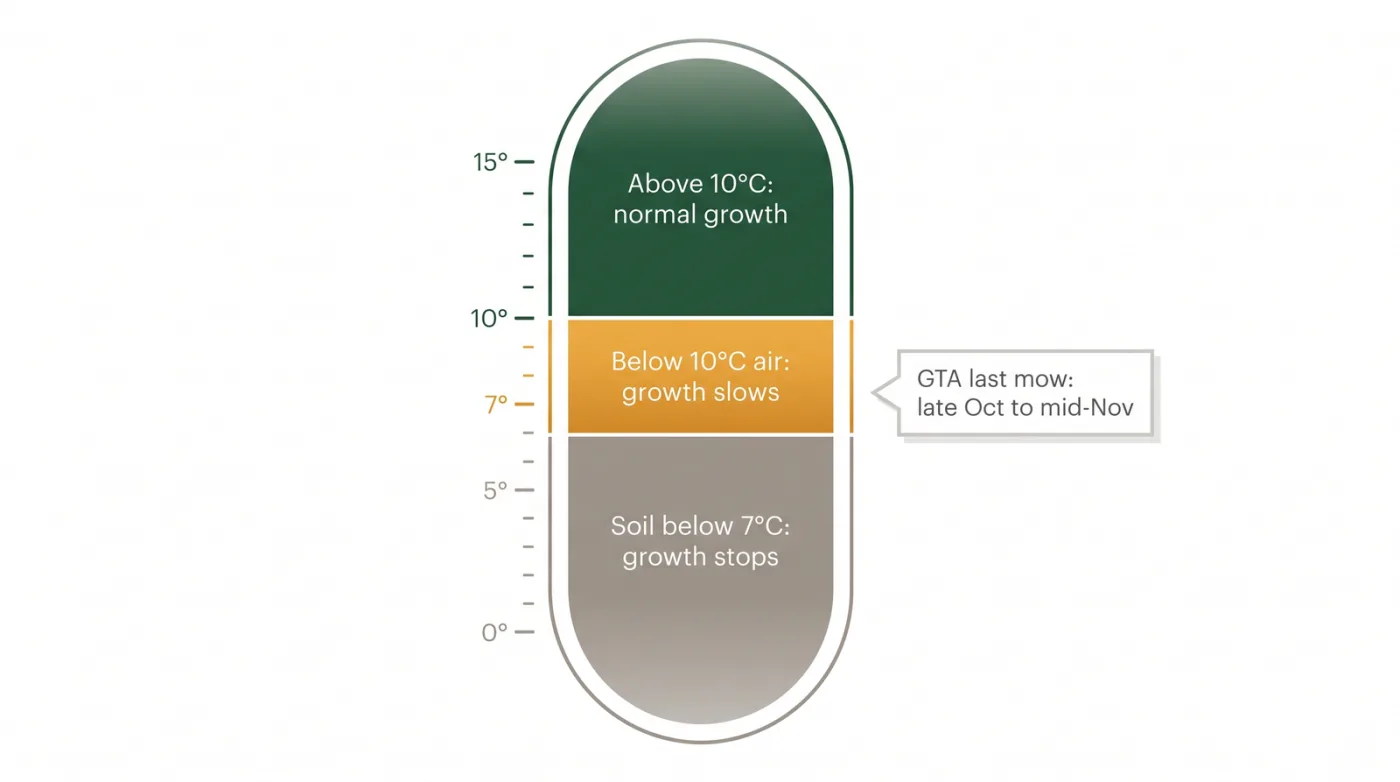
So the useful answer is not a date. It is a condition: mow on your normal schedule until the grass clearly stops growing back, then make one final cut. In a typical GTA year that lands in the first half of November.
Quotable: There is no calendar date for the last mow of the year. Cool-season grass in the GTA keeps growing until daytime highs sit below about 10°C for several days, which usually means late October to mid-November.
Why temperature decides, not the date
Because grass growth follows soil temperature more than air temperature or daylight. Cool-season lawns slow their growth once daytime air holds below about 10°C (50°F) and effectively stop as soil temperature falls below roughly 7°C (45°F) (University of Minnesota Extension). Soil holds heat longer than air, so the lawn often keeps growing for a week or two after the first frosty nights, which is exactly why an early-November mow is normal in Toronto.
This is also why copying a neighbour's "I stopped mowing October 15" habit is a mistake. One cold week does not end the season, and one warm week can extend it. The lawn shows you what it is doing if you watch it.
How to know it is actually the last mow
Read three signals together, not one:
- Sustained cold. Daytime highs stay below about 10°C (50°F) for three to four days in a row, not just one cold morning.
- Little regrowth. The lawn barely grows back between your normal mows, so there is little left to cut.
- Frost or snow in the forecast. A hard freeze or the first lasting snow is coming within days.
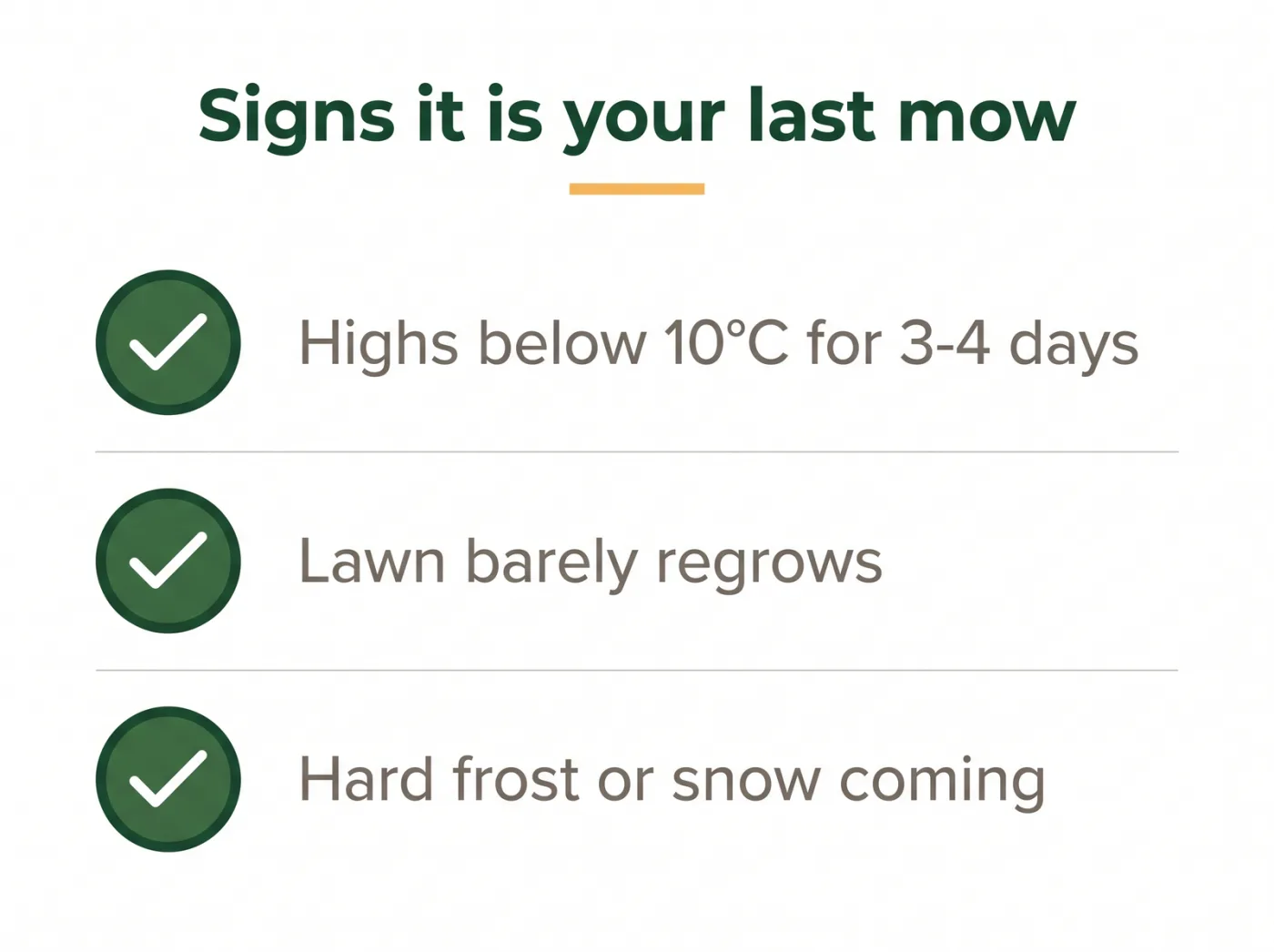
When all three line up, the next dry-surface cut is your last of the year. Plan it before the first hard freeze. Mowing frosted or frozen grass tears brittle blades and can rut the crowns, so wait for frost to lift and the surface to dry, and if the ground is already frozen, leave the lawn until spring.
Quotable: The last mow is not one cold morning. It is three signals together: several days below 10°C, a lawn that barely regrows, and a hard frost in the forecast.
Make the final cut a good one
The timing question and the height question meet on this cut. Once you have decided it is the last mow, drop the height to about 2 to 2.5 inches, roughly half an inch below the 3-inch (6 to 8 cm) height Ontario recommends the rest of the year, so the grass does not mat under snow (Landscape Ontario). Take that reduction gradually if the lawn is long. The full reasoning is in our companion guide on whether to cut your lawn short before winter.
Clear the fallen leaves at the same time. A thick mat of wet maple and oak leaves smothers the crowns and traps the same moisture that long grass does. Bag them, or mulch-mow a light scatter back into the lawn, but do not leave a heavy blanket sitting over winter.
From the data: Of the 249 lawn-care companies YardQuote tracks across the GTA, 220 carry three or more Google reviews, the average rating is 4.75, and 88% of rated companies hold 4.5 stars or higher (YardQuote tracking, July 2026). Most offer a final-cut-and-cleanup fall visit if you would rather not chase the forecast yourself.
Timing the last mow is one piece of putting a Toronto lawn to bed; feeding it correctly is the other. See our Ontario lawn fertilizer calendar for when that final feeding should go down. To hand off the fall visit, compare rates on the lawn care cost page or browse rated crews on the North York lawn care directory.
Want a local crew to time and make the last cut for you? Request a quote and compare up to three rated GTA lawn-care pros side by side. Your contact details only go to the one you pick.