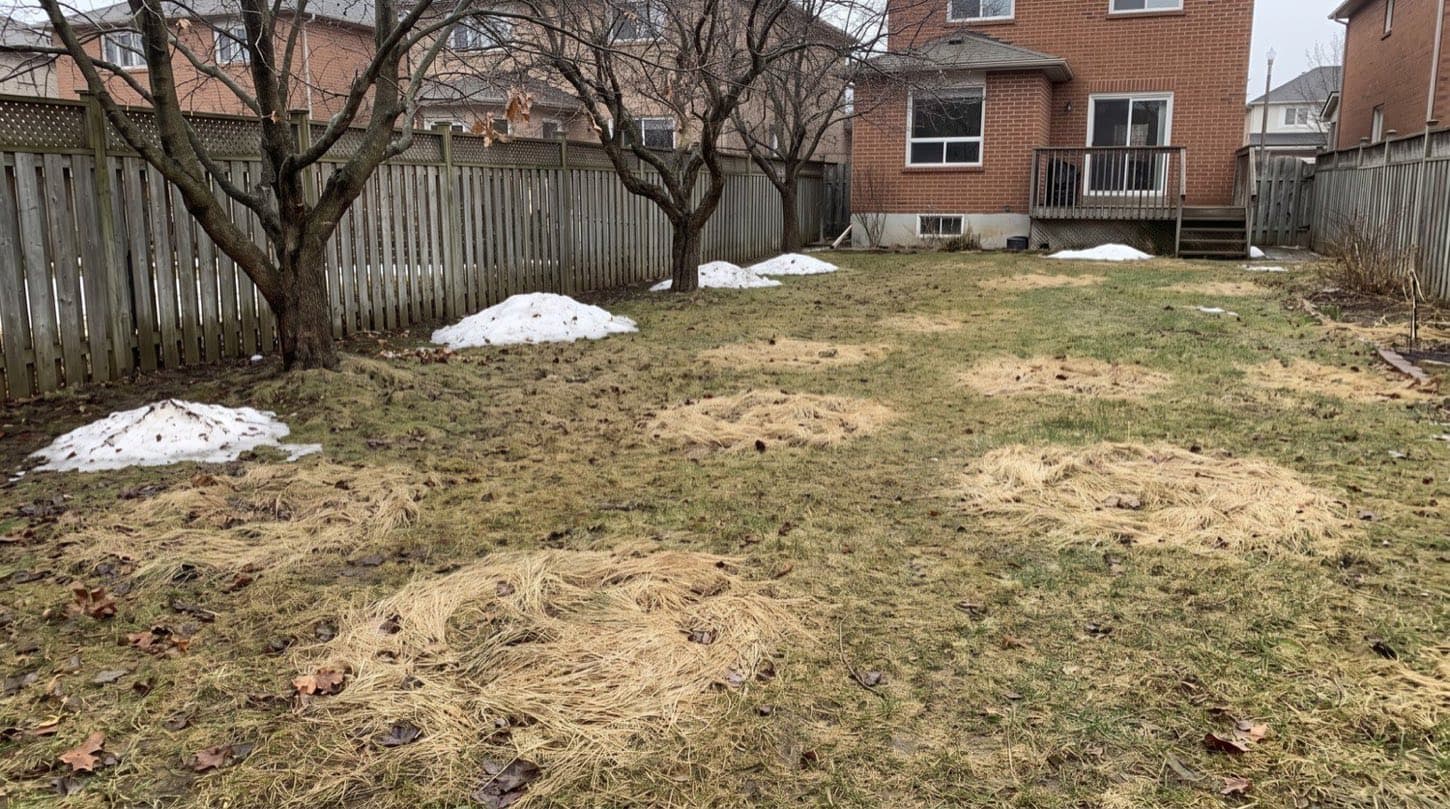
Answer First: The matted, straw-colored circles on your lawn as the snow melts are snow mold, a fungal disease that appears in March and April. It is usually cosmetic: gray snow mold damages the leaf blades but not the crown, so most Toronto lawns green up on their own. Fix it by gently raking the patches to break them up and let them dry — the grass underneath recovers with a light spring feeding, and home lawns almost never need a fungicide.
You uncover the lawn in April expecting green and find pale, flattened circles that look like something slept on them all winter. It is not dead grass and it is not your fault. It is snow mold, and in most Toronto yards the fix is a rake and some patience.
What is snow mold and what does it look like in April?
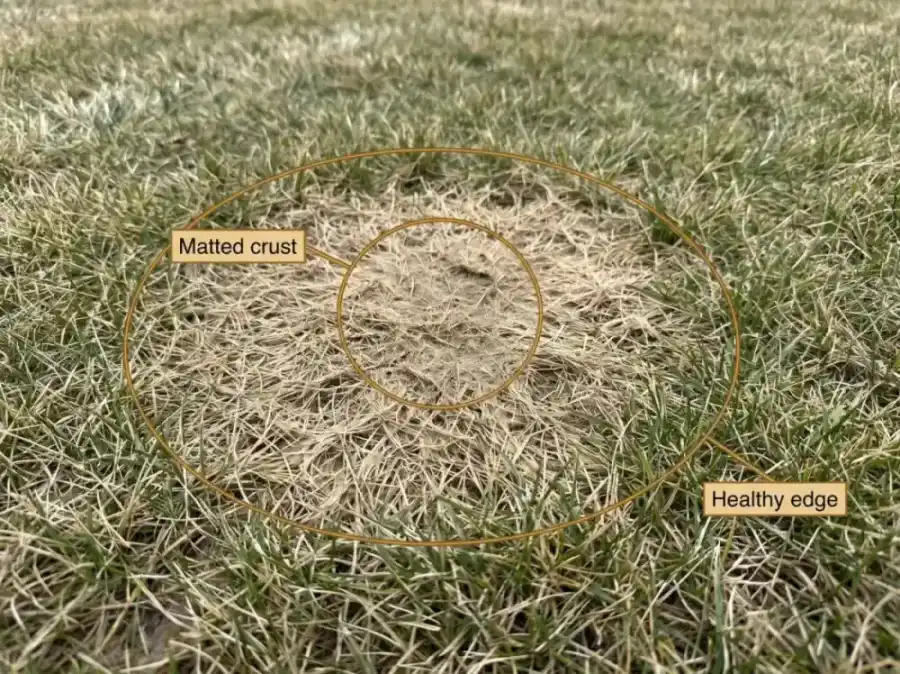
Snow mold is a cold-weather turf fungus that becomes visible the moment the snow recedes. According to Iowa State University Extension, the symptoms show up in late winter or early spring as circular, straw-colored patches where the grass is matted flat and felted, sometimes with a visible web of fungal growth.
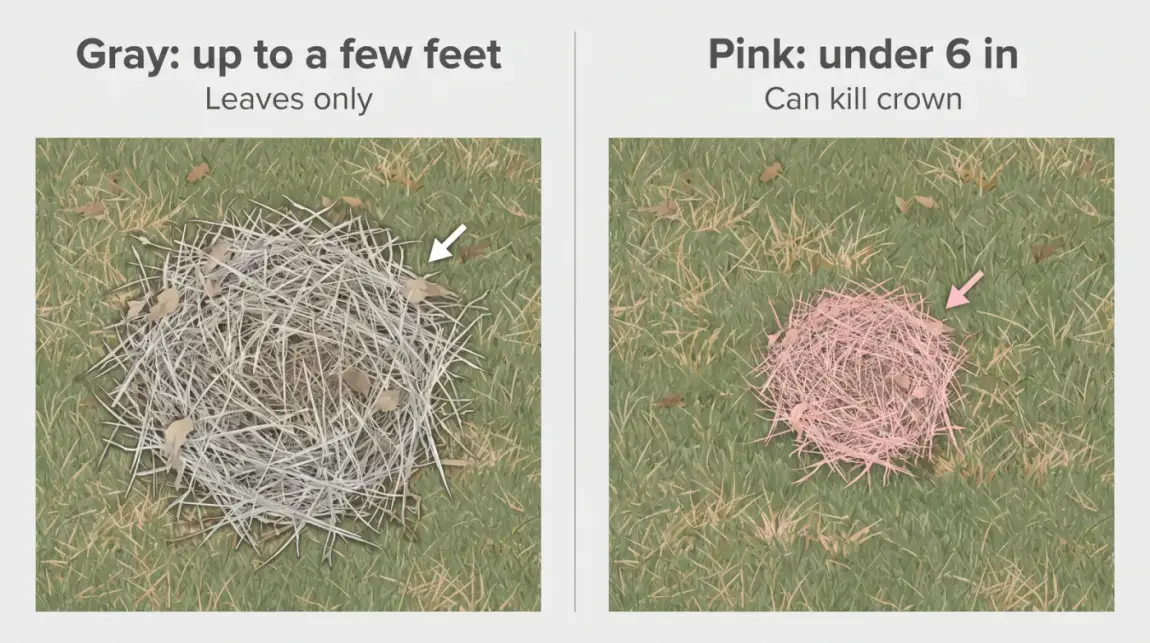
There are two kinds, and the size of the circles is the first clue to which you have. Gray snow mold patches range from a few inches to a few feet across; pink snow mold patches are usually smaller, under six inches.
Snow mold — a fungal disease of cool-season turf that grows under long-lasting snow on unfrozen ground, appearing in spring as matted, straw-colored circular patches. It is caused by two different fungi: gray snow mold (Typhula) and pink snow mold (Microdochium nivale).
Gray or pink — does the difference matter?
It does, because it tells you whether to relax or reseed. Here's the honest split.
| Gray snow mold | Pink snow mold | |
|---|---|---|
| Fungus | Typhula | Microdochium nivale |
| Patch size | A few inches to a few feet | Usually under 6 inches |
| Colour | Grayish-white, sometimes tiny dark specks | Pinkish, whitish when dry |
| What it damages | Leaf blades only | Can reach the crown and roots |
| Recovery | Greens up on its own, slowly | May stay bare and need reseeding |
The reassuring news from Iowa State is that damage is usually mild and affected areas green up eventually, just slower than the rest of the lawn, because the fungi mostly harm the leaves rather than killing the whole plant. Pink is the one that earns real concern: Penn State notes it can damage the crown, and it can appear in cold, wet conditions even without deep snow cover.
Quotable: Gray snow mold looks alarming but only damages the leaf blades, so most lawns recover on their own. Pink snow mold makes smaller patches but can kill the crown — size down, worry up.
What causes snow mold in the first place?
The conditions, not bad luck. Snow mold thrives when snow sits for a long stretch on ground that never fully froze, holding the turf cold, humid, and just above freezing — the exact microclimate at soil level under a long-lasting snowbank. A few things make a Toronto lawn far more prone to it:
- Grass that went into winter long. Tall, soft blades mat down and hold moisture.
- Fall leaves left to sit. A wet leaf layer smothers the turf and feeds the fungus.
- Too much late nitrogen. Iowa State is specific that snow molds are worse on lush turf that got very high fall nitrogen — the succulent growth is more susceptible.
- Piled snowbanks. The long-lasting mounds you shovel off the driveway and walk are prime snow-mold factories.
That last one links two winter jobs. When you or your snow removal crew pile cleared snow onto the same corner of lawn all winter, that corner is where the worst matted patch shows up in April.
How do I fix a lawn with snow mold right now?
Gently, and mostly with a rake. The active disease stops once the turf warms and dries, so your job in spring is to speed that up:
- Rake the matted patches. Break up the crushed, felted crust with a light hand rake so air and spring sun reach the crowns. This is the single most effective step.
- Let it dry and warm. Improving drying and airflow shuts the fungus down. Don't keep the area soggy.
- Feed lightly. A light spring feeding pushes new growth into the thinned patches. Save the heavier feeding logic for the fall — read our note on the last fall feeding for why timing matters.
- Reseed only what stays bare. Wait two to three weeks after raking. Most patches green back up; overseed only the spots that don't, which are usually pink-mold crowns.
Skip the fungicide. On a home lawn it is unnecessary — the disease is self-limiting once the weather turns.
From the data: Of the 249 lawn-care companies YardQuote tracks across the GTA, spring startup visits routinely include a dethatch-and-rake pass for exactly this reason. Snow mold is one of the most common April complaints on a Toronto lawn, and one of the least expensive to resolve.
How do I prevent it next winter?
Everything you do in the fall decides your April. To keep snow mold from setting up:
- Keep mowing into late fall so the grass doesn't disappear under snow while it's still long.
- Clear the leaves before the snow flies, rather than letting a wet mat sit on the turf.
- Go moderate on late nitrogen. A sensible late-fall feeding is good; a heavy one grows the soft blades snow mold loves.
- Keep thatch thin — around half an inch — so the canopy isn't a damp sponge all winter.
- Spread your snow, don't pile it. When clearing driveways and walks, scatter the snow rather than banking it on one patch of lawn.
Putting the whole yard to bed properly is the real prevention. Our guide to winterizing a Toronto garden covers the beds and shrubs, and you can compare real GTA rates for a spring lawn startup on the lawn care cost page or browse lawn care companies near you.
Dealing with a patchy lawn this spring? Request a quote and compare up to three vetted local crews side by side — your contact details only go to the one you pick.