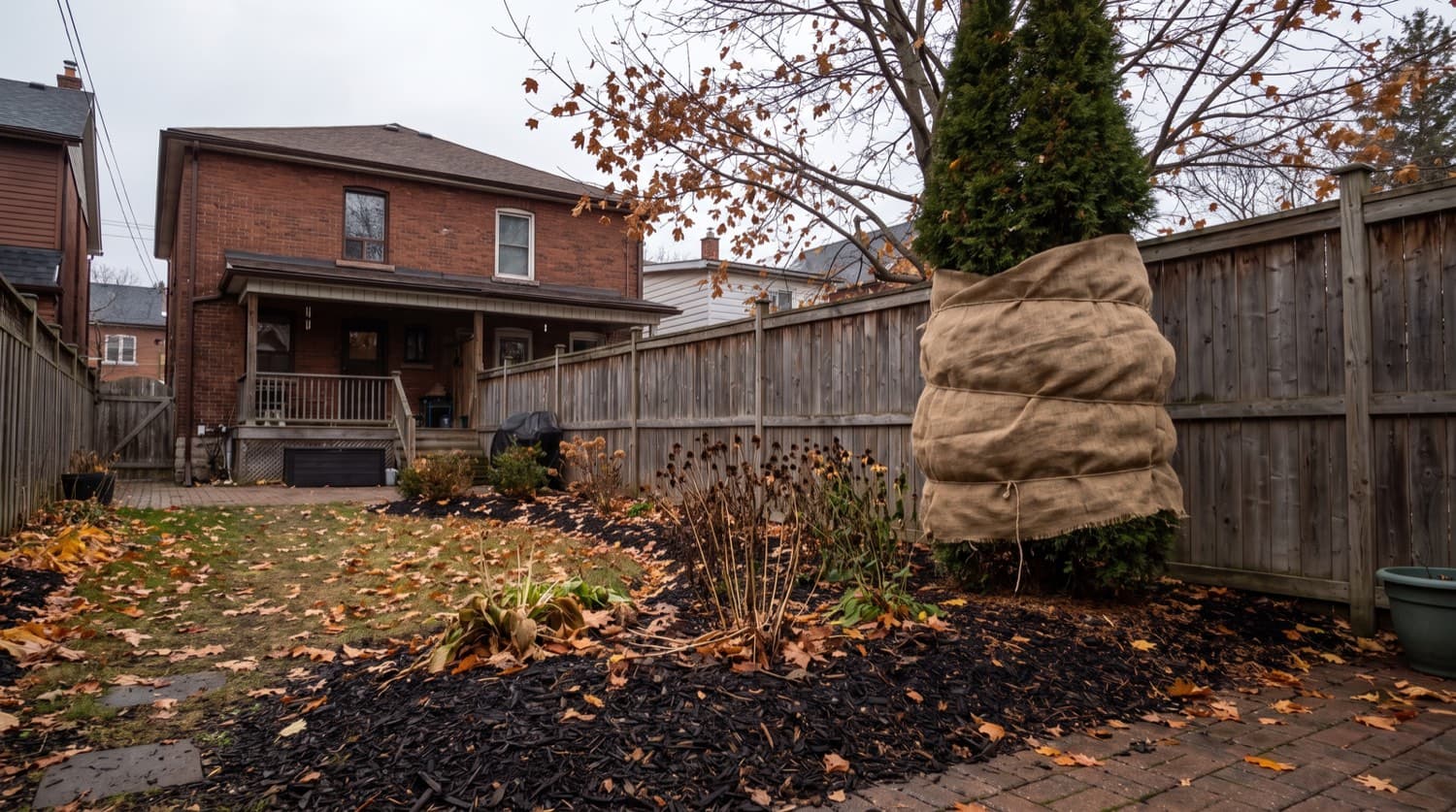
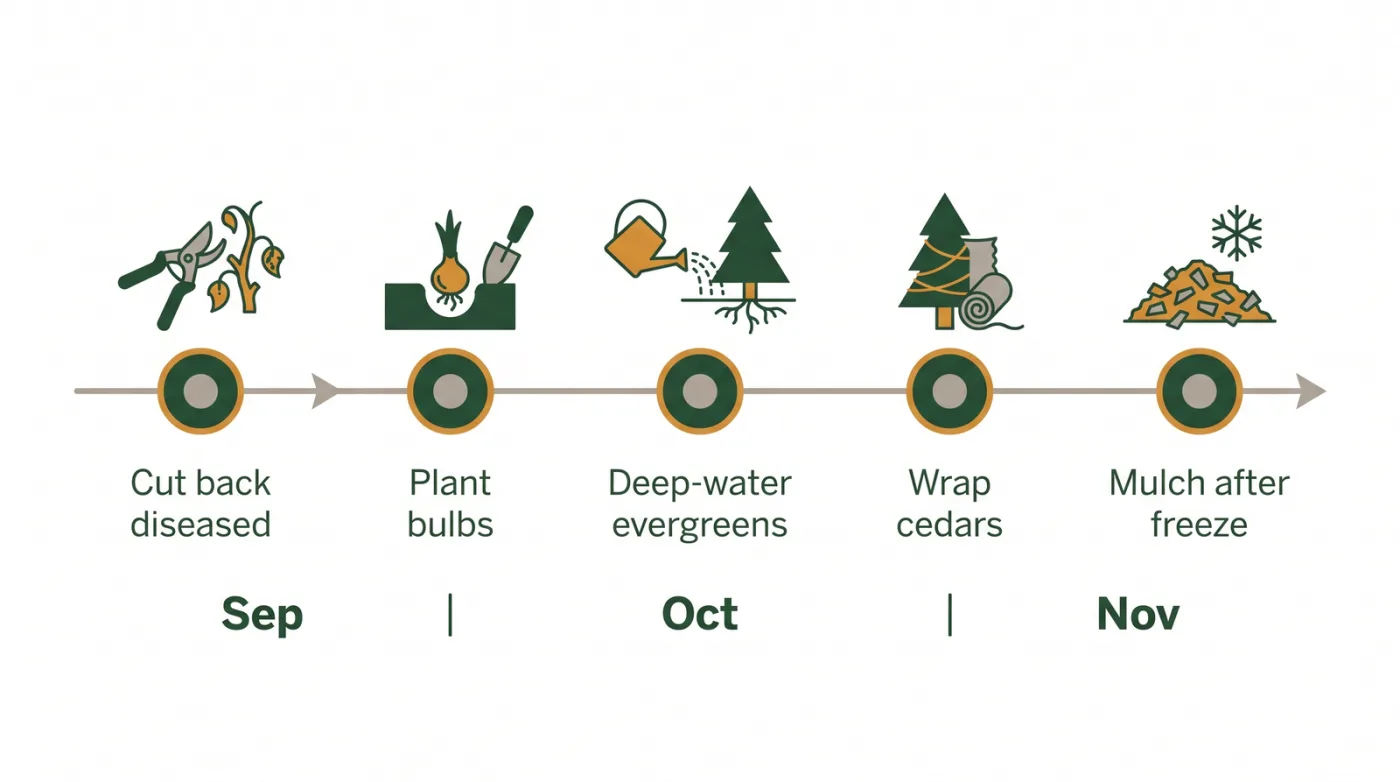
Answer First: Winterize a Toronto garden through October, before the first hard frost — which can arrive as early as late September in the outer GTA and usually by mid-to-late October in the city core. The high-value tasks, in order: deep-water evergreens and young trees before the ground freezes, mulch beds with 2–4 inches of shredded leaves, wrap exposed cedars and boxwood in burlap, and empty ceramic pots so they don't crack. Toronto sits in plant hardiness zone 6b.
A garden that is put to bed well in October looks after itself until April. Skip the fall work and you pay for it in spring, with heaved perennials, brown evergreens, and cracked pots. None of it is hard; it just has a deadline.
When should I start winterizing my Toronto garden?
Work backward from the first hard frost. The Toronto Master Gardeners put the GTA's first frost risk as early as late September, and the denser, warmer city core usually holds off until mid-to-late October. Either way, October is the working month: early enough that the ground is still soft for watering and planting, late enough that plants have hardened off.
Knowing your zone sets expectations. Toronto sits in plant hardiness zone 6b on the Natural Resources Canada map. A shrub rated to zone 5 or colder will shrug off a normal Toronto winter with no help. The plants worth your effort are the borderline zone-6-and-warmer ones, newly planted stock that hasn't rooted in, and anything exposed to wind.
Quotable: Toronto is plant hardiness zone 6b. Anything rated zone 5 or colder survives winter on its own — spend your fall effort on the borderline, the newly planted, and the wind-exposed, not the whole garden.
What's the single most important fall task?
Watering, and almost everyone skips it. Before the ground freezes, deep-water your evergreens and any tree or shrub planted in the last two years. Evergreens keep losing moisture through their needles all winter, and when the roots are locked in frozen, dry soil they can't replace it. The result is the brown, brittle foliage called winter burn that shows up in March.
A slow, deep soak at the base in late October or early November — while the hose still works and the ground is open — is the cheapest insurance in the garden. Young deciduous trees benefit from the same treatment to carry them through the dry frozen months.
How do I protect perennial and shrub roots?
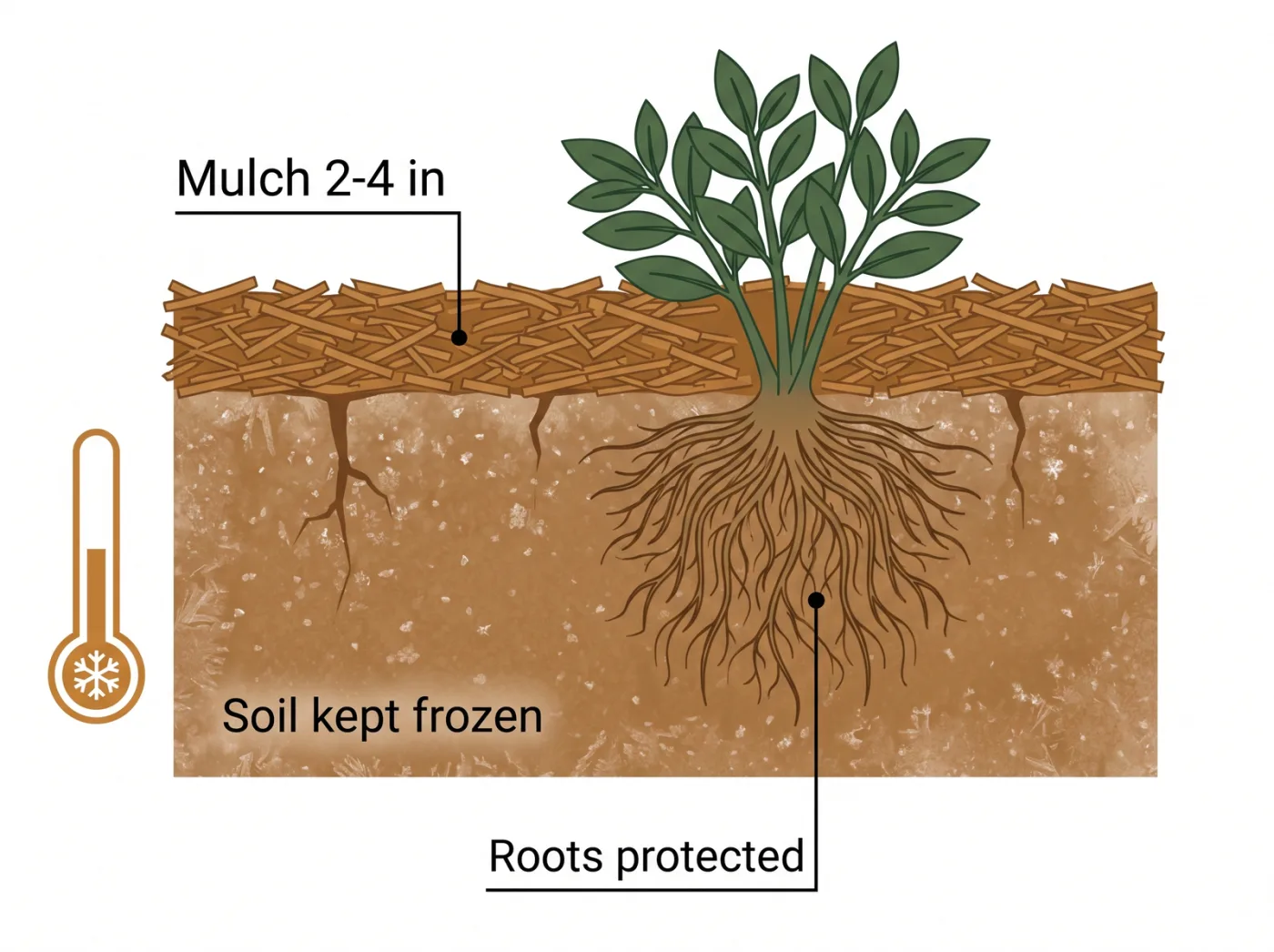
With mulch, and with better timing than most people use. Spread a 2–4 inch layer of shredded leaves, bark, or straw over your beds. But the goal isn't to keep the soil warm — it's to keep it evenly frozen.
Freeze-thaw heaving — the cycle where soil repeatedly freezes and thaws over winter, expanding and contracting until it physically pushes shallow-rooted perennials up and out of the ground. Mulch applied once the ground has frozen acts as a blanket that keeps it frozen through the January thaws, which is exactly what stops the heaving.
That's why the pros mulch beds after the first hard freeze, not before. Mulch laid down too early over warm soil just gives voles a cozy place to nest against your plant crowns.
As for the perennials themselves: cut back anything diseased or collapsed into mush, since it only shelters fungus and pests over winter. Leave healthy ornamental grasses and sturdy seed heads like coneflower standing — they feed birds, give pollinators winter shelter, and catch insulating snow.
From the data: Of the 650 landscaping companies YardQuote tracks across the GTA, fall cleanup and winter-protection visits are a distinct line on most maintenance contracts. The crews that hold ratings above 4.5 stars tend to book the cleanup as two touches — an October cut-back and a later mulch-and-wrap — rather than one rushed visit before the snow.
How do I stop winter burn on evergreens?
Three moves, in order: water, wrap, and skip the plastic. After the deep watering above, wrap exposed or newly planted cedars, boxwood, and yews in burlap to shield them from the winter sun and wind that drive winter burn. Burlap breathes; plastic does not, and on a sunny January afternoon a plastic-wrapped shrub bakes.
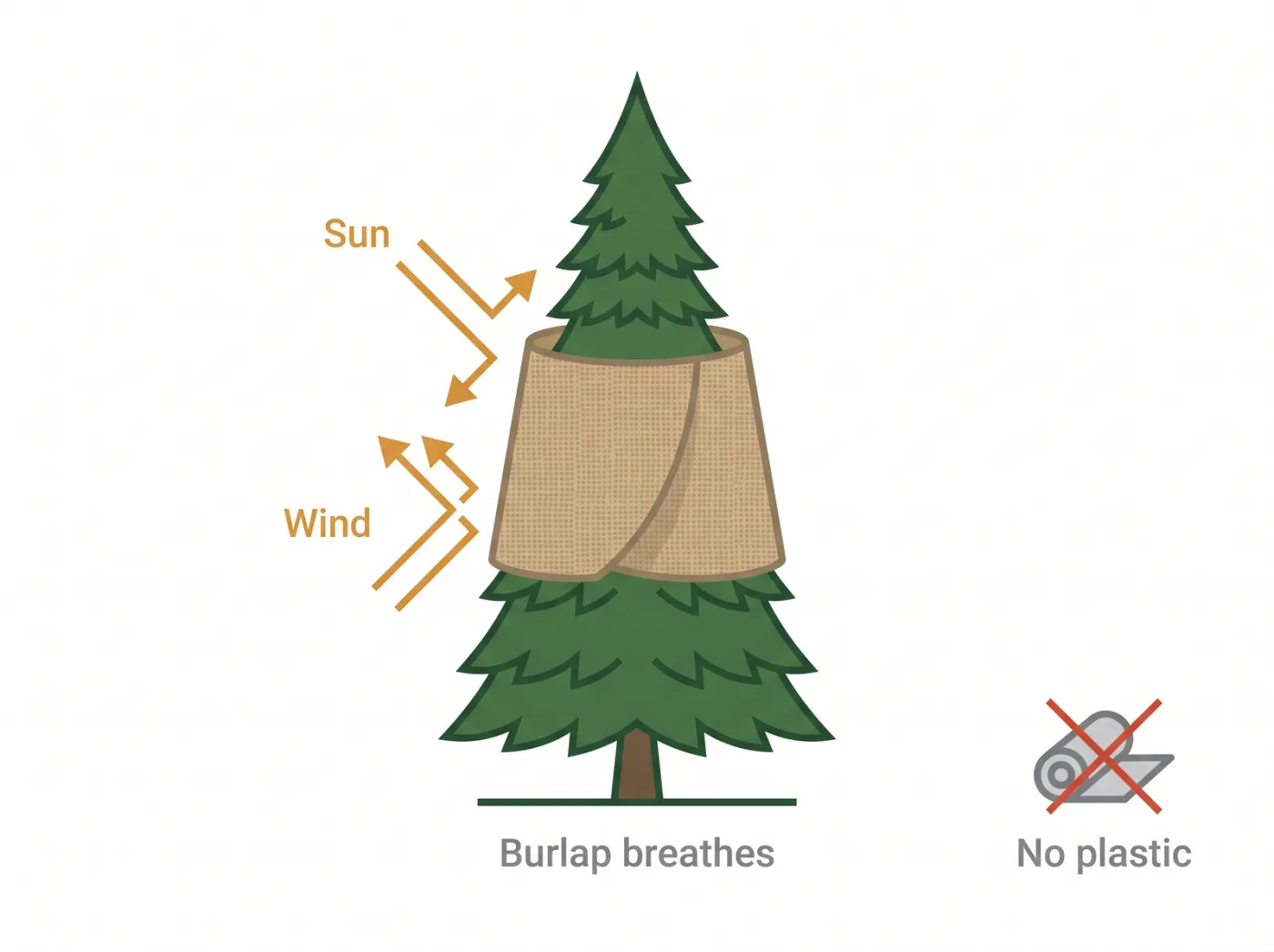
Prioritize the exposed ones — a cedar hedge on the windward side of the lot or a boxwood catching reflected sun off a south wall needs the burlap far more than a sheltered specimen in the lee of the house.
What about pots, hoses, and bulbs?
The small end-of-season jobs that save money and plants:
- Empty ceramic and terracotta pots. Water left in a glazed pot freezes, expands, and cracks it. Empty them, and store the good ones under cover.
- Drain hoses and blow out irrigation. Standing water in a line freezes and splits it. Disconnect hoses from the house so the outdoor tap doesn't freeze back into the wall.
- Plant spring bulbs before the ground freezes. Tulips and daffodils go in through October and into early November — they need weeks of cold soil to root before deep freeze.
- Clean and dry tools. A wipe-down and a dry storage spot stops a winter of rust.
Putting the lawn to bed is its own job, not a garden one. Time the last lawn feeding of the year for late fall, and cut the grass a final time so it doesn't go into winter long — long, unfed grass under snow is what invites the matted patches of snow mold in April. You can compare real GTA rates for a full fall cleanup on the landscaping cost page or browse landscaping companies near you.
Want a crew to handle the fall cleanup and winter protection for your yard? Request a quote and compare up to three vetted local pros side by side — your contact details only go to the one you pick.