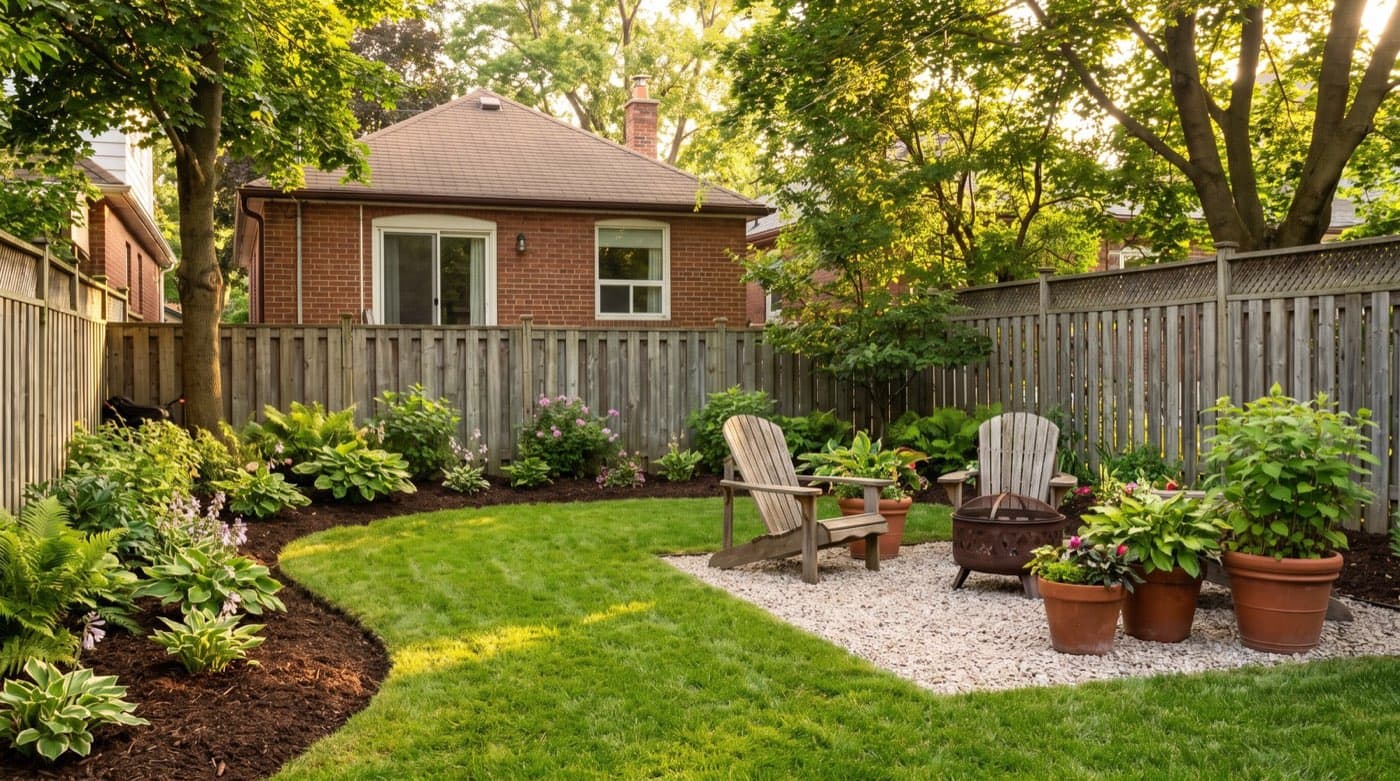
Answer First: The simplest backyard upgrades give the biggest return: cut a crisp edge around your garden beds and add fresh mulch, overseed a thin lawn in fall rather than re-sodding, set out one small gravel or paver sitting area, and group a few larger container plants as a focal point. Most of this is a weekend of work and a few hundred dollars, no machinery or landscaper required, and it makes a tired Toronto backyard look maintained and intentional.
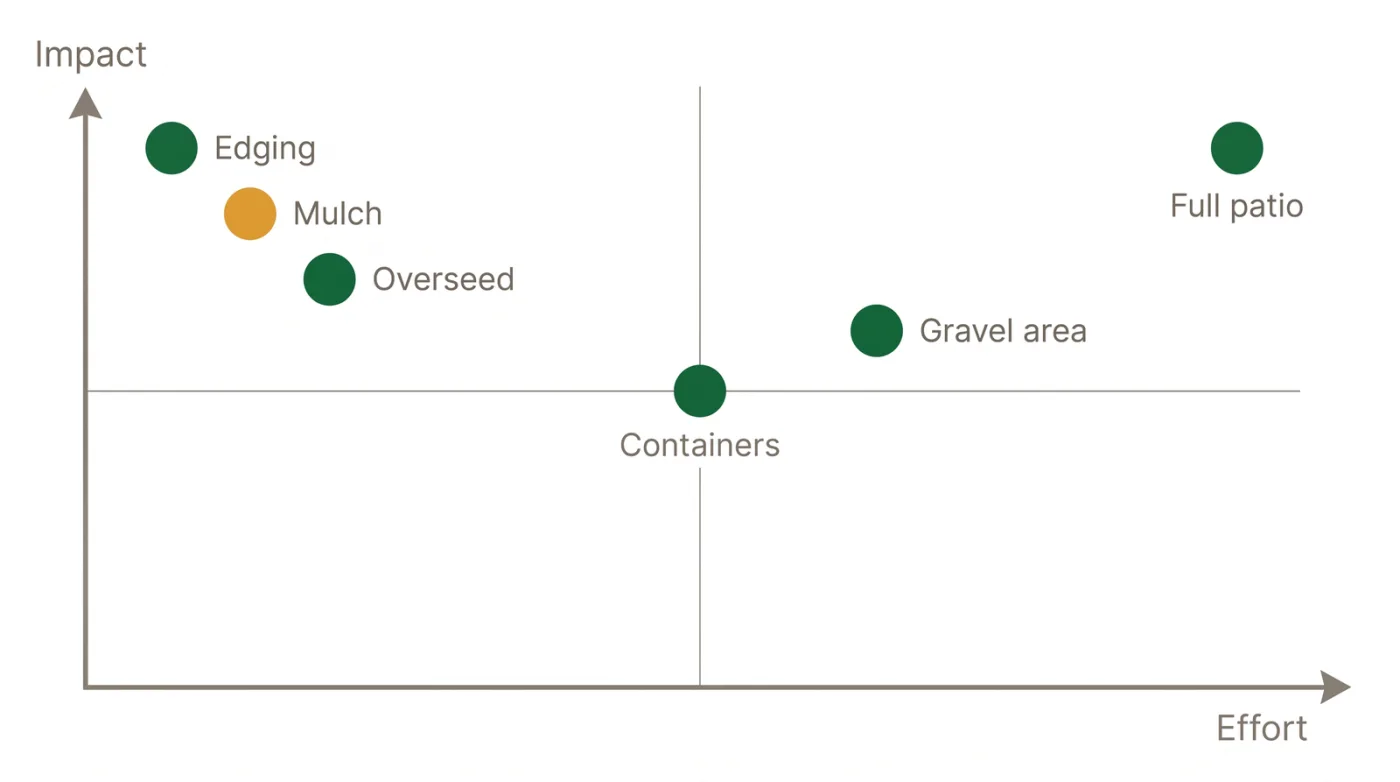
Not every backyard needs a renovation. Most just need to look cared for, and that comes from a handful of simple moves almost anyone can do in a weekend. Here is the playbook, ordered by how much impact you get for the effort.
The single cheapest win: edges and mulch
If you do one thing, define your bed edges and mulch them. A clean, cut line between lawn and garden bed, topped with a few centimetres of fresh mulch, makes an entire yard read as maintained, even if nothing else changes. It is the highest impact-per-dollar move in landscaping.
Edging is free, just a spade and an afternoon. Mulch is cheap and does double duty: it suppresses weeds, holds moisture through Toronto's dry July, and feeds the soil as it breaks down. For how much you actually need, see our guide to mulch cost and coverage.
Quotable: A crisp bed edge and fresh mulch is the highest impact-per-dollar move in landscaping. It costs a weekend and a few bags, and it makes a whole yard look maintained.
Thicken the lawn instead of replacing it
A patchy lawn rarely needs to be torn out. Overseeding, spreading fresh grass seed over the existing lawn, thickens it for a fraction of the cost of sod, and fall is the strongest season for it in Toronto because the soil is warm and the air is cool (Ontario).
Rake out the dead patches, spread a quality cool-season seed blend, keep it watered while it germinates, and a thin lawn fills in. Our fall lawn care guide covers the timing, and this is a job that genuinely rewards the DIY approach.
Add one small sitting area
A backyard becomes a place you use when it has somewhere to sit. You do not need a big patio; a compact gravel or paver seating spot, big enough for two chairs and a small table, turns an unused corner into a destination.
Gravel is the simplest and cheapest: level the ground, lay landscape fabric, and spread crushed stone. A few pavers set on a compacted base work too. Keep it small and simple, and it stays a weekend project rather than a construction one.
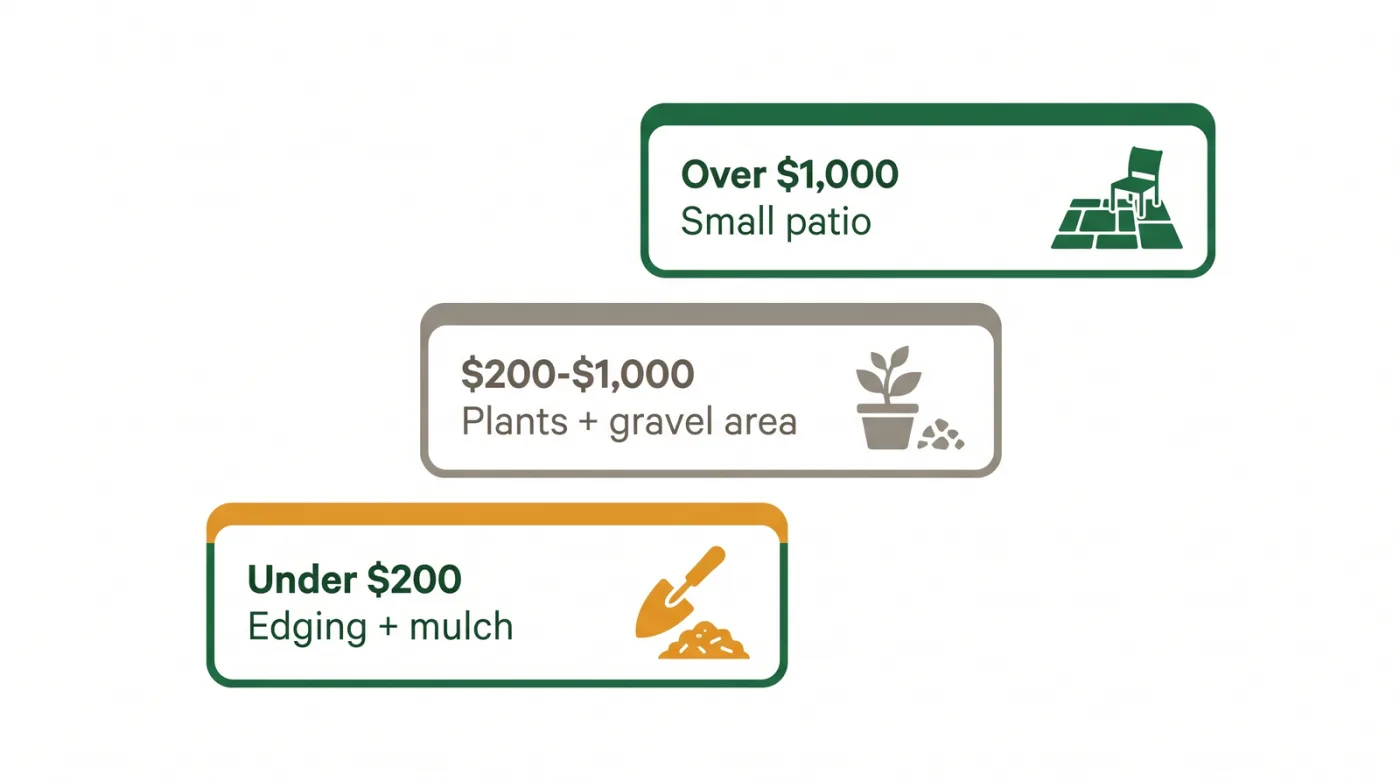
From the data: YardQuote tracks 650 landscaping companies across the GTA (YardQuote tracking, July 2026), but the simplest yard upgrades, edging, mulch, overseeding, and a small gravel pad, are exactly the ones you do not need to hire out. Save a pro's quote for drainage, walls, and large patios where mistakes are expensive.
Plant for low maintenance, Toronto-style
The easiest planting is the kind that takes care of itself. Native and well-adapted perennials handle Toronto's swings between humid summers and hard winters, and once established they need little water or fuss.
- Full sun: black-eyed Susan, coneflower, yarrow, sedum, catmint.
- Shade: fine fescue grass, hostas, native groundcovers.
- Structure: hardy shrubs like ninebark or potentilla to fill space with no care.
Group plants in threes and fives rather than dotting single plants around; clusters read as intentional and fill in faster. Native plants are the low-maintenance choice precisely because they evolved for local conditions.
Finish with a focal point and light
Two small touches tie a simple yard together. A focal point, a single small tree, a group of large matching pots, or a simple bench, gives the eye a destination. And low-cost lighting, solar path lights or a string of café lights over the sitting area, makes the yard usable after dark and instantly more finished.
Neither costs much, and both punch above their price. The goal of a simple backyard is not to look expensive; it is to look cared for, and these details do that.
Keep the easy jobs easy, hire out the hard ones
The line to hold is this: do the tidy, reversible, low-risk jobs yourself, and hire a pro for the ones where a mistake is costly or dangerous. Drainage, retaining walls over a metre, large patios, and anything structural belong to a professional. Edging, mulch, overseeding, planting, and a small gravel pad are yours.
If a project grows past the weekend variety, compare current ranges on the landscaping cost page or browse vetted local pros in the landscaping directory for Scarborough. For tight lots specifically, our small backyard ideas for Toronto semis and townhouses goes further.
Not sure which jobs are worth hiring out? Request a quote and compare up to three vetted local pros side by side. Your contact details only go to the one you pick, and a good pro will tell you honestly what you can do yourself.