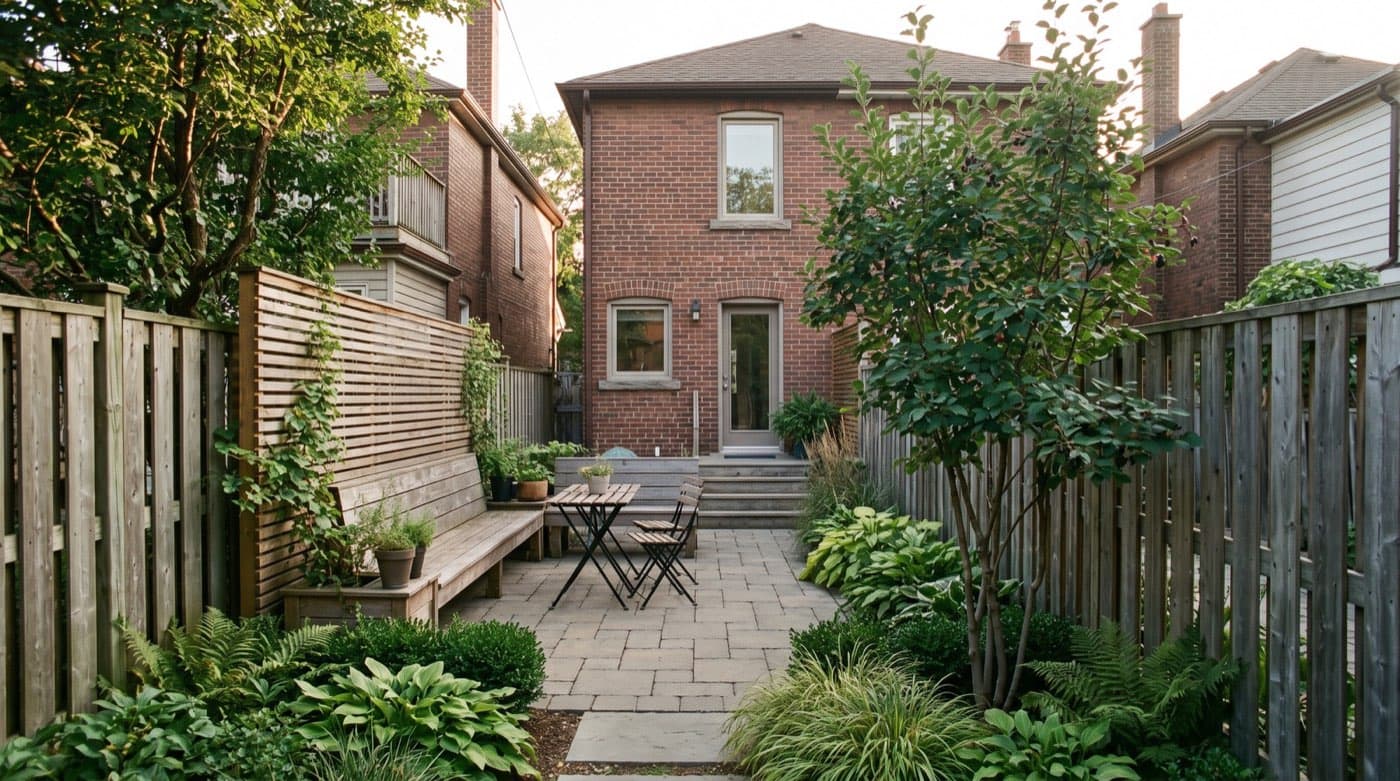
Answer First: A small Toronto backyard works when you give it one clear job instead of trying to fit a patio, a lawn, a garden, and a play area into 400 square feet. Pick the main use, size the hardscape to it (an interlock patio runs about $18 to $30 per square foot installed), add privacy and greenery vertically to save floor space, and keep materials simple and light-coloured to make the space feel bigger. On tight downtown lots, plan machine access first, because hand-digging a yard with no gate adds real labour cost.
Toronto has a lot of small backyards: semi-detached lots in the east end, downtown row houses, and townhouse pockets across the 905. The mistake is treating a small yard like a shrunken big one. It is a different design problem, and the yards that work best are the ones that do one thing well.
Start by giving the yard one job
The single most useful move in a small backyard is deciding its primary purpose before anything else. A yard that tries to be a dining patio, a lawn, a garden, and a storage zone all at once ends up cramped and awkward. One that commits to "an outdoor dining room" or "a green retreat" reads as calm and, oddly, larger.
Everything else follows that decision. If it is a patio yard, the lawn shrinks or disappears. If it is a green retreat, the hardscape is just a small sitting spot surrounded by planting. Choosing is the design.
Quotable: In a small Toronto backyard, the winning move is subtraction. One well-sized patio or one small lawn beats a cramped mix of half-uses crammed into 400 square feet.
Right-size the hardscape (and know the cost)
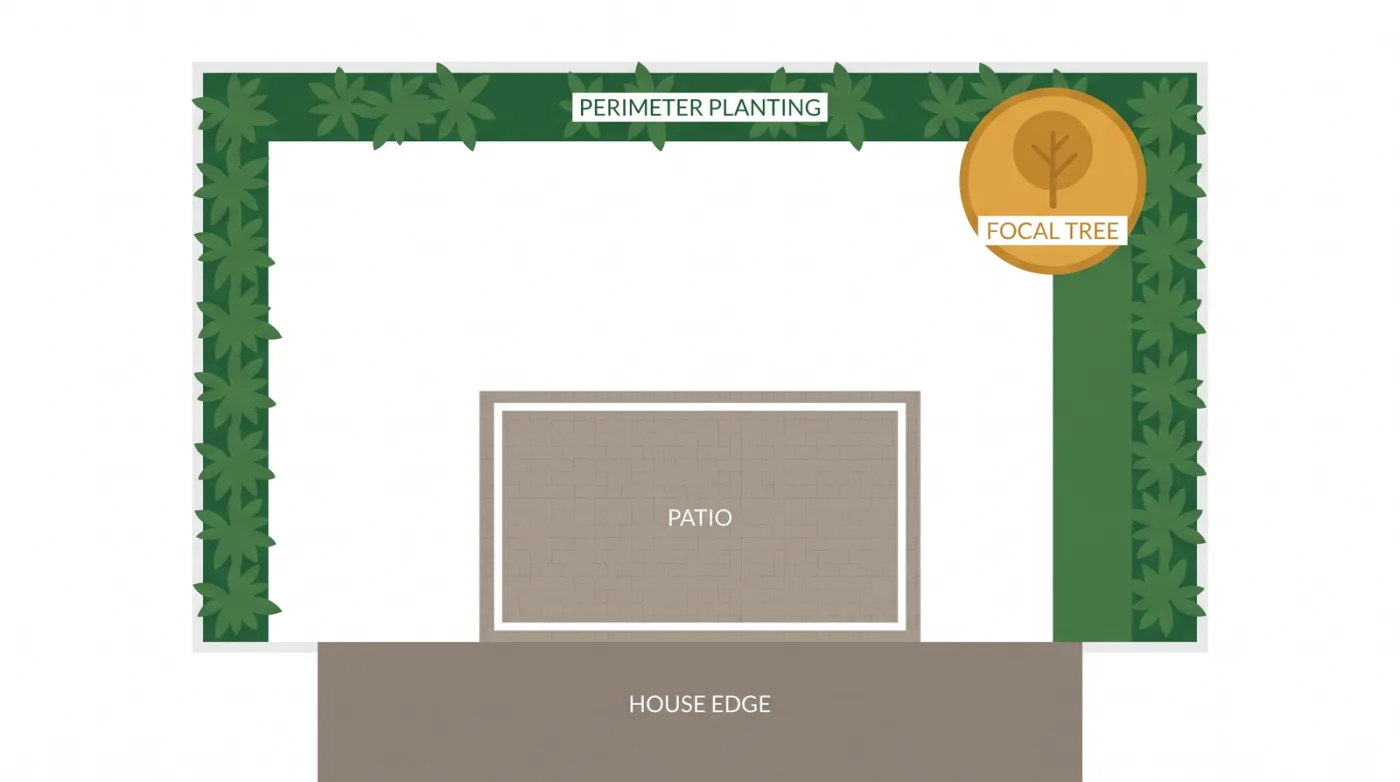
For most small yards, a compact patio is the anchor. The trick is to size it to what you will actually use, a table for four or a small lounge set, not to fill the whole yard with stone. Keep it one continuous surface rather than several disconnected patches, which visually stretches the space.
Here are the real GTA cost anchors to plan around (July 2026, before HST), so the idea stays honest about budget.
| Element | Typical GTA cost | Note |
|---|---|---|
| Interlock patio, installed | $18 to $30 per sq ft | A 200 sq ft patio is roughly $3,600 to $6,000 |
| Natural stone interlock, installed | $35 to $65+ per sq ft | Premium look, nearly double concrete pavers |
| Sod installed (small lawn) | $1.50 to $3.50 per sq ft | Cheapest way to add green floor |
| Small garden or single-patio design | $300 to $900 | A designer plan for a compact yard |
The number that surprises people is not the size, it is the access. On a tight semi or laneway lot with no side gate wide enough for a machine, crews hand-dig and wheelbarrow everything, which multiplies labour hours. Plan the access route before you plan the patio, and see our interlocking cost breakdown for the full picture.
From the data: YardQuote tracks 503 interlocking contractors and 650 landscaping companies across the GTA (YardQuote tracking, July 2026). On small-lot jobs, the spread between quotes is usually about access and base prep, the invisible work, not the visible stone, so compare what is under the patio, not just the surface.
Go vertical to save the floor
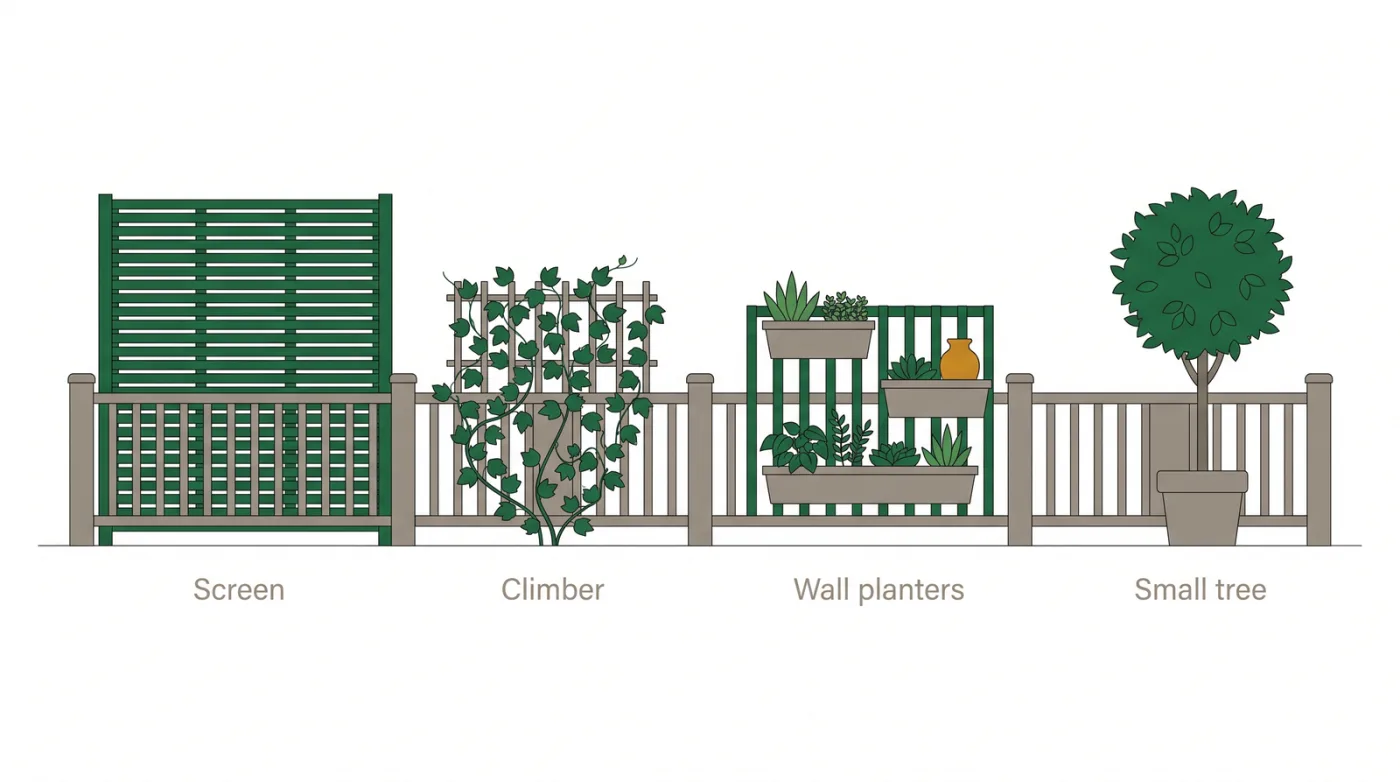
In a small yard, floor space is the scarce resource, so put greenery and privacy on the walls and up in the air where they cost you no ground.
- Privacy screens and trellises along the fence line block sightlines from neighbours without a bulky hedge.
- Climbers like clematis or climbing hydrangea green a fence or screen using almost no footprint.
- Wall planters and hanging pots add layers of plants at eye level.
- A single small tree such as a serviceberry gives height, shade, and a focal point without a big canopy that swallows a small yard.
Small-yard moves that punch above their size
A handful of details make a compact Toronto yard feel deliberate rather than tight.
- Light-coloured hardscape. Pale pavers and gravel reflect light and make the space feel open; dark surfaces close it in.
- Built-in bench seating. A bench along the fence seats more people than chairs and can hide storage underneath, which matters when there is no shed.
- Layered perimeter planting. Tall plants at the back, low at the front, drawing the eye through the space rather than stopping it at a wall.
- One focal point. A specimen plant, a water feature, or a feature wall gives the eye a destination; two or three focal points cancel each other out.
- Drainage first. Small Toronto lots often sit low or drain toward the house. Sort the grading and drainage before you lay stone, because Toronto's freeze-thaw cycles heave a patio built on a poor base.
Know the rules at the edges
Re-landscaping your own back yard rarely needs a permit, but the boundaries have rules. Work on the City boulevard needs a permit, a retaining wall over one metre near accessible areas needs a building permit, and if your project touches the front, Toronto's zoning requires a share of the yard to stay as soft, permeable landscaping (City of Toronto). Confirm before you build a wall, deck, or anything structural near a line.
Make the small yard count
A small backyard is not a budget backyard by default, but it rewards restraint. Spend on one good surface, solid drainage, and a bit of vertical green, and skip the crammed-in extras. If you want to see how the patio piece specifically plays out on tight lots, our guide to paver patio ideas for small backyards goes deeper, and the backyard renovation cost breakdown shows where the money actually goes.
You can also compare vetted local pros in the landscaping directory for Toronto or check current ranges on the costs hub.
Want your small yard designed and priced honestly? Request a quote and compare up to three vetted local pros side by side. Your contact details only go to the one you pick, and a good pro will tell you where restraint saves you money.