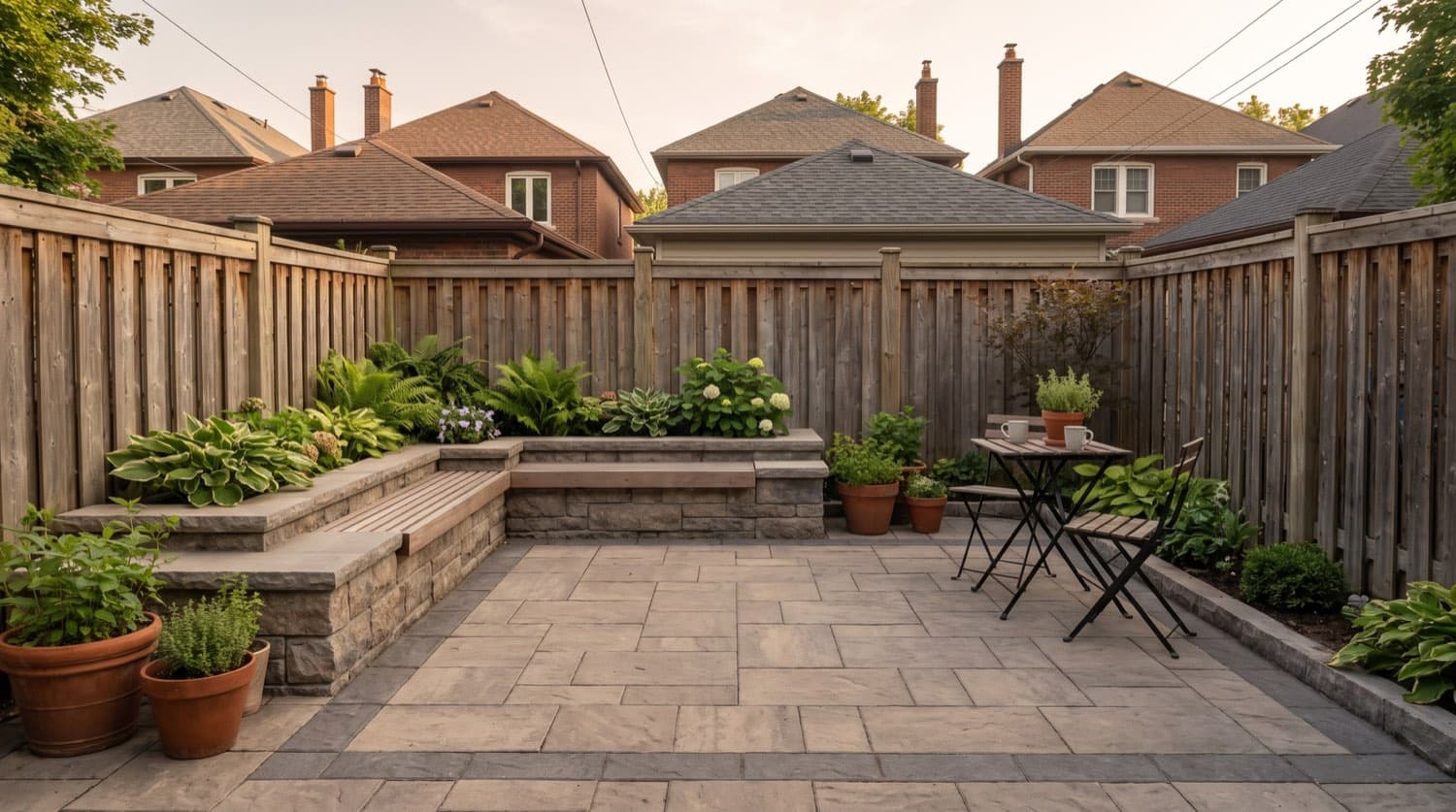
Answer First: The moves that make a small Toronto backyard patio work are simple: use large-format pavers so fewer joint lines make the space read bigger, commit to one clear zone instead of cramming in three, add a contrasting border to frame it, and build seating or planters into the edges to save floor space. A backyard patio in its existing footprint needs no City permit, and installed interlock runs about $18 to $30 per square foot, so a compact 200 to 300 square foot patio is realistically $3,600 to $9,000.
A small yard is not a design problem, it is a design constraint, and constraints reward good decisions. The trick is to stop fighting the size and start using it. Here are the ideas that actually make a compact Toronto backyard feel intentional.
Use large-format pavers to make the space feel bigger
Counterintuitively, bigger pavers make a small yard look larger. Every joint line is a visual interruption, and the eye reads fewer lines as more open space. A surface of large slabs feels calm and expansive; the same area in small, busy pavers feels chopped up and cramped.
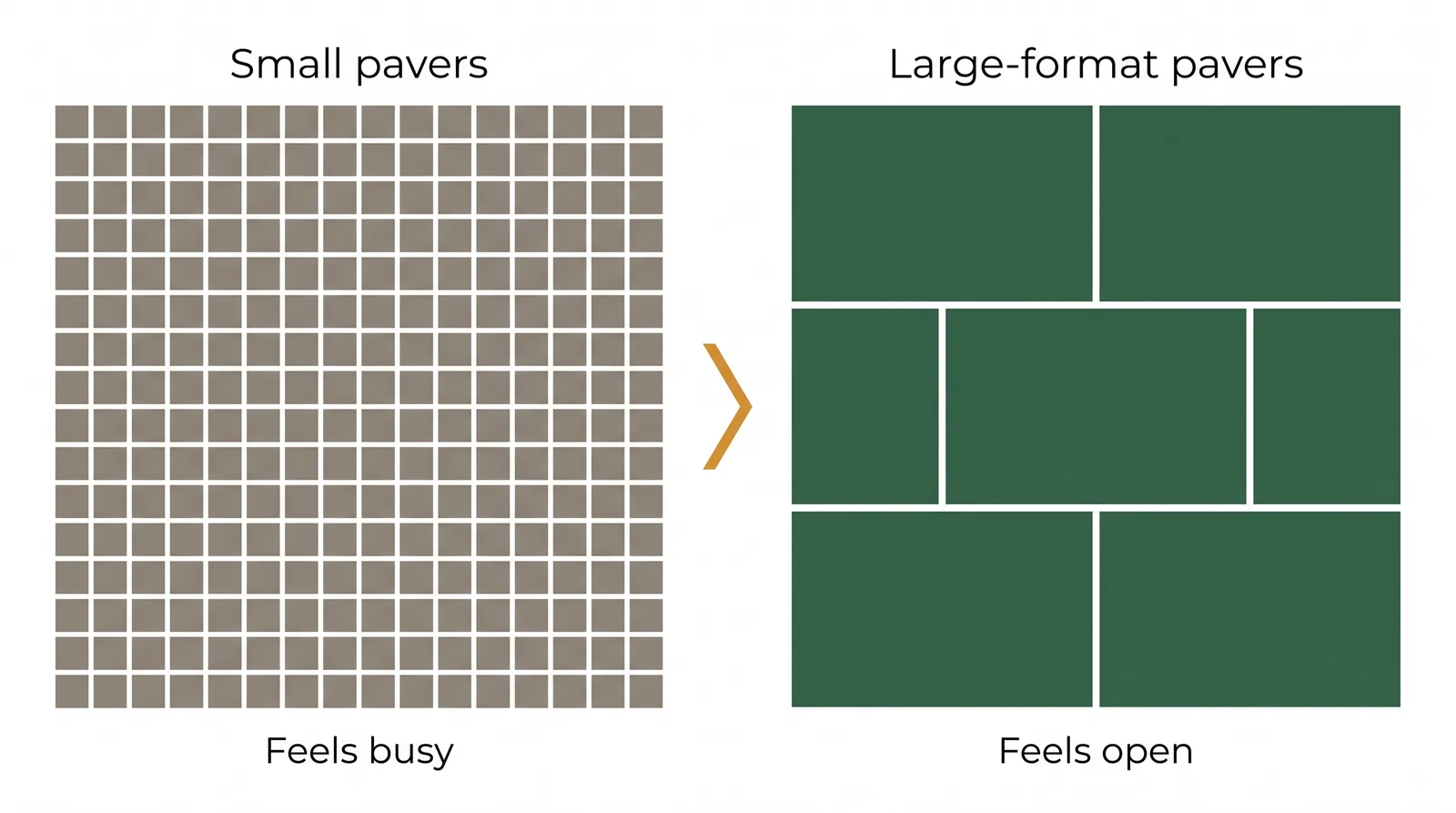
So size up the paver, not the patio. It is the cheapest space-expanding trick you have, because it costs nothing extra in area.
Commit to one zone, not three
The most common small-yard mistake is trying to fit a dining set, a lounge, and a garden into 250 square feet. Everything ends up undersized and crowded. Pick the one thing you will actually use most, dining or lounging, and design the whole patio around it. A single well-proportioned zone feels generous; three cramped ones feel like a compromise.
Quotable: In a small Toronto backyard, one well-sized zone beats three cramped ones. The patio that tries to be a dining room, a lounge, and a garden at once succeeds at none of them.
Frame it with a contrasting border
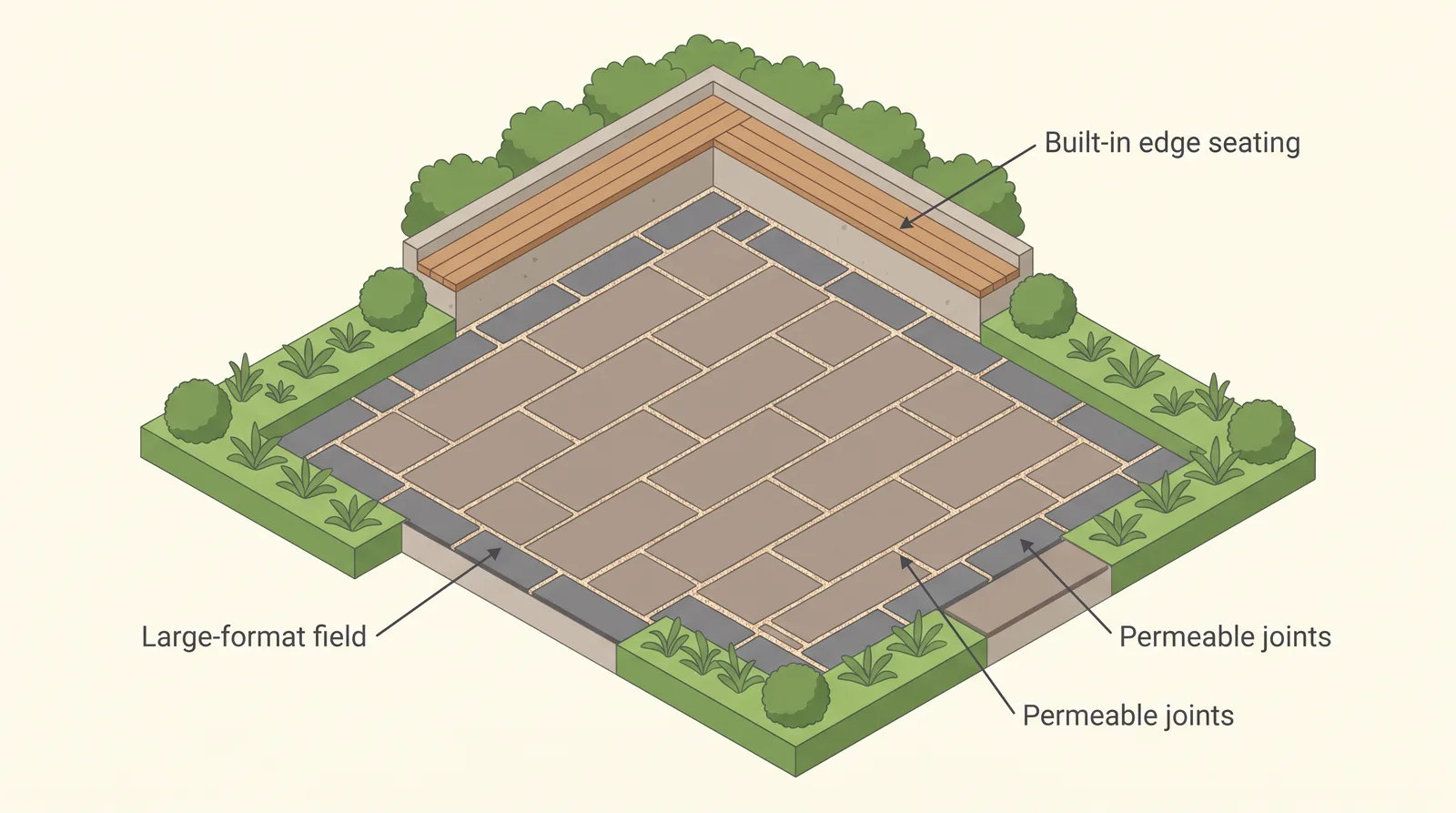
A darker border around a lighter field does two things: it defines the patio as a deliberate room rather than leftover paving, and it draws the eye to the edges, which makes the space feel considered. Decorative banding runs about $3 to $15 per linear foot, so you get a designer effect on a small yard for a modest sum, far cheaper than upgrading the whole field to premium pavers.
Lead the eye and build in the edges
On a narrow lot, direction matters. Run the paver pattern, or lay it on a diagonal, to pull the eye down the yard's long axis and add a sense of depth. Then reclaim floor space by going to the perimeter: built-in bench seating and planter walls along the edges seat people and hold greenery without eating into the open middle. A small yard feels bigger when its centre stays clear.
Consider permeable pavers and a level change
Two upgrades pay off on tight urban lots. Permeable pavers let rain drain through the surface instead of pooling on a small yard with nowhere for water to go, and they are viewed more favourably in Toronto approvals when a project brushes up against City rules. A subtle level change, a single step down into a sunken patio, adds interest to an otherwise flat rectangle and quietly separates the patio from the lawn without a fence.
Budget it realistically
Ideas are free; pavers are not. Installed interlock runs $18 to $30 per square foot in the GTA, so a compact patio pencils out like this.
| Patio size | Rough installed cost |
|---|---|
| 150 sq ft (small lounge) | $2,700 – $4,500 |
| 200 sq ft (dining for 4) | $3,600 – $6,000 |
| 300 sq ft (dining + small lounge) | $5,400 – $9,000 |
From the data: Small jobs cost more per square foot. Across the GTA interlocking contractors YardQuote tracks, sub-500 square foot patios routinely hit crew minimums, and tight downtown lots with narrow side-gate access, where everything is hand-carried through a gate too small for a machine, push labour to the top of the range. A small yard is not automatically a cheap job.
The freeing part: a backyard patio in its existing footprint needs no City permit, so you can design for how you live rather than around bylaws. The material choice is the next decision, weighed in flagstone versus interlocking pavers, and because a small patio is base-sensitive, it is worth understanding why interlocking quotes vary so much. See current ranges on the interlocking cost page or compare rated crews on the interlocking directory for your area.
Want a small-yard patio designed for your space and budget? Request a quote and compare up to three vetted local pros side by side, so you can weigh layout ideas against real numbers. Your contact details only go to the one you pick.