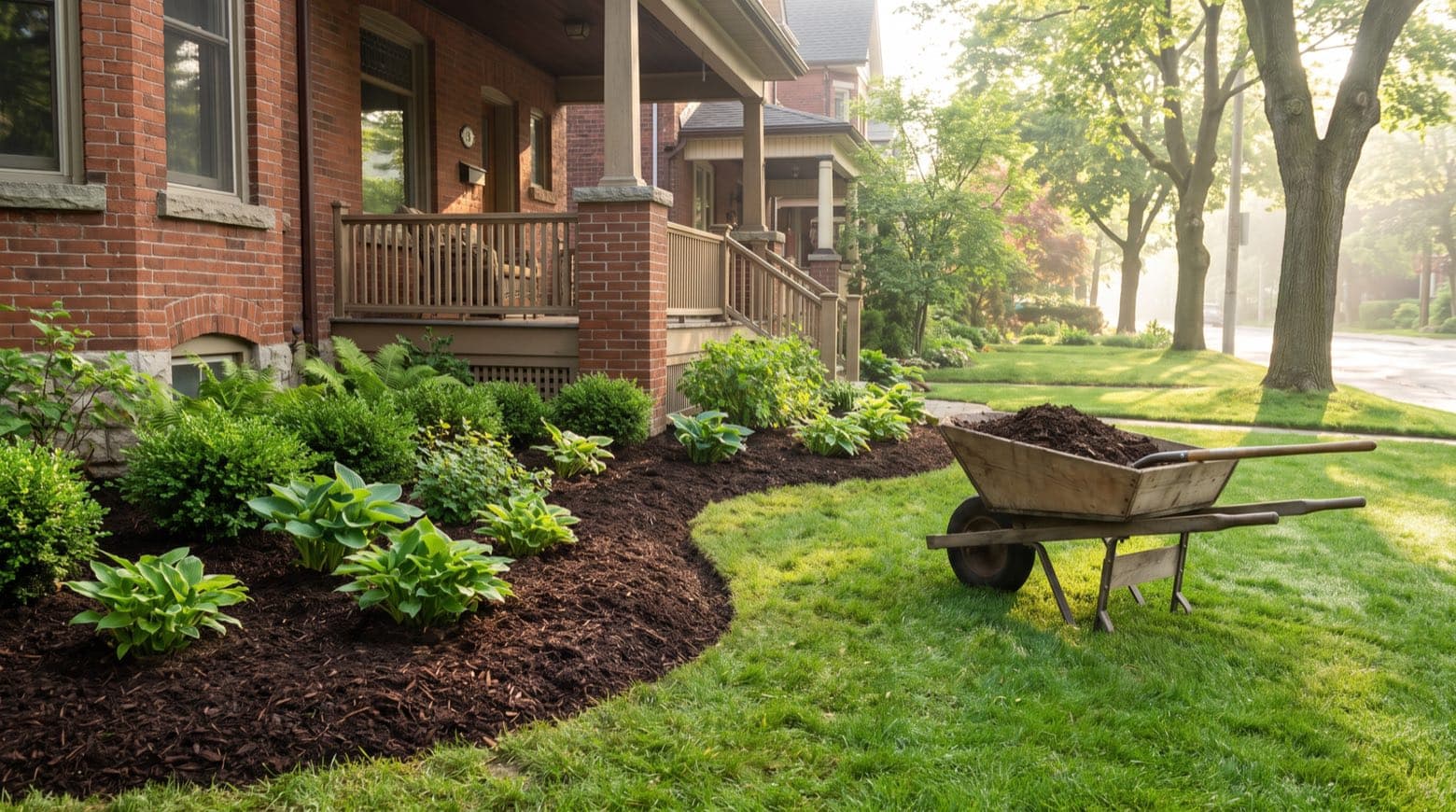
Answer First: One cubic yard of mulch covers about 108 square feet at a 3-inch depth, the standard for garden beds (162 square feet at 2 inches, 81 at 4). To size any job, use cubic yards = area in square feet × depth in inches ÷ 324, then round up. Bulk mulch costs $45 to $85 per cubic yard supplied in the GTA — about $60 typical — plus delivery, and spreading labour runs $50 to $100 per hour (Absolute Home Services, 2025).
Mulch is the cheapest thing in your yard that a contractor can overcharge you for, because most homeowners have no idea how much they need. Get the quantity right and the price is small and predictable. Get it wrong and you either pay for a half-load you did not use or run out halfway through the beds.
How much mulch do I need?
Three numbers give you the answer: the area of your beds, the depth you want, and one constant. Measure the beds in square feet, pick a depth in inches, and run the formula.
Cubic yards needed = (area in sq ft × depth in inches) ÷ 324.
The 324 comes from simple arithmetic: a cubic yard is 27 cubic feet, and spread one inch deep it covers 27 × 12 = 324 square feet. Divide by your depth to get coverage; multiply out to get volume.
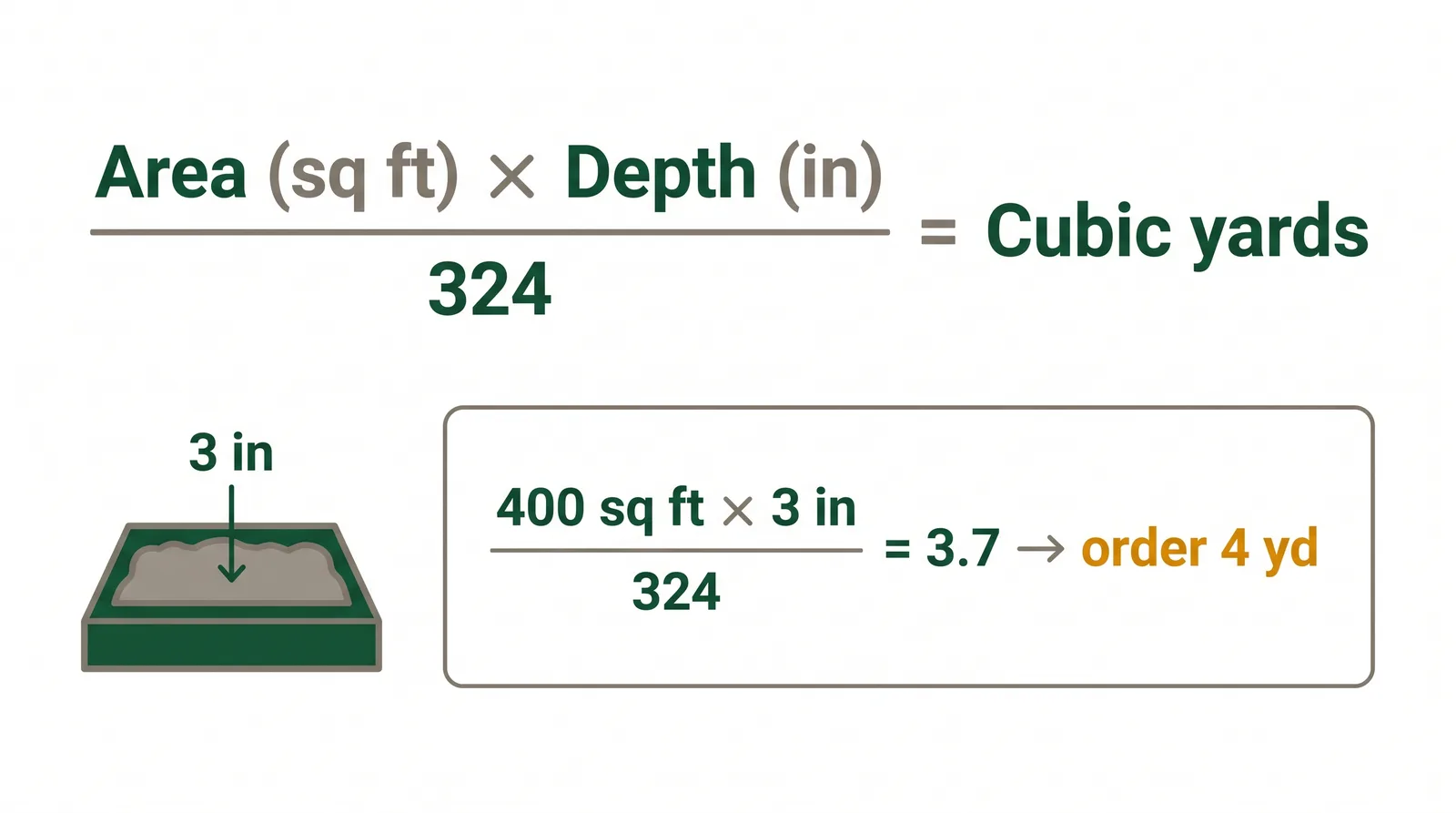
Work an example. A 400-square-foot bed at 3 inches deep: 400 × 3 ÷ 324 = 3.7 cubic yards. Round up and order 4, because settling, uneven ground, and topping up thin spots always use a little more than the clean number. For a quick gut check, one cubic yard equals about 13.5 standard 2-cubic-foot bags, which is why bulk beats bags on anything past a single bed.
Quotable: One cubic yard of mulch covers 108 square feet at a 3-inch depth. The formula for any job is area in square feet times depth in inches, divided by 324, rounded up.
How many square feet does a yard of mulch cover?
It depends entirely on depth, which is why "how many square feet in a yard" has no single answer until you decide how thick to lay it. Here is the coverage at the depths that matter.
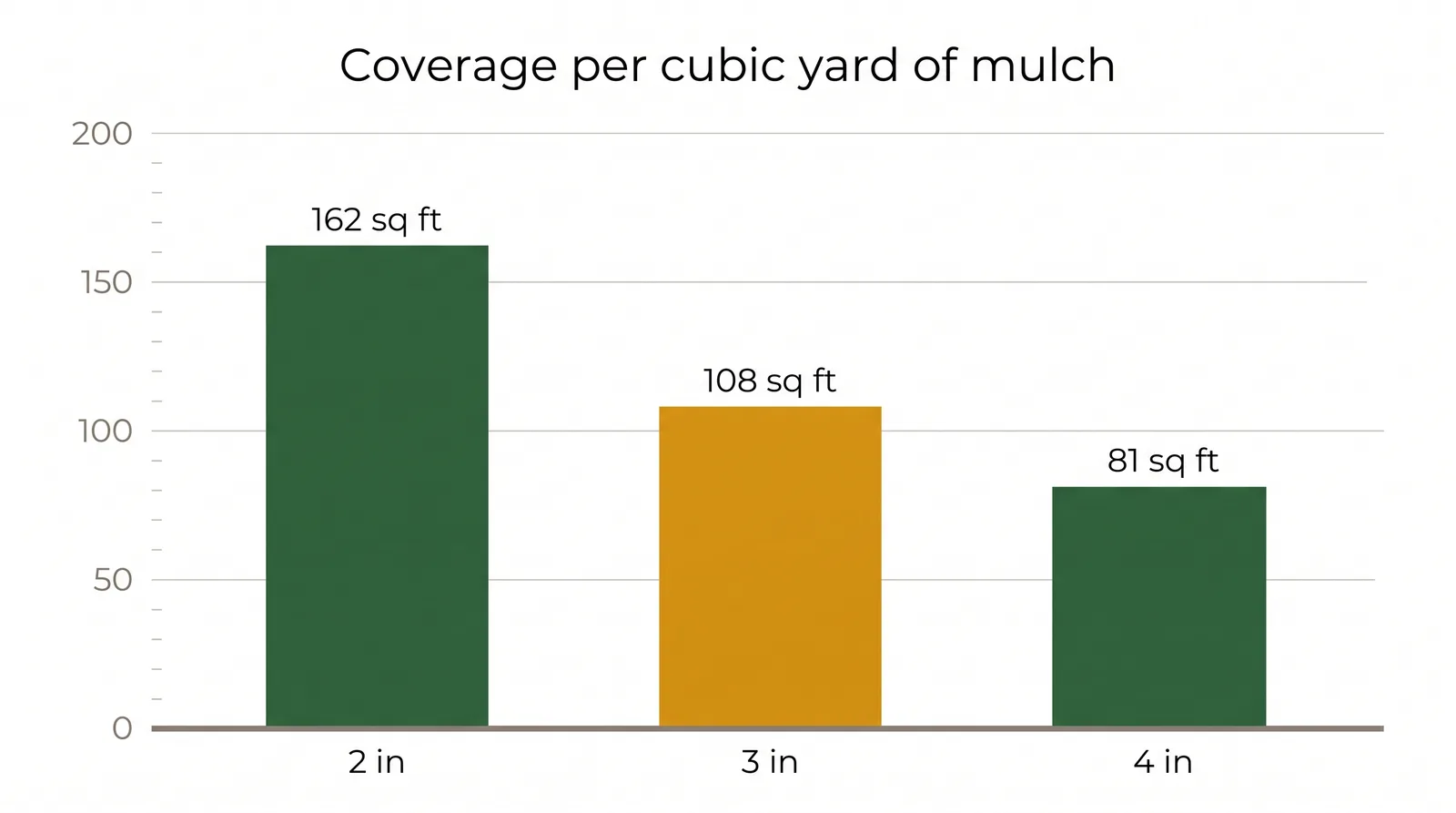
| Mulch depth | Coverage per cubic yard |
|---|---|
| 1 inch | 324 sq ft |
| 2 inches | 162 sq ft |
| 3 inches (standard) | 108 sq ft |
| 4 inches | 81 sq ft |
Most Toronto beds want 2 to 3 inches. That is enough to hold soil moisture through a dry July and shade out weed seeds, without burying the crowns of your plants. Established beds that already have a mulch layer often need only a 1-inch top-up to refresh the colour, which stretches a cubic yard across 324 square feet.
How much does mulch cost in the GTA?
Two costs: the material and the labour to spread it. Bulk mulch is inexpensive; the spreading is where a professional job adds up.
Bulk mulch, supplied: $45 to $85 per cubic yard in the Toronto area, about $60 typical, plus a delivery fee to drop it on your driveway (Absolute Home Services, 2025). GTA suppliers deliver by the yard, and delivery is usually a flat charge, so a larger single order spreads that fee thinner.
Spreading labour: $50 to $100 per hour if a crew wheelbarrows and rakes it into place. A crew moves mulch fast, but on a tight lot with a long haul from the driveway to the backyard, the hours add up.
Put together, a typical front-and-back refresh uses 5 to 10 cubic yards and runs roughly $400 to $1,200 installed (Absolute Home Services). Spread it yourself and you pay only the material and delivery — often a few hundred dollars for the same beds.
From the data: Across YardQuote's ten Toronto cost datasets, mulch is one of the widest DIY-savings gaps we track. The material is $45 to $85 per cubic yard, but the installed job runs the equivalent of $80 to $120 per yard once crew labour is added — so a weekend of your own raking on a 5-yard order saves a few hundred dollars outright (YardQuote pricing data, July 2026).
How deep should mulch be, and where does it go wrong?
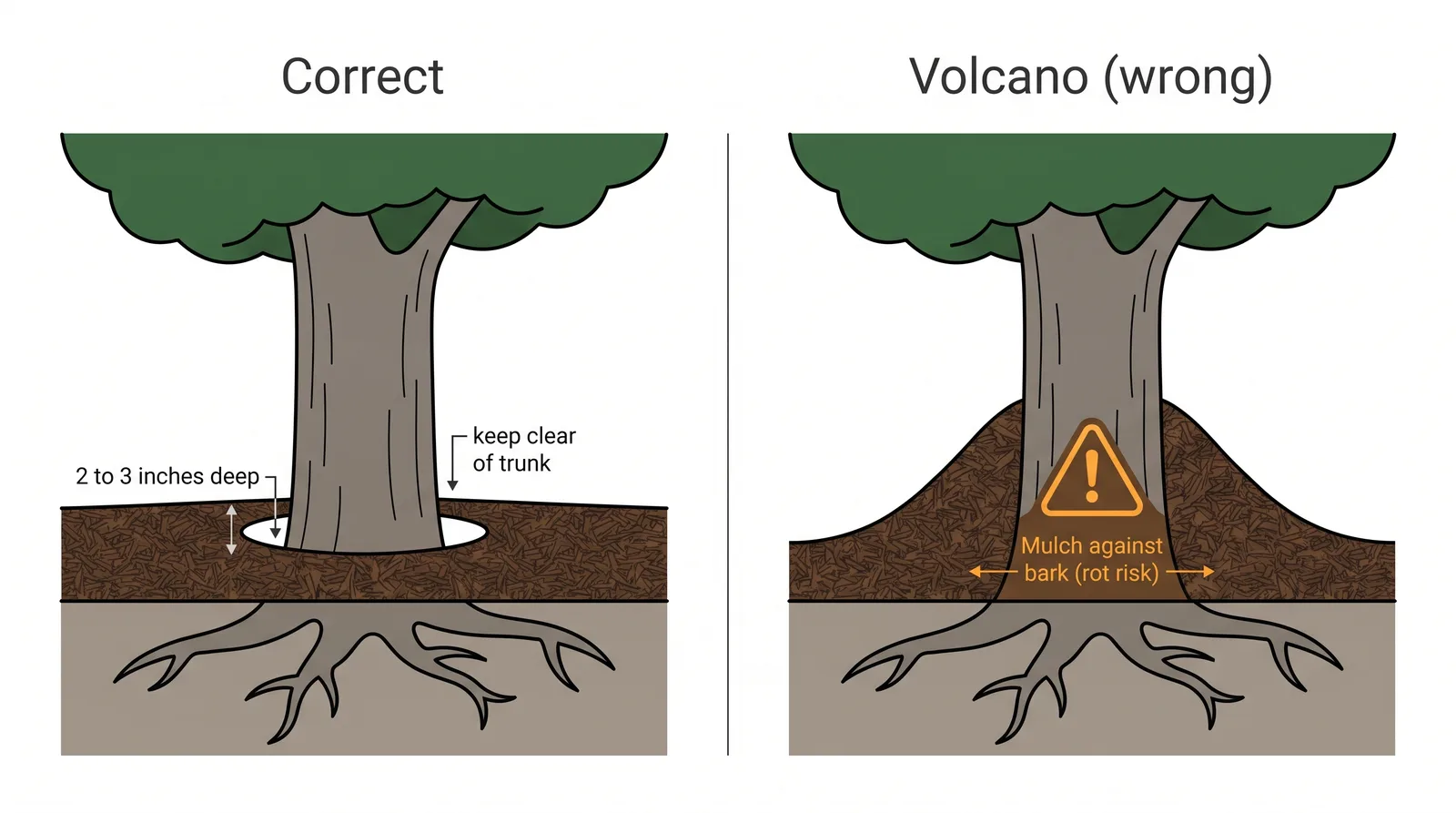
Two to three inches, and never against the trunk. The single most common mulch mistake in Toronto yards is the "mulch volcano" — a cone of mulch piled up around a tree base. It looks tidy in spring and quietly damages the tree.
Mulch mounded against bark traps moisture on the trunk, which invites rot, insects, and rodents that chew the bark under cover (University of Illinois Extension). Roots also grow up into the piled mulch instead of down into the soil, and can circle and strangle the trunk over time (Penn State Extension). The fix is a ring, not a cone: keep the mulch 2 to 4 inches back from tree trunks and shrub stems, and hold the depth to 2 to 3 inches across the bed.
Getting depth right also controls cost. Homeowners who guess tend to lay 4 inches everywhere, which uses a third more mulch than a 3-inch bed and can smother shallow-rooted perennials. Measure, pick 2 to 3 inches, and buy to the math.
Should you DIY mulch or hire it out?
DIY if you can move it; hire it if you cannot. Mulch is the rare landscaping job where the material is cheap and the value is almost all in the labour, which flips the usual math.
- Do it yourself when your beds are reachable from the driveway, you have a wheelbarrow, and the order is under about 5 yards. You keep the $50-to-$100-an-hour spreading cost.
- Hire it out when the haul is long, the volume is large, or you are already paying a crew for a broader refresh. Ask for mulch to be bundled into a bigger visit so you pay one mobilization, not a minimum call-out.
Either way, the normalize-first rule from why Toronto landscaping quotes vary 3x applies: confirm whether a quote is material-only or installed, and whether it includes 13% HST. You can compare current material and labour ranges on the landscaping cost page or browse the full costs hub for the rest of your project.
Planning a bigger refresh than mulch alone? Request a quote and compare up to three vetted local pros side by side, matched on the same scope. Your contact details only go to the one you pick.