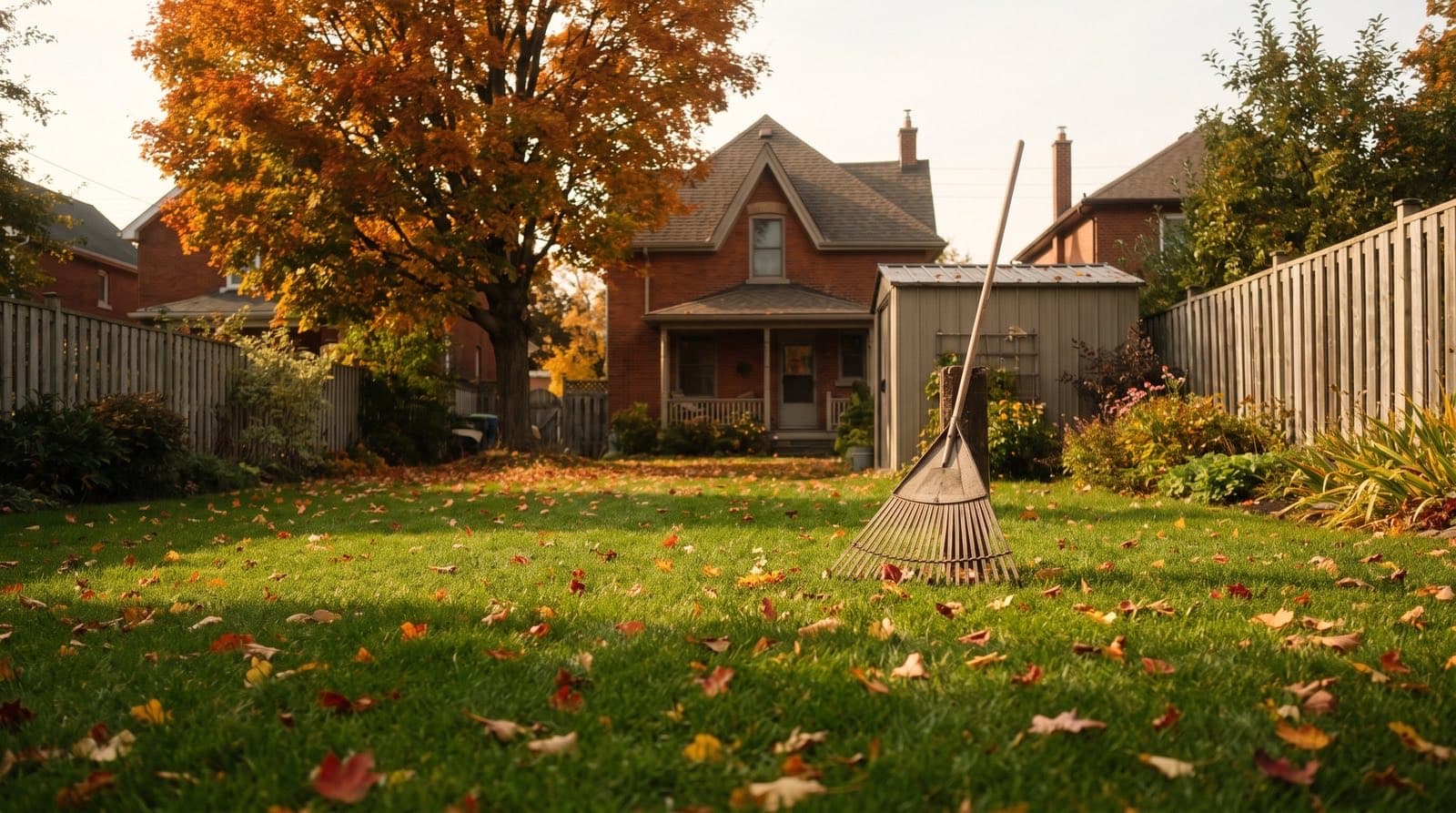
Answer First: Fall is the most important season for a Toronto lawn, because warm soil and cool air are ideal for roots and new grass. Six jobs decide next spring's lawn: aerate, overseed, feed for roots, keep mowing (with a slightly lower final cut), manage the leaves, and give it a last deep drink before freeze-up. Done between September and November, they matter more than anything you do in spring.
Spring gets all the attention, but fall is when a Toronto lawn is actually made. The grass is putting energy into roots instead of blades, the soil is still warm, and every bit of care compounds over winter into a healthier spring lawn. Here are the six jobs, in order, and the local timing for each.
Why does fall matter more than spring?
Because the lawn is working for you instead of against you. Toronto's cool-season grasses hit a second growth surge in fall, pouring energy into roots rather than top growth. The soil still holds summer warmth for germination, the air is cooler so nothing dries out, rain is steadier, and weeds have mostly stopped competing.
That is the opposite of a Toronto July, when heat and drought fight everything you plant. It is why the same overseeding that struggles in spring takes hold easily in September.
Quotable: Fall is when a Toronto lawn is built. Warm soil, cool air, and steady rain make September the highest-return month of the year for aerating, overseeding, and feeding cool-season grass.
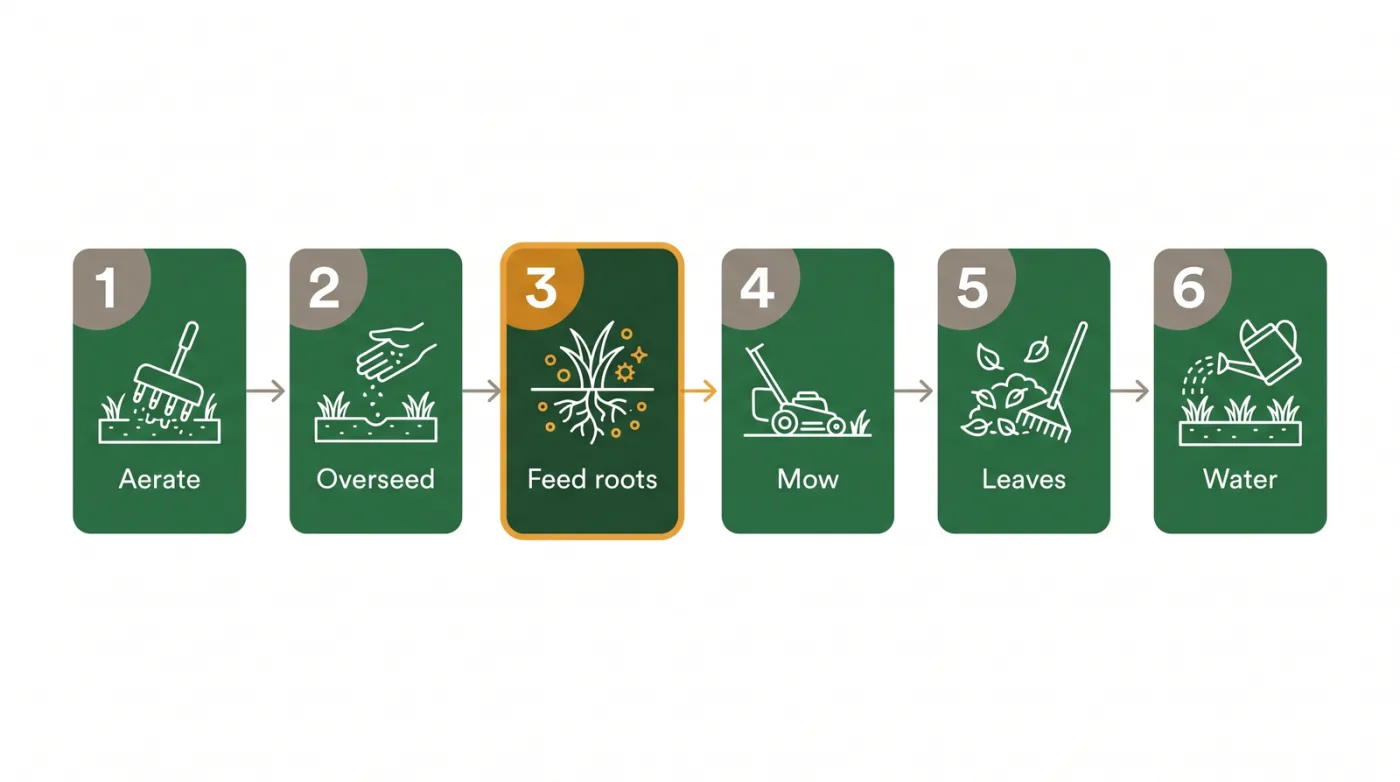
The 6 jobs that matter
1. Aerate the soil (early-to-mid September)
Core aeration pulls small plugs of soil out of the lawn to relieve compaction, the main problem in Toronto's heavy clay yards. Do it early in the fall window so roots and new seed can use the loosened soil. If your lawn feels hard underfoot or water pools after rain, this is the first job.
Core aeration — pulling finger-sized plugs of soil and thatch out of the lawn so air, water, and roots can move freely again, which matters most in the compacted clay soils common across the GTA.
2. Overseed (late August to mid-September)
This is the prime seeding window of the entire year. Soil is still above 10°C for germination, and there are six to eight weeks before frost for young grass to establish. Overseed right after aerating so seed falls into the holes, and lean on cool-season blends: Kentucky bluegrass, perennial ryegrass, and fescues for shade or drought. Fall overseeding is also your best legal weed control under Ontario's rules, since a thick lawn crowds weeds out.
3. Feed the roots (September into October)
The fall feeding is the most valuable of the year. Unlike a spring feed that pushes fast top growth, a fall application builds roots and winter hardiness (Ontario). Strong roots going into winter are what make a lawn green up fast and resist weeds the following spring. If you fertilize only once, do it now.
From the data: YardQuote tracks 249 lawn care companies across the GTA, and 88% of the rated ones hold 4.5 stars or higher (YardQuote tracking, July 2026). Fall aeration and overseeding book up fast at the good crews, so a September lawn is often an August call.
4. Keep mowing, then cut the last one lower
Grass keeps growing until the cold stops it, so keep mowing at about 75 mm through the fall. For the final cut or two of the season, drop slightly to around 50 to 60 mm. A shorter final cut reduces the matted grass that breeds snow mould over a Toronto winter. Do not scalp it, though; too-short grass heads into winter weak.
5. Manage the leaves (October to November)
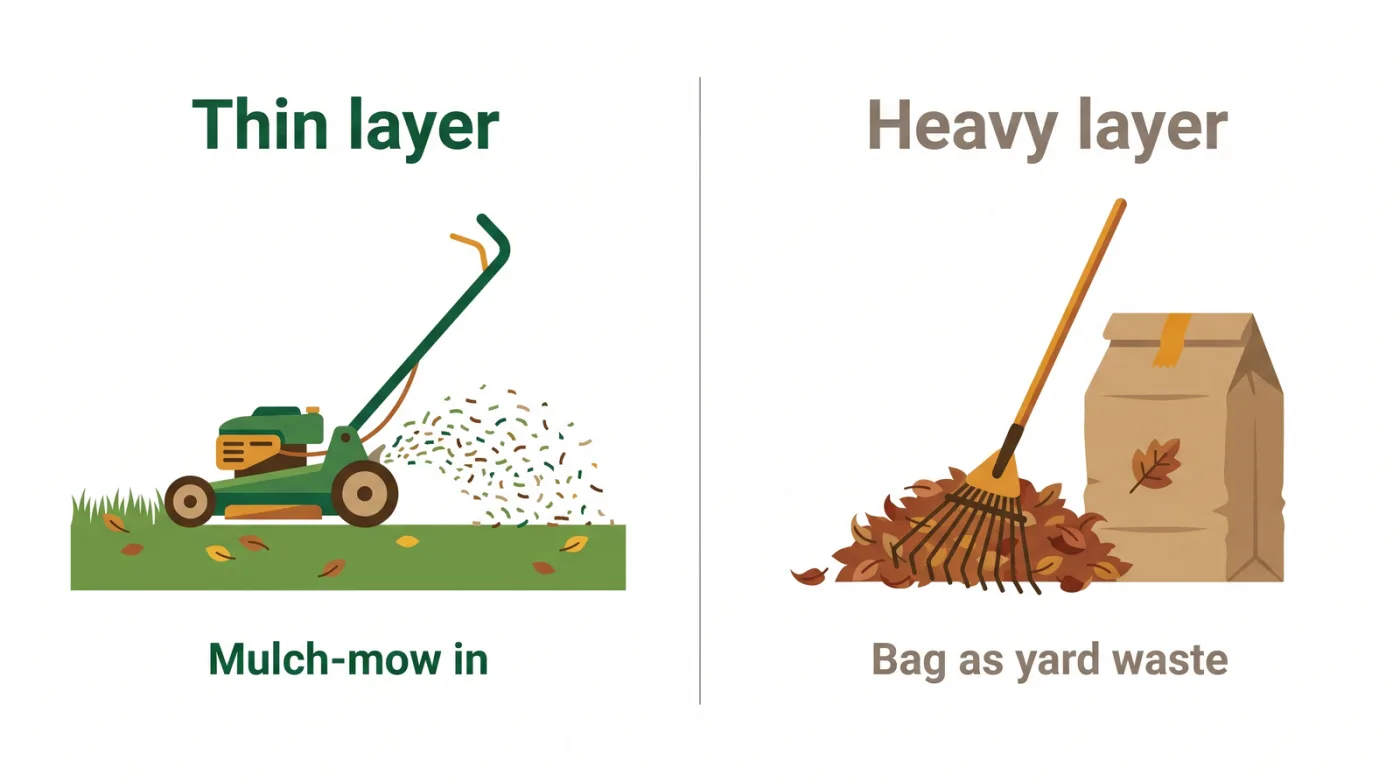
A thick leaf layer smothers grass and invites disease, so it cannot just sit. A thin scattering can be mulch-mowed straight into the lawn, where it breaks down and feeds the soil for free. Heavier layers get raked and set out in kraft paper yard waste bags on your collection day; the City does not collect leaves in plastic bags or boxes. Some neighbourhoods also run mechanical vacuum leaf collection, where you rake loose leaves to the curb by a scheduled date.
6. Give it a final deep drink
Before the ground freezes, usually late in the fall, water the lawn deeply once if the season has been dry. A well-hydrated root zone going into winter handles the freeze-thaw cycle better than a parched one. After that, shut off and drain any irrigation to protect it from a hard frost.
Getting fall right pays off in April
Everything on this list is about next spring. A lawn that was aerated, overseeded, and root-fed in September comes out of a Toronto winter thicker and greener than one that got a frantic spring rescue. If your lawn is thin now, the plan is a September renovation, not an April one, which connects to the timing logic in our guides on when to lay sod and spring lawn care.
If the six jobs are more than a weekend can hold, fall is a good time to price them out. Compare current ranges on the lawn care cost page or browse vetted local pros in the lawn care directory for North York.
Want your fall lawn work timed and priced right? Request a quote and compare up to three vetted local lawn care pros side by side. Your contact details only go to the one you pick, and a good pro will tell you which of the six jobs your lawn actually needs.