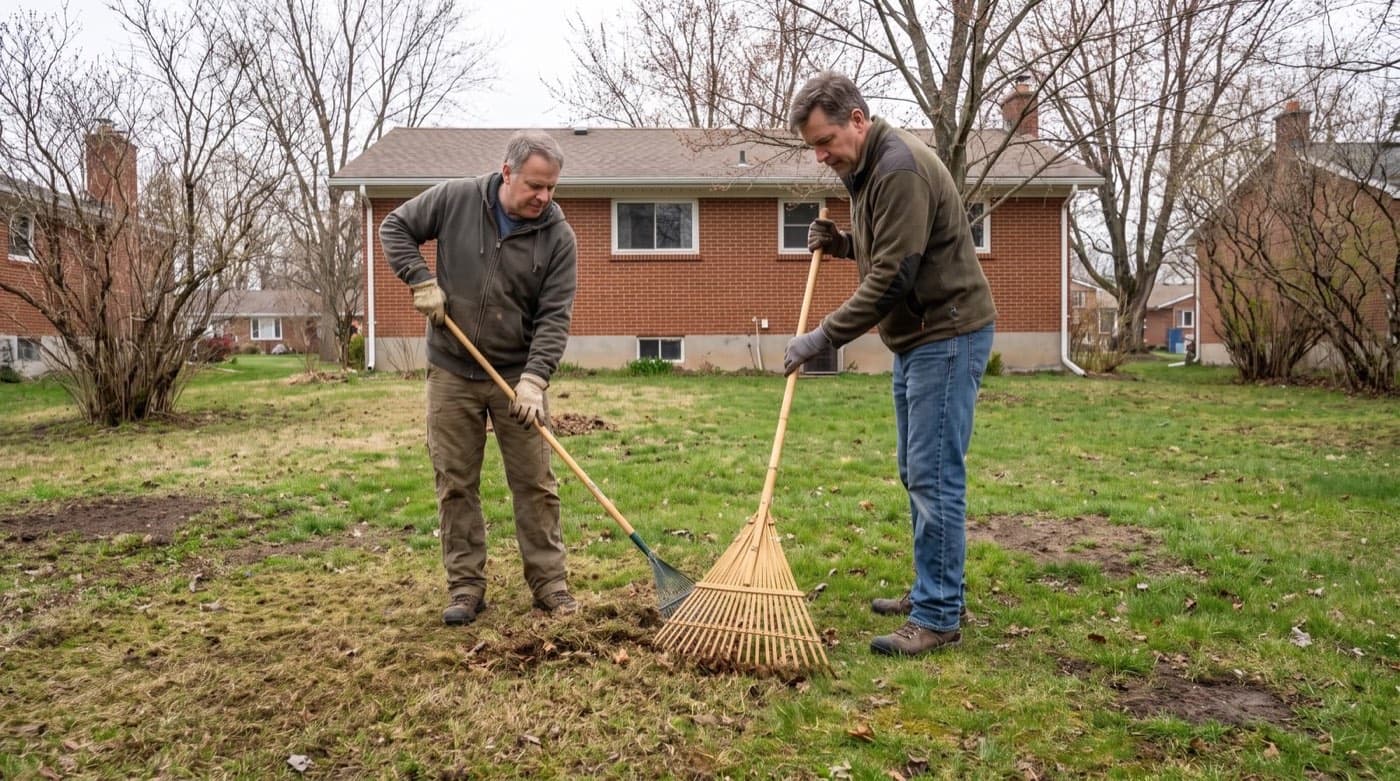
Answer First: A Toronto spring lawn plan runs from late March to May and works with Ontario's rules, not against them. Wait for the lawn to dry before raking, skip any synthetic weed or crabgrass spray because Ontario bans cosmetic lawn pesticides, make the first mow around 65 mm in April, and treat spring seeding as patch repair since fall seeding is far more successful. Do those four things and you beat most lawns on the street.
Most spring lawn damage in Toronto is self-inflicted, done by an eager homeowner on the first warm Saturday raking a lawn that is still half-frozen mush. The grass greens up on its own schedule. Your job is to help at the right moments and stay off it at the wrong ones. Here is the month-by-month version.
When should you actually start?
When the lawn dries out and firms up, usually the first half of April, not the first mild day in March. A soggy, thawing lawn tears at the roots when you rake it and compacts under your feet. The simple test: if you leave footprints or the ground feels spongy, it is too early.
Cool-season grasses, the Kentucky bluegrass and fescue blends that make up most Toronto lawns, start active root growth once soil temperatures reach about 10°C. Before that, there is nothing to wake up, so patience does more than effort.
Quotable: The most common spring lawn mistake in Toronto is starting too early. Raking or walking a soggy, half-frozen lawn tears the grass crowns and compacts the soil, undoing more than the cleanup helps.
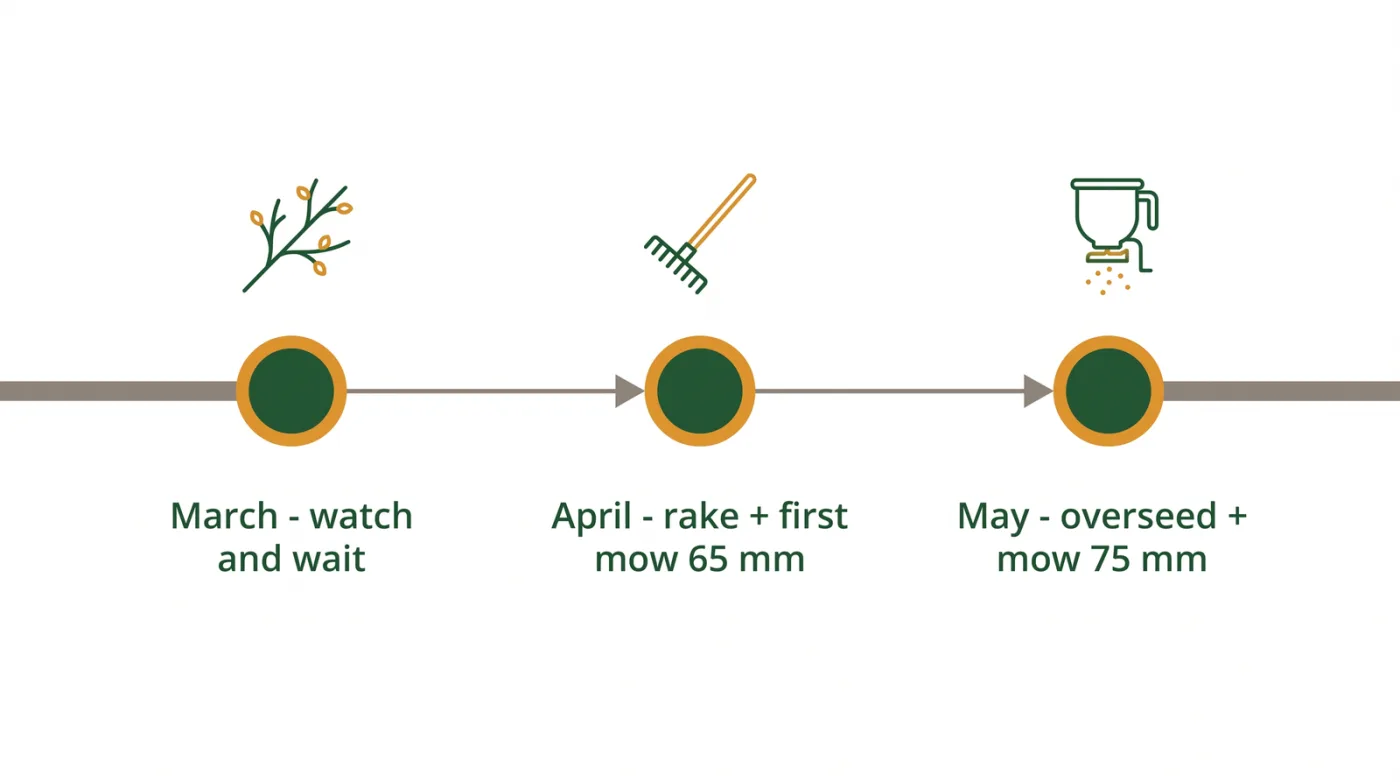
Month by month: the Toronto spring checklist
Here is the sequence, tied to what the lawn is doing rather than fixed dates, since Toronto springs vary by weeks year to year.
Late March — watch and wait. Pick up branches and heavy debris by hand, but stay off the wet turf. Look for matted grey patches of snow mould, which usually recovers on its own once the area dries and gets light; a gentle fluff with a rake once the lawn is dry helps.
April — rake, assess, first mow. Once the lawn is dry, lightly rake to pull out dead grass and leaves and improve airflow, which prevents fungus. Make the first mow around 65 mm when the grass is actively growing. This is the month to spot bare patches for later seeding.
May — mow steady, overseed thin spots, feed lightly. Move routine mowing to about 75 mm. Overseed thin or worn areas from mid-April through mid-May before the heat arrives. A light spring feeding is fine, but the bigger fertilizer job belongs to fall.
The rule that separates Ontario from American lawn advice
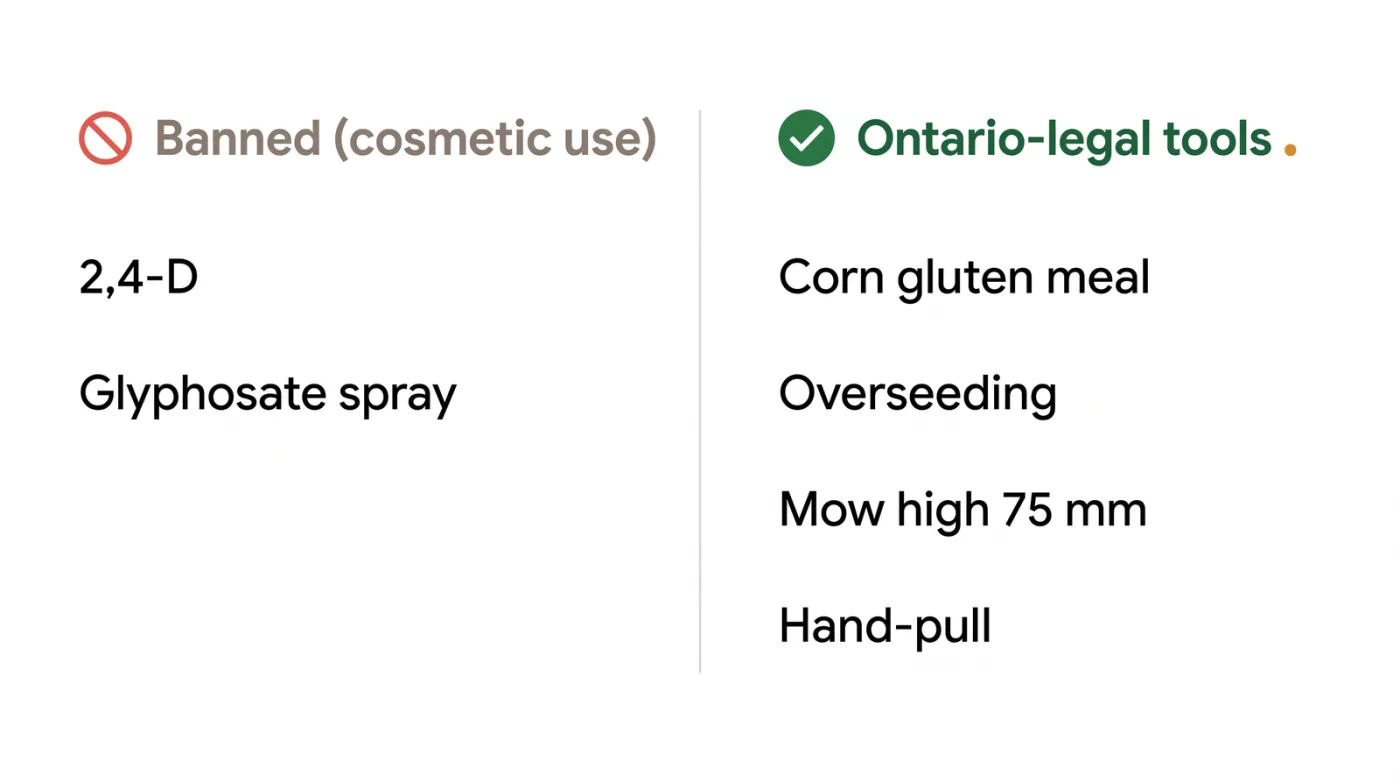
You cannot legally spray your way to a weed-free lawn in Ontario. The province's cosmetic pesticide ban, an amendment to the Pesticides Act in force since 2009, prohibits common lawn chemicals like 2,4-D and glyphosate for cosmetic use, and it overrides any municipal bylaw (Landscape Ontario).
That means the American internet's default spring advice, "apply a crabgrass pre-emergent," does not legally apply here. The Ontario-legal toolkit is different and, done consistently, works:
- Corn gluten meal as a natural pre-emergent, timed to early spring.
- Overseeding to thicken the turf so weeds have no bare soil to colonize.
- Mowing high (near 75 mm) to shade the soil, which suppresses crabgrass germination.
- Hand-pulling young weeds after rain when the whole root lifts easily.
Quotable: Ontario's cosmetic pesticide ban means there is no legal synthetic crabgrass spray for a Toronto lawn. A thick, high-mown lawn is the actual weed control, not a bottle.
Crabgrass — a low, spreading annual weed that germinates when soil at a 5 cm depth warms to roughly 12 to 13°C, which in the GTA lines up with forsythia shrubs finishing their bloom. That bloom is your natural timing cue for corn gluten meal, not a calendar date.
Do you need to dethatch or aerate?
Only if the lawn tells you to. Dethatching, pulling out the spongy layer of dead material at the soil surface, is worth it only when that layer is thicker than about 20 mm, and it should wait for late spring when the grass is growing fast enough to recover.
Core aeration, which relieves the compacted clay soil common across Scarborough and much of Toronto, genuinely helps, but fall is the stronger season for it. Piling aeration, dethatching, and overseeding all into one spring weekend stresses the lawn more than it helps. Space the work out, and save the heavy renovation for September, covered in our fall lawn care guide.
From the data: YardQuote tracks 249 lawn care companies across the GTA, and 88% of the rated ones hold 4.5 stars or higher (YardQuote tracking, July 2026). Spring is their busiest phone-in season, so the best-reviewed crews book up first.
A few Toronto-specific housekeeping notes
Two City rules quietly shape spring lawn work. First, you are required to keep your lawn, and the boulevard in front of it, cut below 20 cm under the City's turfgrass bylaw, so do not let the first flush of April growth run away from you. Second, spring cleanup waste goes out as yard waste in kraft paper bags on your collection day; the City does not collect grass clippings, plastic bags, or soil, so leave short clippings on the lawn to feed it.
If the lawn needs more than a tune-up, spring is a fine time to price the work while crews are gearing up. Compare current ranges on the lawn care cost page or browse vetted pros in the lawn care directory for Etobicoke.
Want a straight read on whether your lawn needs a pro or just patience? Request a quote and compare up to three vetted local lawn care pros side by side. Your contact details only go to the one you pick.