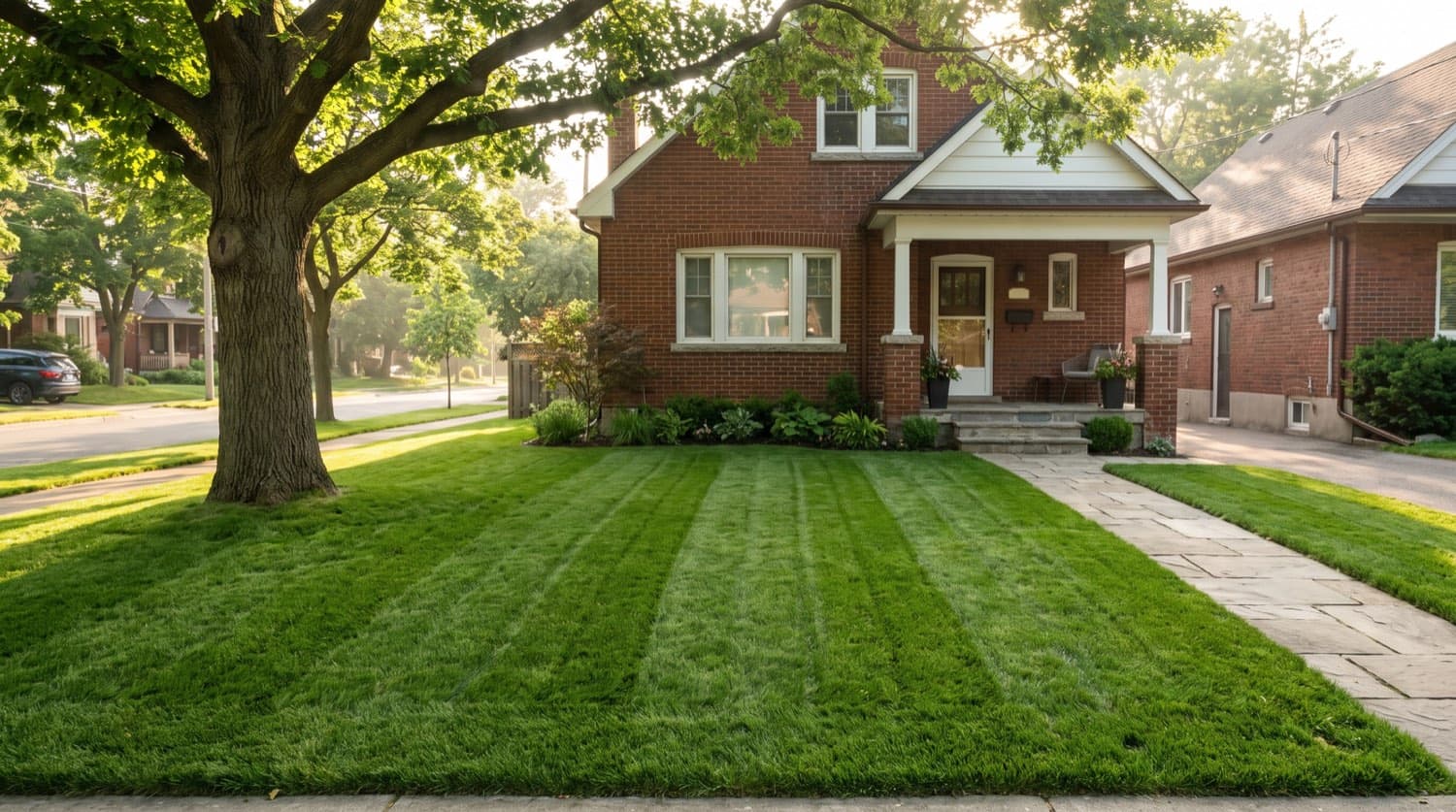
Answer First: Kentucky bluegrass is Ontario's default lawn grass because it is cold- and wear-tolerant and it repairs itself: it spreads by underground stems called rhizomes that push new shoots into thin and damaged areas, knitting a dense, durable turf. It is also the species Ontario sod farms grow by default and the cheapest sod variety, at $0.35 to $0.70 per square foot. The trade-off is that it needs full sun and goes brown-dormant in a hot, dry July.
Nearly every sod pallet and seed bag in the GTA leads with the same grass, and it is not marketing inertia. Kentucky bluegrass earns the default slot with one feature most lawn grasses do not have.
Why is Kentucky bluegrass the default in Ontario?
Because it matches the climate and, unlike most lawn grasses, it fixes itself. Kentucky bluegrass is cold tolerant and wear tolerant, and it forms a dense sod that recovers from injury quickly (Michigan State University Extension). Landscape Ontario's sod standard names it the Nursery Sod Growers Association's first-choice all-purpose sod for Ontario's climate, suited to sunny to slightly shaded lawns. That is why most Ontario lawn sod is bluegrass, and why it anchors most seed blends.
It is also the cheapest sod variety, at $0.35 to $0.70 per square foot as material. Cold-hardy, self-healing, and inexpensive is a hard combination to beat, which is exactly why it became the standard.
Quotable: Kentucky bluegrass is Ontario's default lawn grass for one reason above the rest: it repairs itself. Underground rhizomes push fresh shoots into thin and worn spots, so the lawn heals wear that would leave a clumping grass permanently patchy.
How rhizomes make it self-repairing
This is the whole story, so it is worth understanding the mechanism.
Rhizome — an underground stem that grows sideways beneath the surface, then turns up to send out a new shoot, letting one plant spread into a connected mat.
Because bluegrass spreads by rhizomes, a single plant sends runners under the soil that pop up as new grass in the gaps around it. When traffic, drought, or disease thins a patch, the surrounding plants creep in and close it (Michigan State University Extension). The fescues and perennial ryegrass grow in bunches and cannot do this; a bare spot in a bunch grass stays bare until you reseed it.
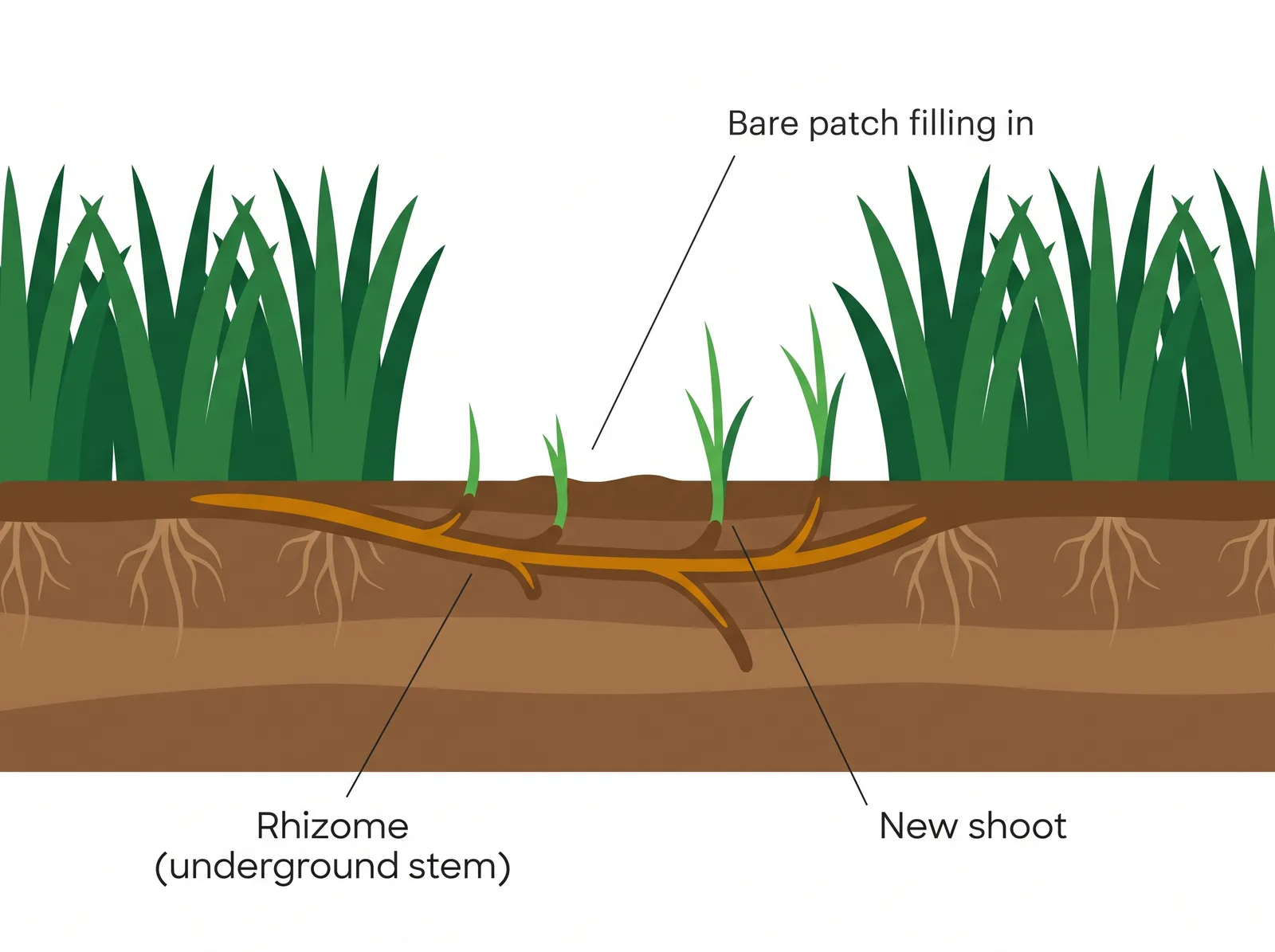
That self-knitting habit is why a bluegrass lawn tolerates a backyard full of kids and dogs and still fills back in, and why it makes such good sod, the rhizomes bind the roll into a mat strong enough to lift and transplant.
What Kentucky bluegrass is bad at
No grass is free. Bluegrass has two real weaknesses, and matching them to your yard is the whole decision.
Shade. It wants full sun to only light shade. A north-facing yard under mature maples is the wrong home for it, and no amount of feeding fixes that.
Summer heat. It is only moderately heat- and drought-tolerant, so in a hot, dry Toronto July it goes dormant and browns off, then greens back up with cooler fall temperatures and rain (Penn State Extension). That brown is survival, not death, but if you cannot water and cannot stand the look, a fescue holds colour better.
From the data: In YardQuote's Toronto sod pricing data (July 2026), Kentucky bluegrass is the cheapest variety at $0.35 to $0.70 per square foot, while fescue and premium blends run $0.60 to $0.90. You pay a small premium to trade some self-repair for shade and heat tolerance.
Kentucky bluegrass vs fescue vs ryegrass
The choice comes down to your light and your watering, not brand names.
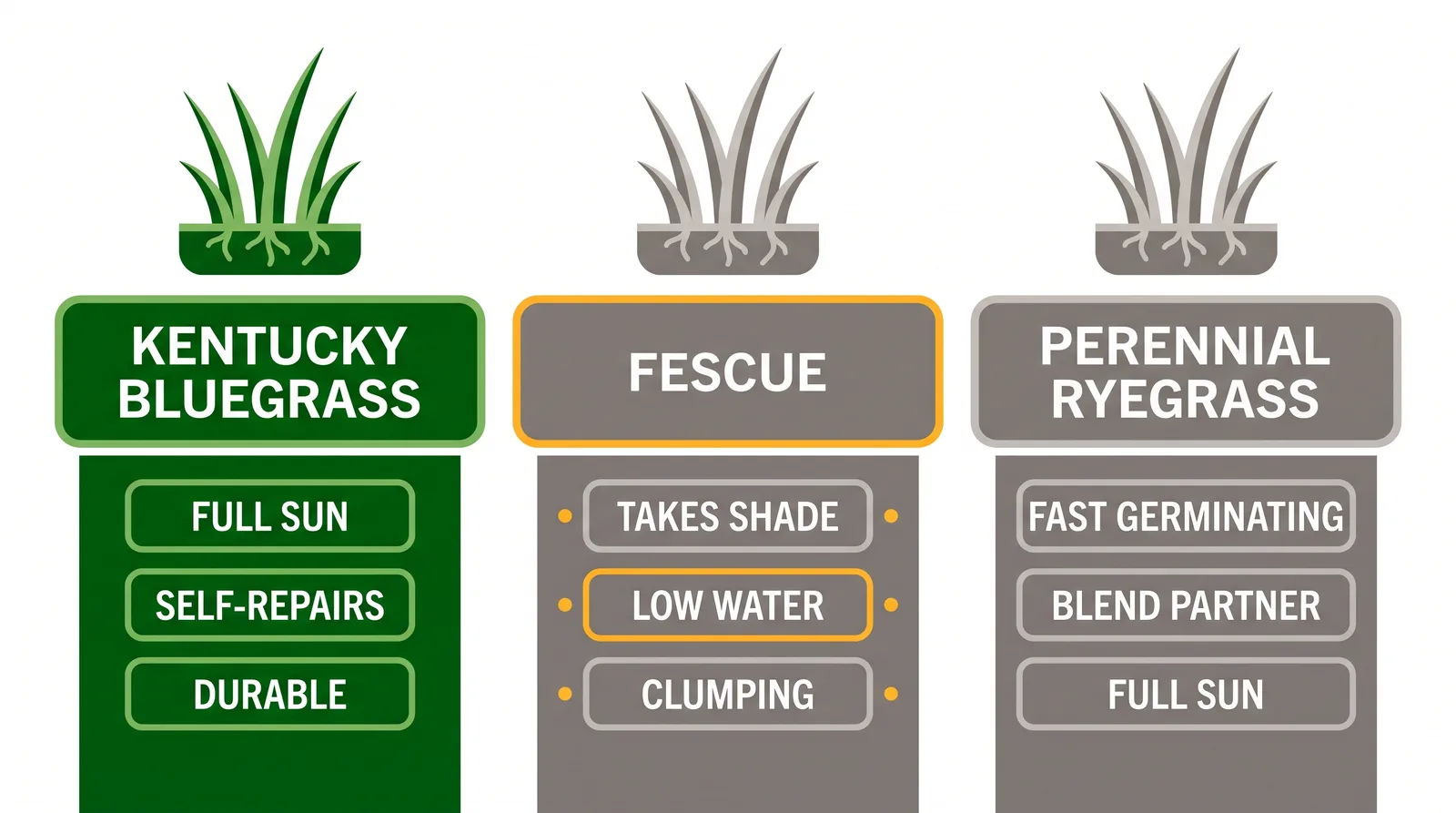
- Choose Kentucky bluegrass if your yard gets full sun and you want a dense, durable, self-repairing lawn with normal watering. This is most GTA front yards.
- Choose a fescue if you have shade or want lower watering and will accept a clumpier texture. Fine fescues take shade; tall fescue takes heat and drought.
- Choose perennial ryegrass (usually in a blend) if you need fast germination, as it sprouts quickest and is often mixed with bluegrass to green up a new seeding while the slower bluegrass fills in.
Because each has a weakness, Ontario lawns are usually blends, and the sod standard formalizes it by capping any single cultivar at 90% of the turf. If you are seeding rather than sodding, the fast-germinating fescue and ryegrass blends are also what we recommend for the narrow window frost seeding suits.
Putting it on your yard
Match the grass to the light, then let the maintenance calendar do the rest. In sun, bluegrass sod or a bluegrass-heavy blend is the reliable default, and it is what you will get from most Ontario farms, explained in how sod is grown on Ontario farms. Keep it on the Toronto lawn care schedule, mowing high and watering deeply, and its self-repair does much of the work for you. Compare current sod ranges on the sod cost page and seed options on the grass seed lawn cost page, or find rated crews on the lawn care directory for your area.
Not sure whether bluegrass, fescue, or a blend suits your light and your yard? Request a quote and compare up to three vetted local pros side by side, so the grass matches your conditions, not a default. Your contact details only go to the one you pick.