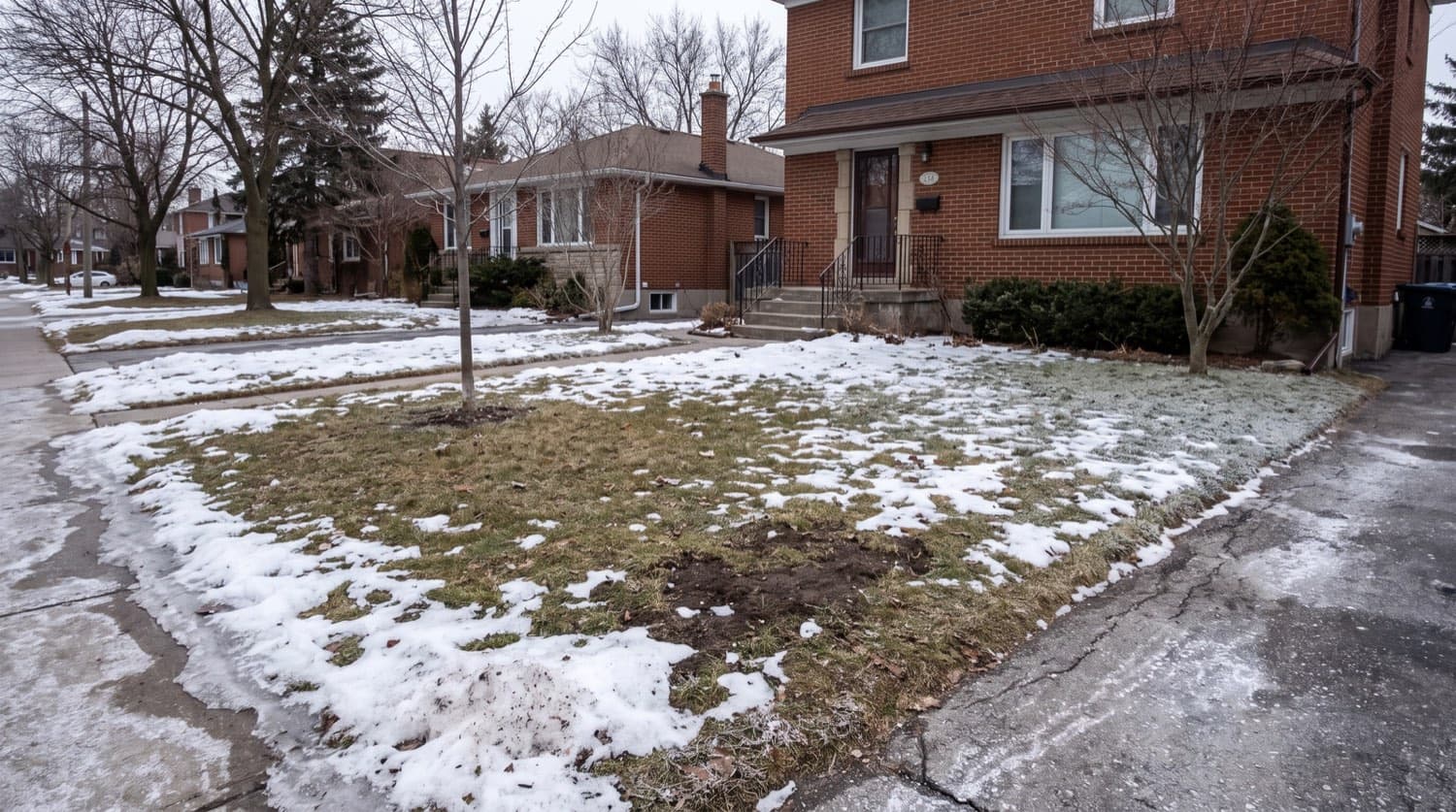
Answer First: Frost seeding works, but mostly for pasture legumes like red clover, not for grass lawns. University extension research finds grasses are poor frost-seeding candidates. Ontario's freeze-thaw climate provides the mechanism, but for a grass lawn, fall overseeding from late August to mid-September is far more reliable, with late-fall dormant seeding a distant second. Treat frost seeding as a cheap February gamble on thin patches, not a lawn-building method.
Every late winter, the same advice makes the rounds: throw grass seed on the frozen lawn and let the frost do the work. The mechanism behind it is real. The problem is that it was built for a different crop.
What is frost seeding?
Frost seeding — broadcasting seed onto frozen ground in late winter so the natural freeze-thaw movement of the soil works it down into contact with the earth, with no tilling or raking-in.
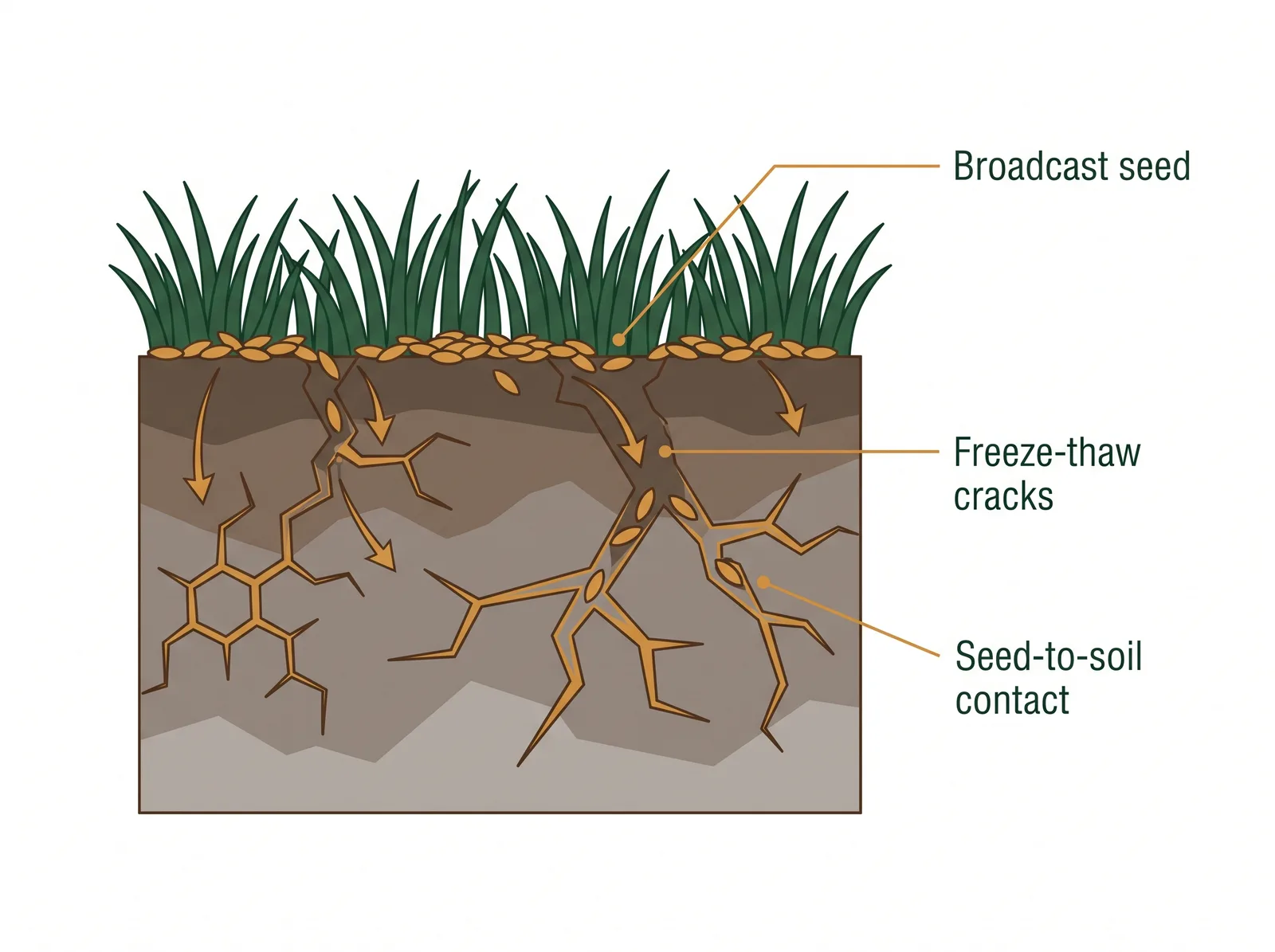
Here is the physics. When soil freezes at night and thaws by day, it expands and contracts. Iowa State University Extension describes the result as a "honeycombing effect" that pulls seed into the soil profile and gives it good seed-to-soil contact (Iowa State Extension). No machine, no drilling. The freeze-thaw cycle does the incorporation for free, which is exactly why it appeals to anyone staring at a thin, tired lawn in February.
Does frost seeding work for a grass lawn in Ontario?
Not well, and this is the part the internet skips. The method was developed for pasture and forage, and the crops it suits are legumes. Iowa State Extension names red clover and birdsfoot trefoil as the strong performers, calls white clover and alfalfa more variable, and states plainly that grasses are not good frost-seeding options.
A lawn is grass. That single fact is why frost seeding underdelivers on turf: the crop you are trying to establish is the one the method handles worst.
Quotable: Frost seeding was built for pasture legumes like red clover, not lawn grass. University extension research is direct that grasses are poor frost-seeding candidates, which is why a February scatter of grass seed on a Toronto lawn so often disappoints.
Ontario does have the climate. Southern Ontario's late-winter freeze-thaw swings, cold nights into thaw afternoons through February and early March, are exactly the pattern the mechanism needs. The limitation is not our weather. It is the mismatch between the technique and grass seed.
Frost seeding vs dormant seeding vs fall overseeding
If your goal is a thicker Toronto lawn, three timing options compete. They are not equal.
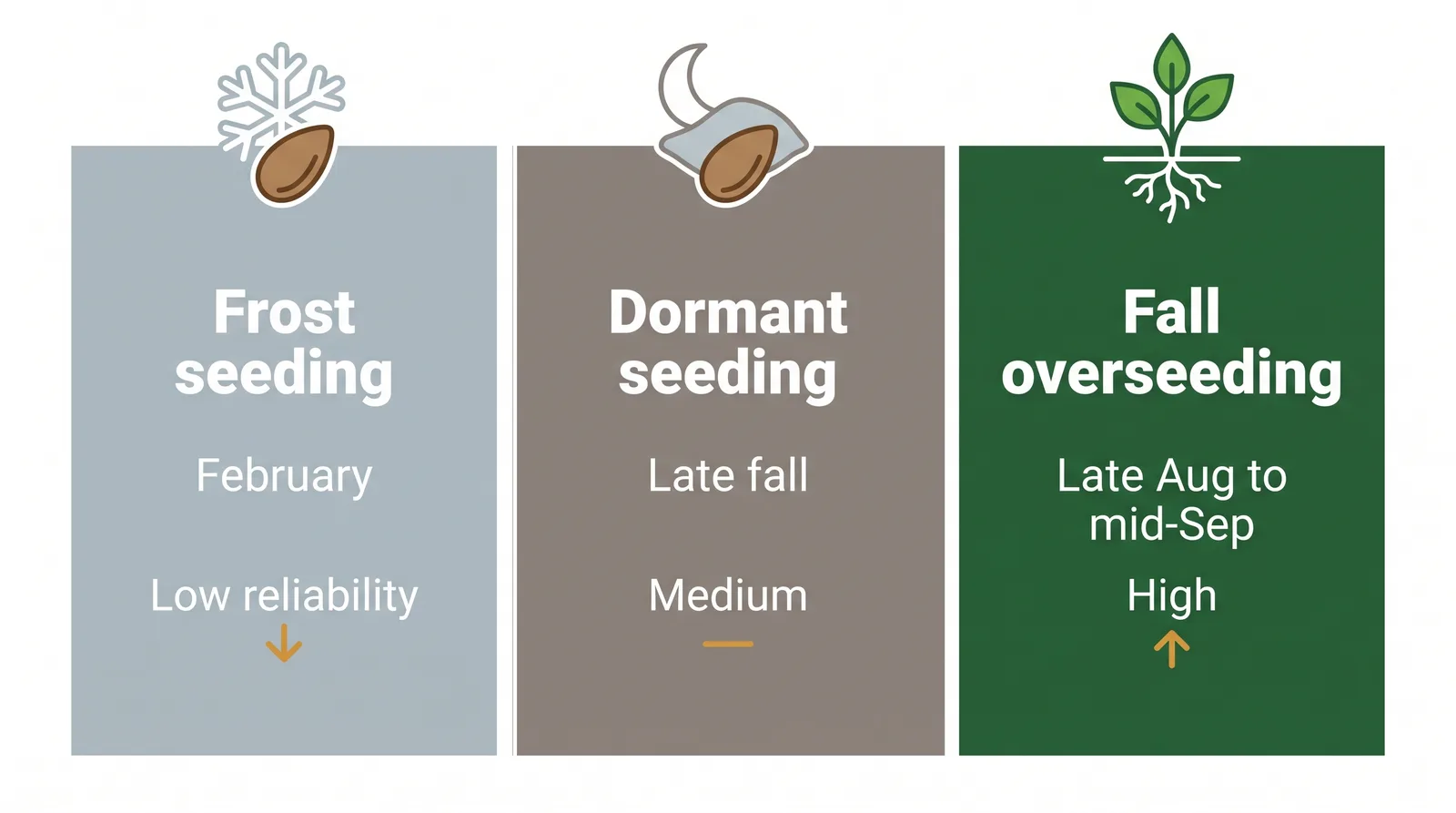
- Fall overseeding (late August to mid-September): the reliable choice. Cool-season grass seeded in early fall gets two mild growing seasons, fall and the following spring, before its first summer heat stress, with less weed competition than spring (Penn State Extension). Pair it with core aeration for seed-to-soil contact and it is the most productive lawn job of the year.
- Dormant seeding (late fall): the backup. Seed sown after growth stops sits dormant through winter and germinates as the soil warms in spring. More reliable on grass than frost seeding, less reliable than a proper fall job.
- Frost seeding (February): the gamble. Cheapest and easiest, weakest results on grass. Reserve it for touching up thin patches when you have nothing to lose.
From the data: YardQuote tracks 249 lawn-care companies across the GTA; 220 carry three or more reviews, the average rating is 4.75, and 88% of rated companies hold 4.5 stars or higher (YardQuote tracking, July 2026). The well-reviewed ones almost all seed in fall, not February, which tells you where the results are.
How to frost seed a lawn, if you try it anyway
It costs a bag of seed and ten minutes, so a low-stakes experiment on a thin patch is fair. Do it properly to give it any chance.
- Expose the soil. Rake the thin or bare area hard to break up thatch and open bare ground. Seed that lands on a dense mat of thatch or thick grass never reaches soil, and that is the number-one reason frost seeding fails.
- Time it to the freeze-thaw window. Broadcast in February during a stretch of frosty nights and thaw days. Seed early in the morning while the ground is still frozen firm, so you do not compact soft mud.
- Choose fast germinators. A fescue or perennial ryegrass blend establishes faster than Kentucky bluegrass, giving the short window a better shot. You can compare seed and installed-lawn options on the grass seed lawn cost page.
- Do nothing else, and plan to overseed in fall regardless. Let the soil movement work. Then seed properly in September, because that is the job that actually thickens the lawn.
When frost seeding fails
Two failures account for most disappointments. The first is thatch: a thick thatch layer or dense existing turf blocks seed from touching soil, so the freeze-thaw cracks capture nothing. The second is timing: seed after the freeze-thaw cycle has ended, or during a mild spell with no hard frosts, and the mechanism simply is not there. Add grass seed instead of the legumes the method suits, and the odds drop again.
The honest verdict: in Ontario's climate the mechanism is real, but for a grass lawn it is the least reliable option you have. Put your effort into the fall. If a lawn is thin enough that you are considering a February hail-mary, it is usually thin enough to justify a proper renovation, which is where our Toronto lawn care calendar and the economics of sod versus seed come in. For bigger bare areas, compare vetted crews on the lawn care directory for your area.
Not sure whether your lawn needs overseeding, a full renovation, or fresh sod? Request a quote and compare up to three vetted local pros side by side, so you get a real plan instead of a February guess. Your contact details only go to the one you pick.