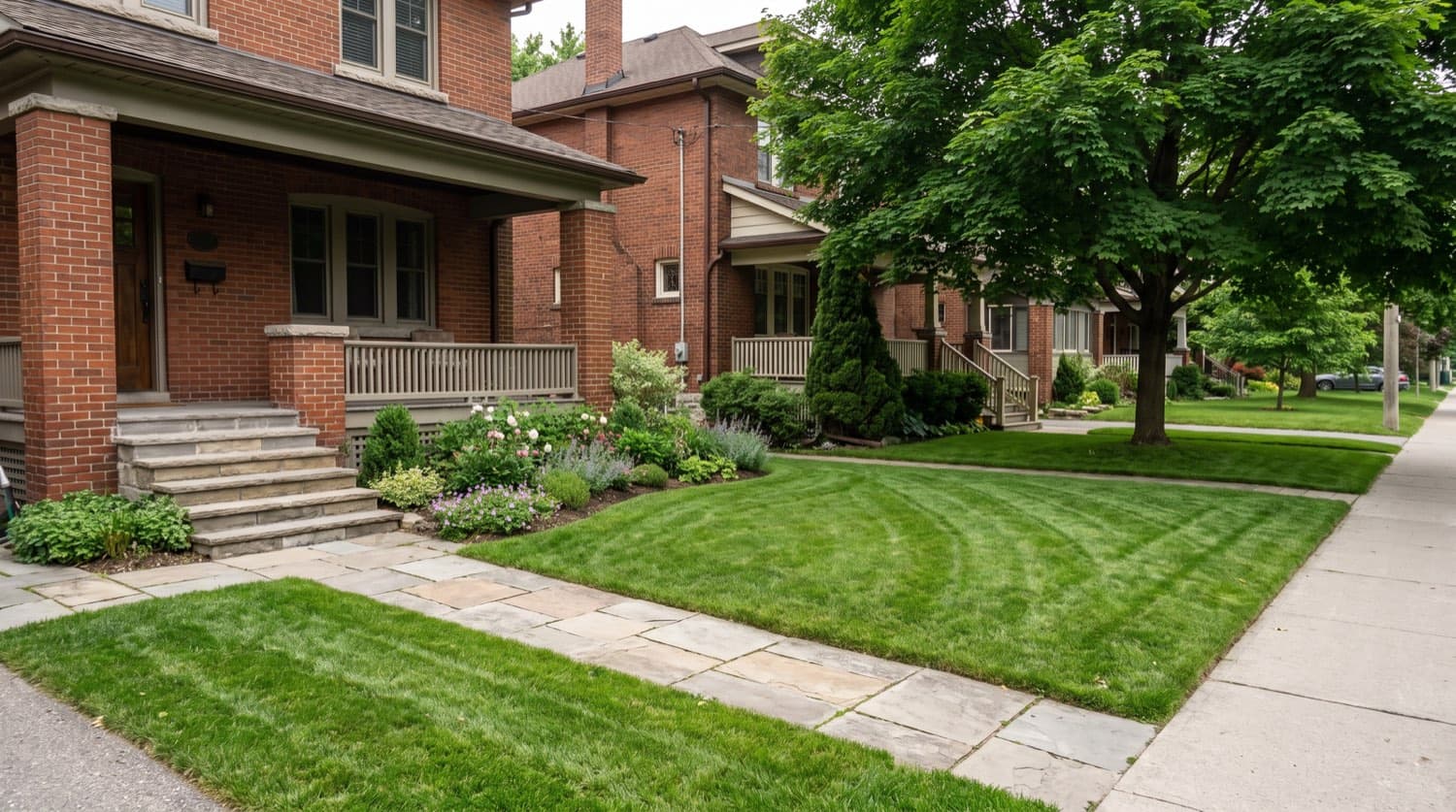
Answer First: A Toronto lawn is made in three moments: feed it in May, core-aerate and overseed from late August to mid-September, and lay down a winterizer feed in October. Everything between those is mowing high, about 3 to 3.5 inches, and watering deeply, roughly 1 to 1.5 inches a week. Fall, not spring, is when you seed. Get those right and the rest of the calendar is maintenance.
Most lawn advice buries the two or three decisions that matter under a pile of monthly busywork. Here is the version that leads with what counts, then fills in the year around it.
The three jobs that carry the year
Before the month-by-month, know where the leverage is. In the GTA's cool-season climate, three tasks do most of the work.
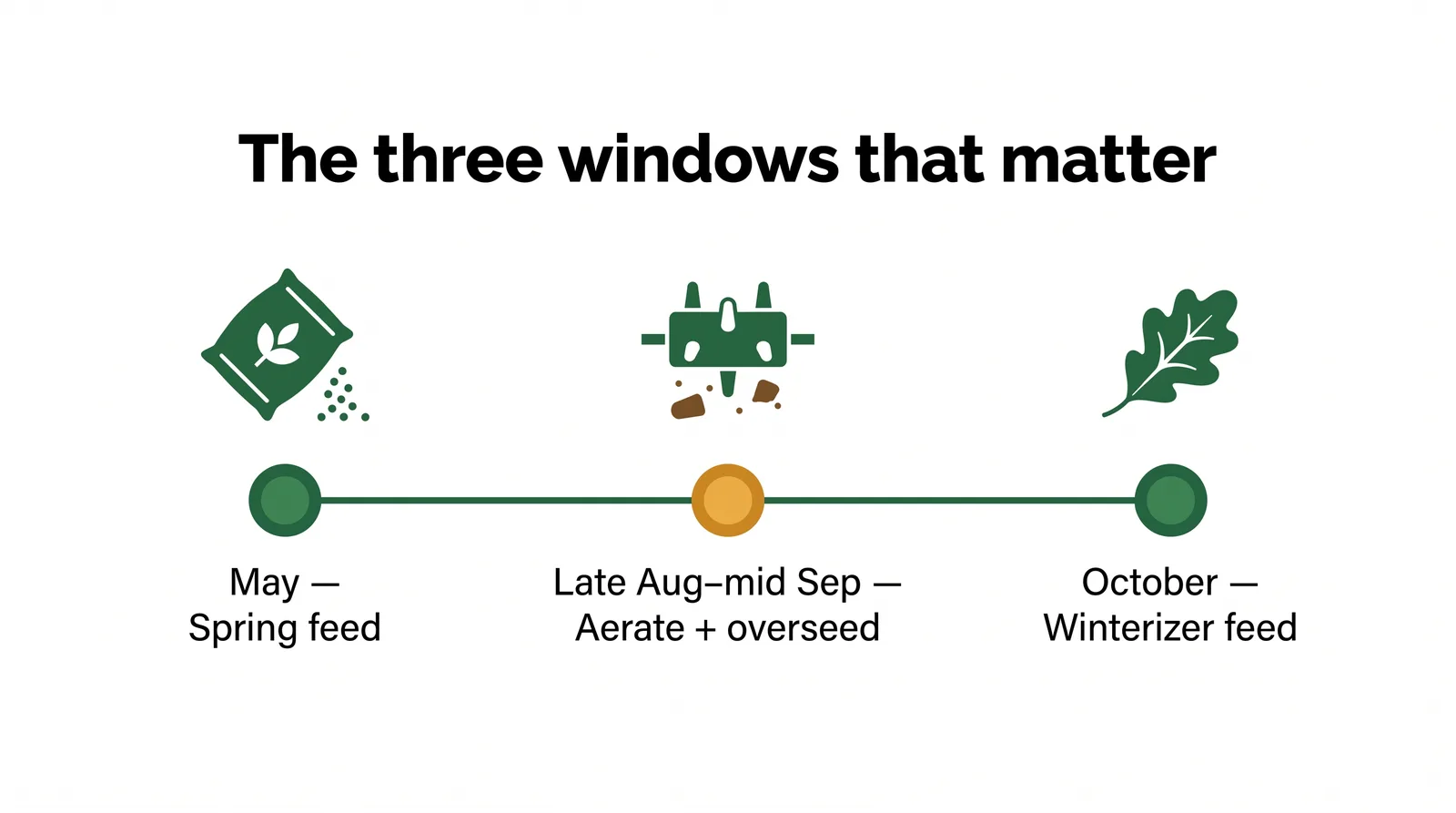
- May: the spring feed. A late-spring application with some slow-release nitrogen fuels active growth as the lawn wakes up.
- Late August to mid-September: aerate and overseed. The single most productive job of the year. Core aeration plus overseeding thickens the lawn while the weather is on your side.
- October: the winterizer feed. A fall feeding helps cool-season grass rebuild roots after summer and bank energy for winter, which extension programs rate the most important feed of the year (Penn State Extension).
Quotable: For a Toronto lawn, fall beats spring for the work that matters. New grass seeded in early fall gets two mild growing seasons before its first summer, with far less weed competition, which is why September overseeding outperforms an April scramble.
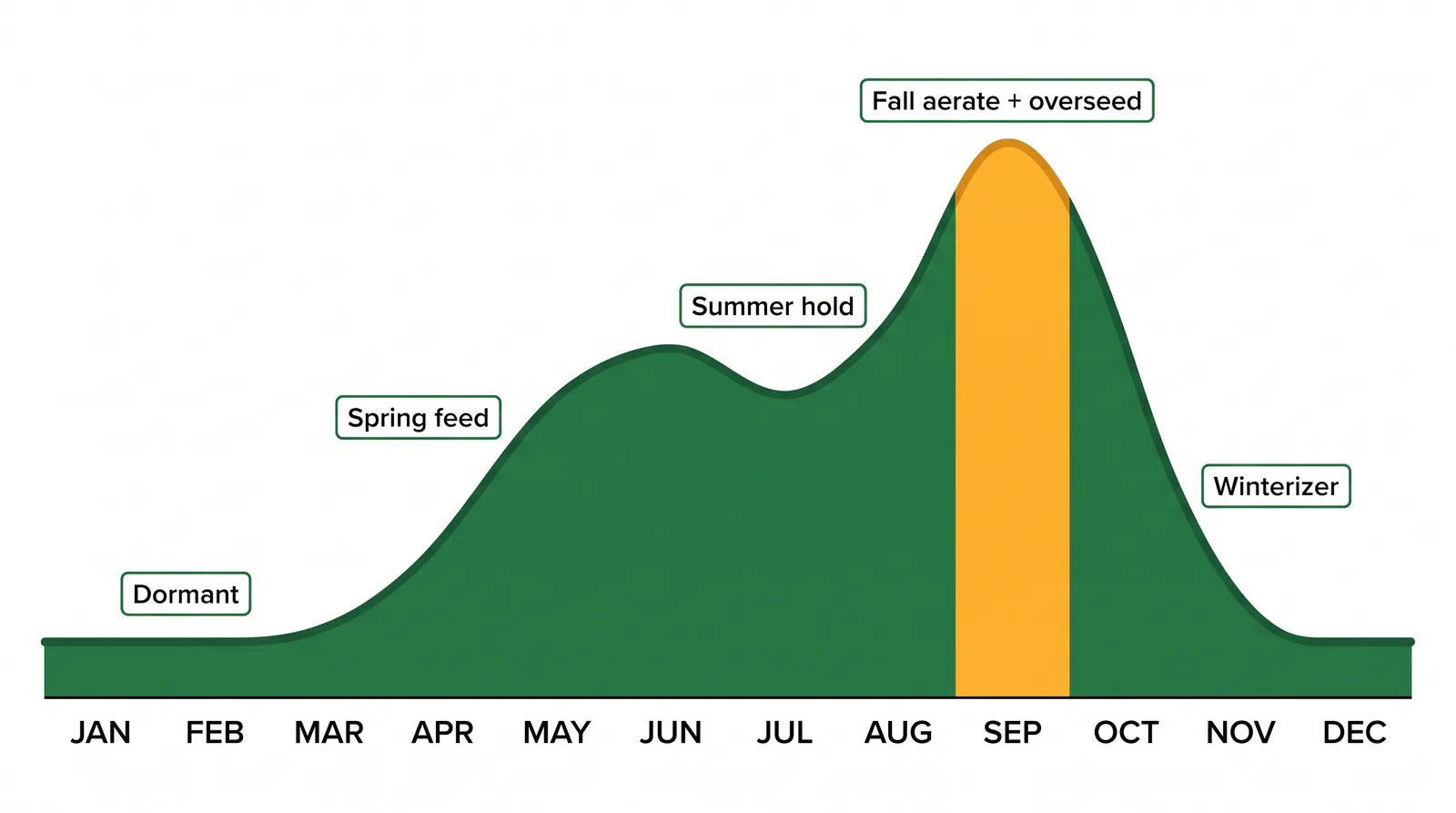
The full 12-month Toronto lawn calendar
This is the whole year mapped to the GTA's cool-season grasses and roughly April-to-November growing window. Adjust a week or two for the weather any given year.
| Month | Do this | Why |
|---|---|---|
| January | Nothing on the lawn. Plan; sharpen the mower blade. | Grass is dormant; a sharp blade cuts cleanly all season. |
| February | Stay off frozen grass. Order seed. | Walking on frost-crowned grass damages the crowns. |
| March | Light cleanup once soil is dry; book a soil test. | Working wet soil compacts it; a test tells you what to feed. |
| April | First cut when growth starts, slightly low to clear winter tips; corn gluten meal if using a pre-emergent. | Removes damaged blades; corn gluten is an Ontario-legal pre-emergent option. |
| May | First real feed (slow-release nitrogen); spot-seed thin patches; raise mowing to 3–3.5 in. | Fuels spring growth; taller grass shades out weeds. |
| June | Mow at 3.5 in; water 1–1.5 in/week in dry spells. | Deep watering builds deep roots before the heat. |
| July | Mow tall (3.5–4 in); water deeply or allow dormancy; watch for grubs and chinch bugs. | Heat stresses cool-season grass; tall grass and deep roots survive it. |
| August (late) | Begin core aeration + overseeding; keep watering. | The prime renovation window opens as nights cool. |
| September | Aerate + overseed; apply fall fertilizer. | The best seeding and feeding month of the year. |
| October | Winterizer feed; final mows; manage leaves. | Fall feeding builds roots and winter energy reserves. |
| November | Last mow slightly lower before dormancy; final cleanup. | Shorter final height reduces winter matting and disease. |
| December | Nothing. Stay off frozen turf. | Dormant grass needs nothing; frozen crowns are fragile. |
Mowing and watering: the everyday rules
The calendar's big jobs only pay off if the day-to-day is right, and it comes down to two habits.
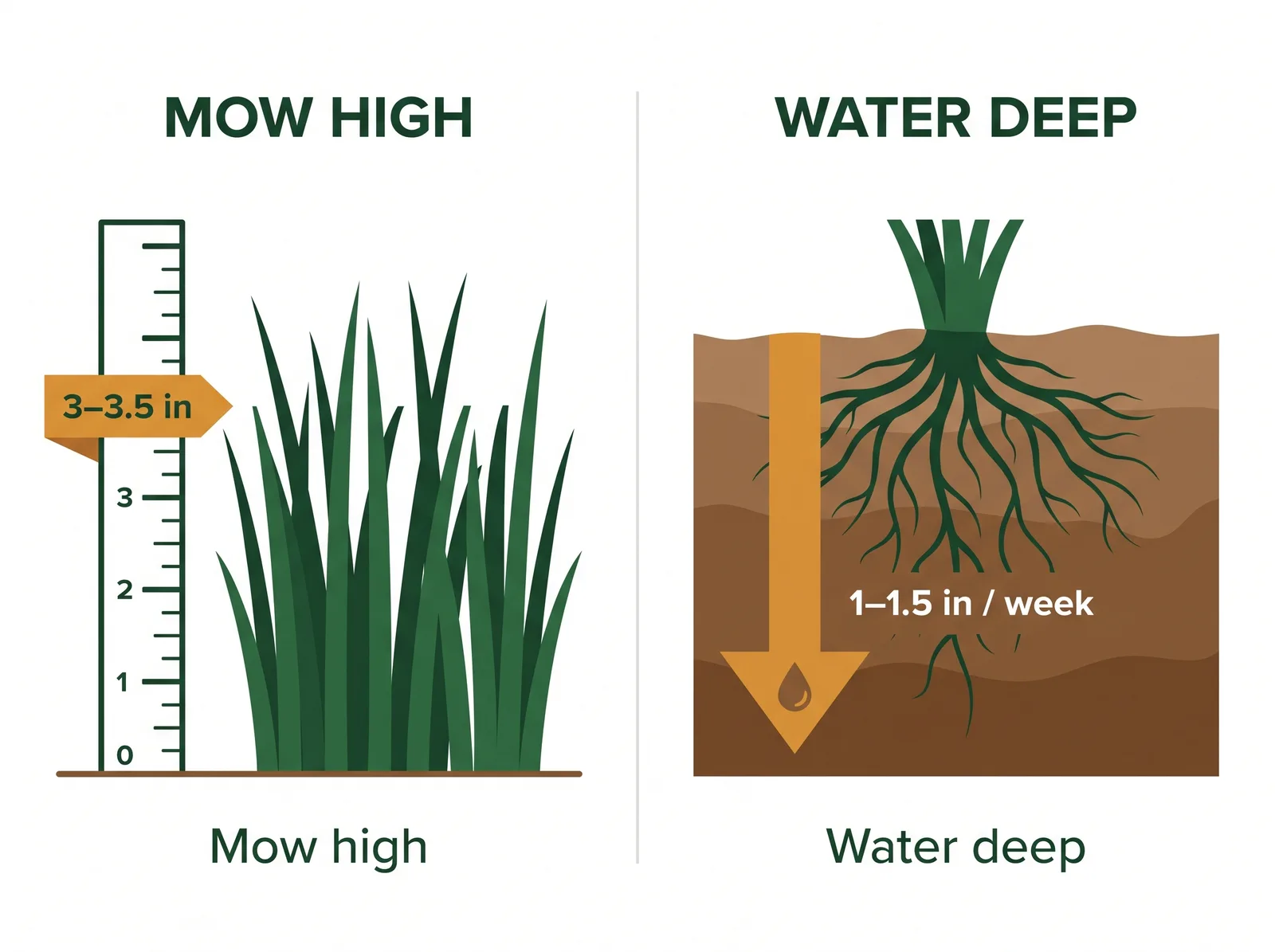
Mow high, and never scalp. Keep cool-season grass at about 3 to 3.5 inches, and never cut off more than one-third of the blade at once. Taller grass shades out germinating weed seeds, keeps the soil cooler in summer, and grows deeper roots that reach water in a drought (University of Minnesota Extension). Scalping does the opposite: it invites crabgrass and dries the soil out.
Water deeply and infrequently. Aim for roughly 1 to 1.5 inches per week including rainfall, delivered in one or two deep soakings rather than a daily sprinkle. Deep water pulls roots down; shallow daily watering keeps them at the surface where they cook in July.
From the data: YardQuote tracks 249 lawn-care companies across the GTA; 220 carry three or more reviews, the average rating is 4.75, and 88% of rated companies hold 4.5 stars or higher (YardQuote tracking, July 2026). A well-reviewed crew follows this same calendar; you are paying for the timing and the equipment, not a secret.
What each season is really for
- Spring is for waking up, not overhauling. Clean up, take the first cut, feed in May. Resist the urge to overseed now; it rarely takes the way a fall seeding does.
- Summer is for holding steady. Mow tall, water deeply, and accept that a healthy lawn may go tan and dormant in a July heat wave. That is survival, not death.
- Fall is for building. Aerate, overseed, and feed. This is when a thin lawn becomes a thick one, covered in our guide to why fall overseeding beats frost seeding.
- Winter is for planning. Nothing on the grass, everything on the prep.
Weeds are a season-long question that Ontario law shapes, especially the dandelions that show up in May, and the legal-in-Ontario control methods are covered in our guide to getting rid of dandelions. If your lawn is too far gone for overseeding to fix, weigh the economics of sod versus seed, or compare local crews and current pricing on the lawn care cost page and the lawn care directory for your area.
Want a maintenance plan built around your specific lawn and season? Request a quote and compare up to three vetted local pros side by side, so the schedule fits your yard, not a generic template. Your contact details only go to the one you pick.