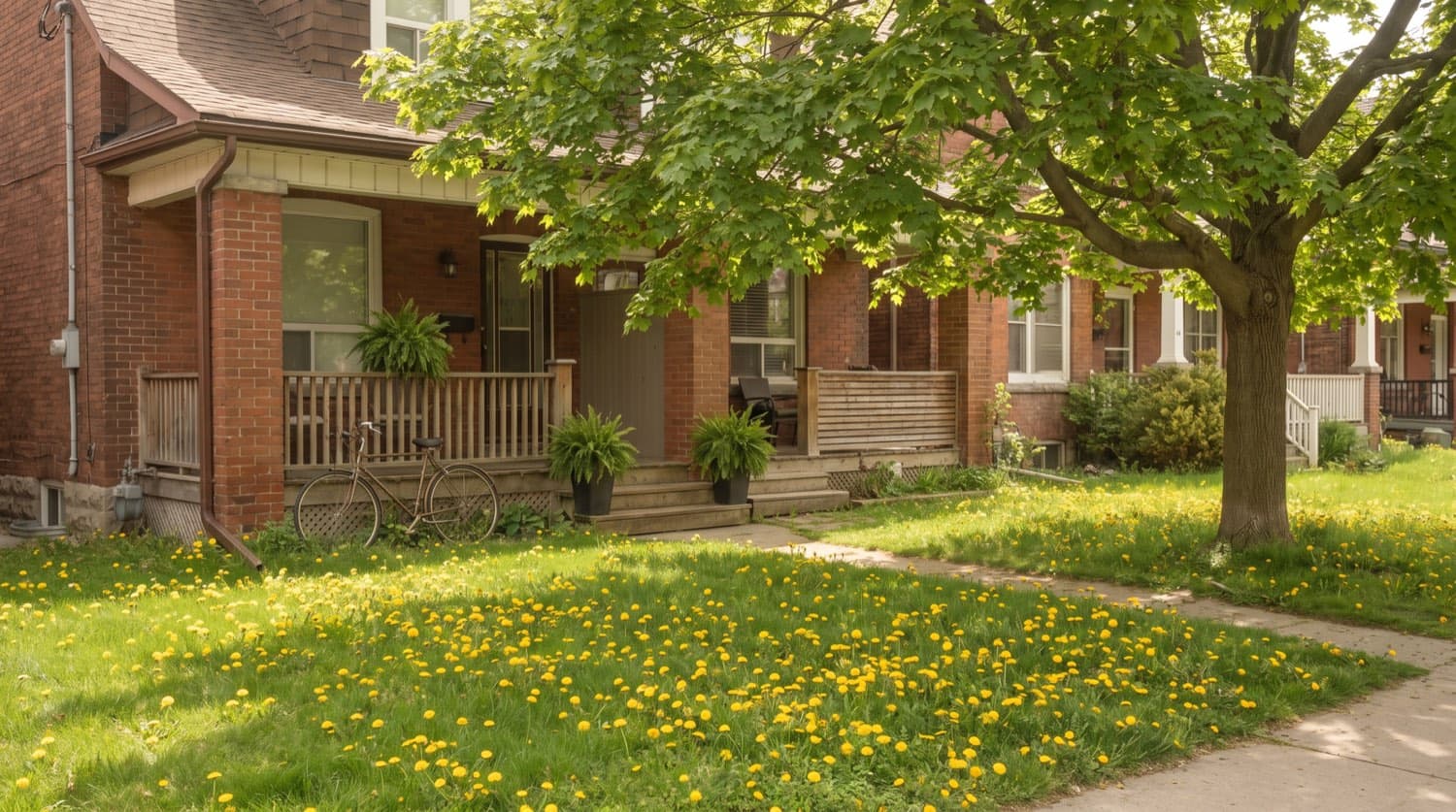
Answer First: In Ontario it is illegal to use pesticides to control dandelions on a home lawn, including the classic weed-killer 2,4-D, under the cosmetic pesticides ban in force since April 22, 2009. The legal methods that actually work are digging out the entire taproot, thickening the lawn through overseeding and high mowing to crowd dandelions out, and using only products whose ingredients appear on the province's Allowable List, such as corn gluten meal or fatty-acid soaps.
You reach for the weed-and-feed you remember your parents using, and in Ontario you are now reaching for something you cannot legally apply. The rules changed in 2009. The good news is that the methods that survived the ban are the ones that actually last.
Is it legal to kill dandelions in Ontario?
Not with the products most people picture. Ontario's cosmetic pesticides ban, under the Pesticides Act and Ontario Regulation 63/09, took effect April 22, 2009 and prohibits using pesticides for cosmetic purposes on lawns, gardens, patios, driveways, parks, and schoolyards (Government of Ontario).
That prohibition is explicit about dandelions: it is against the law to use pesticides to manage dandelions on your lawn, even if that use is printed on the product label. The banned ingredients include 2,4-D, the active ingredient in traditional broadleaf weed killers, along with diazinon and glyphosate for this use.
Quotable: Since April 22, 2009, using a pesticide to kill dandelions on your Toronto lawn has been illegal in Ontario, even when the product label says you can. A weed-free lawn is a cosmetic reason, and the cosmetic ban has no exception for it.
The ban keeps exceptions, but none help a homeowner chasing a spotless lawn. They cover health and safety threats, wasps, mosquitoes, poison ivy, giant hogweed, ticks, and uses like agriculture, golf courses, and forestry. Wanting a tidy lawn is precisely the cosmetic motive the law targets.
What is legal, and what is banned
The line is simple: only ingredients on the province's Allowable List are legal for lawn weed control. Everything else, for cosmetic use, is not.
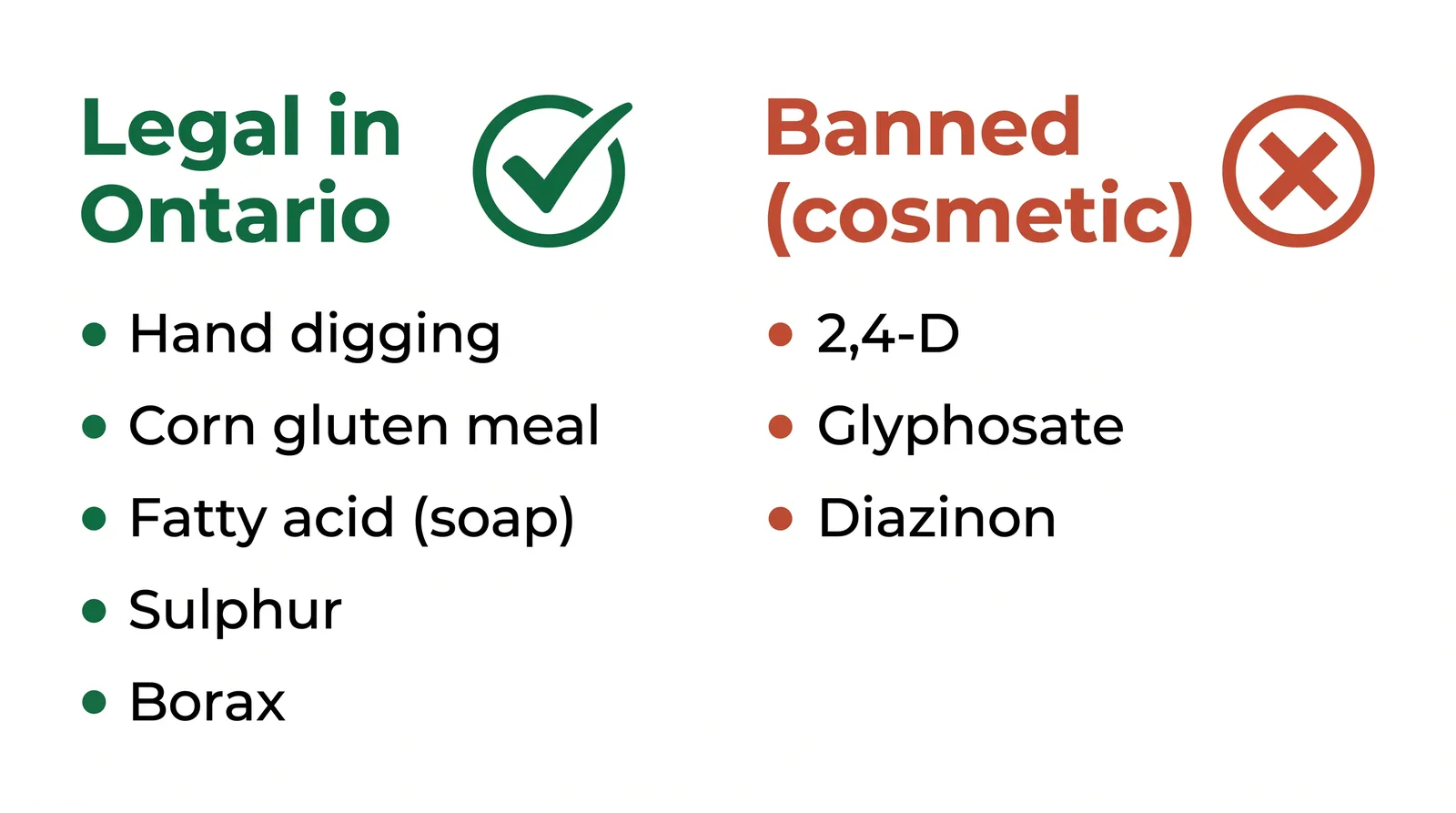
Legal in Ontario for lawns:
- Hand digging and manual removal, always legal.
- Corn gluten meal, a natural pre-emergent on the Allowable List.
- Fatty acids (soap) and sulphur and borax, Allowable-List ingredients the province names directly.
- Biopesticides and other lower-risk products on the Allowable List. Some iron-based (FeHEDTA) products are sold as ban-compliant and burn back foliage.
Banned for cosmetic lawn use:
- 2,4-D, the classic dandelion killer.
- Glyphosate and diazinon for this purpose.
Before buying any product, confirm it lists only Allowable-List ingredients. The province maintains the full list of authorized active ingredients, and compliant products state that they meet the regulation.
The most effective legal method: dig the taproot
With sprays off the table, the single most reliable method is mechanical, and it turns on one anatomical fact.
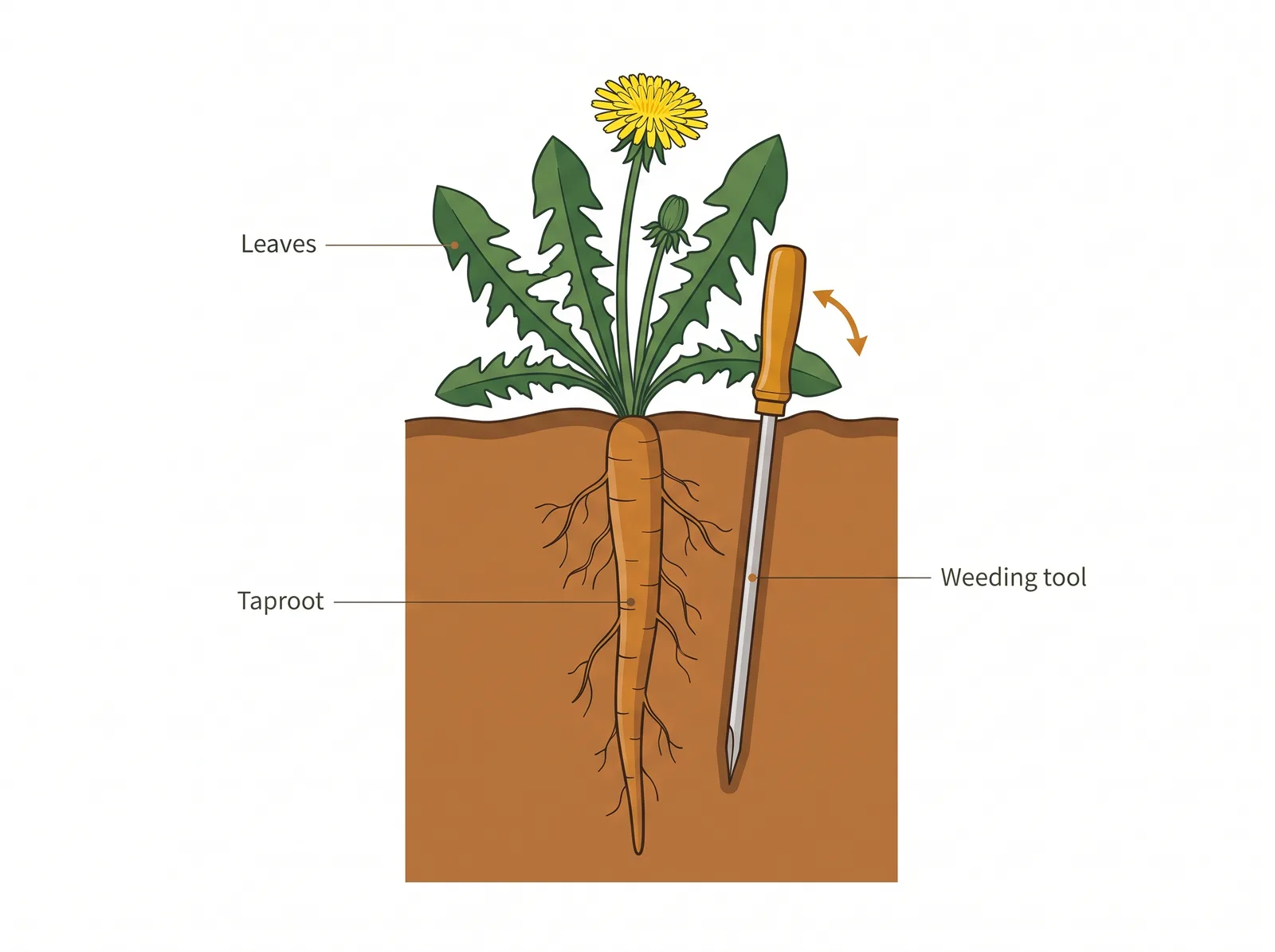
Taproot — the deep, carrot-like central root a dandelion uses to store energy, from which it regrows if any piece is left in the soil.
That is why snapping the leaves off does nothing and why half-hearted digging just multiplies the problem. You have to lift the whole root.
- Wait for soft soil. Dig after rain or a watering, when the ground releases the root instead of snapping it.
- Use the right tool. A narrow dandelion weeder or fishtail fork drives down beside the root; a trowel tends to cut it.
- Lever, don't yank. Push the tool in alongside the taproot, then lever the whole root up and out in one piece.
- Fill and seed the hole. Drop a pinch of soil and grass seed into the gap so grass, not the next dandelion, claims the space.
From the data: YardQuote tracks 249 lawn-care companies across the GTA; 220 carry three or more reviews, and the average rating is 4.75 (YardQuote tracking, July 2026). Since the 2009 ban, the reputable ones compete on turf-thickening programs and hand-weeding, not on spraying, because spraying for looks is not a service they can legally sell.
The real long game: crowd them out
Digging clears today's dandelions. A thick lawn prevents tomorrow's. Dandelion seeds need light and open soil to establish, so a dense, tall canopy is your best permanent control.
- Mow high. At 3 to 3.5 inches, grass shades the soil surface and blocks dandelion seeds from germinating.
- Overseed in fall. Thickening thin turf in the late-August-to-mid-September window fills the gaps dandelions would colonize, the timing laid out in our Toronto lawn care calendar.
- Apply corn gluten meal in early spring if you want a legal pre-emergent, before new seeds sprout. It suppresses germination but will not touch established plants.
A dandelion problem is almost always a thin-lawn problem wearing a costume. Fix the density and the yellow heads have nowhere to land. If your lawn is thin enough that dandelions have taken over, weigh overseeding against a reset with sod versus seed, and compare local crews and pricing on the lawn care cost page or the lawn care directory for your area.
Not sure whether to hand-weed, overseed, or start the lawn over? Request a quote and compare up to three vetted local pros side by side, all working within Ontario's rules. Your contact details only go to the one you pick.