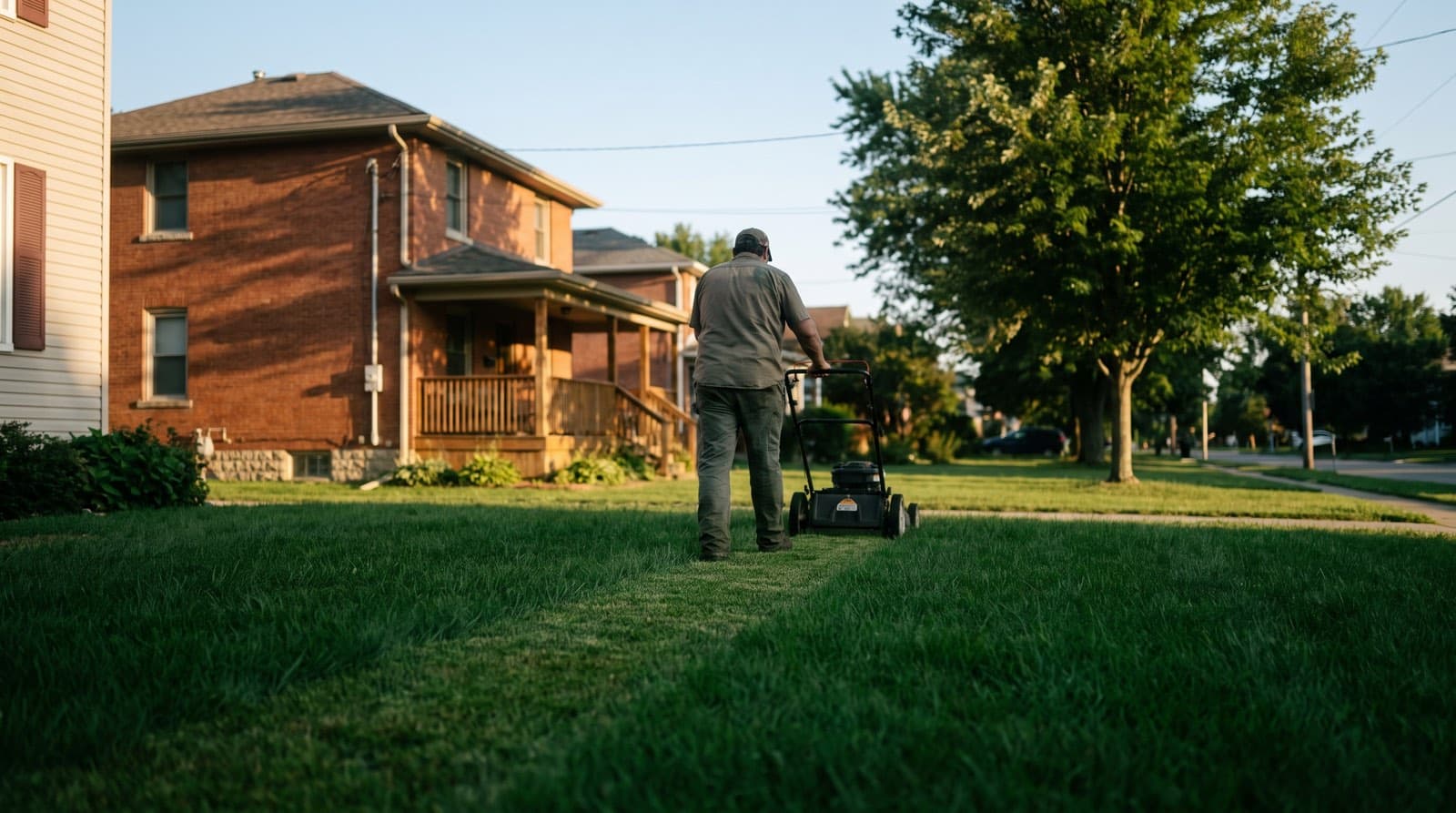
Answer First: Cut cool-season Toronto grass to about 2.5 to 3 inches (6 to 7.5 cm), and never remove more than one-third of the blade in a single mow, because taking more than a third severely injures the grass by cutting its ability to feed the roots (Michigan State University Extension). To keep a 3-inch lawn, that means mowing when it reaches roughly 4 to 4.5 inches. Taller grass also shades the soil and suppresses crabgrass, so mowing high is the healthiest and lowest-effort choice.
The instinct is to cut the lawn as short as possible so you can go longer between mows. On a cool-season Toronto lawn, that is exactly backwards, and it is the fastest way to a thin, weedy yard.
What is the one-third rule?
Never remove more than one-third of the total leaf surface in a single mow. Removing more than a third can severely injure the grass plant by decreasing its ability to support its underground portions, meaning its roots (Michigan State University Extension). The grass blade is the engine that feeds the roots; cut too much off at once and you starve the part you cannot see.
The rule turns into a simple habit once you know your target height. To hold a lawn at 3 inches, you mow when it reaches about 4.5 inches, taking off roughly the top third. Let it get to 6 inches and then scalp it back to 3 in one pass, and you have removed half the blade and set the lawn back weeks.
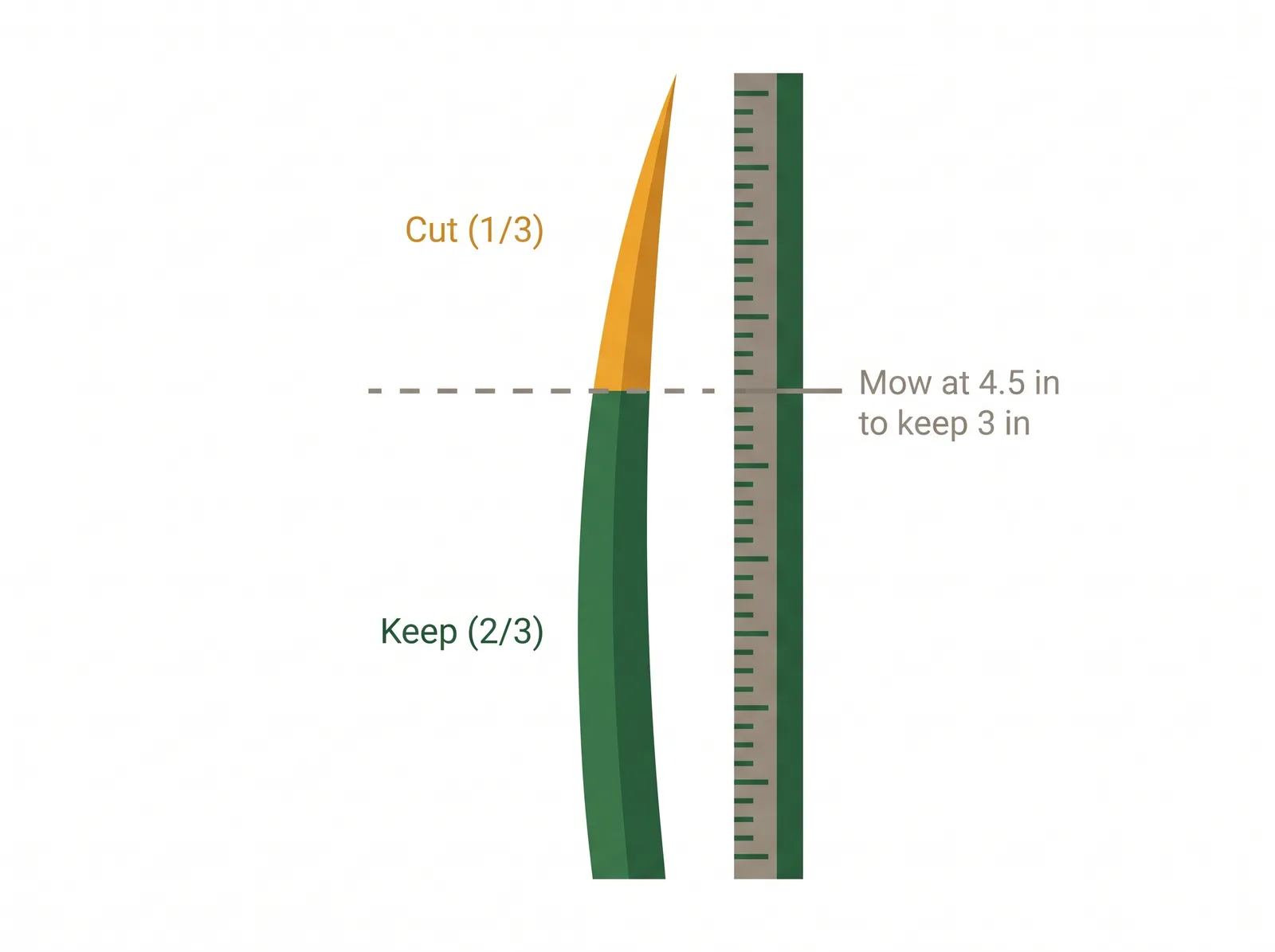
Quotable: Never remove more than one-third of the grass blade in a single mow. Cutting more severely injures the plant's ability to support its roots, which is why scalping a long lawn in one pass sets it back for weeks (Michigan State University Extension).
How short should Toronto grass actually be?
About 2.5 to 3 inches. The City of Toronto recommends setting the mower to cut at 6 to 7.5 cm (2.5 to 3 inches), because mowing high strengthens the roots and helps the lawn retain water and nutrients (City of Toronto). That sits right inside the 2 to 3.75-inch range turf specialists recommend for cool-season home lawns.
There is a legal ceiling to mind too. Toronto's Municipal Code requires grass and weeds on private property be kept under 20 cm, so the target is a band: mow high for health, but do not let the lawn run past about 20 cm before you cut it.
Why does mowing higher beat mowing short?
Because height does three jobs at once, and all of them save you work. Taller grass grows deeper roots, which reach more water and survive Toronto's summer heat. It shades the soil, and taller, denser turf has a profound shading effect that reduces germination of weed seeds, particularly crabgrass (Michigan State University Extension). And it holds soil moisture, so you water less.
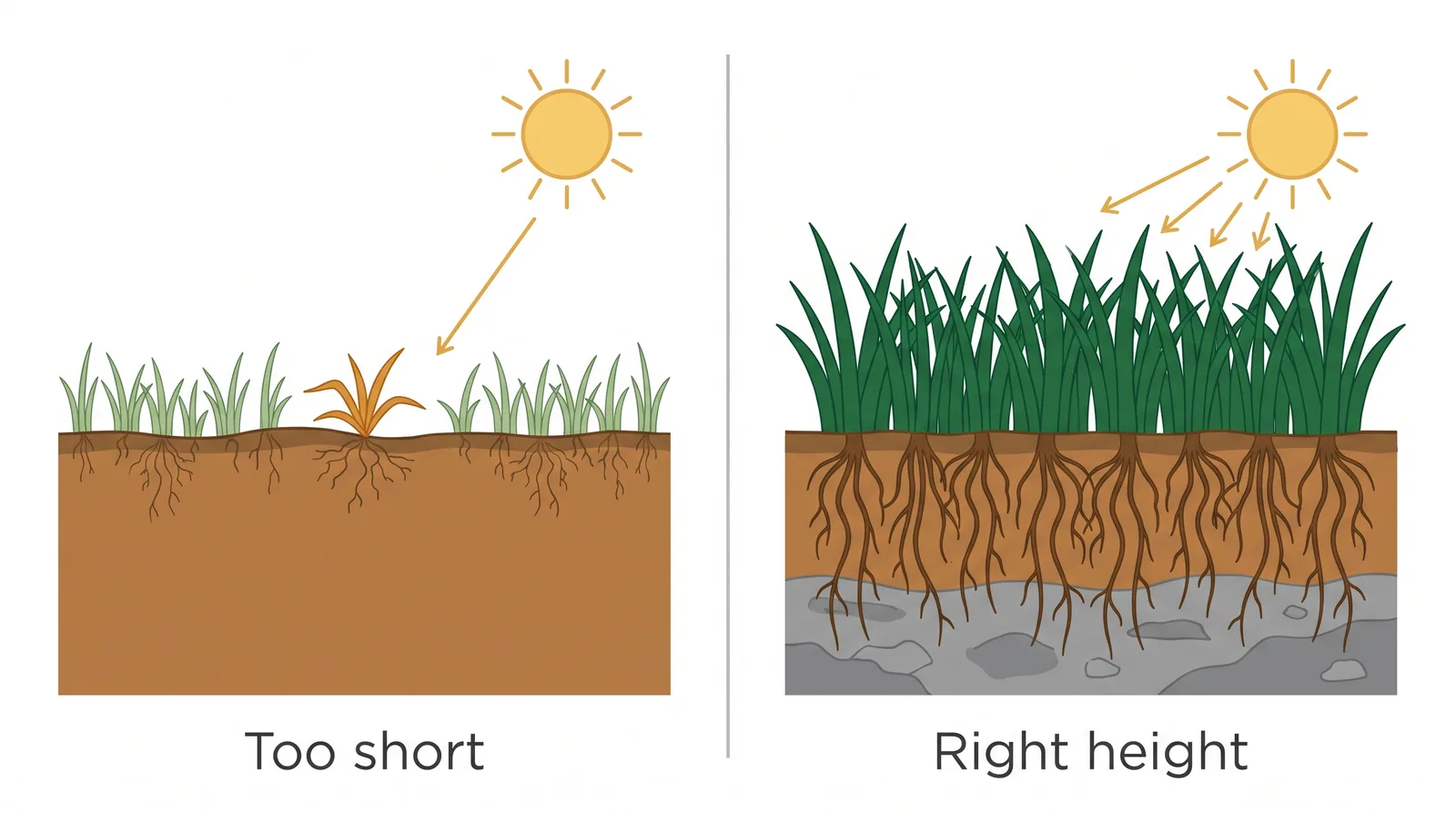
Cutting short does the opposite of what people hope. It exposes bare soil to sunlight, which is an open invitation to crabgrass, and it forces the grass to regrow blade at the expense of roots. The short lawn dries faster, thins sooner, and fills with weeds, so you end up doing more, not less.
From the data: Of the 249 lawn-care companies YardQuote tracks across the GTA (July 2026), 220 carry three or more reviews at an average of 4.75 stars. The best-reviewed crews mow high and mow often rather than scalp, because a denser, taller lawn is what keeps their clients out of weed treatments.
What are the mowing habits that matter?
Height is most of the battle, but a few habits finish the job.
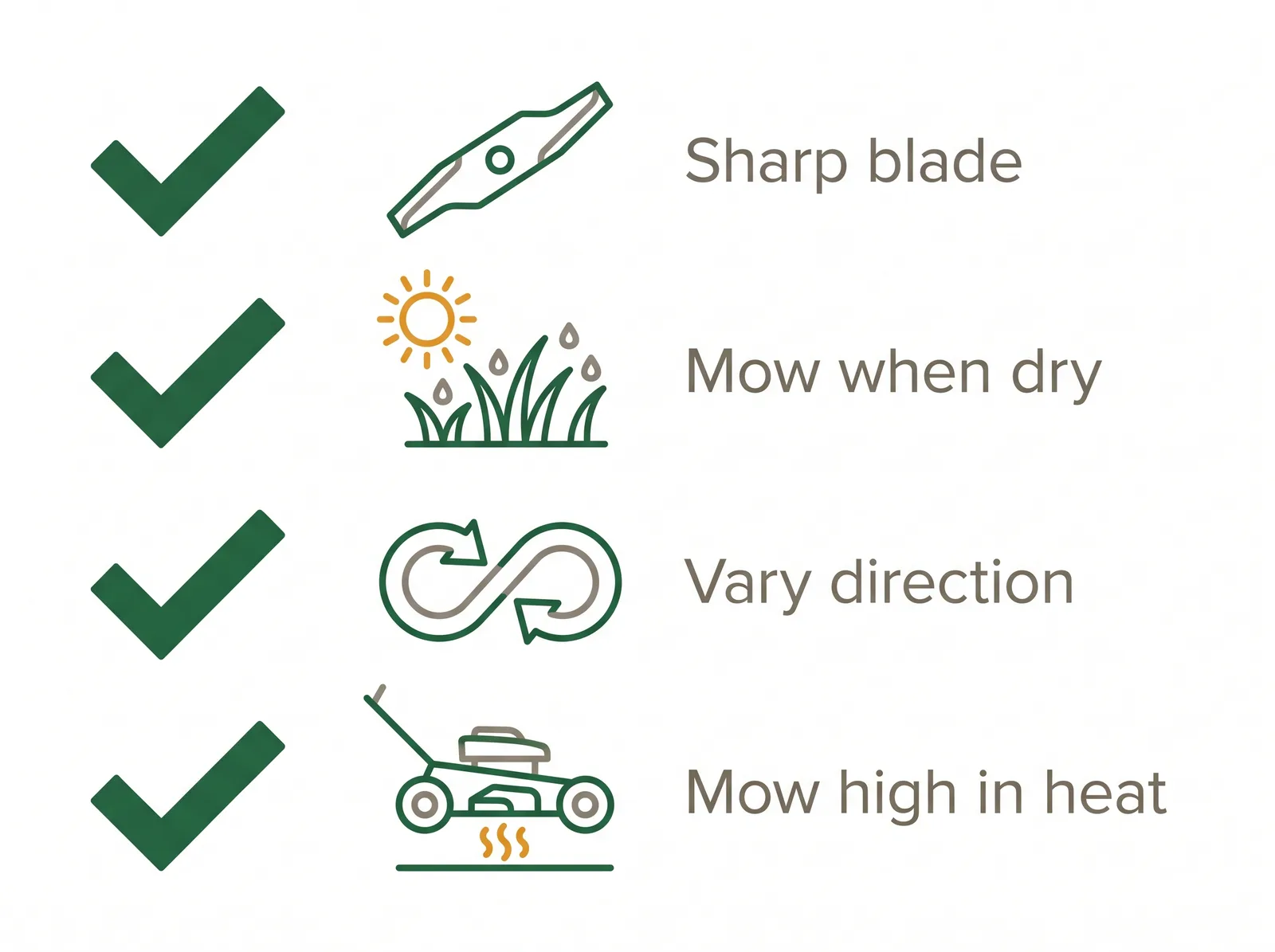
- Keep the blade sharp. A dull blade tears grass instead of cutting it, leaving frayed brown tips that lose water and invite disease.
- Mow when the grass is dry. Wet grass tears, clumps and spreads disease, and it compacts the soil underfoot.
- Vary the direction each mow so the grass does not lean and rut the same way every time.
- Raise the deck in summer heat. Leaving the lawn a little taller through a July heat wave shades the soil and protects the roots.
Mowing frequency follows growth, not the calendar. In the fast spring flush a GTA lawn may need cutting every four to five days to stay inside the one-third rule; in summer it slows right down. And what you do with the clippings matters too, covered in grasscycling: bag or mulch your clippings.
Higher mowing pairs with deep watering, once a week on clay, covered in the best time to water grass in Toronto. If the lawn stays thin even when you mow high, the soil underneath may be the problem, worth checking against compacted soil signs and fixes. You can also compare vetted mowing crews on the Toronto lawn care cost page or in your area, such as lawn care in North York.
Prefer to hand off the mowing to someone who cuts it right? Request a quote and compare up to three vetted local lawn-care pros side by side. Your contact details only go to the one you pick.