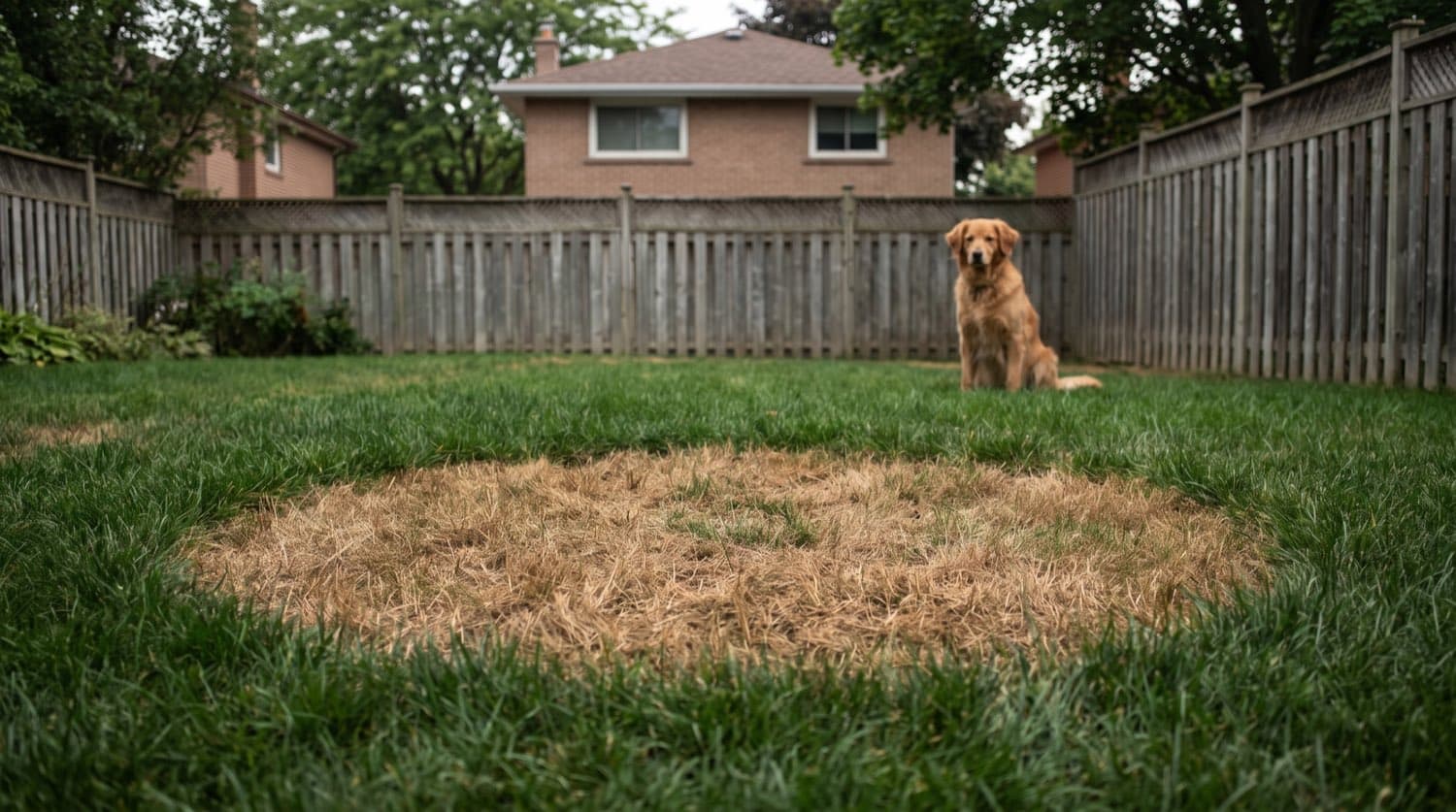
Answer First: Dog urine burns grass with a concentrated dose of nitrogen and salts, not acid, which is why a spot dies in the middle and turns lush green at the edges. Prevent it by rinsing the spot with water right after your dog goes, encouraging more drinking, and training the dog to one designated area. Repair a dead spot by raking it out, adding a little compost, reseeding, and keeping it moist; the green ring recovers on its own.
The brown circle with a bright green halo is one of the most recognizable marks on a lawn. Understanding what actually causes it, and what does not, is the difference between a fix that works and a shelf of products that do not.
Why does dog urine kill grass?
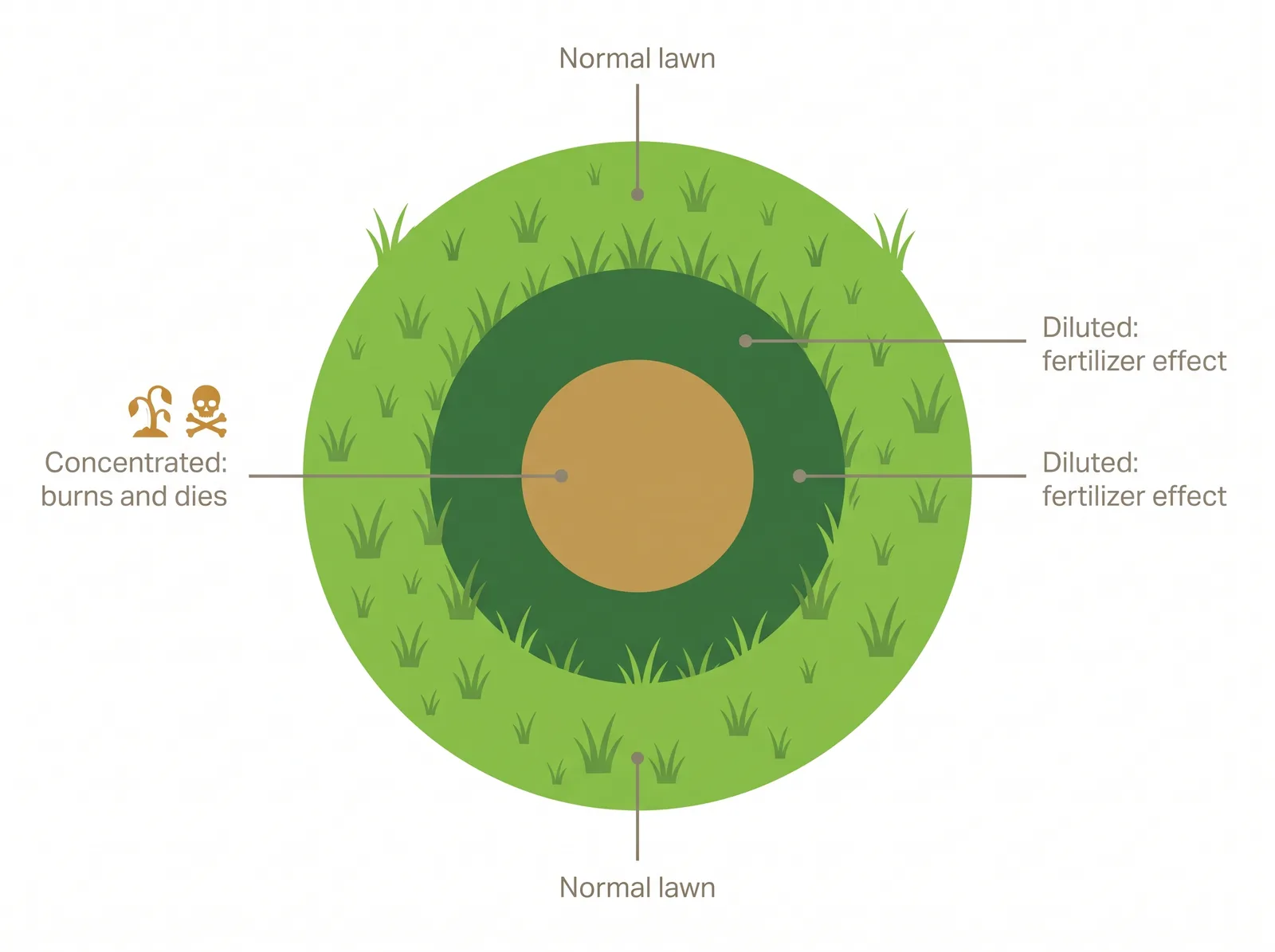
Concentrated nitrogen and salts, delivered to one small spot. When a dog empties its bladder in a single place, the nitrogen load per square inch runs several times higher than a normal fertilizer application, and the salts draw water out of the grass, burning it (Kansas State University Turfgrass).
This matters because the popular explanations are wrong. It is not that dog urine is too acidic, and dietary pH "supplements" mostly work by making the dog drink more, which dilutes the urine, not by neutralizing anything. The damage is a fertilizer burn, and it is worst during hot, dry Toronto stretches when the soil is already stressed and cannot buffer the dose.
Quotable: Dog urine damage is a nitrogen-and-salt burn, not an acid problem. The dose in one squat can be several times a normal fertilizer rate, which is why the centre of the spot dies.
Why is the dead spot ringed with greener grass?
Because the centre and the edge get very different doses. The middle of the spot takes the full, concentrated hit and dies, sometimes within 24 hours. The outer ring gets urine diluted by soil moisture, and at that lower concentration the nitrogen acts as a fertilizer instead of a poison, producing the dark-green halo (Kansas State University Turfgrass).
That ring is also a clue about your lawn. The contrast is sharpest on turf that is low on nitrogen, because the fertilized edge stands out more against a hungry lawn. A well-fed lawn shows a subtler ring.
How do you prevent dog urine spots?
Water is the best prevention there is. Rinsing the spot right after your dog urinates dilutes the nitrogen and salts before they can burn the grass, and it is free.
- Rinse the spot. Keep a watering can by the door and soak the area soon after your dog goes. This is the single most effective step (Kansas State University Turfgrass).
- Encourage drinking. A well-hydrated dog produces more dilute urine, which burns less. Most "lawn-safe" supplements work simply by making the dog drink more.
- Designate a spot. Train the dog to use one low-visibility gravel or mulch area so the damage is contained where it does not show.
- Keep the lawn vigorous. Proper mowing height and deep, infrequent watering help the turf tolerate the dose (University of Maryland Extension).
Fertilizer burn — scorching of grass caused by too much nitrogen and salt in one place, whether from spilled lawn fertilizer or a concentrated dose of dog urine, which draws moisture out of the plant and kills it.
From the data: Of the 249 lawn-care companies YardQuote tracks across the GTA, 88% of rated companies hold 4.5 stars or higher (YardQuote tracking, July 2026). Overseeding worn and burned spots is routine autumn work, so repairing a dog-damaged lawn rarely means gambling on an unknown crew.
How to repair a dog urine spot
For a dead centre, the repair is a small patch job: loosen, feed, seed, water. The green ring needs nothing and will blend back in as the new grass fills.
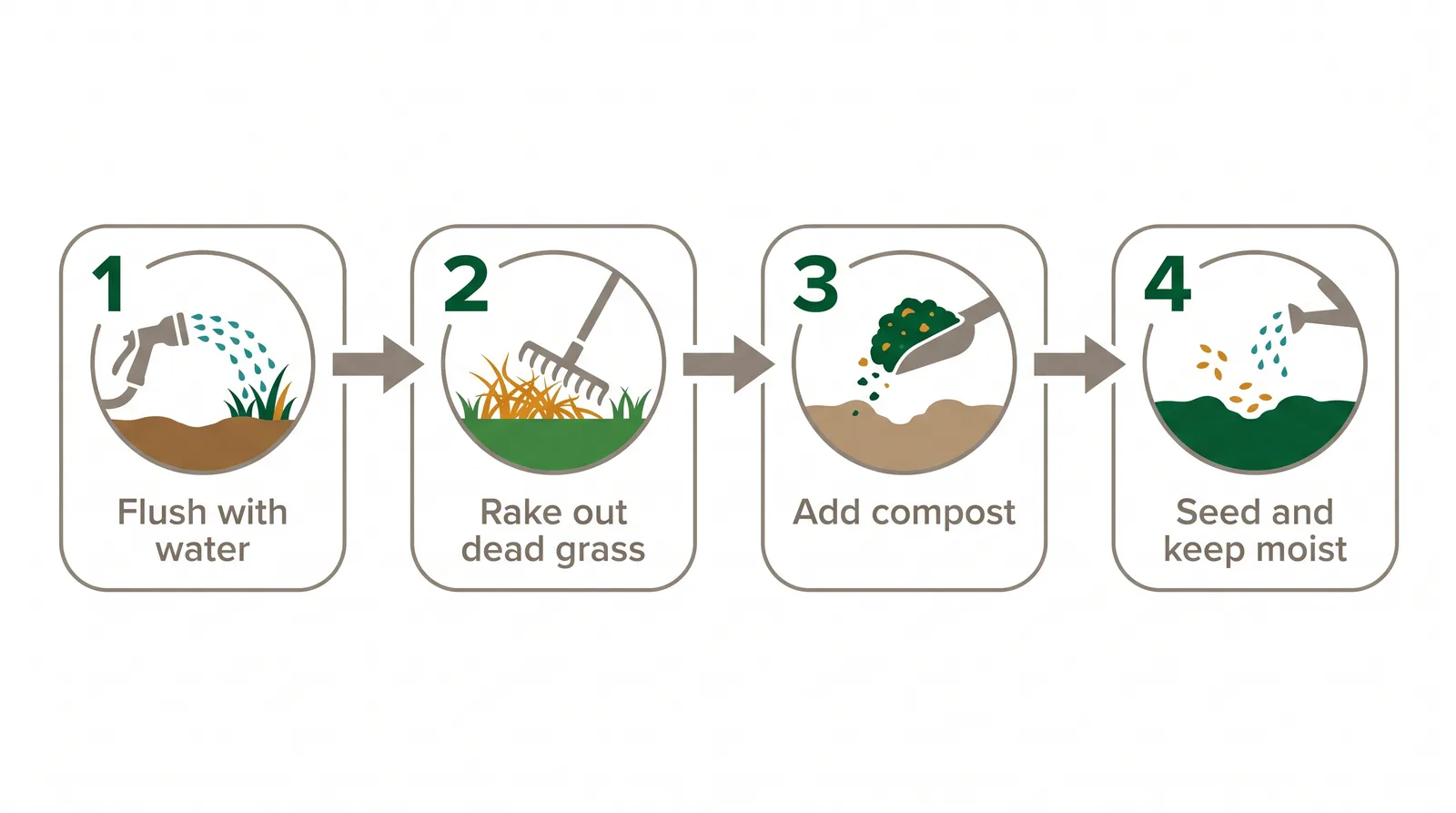
- Flush the spot. Soak the dead area with water to wash out lingering salts before you replant.
- Rake and loosen. Pull out the dead grass and scratch up the top of the soil so seed can make contact.
- Add a little compost. A thin layer of compost or topsoil gives the seed a clean bed.
- Seed and keep moist. Spread grass seed, press it in, and water daily until it germinates.
Time the repair for the late-August-to-September window when cool-season grass establishes fastest, and check whether the grass is truly dead before you reseed. If the tugged grass is firm and rooted, the crown may have survived and it can recover with watering alone.
For the fuller picture, our guides to why grass turns yellow and how long burnt grass takes to grow back cover the other causes of brown patches, and how to fix a patchy lawn walks through seed versus sod when the damage spreads. You can compare rated crews on the lawn care cost page, browse lawn care in North York, or price a full reset on the sod installation cost page.
Too many spots to patch by hand? Request a quote and compare up to three vetted local pros side by side. Your contact details only go to the one you pick.