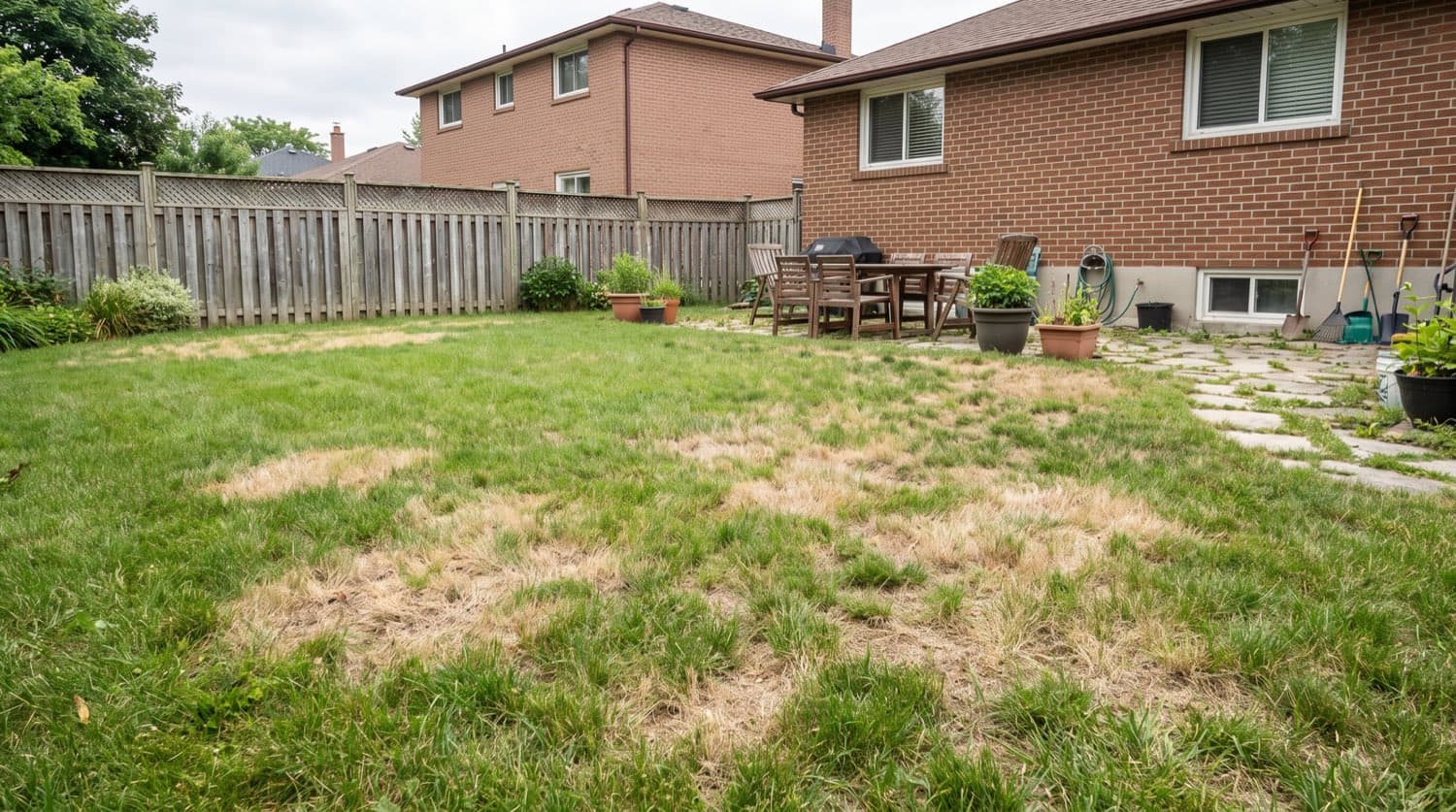
Answer First: Grass turns yellow for a handful of reasons, and the pattern tells you which. All-over yellowing usually means a nitrogen shortage, a watering problem, or normal summer dormancy; yellow patches usually mean dog urine, spilled fertilizer, or grubs; and yellow blades with green veins mean an iron problem tied to soil pH. Read the pattern first, fix that specific cause, and never pour extra fertilizer on stressed grass, which only burns it.
Yellow grass is a message, not a verdict. The colour, the pattern, and the timing together usually point straight at the cause, and most causes are fixable without tearing up the lawn.
Whole-lawn yellow or yellow patches? Start there
The first question is not what caused it, but where it is. Uniform yellowing across the whole lawn and scattered yellow spots point to completely different problems, so this one observation cuts the list in half (University of Maryland Extension).
All-over, even yellowing is a whole-lawn issue: a nitrogen shortage, over- or under-watering, or seasonal dormancy. Yellow spots and patches are local damage: dog urine, a fertilizer spill, grubs chewing roots, or a chemical splash. Before treating anything, stand back and decide which one you are looking at.
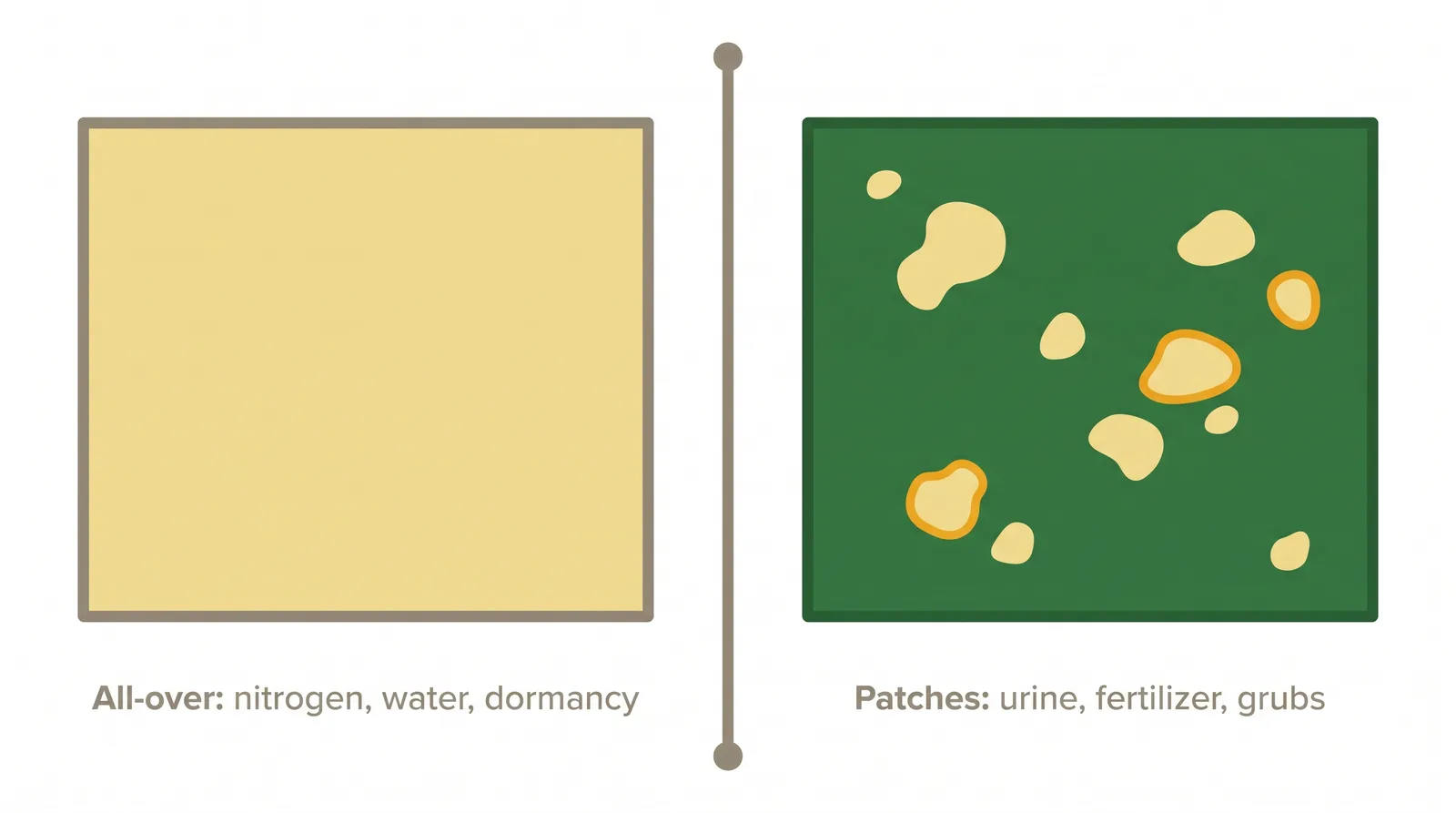
Quotable: All-over yellowing signals a whole-lawn cause like nitrogen shortage or dormancy; defined yellow patches signal local damage like dog urine or spilled fertilizer. The pattern is half the diagnosis.
The 8 common causes, and how to tell them apart
Most yellow Toronto lawns trace back to one of these eight. Each has a look that separates it from the others.
- Nitrogen deficiency. A slow, even fade to pale yellow-green across the whole lawn as the grass runs low on the nutrient that drives green growth. Fix with a balanced feeding.
- Iron chlorosis. Blades yellow while the veins stay green, most often on new growth. It is usually a soil-pH problem locking up iron, not a fertilizer shortage, so a soil test comes before any product.
- Underwatering and dormancy. Uniform tan-brown in hot, dry stretches. A cool-season lawn going off-colour in a Toronto July is usually alive and dormant, not dead (University of Minnesota Extension).
- Overwatering. Saturated soil starves roots of oxygen and yellows the lawn while the ground stays soggy. Light, frequent watering makes it worse by growing shallow roots.
- Dog urine. Straw-yellow spots, often ringed by darker green, from a concentrated dose of nitrogen and salts. Common along fence lines and favourite corners.
- Fertilizer burn. Yellow-to-brown streaks or patches that follow spreader lines or a spill, where concentrated salts scorched the grass. It looks like drought stress in defined shapes.
- Grubs. Yellowing patches that feel spongy and lift like a loose carpet, because grubs have eaten the roots underneath. Peel a corner back to check.
- Scalping. Pale, browning strips where the mower cut too low, common on uneven ground and after a first hard spring cut.
Iron chlorosis — yellowing of the leaf while the veins stay green, caused by grass being unable to take up iron (usually because soil pH is too high), rather than by a true lack of iron in the soil.
Why both too little and too much water turn grass yellow
Water is the cause people most often get backwards. A yellow lawn makes homeowners reach for the hose, which is exactly wrong half the time.
Underwatering yellows a lawn by pushing it into dormancy: the blades brown to conserve the crown and roots, which stay alive. Overwatering yellows it by drowning the roots, saturated soil has no oxygen, so roots cannot function or take up nutrients, and disease moves in. The tell is the soil. Dry, hard ground under yellow grass means water more deeply and less often; soggy ground under yellow grass means water less.
From the data: Of the 249 lawn-care companies YardQuote tracks in the GTA, 88% of rated companies hold 4.5 stars or higher (YardQuote tracking, July 2026). A well-reviewed crew can run a quick soil test and read the pattern for you, which beats guessing and dumping fertilizer on grass that needs water, or the reverse.
Is the yellow grass dead, or will it recover?
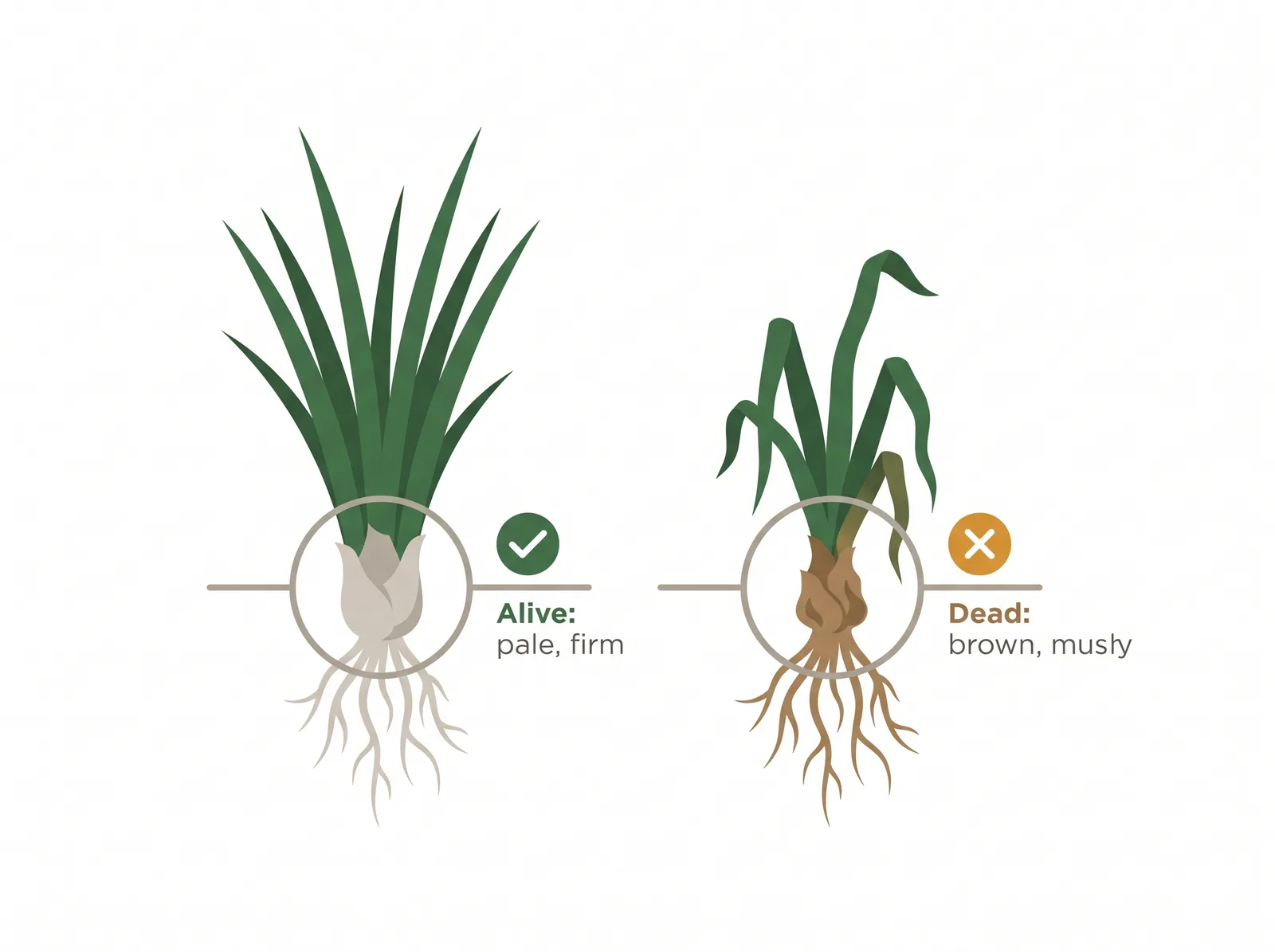
Most yellow grass recovers once you fix the cause, but the crown check settles it. Yellowing from dormancy, low nitrogen, or diluted urine is temporary. Grass that is truly dead needs reseeding.
To tell them apart, pull a small tuft and look at the crown, the pale base where blades meet roots. Firm and white or pale green means the plant is alive and will green up. Brown, mushy, or shrivelled, and pulling out with no resistance, means it is dead (Penn State Extension). For dead patches, the repair is seed or sod, on the same late-summer timing that governs any Toronto lawn fix.
How to green it back up without making it worse
Match the fix to the cause, and resist the urge to over-fertilize. Piling nitrogen onto stressed or dormant grass is the fastest way to burn it and deepen the yellow.
- Nitrogen deficiency: a balanced feeding restores colour within a couple of weeks of active growth.
- Iron chlorosis: correct soil pH based on a soil test; an iron treatment is a short-term green-up, not the real fix.
- Watering problems: water deeply and infrequently, and let soggy ground dry out.
- Dog urine and fertilizer burn: flush the spot with water; reseed dead centres in fall.
- Dormancy: wait for cooler, wetter weather; a dormant lawn does not need rescuing.
For the recurring care that keeps colour even, see the lawn care cost page and browse rated crews like lawn care in Etobicoke. If the yellow spots are actually bare, our guide to fixing a patchy lawn covers seed versus sod, and why grass gets burnt and how long it takes to recover goes deeper on heat and scorch damage.
Want a pro to diagnose the yellow before you spend on the wrong fix? Request a quote and compare up to three vetted local pros side by side. Your contact details only go to the one you pick.