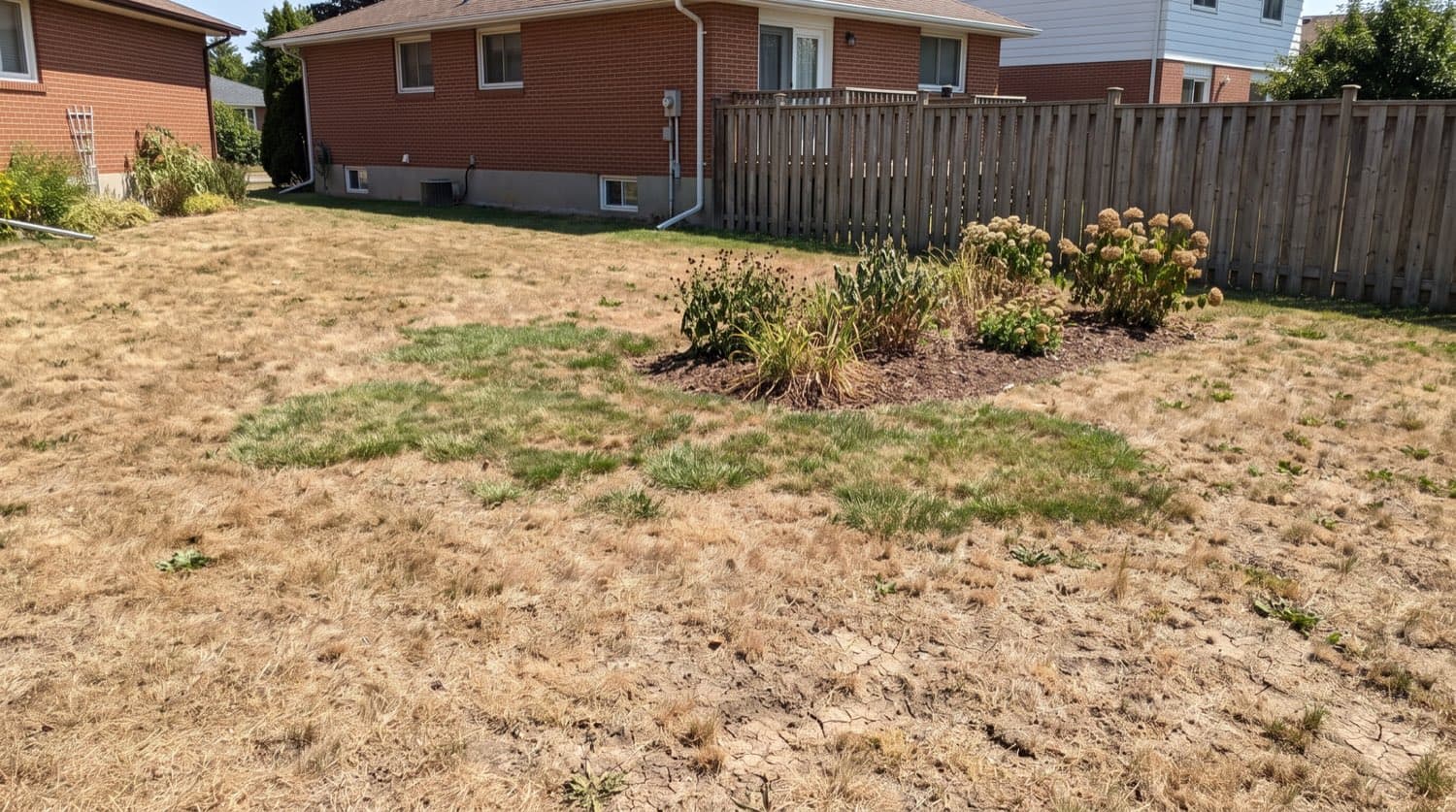
Answer First: Burnt grass grows back on a timeline set by the cause. A cool-season Toronto lawn browned by summer heat is usually dormant, not dead, and greens up within a week or two once regular water and cooler weather return; Kentucky bluegrass can survive roughly two months of drought dormancy. Grass whose crown is still alive recovers in a couple of weeks to a month depending on how badly it was scorched, but grass with a dead crown never comes back and must be reseeded.
A brown lawn in a Toronto July looks alarming and usually is not. Most "burnt" grass is alive and waiting out the heat. The trick is knowing when it is dormant, when it is genuinely dead, and when to just leave it alone.
Is your grass dormant or dead?
Dormant grass is brown but alive and will recover; dead grass will not. The single test that settles it is the crown, the pale base where the blades meet the roots.
Pull up a small tuft of the brown grass. If it resists and the crown is firm and white or pale green, the lawn is dormant, its top growth has browned to protect the living crown and roots (University of Minnesota Extension). If the tuft lifts out with almost no resistance and the crown is brown, mushy, or shrivelled, that patch is dead. This "tug test" is the fastest way to know whether you are waiting or reseeding.
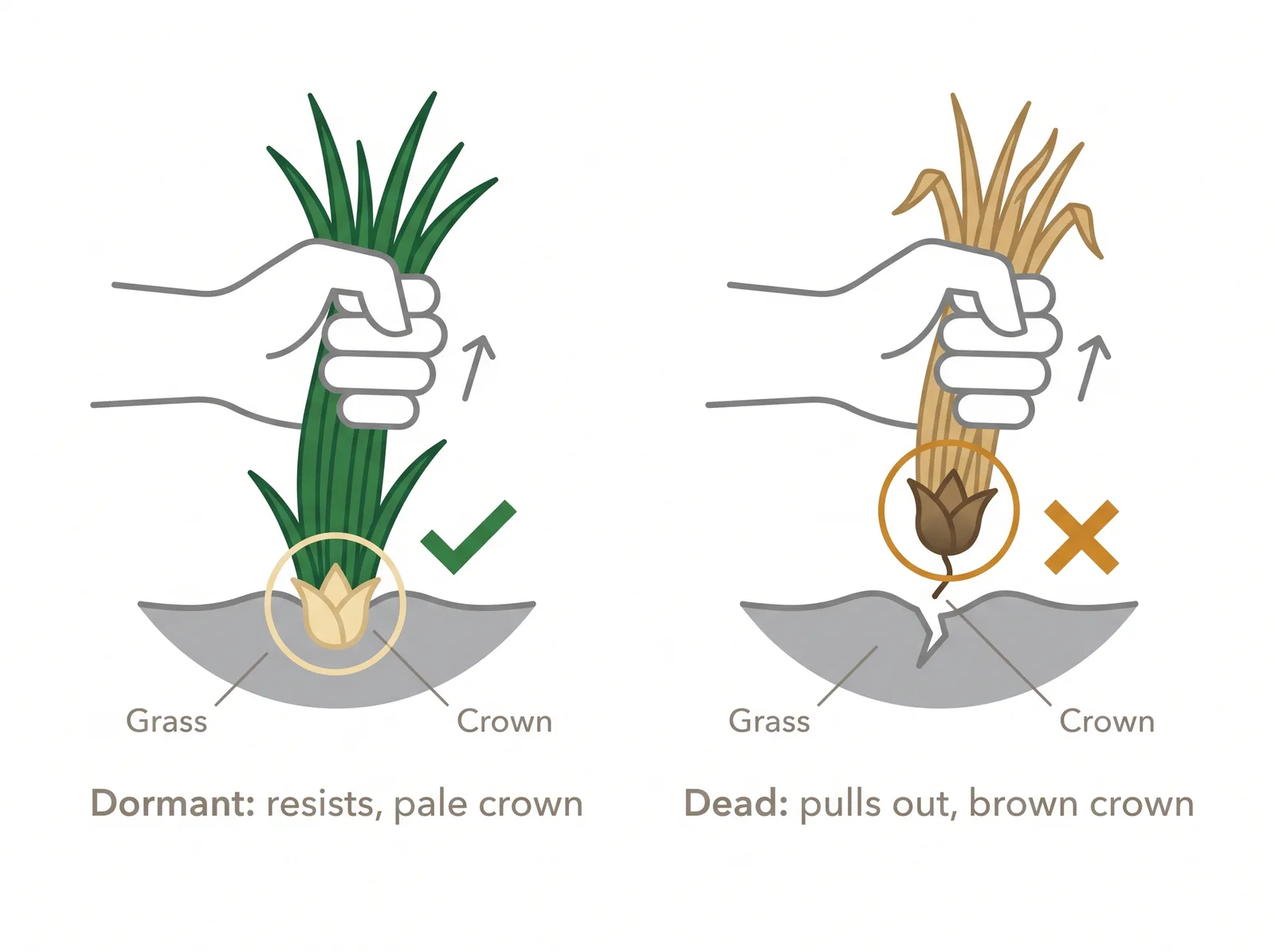
Quotable: Brown grass is not automatically dead. Pull a tuft: a firm, pale crown that resists means the lawn is dormant and will green up; a brown, mushy crown that pulls out easily means it is dead and needs reseeding.
How long does burnt grass take to grow back?
Anywhere from about a week to a full month if the crown survived, and never if it did not. The timeline tracks the cause and the severity, not the calendar.
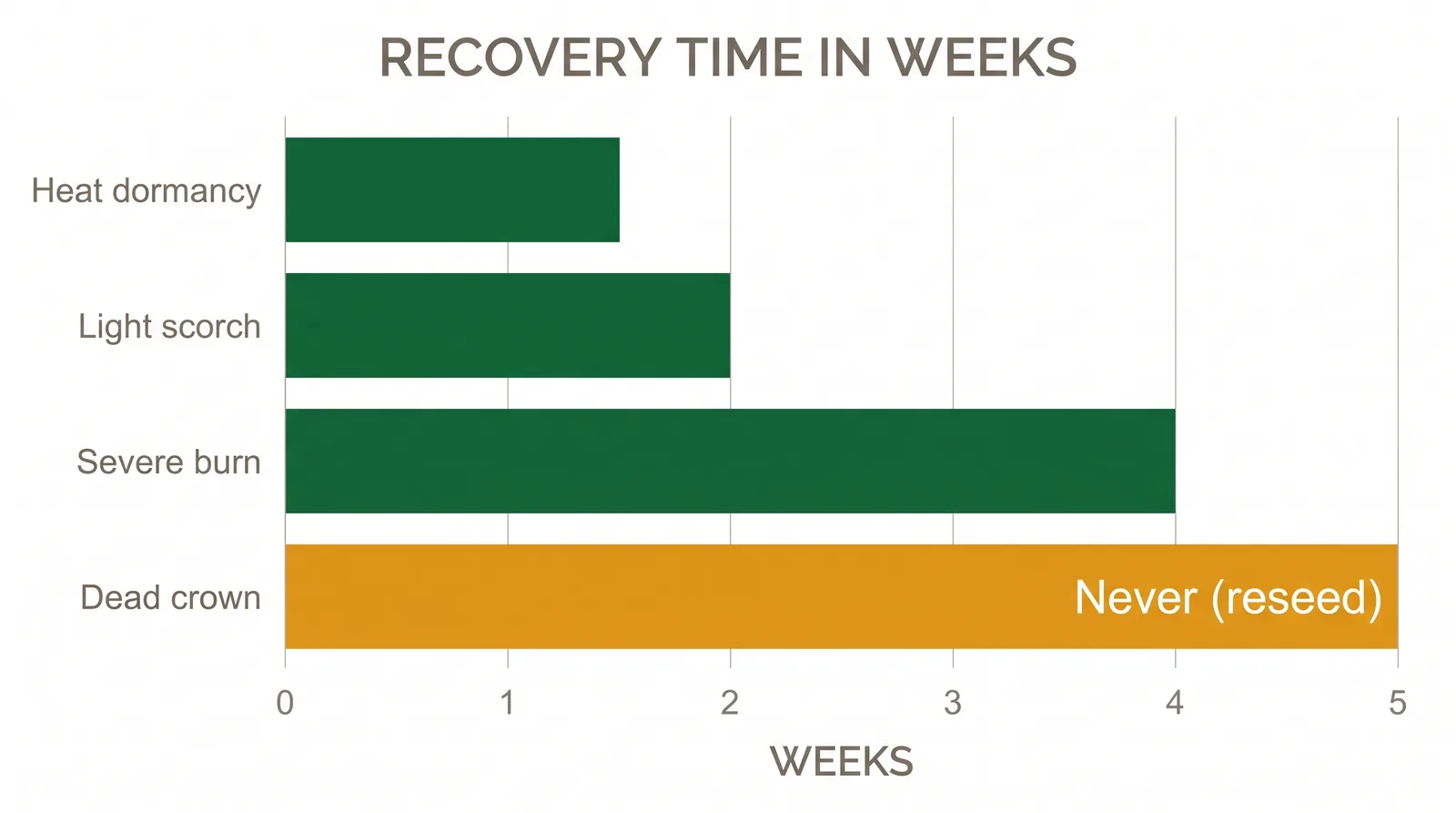
- Heat dormancy: greens up within roughly a week or two once regular water returns and the weather cools.
- Light fertilizer or urine scorch (crown alive): recovers over about two weeks with steady watering to flush the salts.
- Severe burn (crown alive): can take up to a month of careful watering to fully fill back in.
- Dead crown: does not recover; the only fix is reseeding or sodding the patch.
Cool-season grasses are built for this. Kentucky bluegrass can survive close to two months of drought dormancy and still recover, so patience usually beats panic in a Toronto summer (University of Minnesota Extension).
What burns a lawn in the first place?
Four causes account for most burnt Toronto grass, and telling them apart points you to the right fix.
- Heat and drought. Uniform tan-brown across sunny, exposed areas in a dry spell. This is dormancy, and it is normal.
- Fertilizer burn. Yellow-to-brown streaks or patches that follow spreader lines or a spill, where concentrated salts scorched the grass (University of Maryland Extension).
- Dog urine. Straw-brown spots, often ringed by darker green, from a concentrated nitrogen-and-salt dose. Common along fences and favourite corners.
- Chemical or fuel spills. Sharp-edged dead spots where gasoline, a strong herbicide, or another chemical hit the grass.
Dormancy — a survival state where grass stops top growth and browns to protect its living crown and roots during heat or drought, then resumes green growth when favourable conditions return.
From the data: Of the 249 lawn-care companies YardQuote tracks across the GTA, 220 carry three or more Google reviews at an average of 4.75 stars (YardQuote tracking, July 2026). Summer recovery and fall reseeding are routine work for a well-reviewed crew, so a burnt lawn is rarely a reason to gamble on the cheapest unknown.
How to help a dormant or burnt lawn recover
Water is the recovery tool; fertilizer is the recovery trap. The instinct to feed a struggling lawn is exactly what pushes it further over the edge.
- Water deeply, not lightly. For a dormant lawn you want to keep alive through a long dry spell, apply about a quarter to a half inch every two to four weeks to protect the crown (University of Minnesota Extension). When you decide to bring it back, water deeply and consistently.
- Do not fertilize stressed grass. Feeding dormant or burnt turf scorches it further. Wait until the lawn is actively growing again, then use a slow-release feed.
- Pick one strategy. Repeatedly greening a dormant lawn and letting it brown again drains its reserves. Either keep it watered or let it stay dormant; do not bounce between the two.
- Flush the spot for burns. For fertilizer or urine scorch, soak the area to dilute the salts, then reseed any dead centre in fall.
- Reseed dead patches on the right timing. Late August into September is the strongest window for a cool-season Toronto lawn, so save dead-patch repairs for early fall.
For dead patches, our guide to fixing a patchy lawn covers seed versus sod, and if the lawn is yellow rather than brown, why grass turns yellow sorts the colours out. For the recurring watering and feeding that prevent burn, see the lawn care cost page and browse rated crews like lawn care in North York, or price a full reset on the sod installation cost page.
Not sure if your burnt lawn will bounce back or needs replacing? Request a quote and compare up to three vetted local pros side by side. Your contact details only go to the one you pick.