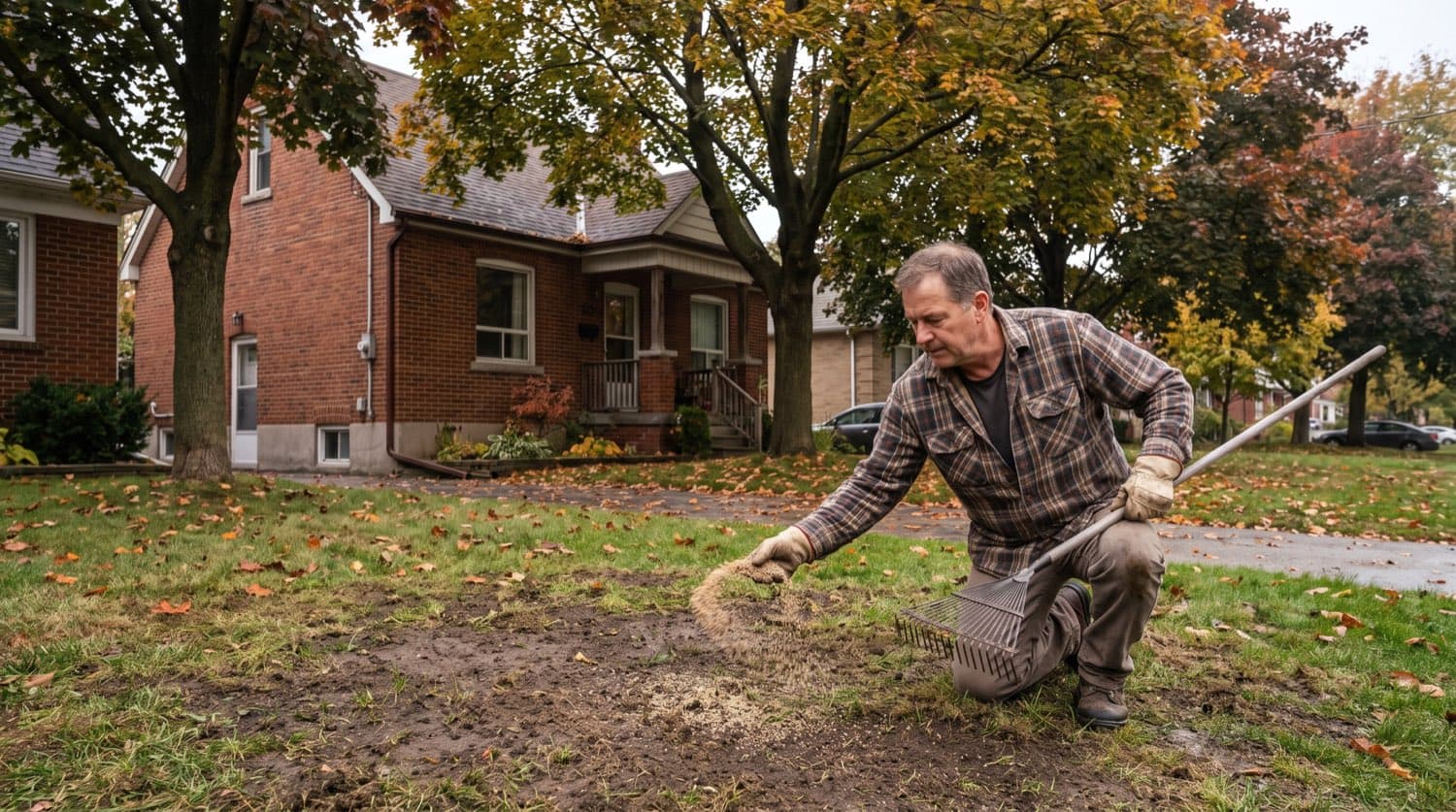
Answer First: Fix a patchy lawn by matching the repair to the damage: if more than roughly half the lawn is still healthy grass, overseed the thin and bare spots; if most of it is dead, weedy, or has failed repeatedly, strip it and resod. In Toronto, do either in the late-August-to-September window, when cool-season grass establishes fastest, and fix the underlying cause, compaction, shade, or drainage, before you spread a single seed.
A patchy lawn is a symptom, not the disease. Before you decide between a bag of seed and a pallet of sod, the real question is why the grass thinned out, and how much of it is worth saving.
Should you overseed or resod a patchy lawn?
Overseed if more than about half the lawn is still healthy and the damage is scattered thin spots. Resod if bare ground, weeds, or dead grass make up most of the yard, or you have reseeded the same failing patches for years with nothing to show for it.
That split comes down to what each method actually does. Overseeding drops new seed into an existing lawn to thicken it; it is cheap, low-effort, and keeps the lawn you have. Resodding removes everything and lays farm-grown turf on prepared soil; it costs more but resets a lawn that is too far gone to rescue.
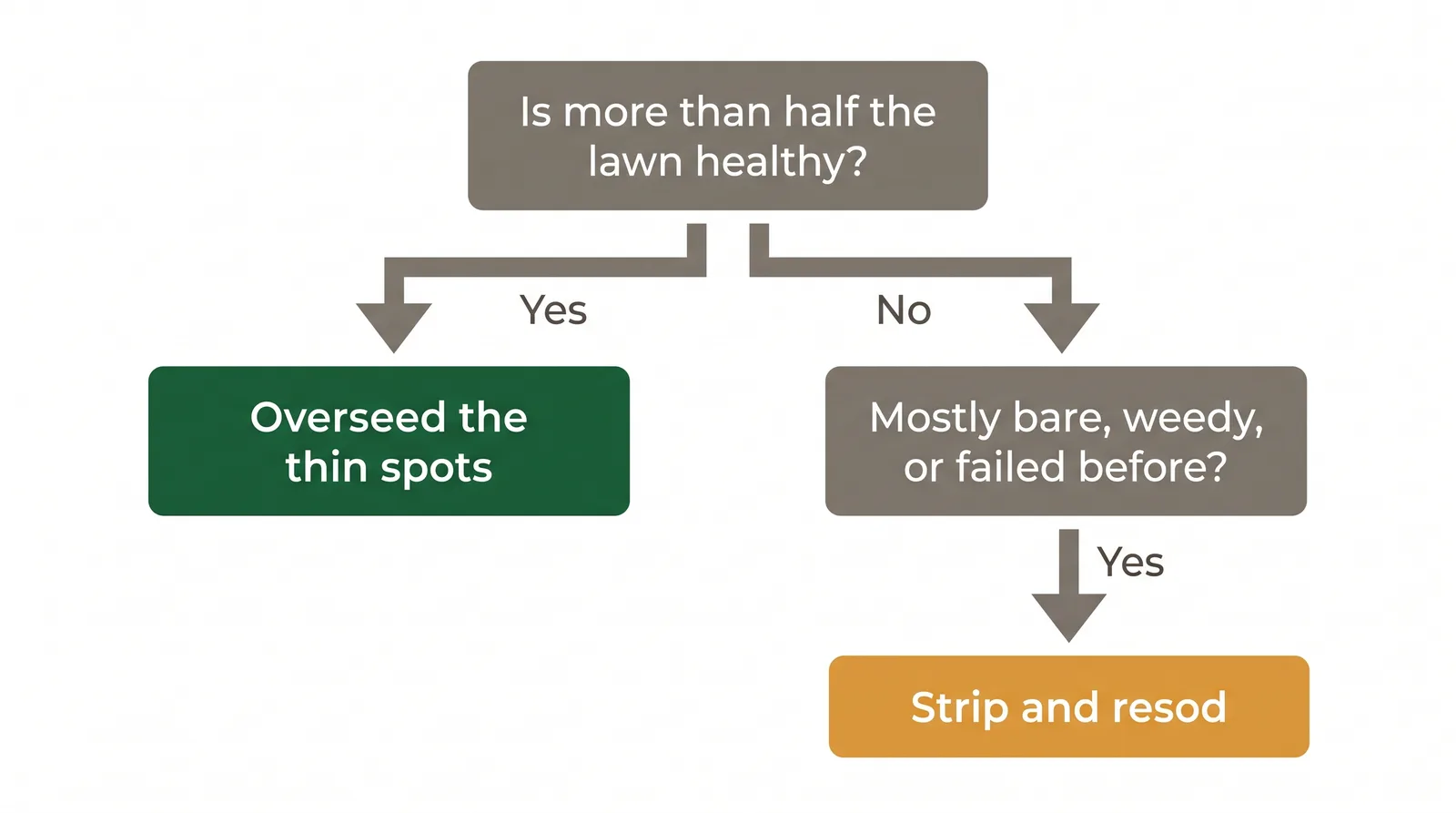
Quotable: The rule of thumb for a patchy lawn: if more than half is still healthy grass, overseed the thin spots; if bare or weedy ground wins, resod for a clean reset.
When is the best time to reseed a lawn in Toronto?
Late August into September. This is the single most important factor in whether a repair takes, and the one most homeowners get wrong by seeding in spring or, worse, midsummer.
Toronto lawns are cool-season grasses, mainly Kentucky bluegrass, fescues, and perennial ryegrass, and they establish best when the soil is still warm from summer but the air has started to cool. Early fall gives young seedlings warm soil for fast germination, gentler rain, and far less weed competition than spring, because crabgrass and other summer weeds are fading (Michigan State University Extension). Spring, roughly late April into early June, is a workable second choice. Midsummer is the trap: July heat cooks tender seedlings before they root.
From the data: Of the 249 lawn-care companies YardQuote tracks across the GTA, 220 carry three or more Google reviews, averaging 4.75 stars, and 88% of rated companies sit at 4.5 stars or higher (YardQuote tracking, July 2026). Overseeding and topdressing are common autumn services, so a well-reviewed crew booked for early fall is easy to find.
How to repair a bare patch, step by step
Seed needs firm contact with loosened soil to sprout, so a bare patch is prep work, not just scattering seed. Broadcasting seed on hard ground is how you waste a bag of it.
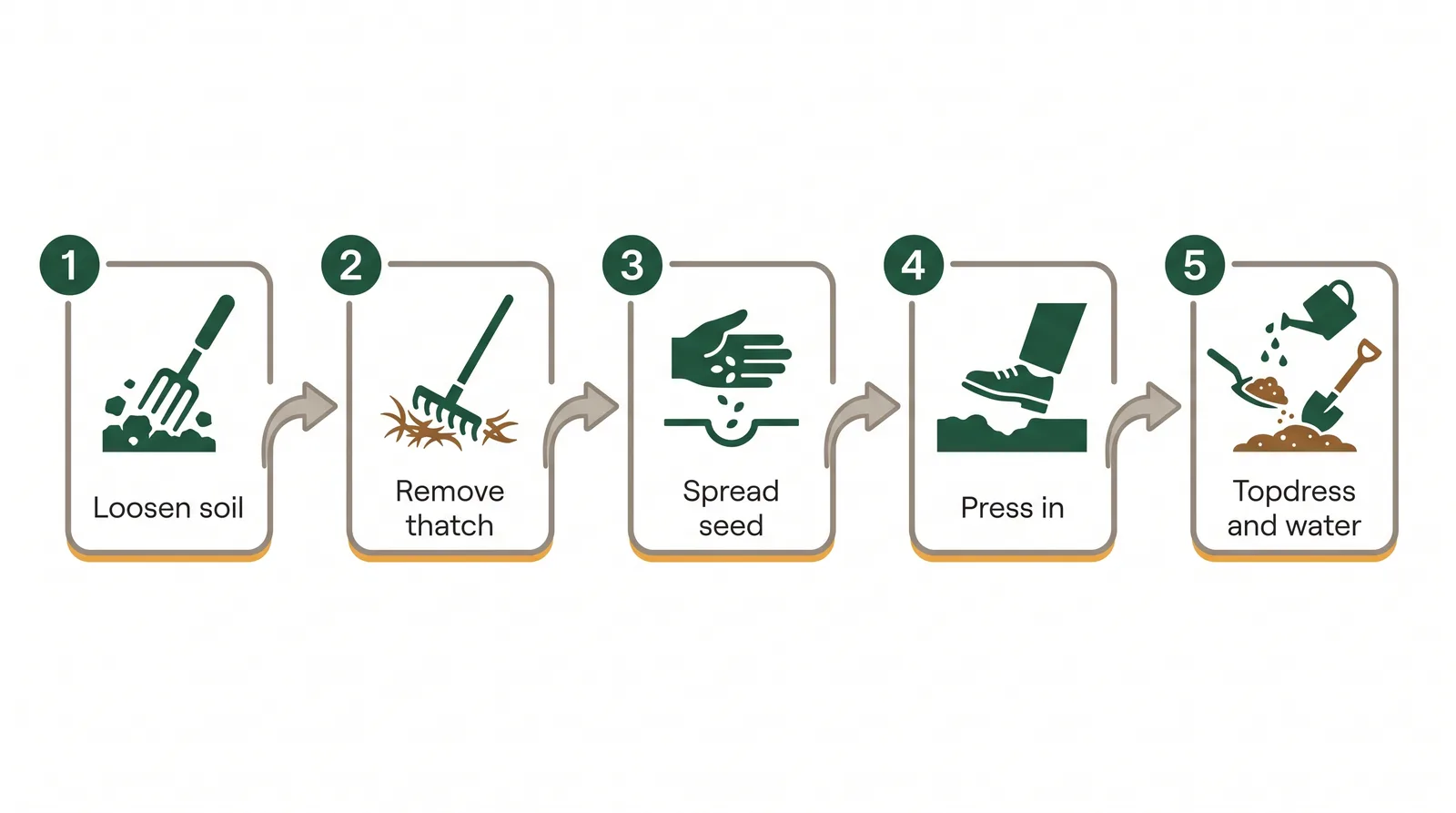
- Clear and loosen. Rake out dead grass and thatch, then scratch up the top half-inch of soil so roots can grip.
- Spread the right seed. Use a mix suited to the spot: a sun-and-shade blend for tree-shaded North York yards, a hard-wearing ryegrass mix for a play area.
- Press for contact. Tamp or roll the seed lightly into the soil. Seed sitting on the surface dries out and dies.
- Topdress thinly. A light layer of compost or seeding soil holds moisture without burying the seed.
- Keep it damp. Water lightly once or twice a day until the seed germinates, then taper off. Consistent moisture during that first two weeks decides the outcome.
Overseeding — spreading new grass seed over an existing lawn to thicken it and fill thin areas, as opposed to reseeding, which strips the old lawn out entirely before planting.
How long until a repair fills in?
Germination is quick; a finished lawn is not. Perennial ryegrass sprouts in about 5 to 7 days, and Kentucky bluegrass takes roughly 14 days to germinate (Penn State Extension). But a seeded patch needs a full growing season to knit into the surrounding lawn, which is why fall seeding that carries into the next spring looks best.
Sod skips that wait. It is a mature lawn the day it is laid, rooting into prepared soil over two to three weeks. That speed, plus its weed resistance while establishing, is what you pay extra for.
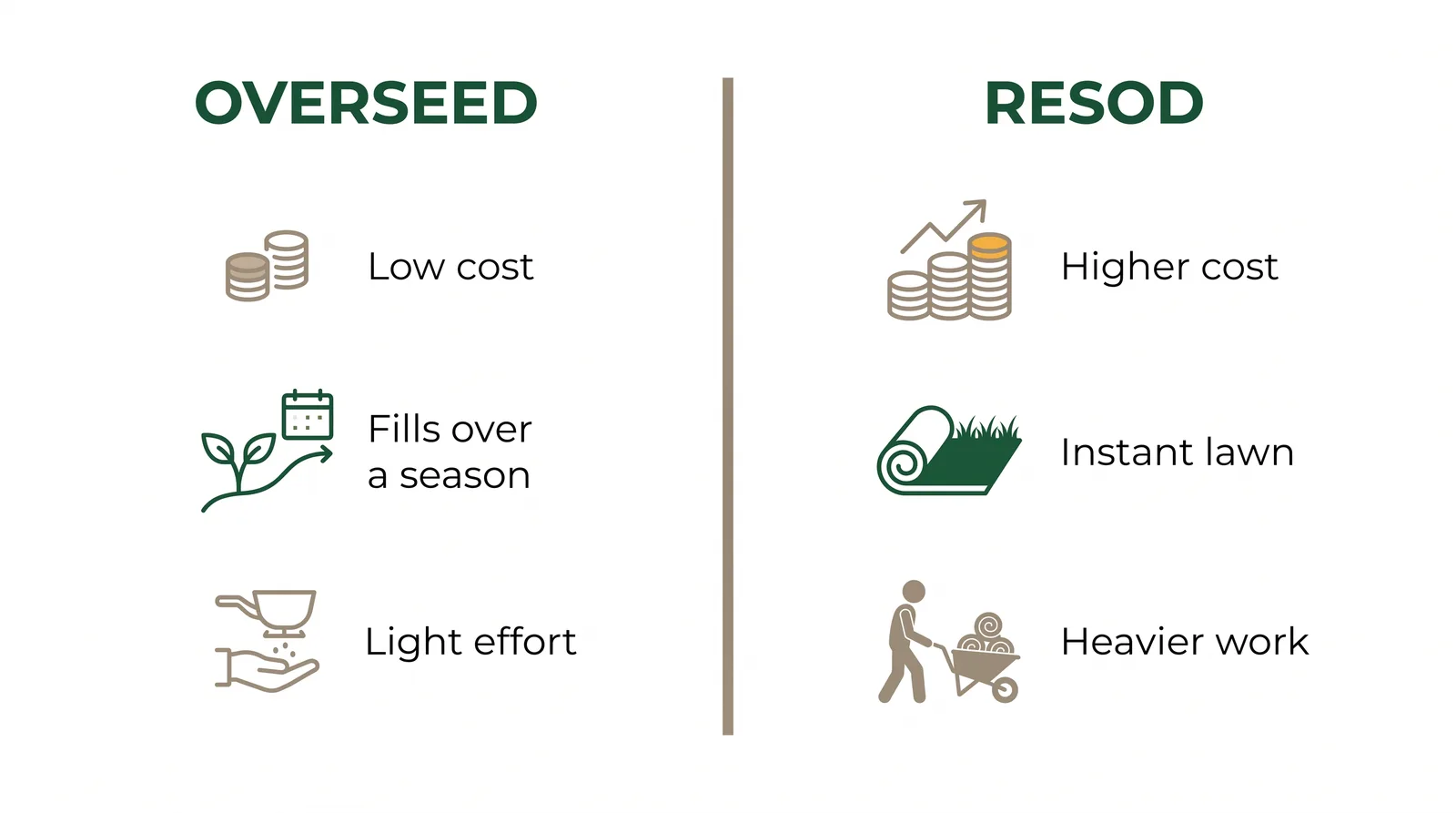
| Factor | Overseed | Resod |
|---|---|---|
| Best when | More than half the lawn is healthy | Mostly bare, weedy, or repeatedly failed |
| Cost | Low (seed) | Higher (farm turf plus labour) |
| Result | Fills in over a season | Usable lawn immediately |
| Weed resistance while establishing | Lower | Higher |
| Effort | Light, DIY-friendly | Heavier, often hired out |
Fix the cause, or repeat the patch
A patch that keeps coming back in the same spot is telling you something. Reseeding over an unfixed problem just grows the same thin lawn a second time.
The usual culprits in Toronto yards are compacted clay soil (common in Scarborough and older east-end lots), deep shade under mature maples, poor drainage in a low corner, dog urine, and worn tracks from foot traffic. Compaction and shade in particular defeat seed no matter how much you spread. Aeration relieves compaction; a shade-tolerant fescue mix helps under trees; and where nothing grows, a path or planting bed beats fighting the same bare spot every year.
For the resod route, see current ranges on the sod installation cost page and our breakdown of sod cost per square foot. If overseeding is your path, the aeration and overseeding cost guide and the lawn care cost page cover the recurring work, and you can browse rated crews like lawn care in Scarborough. If the patches are yellow rather than bare, our guide to why grass turns yellow diagnoses the colour first.
Not sure whether your lawn needs seed or a full resod? Request a quote and compare up to three vetted local pros side by side. Your contact details only go to the one you pick.