Answer First: Yes, salt damages both concrete and interlocking pavers. It scales and pits the surface, and its chloride penetrates the concrete to corrode any steel reinforcement, cracking the slab from inside. Salt also multiplies freeze-thaw damage, roughly ten times the harm of ordinary weathering in testing (peer-reviewed studies). Prevent it by sealing, using sand or a paver-safe de-icer, and never de-icing new concrete in its first winter.
Every winter the same bag of rock salt that keeps your steps safe is quietly eating them. On concrete and pavers, salt is not a neutral convenience, and the damage is cumulative, invisible at first, then obvious by spring.
How does salt damage concrete?
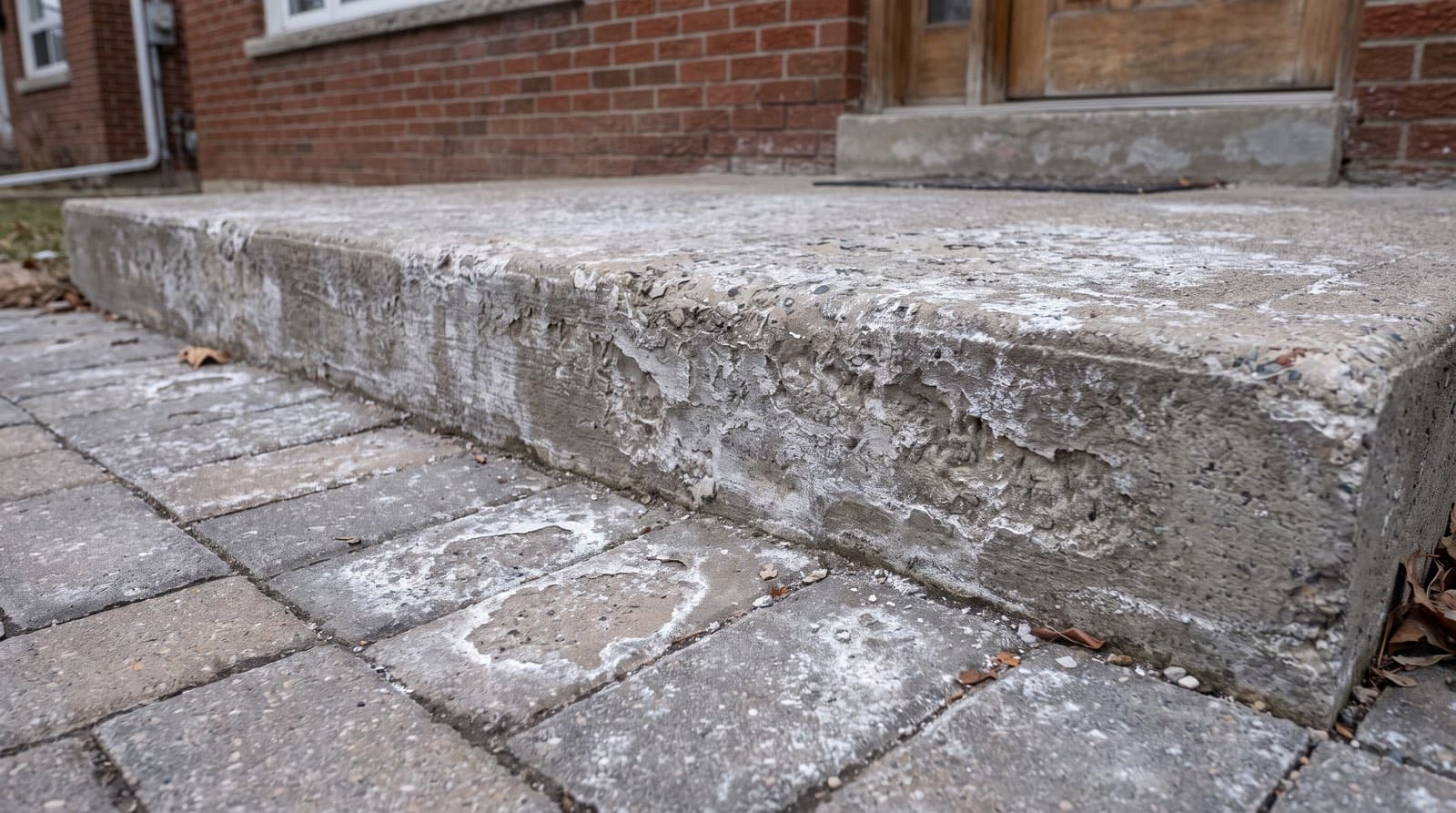
Two ways at once, one on the surface and one deep inside. On the surface, salt causes scaling and spalling: water absorbed into the top layer freezes, expands, and shears thin flakes off, and salt accelerates it sharply by driving more water in and refreezing it. That is the pitted, crumbling surface you see on old steps and slabs.
Deeper, salt is worse. Its chloride ions soak into the concrete and reach any steel reinforcement, where they corrode the rebar. Rusting steel expands and cracks the slab from inside out. Studies of concrete in freezing climates found that salt combined with freeze-thaw did roughly ten times the damage of ordinary weathering and could cut service life by more than half.
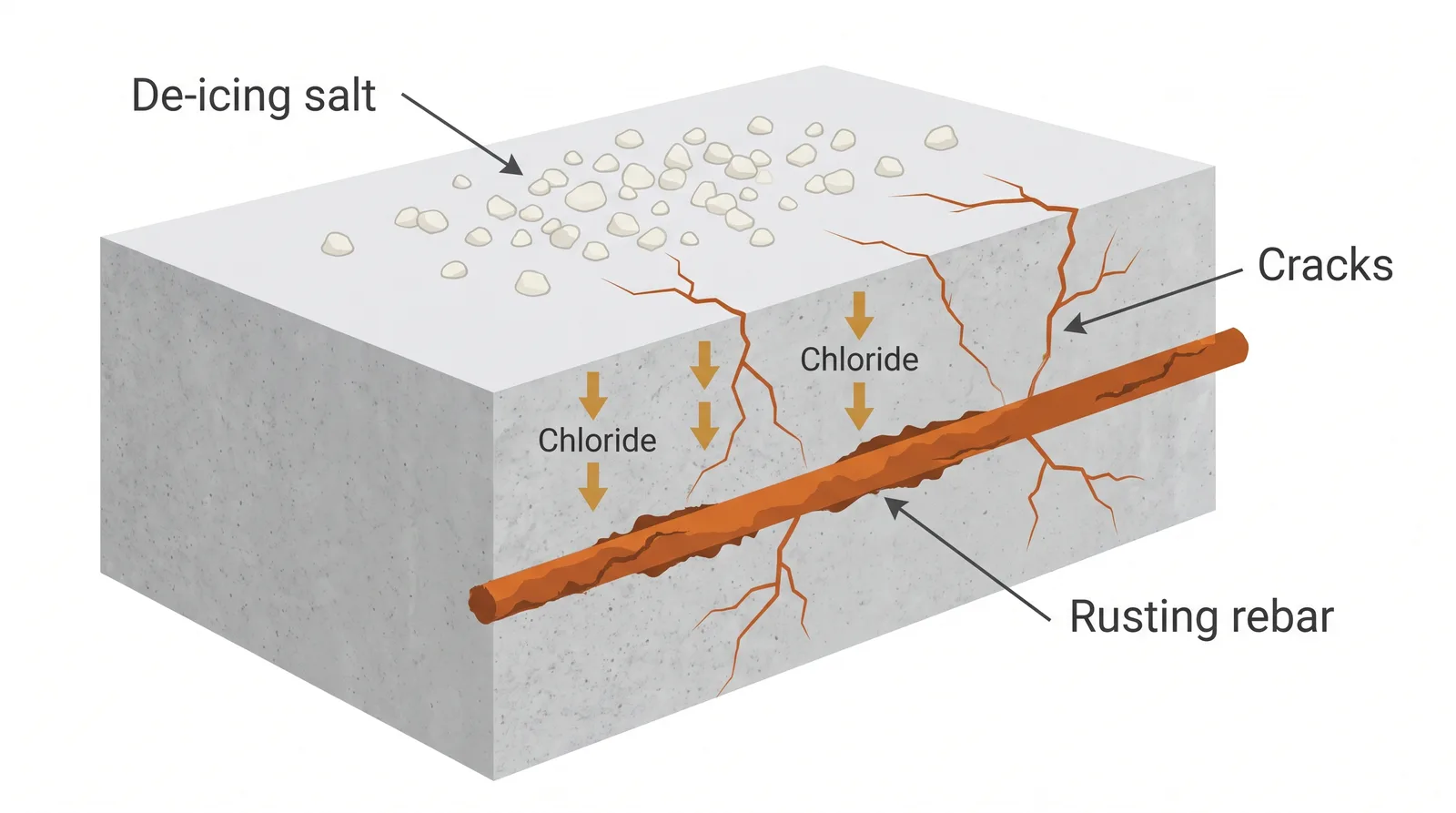
Quotable: Salt damages concrete on two fronts: it scales the surface, and its chloride seeps in to corrode the reinforcing steel, which rusts, swells, and cracks the slab from inside. In testing, salt plus freeze-thaw did about ten times the damage of ordinary weathering (peer-reviewed studies).
Does salt damage interlocking pavers too?
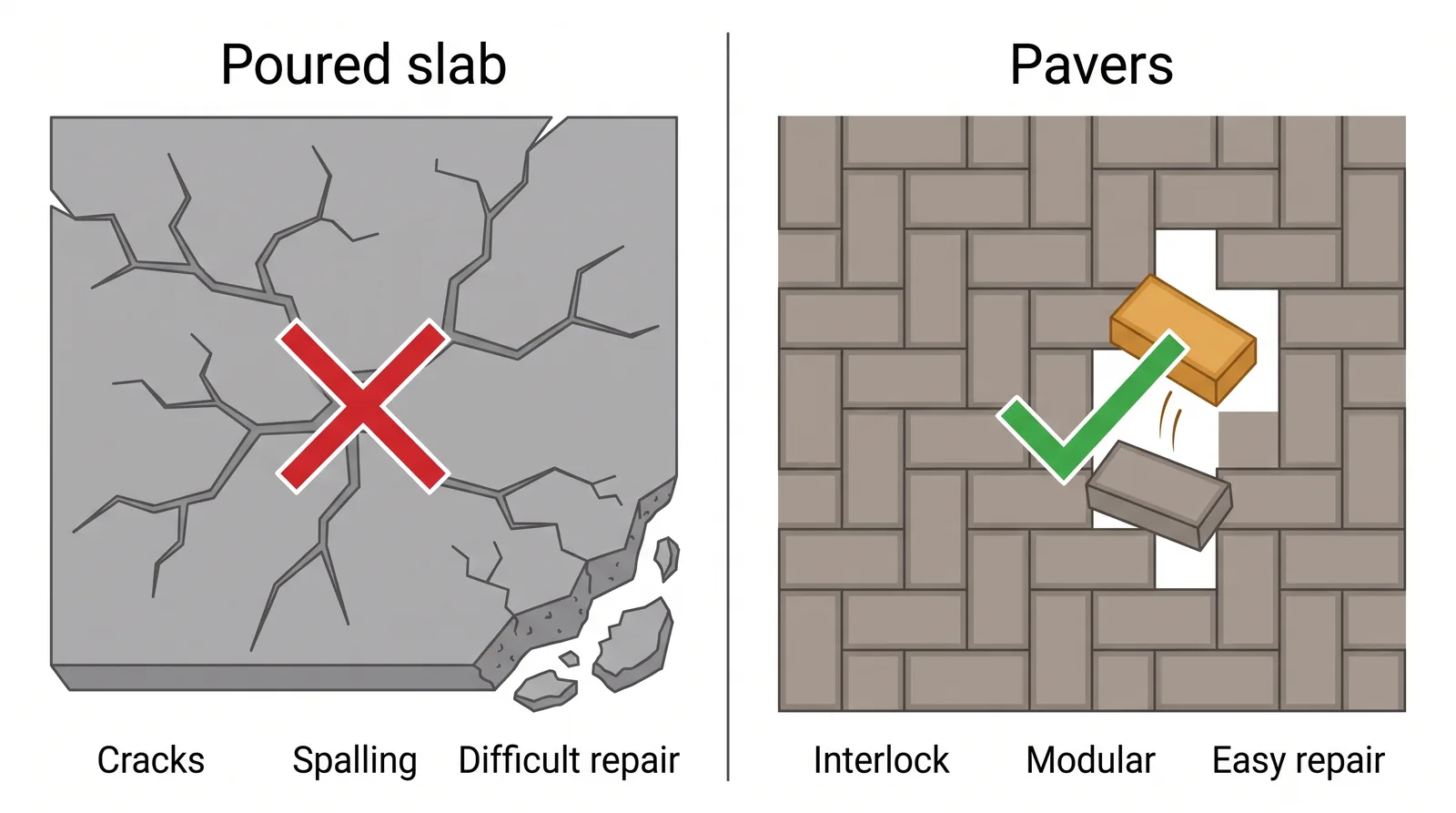
Yes, but they hold up better than a poured slab, and they are easier to fix. Manufactured concrete pavers are denser than cast-in-place concrete, so they scale more slowly under salt. But salt still pits the surface, leaves the chalky white bloom called efflorescence, and washes out the polymeric joint sand that locks the pavers together, which lets water move freely under the surface and heave them.
The advantage of interlock is repairability. A single spalled or stained paver can be lifted and swapped, where a scaled concrete slab usually has to be resurfaced or replaced whole. That difference is worth real money over a driveway's life.
From the data: YardQuote tracks 503 interlocking contractors across the GTA, and joint re-sanding and sealing is one of their most common spring calls after a hard, salty winter. That is the cheap fix; the expensive one is rebuilding a base that heaved because the joints failed first.
How do you prevent and repair salt damage?
Prevention is a short list, and it is far cheaper than the repair. Seal the surface on the manufacturer's schedule, keep the joint sand topped up on pavers, and make sure meltwater drains off rather than pooling. For traction, use sand or a paver-safe de-icer instead of piling on rock salt, and choose the right product for the temperature, which we break down in salt versus ice melter. The one non-negotiable: never de-ice new concrete in its first winter.
When damage is already done, the fix scales with how deep it goes, using the same repair ranges as any winter paver damage:
| Repair | Cost (GTA) |
|---|---|
| Sand & seal (power wash, polymeric sand, sealer) | $1.35 – $2.50 per sq ft |
| Re-level sunken pavers | $8 – $22 per sq ft |
| Full lift & relay (rebuild base) | $15 – $25 per sq ft |
The through-line is that salt damage is mostly preventable, and drainage plus sealing does most of the prevention. This is the same freeze-thaw fight we cover in winter damage to pavers, and it starts with a properly built surface, as in the best time for interlocking work. To price a repair or a new install, see the interlocking cost page or browse interlocking contractors by area.
Salt-scaled steps or pitted pavers after winter? Request a quote and compare up to three vetted local pros side by side. Your contact details only go to the one you pick.