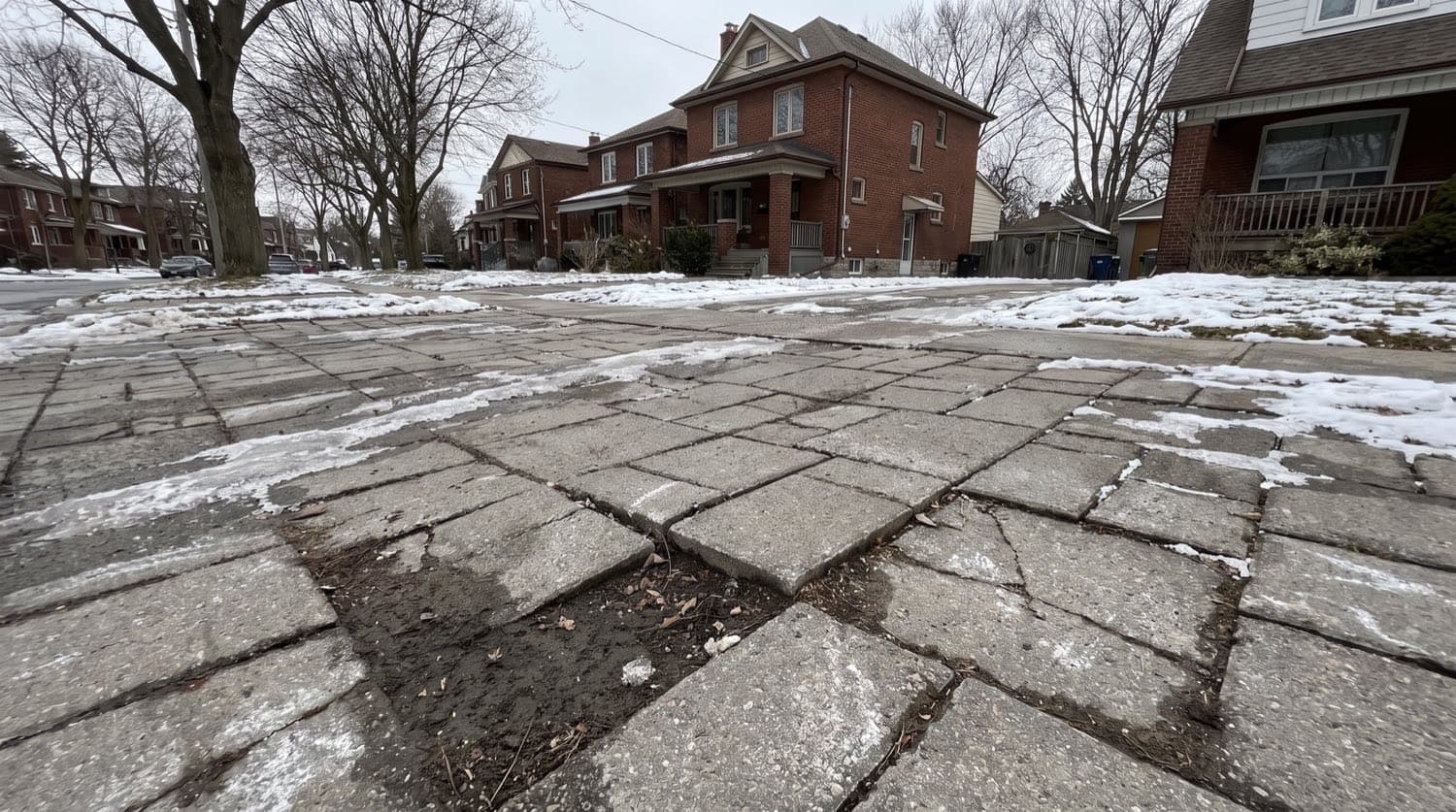
Answer First: Toronto winters damage pavers two ways: frost heave, where water in the base freezes and lifts the pavers, and de-icing salt, which scales and pits the surface. Salt makes freeze-thaw far worse, roughly ten times the damage of ordinary weathering in testing (peer-reviewed studies). Prevent it with a free-draining base, topped-up polymeric sand joints, sealing, and skipping rock salt. Fixes run from $1.35 per square foot to re-sand up to $25 for a full lift-and-relay.
A paver driveway that looked perfect in October can come out of a Toronto winter lumpy, pitted, and hazed white. It is not bad luck. It is two predictable forces, and both are largely preventable.
What causes winter damage to pavers?
Water, freezing where it should not be. Interlocking pavers are durable, but the system fails when water gets trapped and freezes. Two mechanisms do the damage, and they often work together.
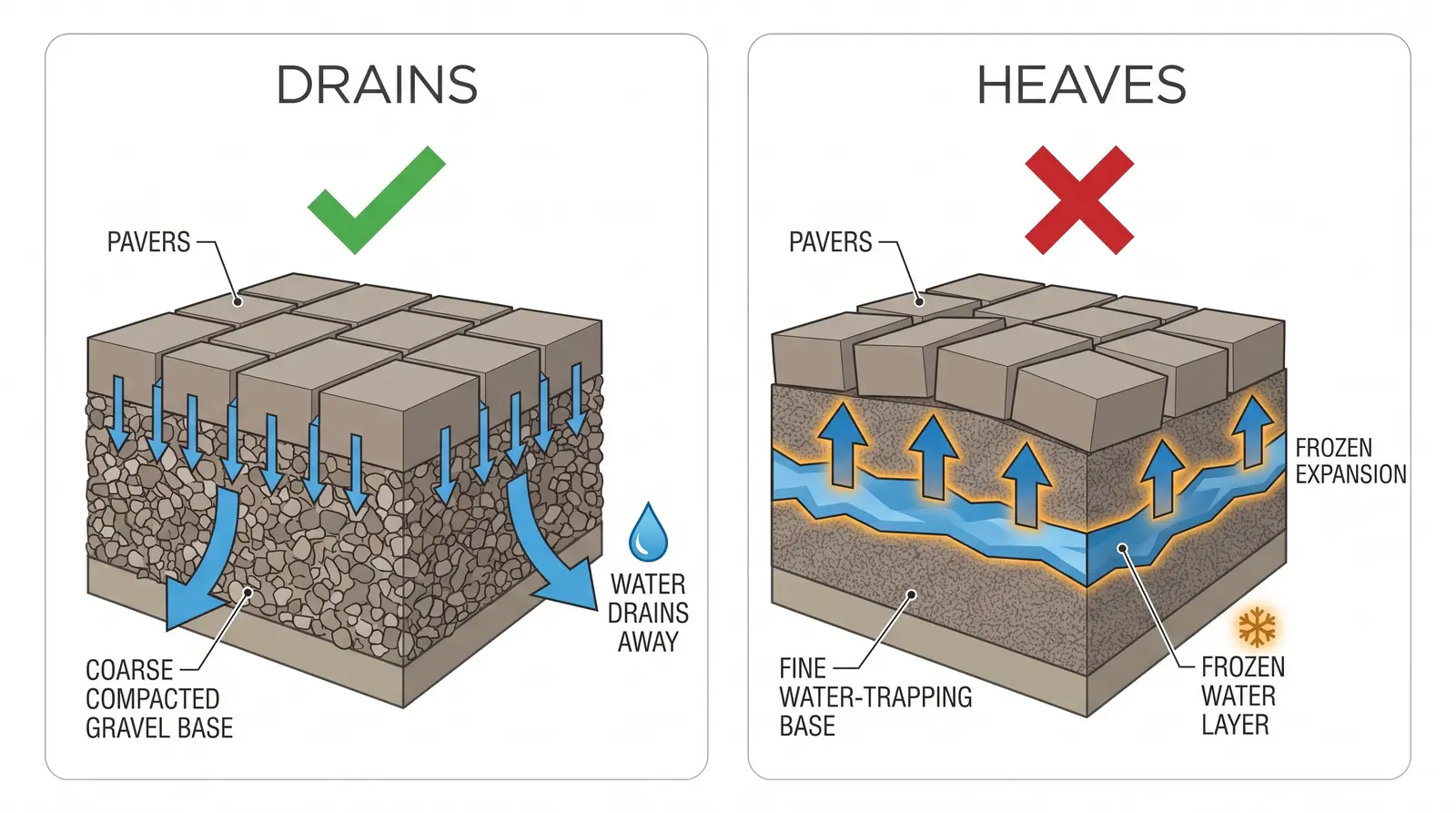
Frost heave is the structural one. Meltwater seeps into the base beneath the pavers, freezes, and expands, pushing the pavers up and out of alignment. Toronto's freeze-thaw cycles repeat this dozens of times a winter, nudging pavers a little higher each time until the surface is visibly uneven. A base that drains poorly, or joints that have lost their sand, lets water pool exactly where it does the most harm.
Surface scaling and spalling is the cosmetic-turned-structural one. Water absorbed into the top layer of a paver freezes, expands, and shears thin flakes off the face. Add de-icing salt and it accelerates sharply.
Quotable: Frost heave lifts pavers when water trapped in the base freezes and expands, and it repeats every freeze-thaw cycle. The fix is drainage: a base that sheds water cannot heave the way a base that holds it does.
Why is de-icing salt so bad for pavers?
Because it attacks the surface and deepens the freeze-thaw damage at the same time. De-icing salt, especially sodium chloride, is mildly corrosive to the cement in concrete pavers and, by melting ice, drives more water into the stone where it refreezes overnight and scales the face.
The numbers are stark. Studies of concrete in freezing climates found that salt combined with freeze-thaw does roughly ten times the damage of ordinary weathering, and de-icing salt can cut a surface's service life by more than half. Salt also leaves efflorescence, the chalky white bloom, and rock salt granules can clog the base's drainage voids, which makes heaving worse. Sand for traction, or a paver-rated de-icer, avoids most of this.
Quotable: In testing, de-icing salt combined with freeze-thaw did about ten times the damage of ordinary weathering and cut surface life by more than half. On pavers, rock salt is not a convenience, it is an accelerant (peer-reviewed studies).
How do you prevent winter paver damage?
Manage water, and manage salt. Most of the prevention is a short fall routine plus one big decision made at installation.
- Top up the joints. Refill worn joints with polymeric sand, which hardens to lock the pavers and block water while still flexing slightly. Washed-out joints are a main path for water under the surface.
- Seal the pavers. A quality sealer resists moisture and salt penetration; reseal on the manufacturer's schedule.
- Fix the drainage. Make sure meltwater runs off the surface and away, not into low spots that pool and freeze.
- Shovel smart. Use a plastic-edged shovel, and skip the rock salt. Sand for grip, or use a de-icer rated safe for pavers.
- Build the base right. The deepest protection is set at installation: a properly compacted, free-draining gravel base that never traps water. This is why a good install matters, as we cover in the best time for interlocking work.
What does repairing winter paver damage cost?
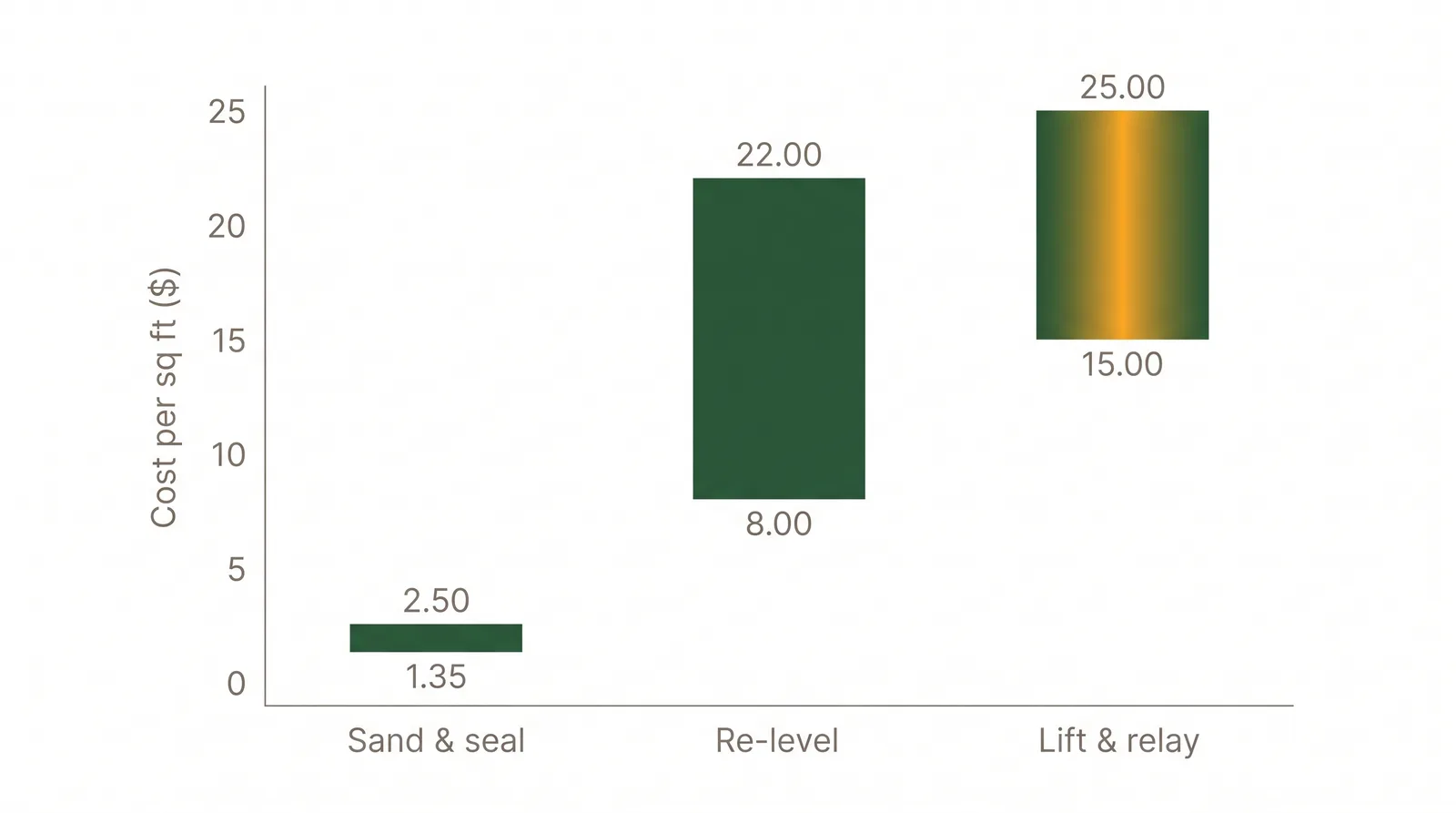
It depends on how deep the damage runs, from a light refresh to a full rebuild. Below are real GTA repair ranges from YardQuote's interlocking cost data.
| Repair | Cost (GTA) |
|---|---|
| Sand & seal (power wash, polymeric sand, sealer) | $1.35 – $2.50 per sq ft |
| Re-level sunken pavers (lift, re-screed, relay) | $8 – $22 per sq ft |
| Full lift & relay (rebuild the base) | $15 – $25 per sq ft |
| Repair crew minimum call-out | $800 – $1,200 per job |
From the data: YardQuote tracks 503 interlocking contractors across the GTA, and paver repair is a spring staple after every winter. The cheapest fix, re-sanding and sealing, costs a fraction of a lift-and-relay, so the fall maintenance that prevents heave is far cheaper than the spring repair that follows it.
The pattern is clear: winter paver damage is mostly a drainage and salt problem, and both are cheaper to prevent than to repair. If your surface is already heaving, get it assessed before it spreads. You can compare current ranges on the interlocking cost page, browse interlocking contractors by area, and read why Toronto landscaping quotes vary 3x to compare repair bids fairly.
Pavers heaving or scaling after winter? Request a quote and compare up to three vetted local pros side by side. Your contact details only go to the one you pick.