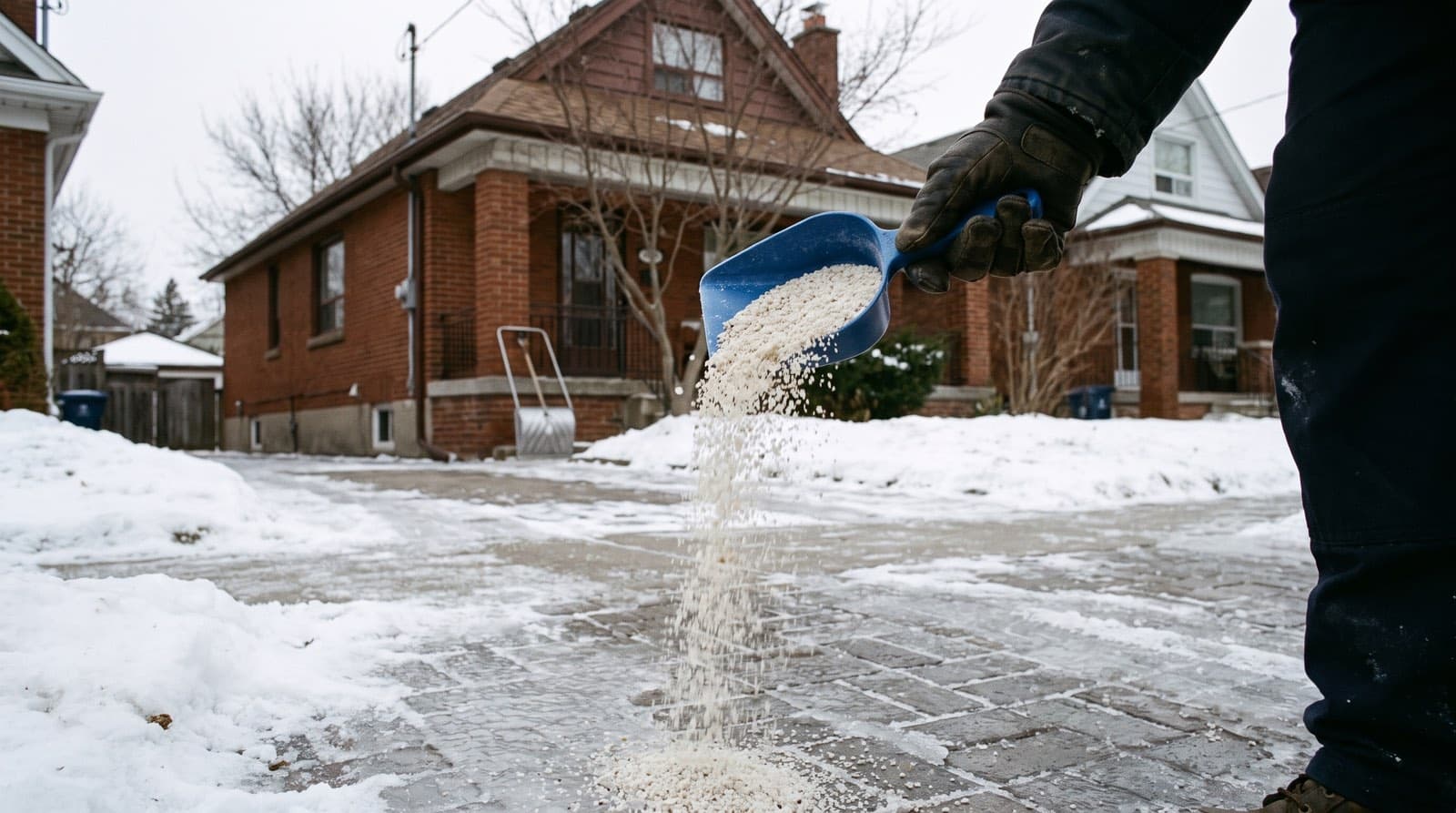
Answer First: Rock salt is the cheapest de-icer but stops working below about -9°C and damages concrete, plants, and pets. Calcium chloride melts fastest and works coldest, to roughly -29°C; magnesium chloride is gentler on surfaces and pets and works to about -15°C. When it is too cold for any de-icer, switch to sand for traction. Whatever you use, shovel first and apply lightly, because chloride is toxic to waterways and never breaks down (Penn State Extension).
Every hardware store sells a wall of winter bags labelled "ice melt," and they are not the same product. Picking the wrong one means a driveway that stays icy in a cold snap, or concrete that flakes apart by spring.
What is the difference between salt and ice melter?
Rock salt is one kind of ice melter, not a separate thing. Rock salt is sodium chloride, the cheap, familiar crystal. Ice melter is the umbrella term that also covers calcium chloride, magnesium chloride, and blends that work in colder weather and can be kinder to your surfaces. The choice between them comes down to three questions: how cold is it, what is the surface, and who walks on it.
The trap is treating them as interchangeable. Rock salt in a deep freeze is nearly useless, and the strongest melter on brand-new concrete is a mistake. Matching the product to the conditions is the whole game.
Quotable: All rock salt is ice melter, but not all ice melter is rock salt. Rock salt is sodium chloride, the cheapest; calcium and magnesium chloride cost more but work in colder weather and, in magnesium's case, do less damage.
Which de-icer works at which temperature?
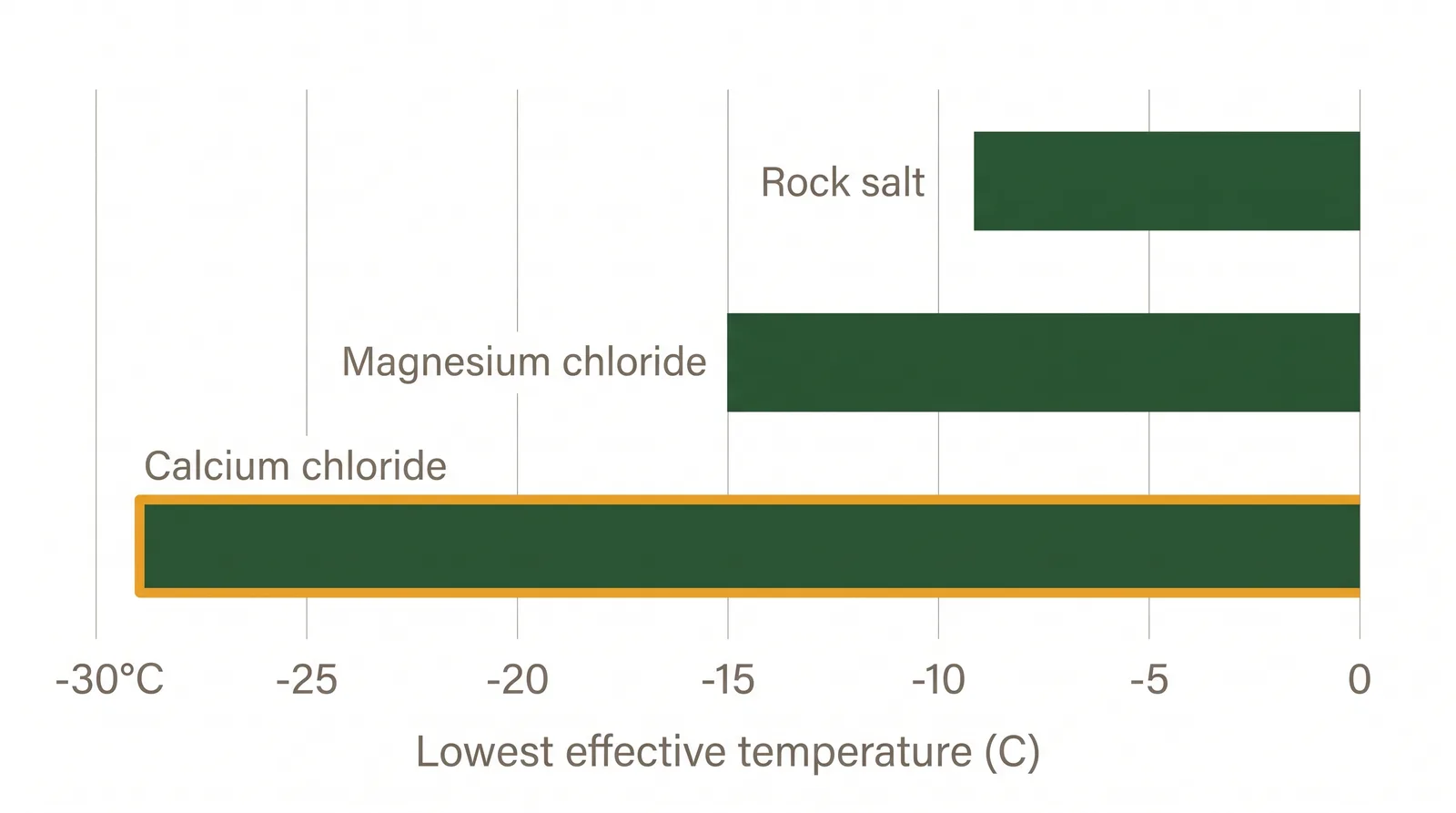
This is the difference that matters most in a Toronto winter, because the coldest nights are exactly when a driveway ices over. Each de-icer has a temperature below which it simply stops melting.
| De-icer | Works down to | Notes |
|---|---|---|
| Rock salt (sodium chloride) | ~ -9°C | Cheapest; hard on concrete and pets |
| Magnesium chloride | ~ -15°C | Gentler on surfaces, plants, pets |
| Calcium chloride | ~ -29°C | Fastest; harshest on pet paws |
| Sand | Any temperature | Traction only, melts nothing |
Rock salt covers most Toronto days, which hover near freezing. When a cold snap drops the temperature into the mid-minus teens or lower, rock salt quits and a calcium or magnesium chloride product keeps working. Below any melter's range, sand is the honest answer: it will not melt the ice, but it gives you grip.
Quotable: Plain rock salt stops melting ice below about -9°C. In a hard Toronto cold snap it is no better than gravel, which is when calcium chloride (effective to roughly -29°C) or plain sand for traction takes over.
Which is safe for concrete, pets, and plants?
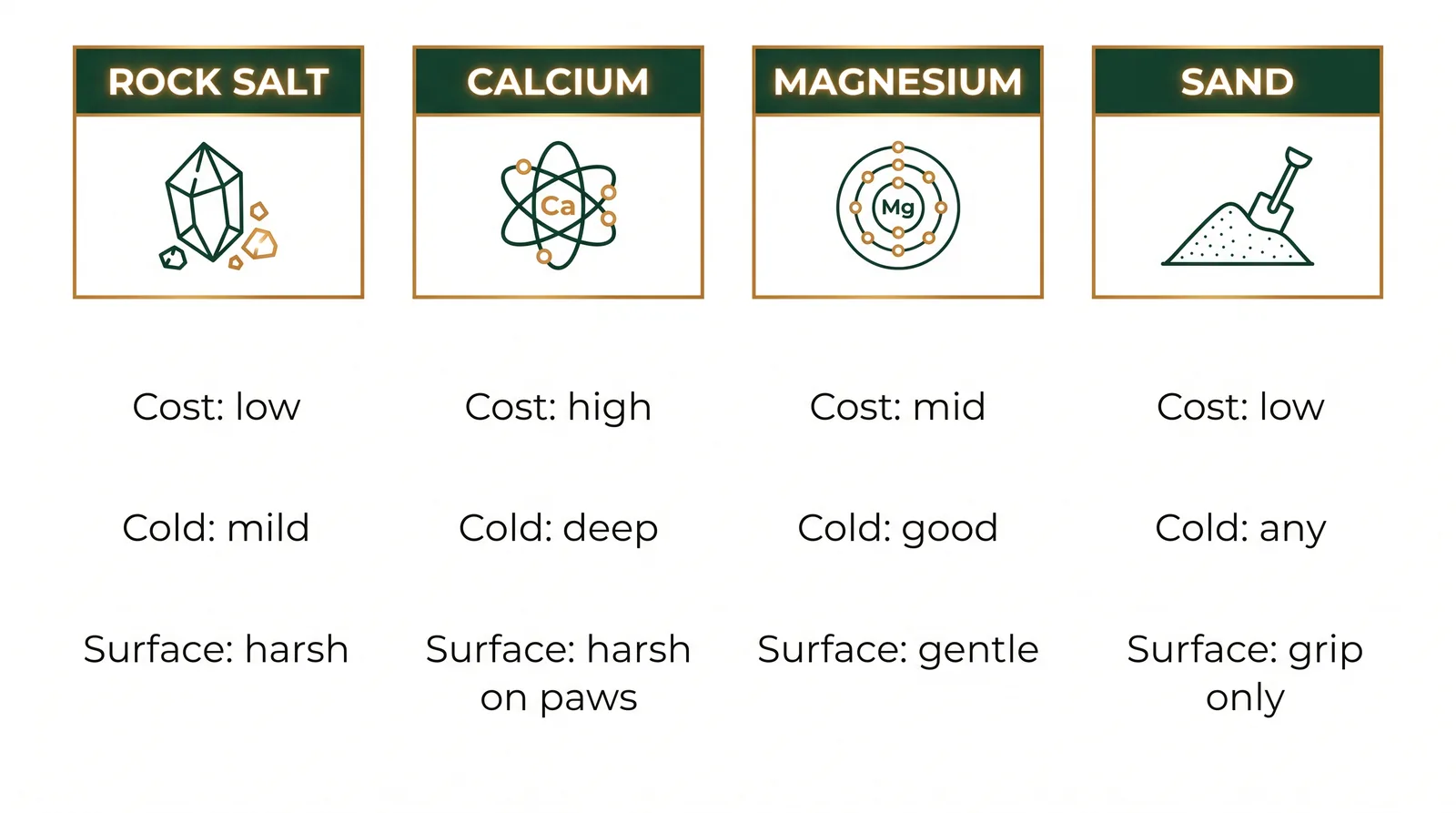
None are harmless, but they are not equal. Every chloride de-icer can scale concrete and irritate pet paws with enough exposure, and salt runoff burns lawns and garden beds along the driveway edge. The differences are real, though.
Magnesium chloride is generally the gentlest of the melters on concrete, plants, and paws. Calcium chloride is the harshest on pets, since it is strong and can irritate paws quickly. Rock salt sits in between on paws but is rough on concrete and vegetation. One hard rule: never de-ice new concrete in its first winter, which we explain in does salt damage interlocking and concrete. For pets, rinse paws after walks and reach for a de-icer labelled pet-safe.
From the data: YardQuote tracks 194 snow removal companies across the GTA, and the professionals lean on the same principle a homeowner should: mechanical clearing first, chemicals second. The less ice there is to melt, the less product, and less damage, it takes.
What should you actually put down?
Match the product to the night, and use less than you think. For a normal Toronto day near freezing, rock salt is fine and cheapest. For a deep cold snap, keep a bag of calcium or magnesium chloride for when rock salt quits. For new concrete, an interlock surface you want to protect, or a pet-heavy walkway, choose magnesium chloride or sand.
Then go light. Shovel and scrape first so there is less ice to treat, and apply de-icer thinly, because piling it on does not melt faster and it does real harm downstream. Chloride is toxic to aquatic life above 230 mg/L and never breaks down in the environment, so every extra scoop ends up in Toronto's creeks and Lake Ontario (Penn State Extension; Minnesota Pollution Control Agency).
Whichever you choose, the clearing itself is the bigger job. If you would rather hand off the driveway and walkways for the season, compare rates on our snow removal cost page, read seasonal versus per-visit snow pricing, and browse snow removal companies by area.
Want the driveway cleared and salted without the guesswork? Request a quote and compare up to three vetted local pros side by side. Your contact details only go to the one you pick.